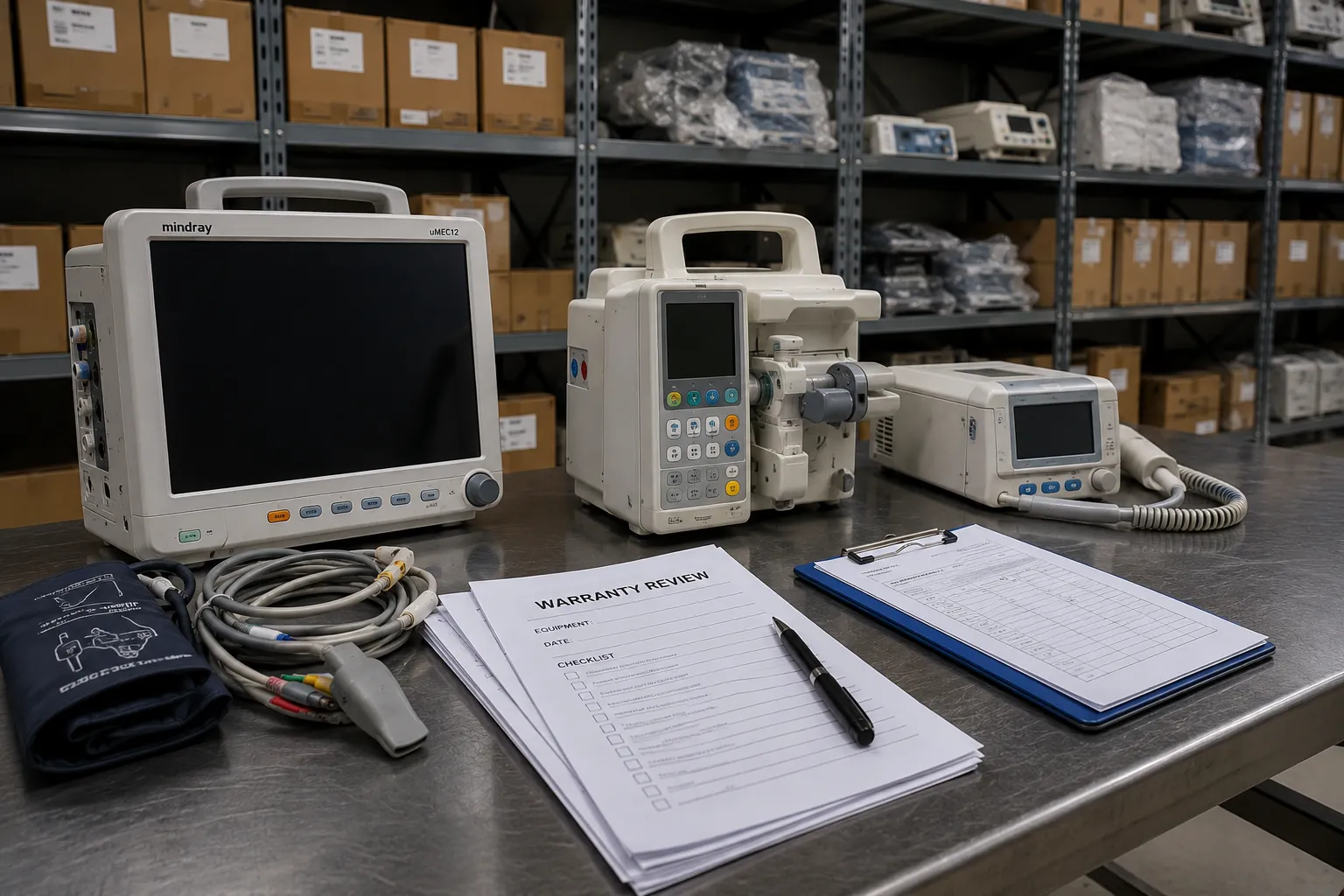
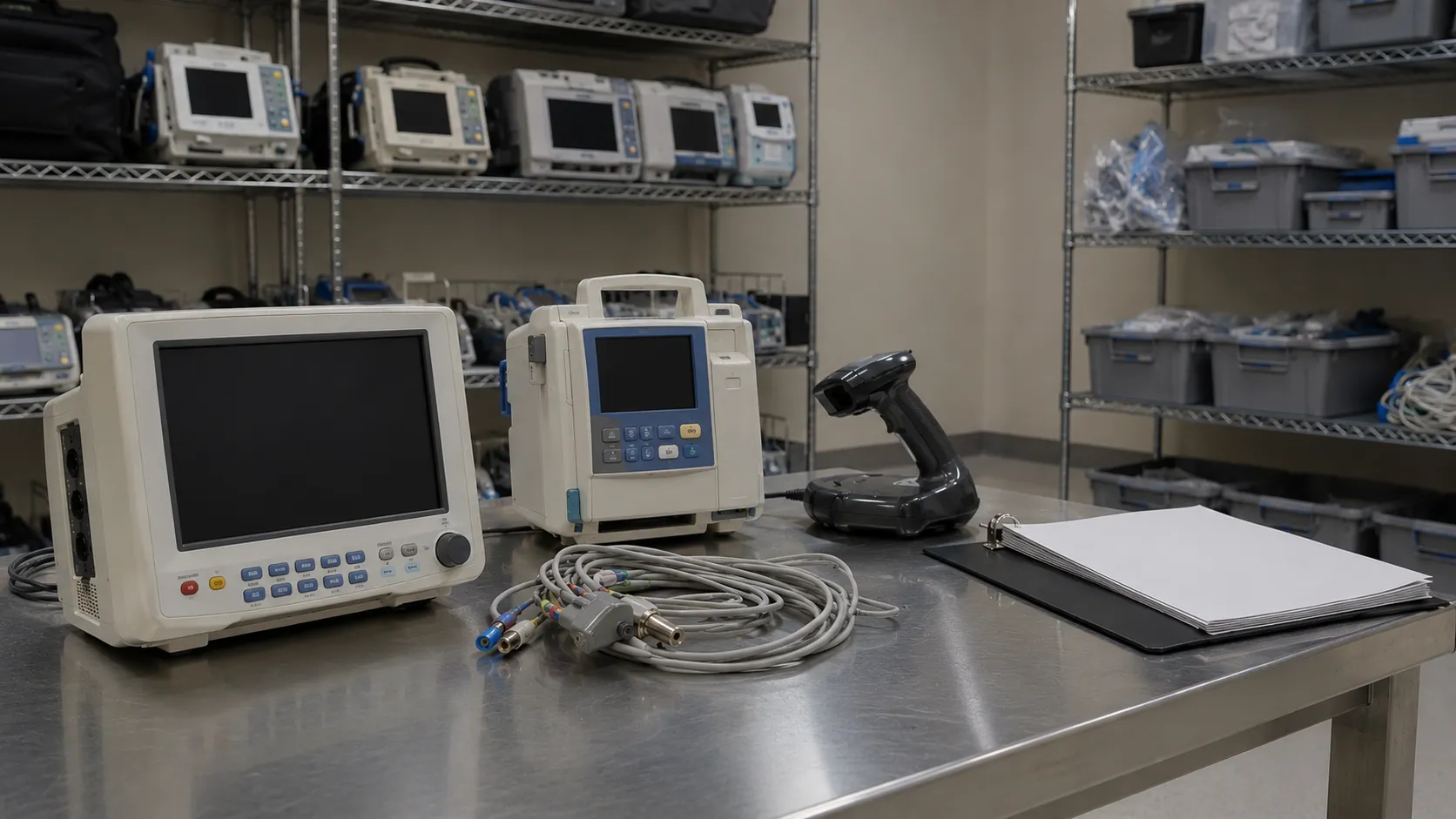
Medical equipment audits help hospitals confirm that assets are identifiable, properly maintained, accurately recorded and suitable for continued operation. Weak preparation can expose missing equipment, overdue servicing, incomplete calibration records and differences between the asset register and actual department locations.
For hospital buyers and healthcare equipment managers, audit readiness should form part of routine asset management rather than a last-minute activity. Procurement records, delivery documents, commissioning evidence, maintenance history and warranty information should remain connected to each equipment record.
Biomedical engineers, clinical departments, procurement teams, facilities personnel and digital teams may all hold information required during the audit. One responsible coordinator should collect this evidence, assign actions and monitor unresolved gaps.
A structured preparation process helps hospitals present reliable records, verify physical equipment and address deficiencies before formal review.
Define the Audit Scope and Assign Responsibilities
Audit preparation should begin by establishing what will be reviewed, which departments are included and who is responsible for each type of evidence.
Audit purpose — Clarify whether the review focuses on asset control, maintenance, calibration, safety, procurement records, financial verification or wider equipment management.
Equipment categories — Define whether the audit covers all medical equipment or selected categories such as imaging, monitoring, laboratory, surgery, critical care or sterilisation.
Departments included — Identify the buildings, clinical areas, stores, and mobile services to be inspected.
Audit period — Confirm the date range for maintenance, calibration, repair and training records.
Responsible coordinator — Appoint one person to manage document requests, physical inspections, department communication and corrective actions.
Department representatives — Each clinical area should identify someone who can confirm the equipment's location, condition, and operational status.
Document owners — Assign responsibility for procurement records, service reports, calibration certificates, software information and training evidence.
Audit schedule — Plan document reviews, department inspections and follow-up meetings with enough time to resolve important gaps.
In practice, hospital teams often lose time because several departments assume another team holds the required records.
A clear list of responsibilities helps the organisation prepare consistent evidence and respond quickly to audit questions.
Confirm the Equipment Inventory and Audit Trail
The asset register should match the equipment physically present within the hospital.
Asset identity — Verify the asset number, equipment description, manufacturer, model and serial number.
Current location — Confirm the facility, department and room. Portable equipment should have a defined home location or current custodian.
When hospitals source equipment through verified international medical equipment suppliers, procurement and delivery teams should collect accurate model, serial number, warranty, and support information for the asset register.
Ownership status — Identify whether the equipment is owned, leased, rented, borrowed, donated or supplied temporarily.
Operational condition — Use controlled descriptions such as operational, restricted, under repair, stored, awaiting installation or decommissioned.
Purchase information — Retain the supplier, purchase order, acquisition date and approved equipment configuration.
Installation and commissioning records — Confirm that installation reports, functional tests and acceptance documents are available.
Warranty status — Record the coverage period, supplier contact route, exclusions and claim history.
Accessories and modules — Verify the status of important probes, batteries, trolleys, software licences, and reusable components.
Loan and demonstration equipment — Record arrival dates, maintenance responsibility, condition and planned return dates.
Decommissioned equipment — Ensure that removed assets are no longer listed as operational and that final disposition is documented.
Large teaching hospitals may use central asset-management systems, while smaller facilities may maintain controlled registers with fewer fields. Multi-facility groups should apply the same identification and status definitions across all locations.
The audit trail should show how an asset moved from procurement and delivery into operation, maintenance and eventual withdrawal.
Verify Maintenance, Calibration and Safety Evidence
Maintenance documentation is one of the most important parts of medical equipment audit preparation.
Preventive maintenance schedule — Confirm that each relevant asset has an approved service frequency and next due date.
Completed service records — Reports should show the equipment identity, inspection date, work completed, findings and technician details.
Overdue maintenance — Identify missed or delayed servicing before the audit and document the reason and corrective plan.
Corrective repairs — Fault reports should connect the reported problem to the diagnosis, repair, parts used, and return-to-service approval.
Calibration status — Equipment requiring performance or measurement verification should have current calibration records.
Test-equipment traceability — Where required, records should show that suitable test equipment was used for technical checks.
Safety inspection — Physical, electrical, or functional safety checks should be documented in accordance with the equipment category and hospital procedures.
Parts replacement — Significant components should be recorded with part numbers, installation dates and responsible technicians.
Service-provider credentials — The hospital should be able to identify whether work was completed internally, by the manufacturer or through an authorised service provider.
Equipment isolation — Assets that have failed inspection should be clearly labelled, restricted and prevented from unintended use.
Return-to-service approval — Equipment should only be restored to operation after required checks and documentation are complete.
Audit preparation should focus on record completeness and on whether technical actions align with the hospital’s approved procedures.
Review Procurement, Supplier and Compliance Documents
Equipment records should remain connected to the documents used to purchase, receive and support each asset.
Approved quotation — Confirm that the delivered manufacturer, model, configuration and accessories match the accepted supplier offer.
Purchase order — The purchase order should identify the approved product, quantity, pricing and commercial terms.
Supplier information accuracy — Medical equipment companies advertising products to hospital buyers should ensure that descriptions, warranty claims and support commitments match formal documentation.
Delivery inspection — Retain records showing packaging condition, equipment identity, serial numbers, accessories and delivery discrepancies.
Compliance documents — Store applicable product, conformity, registration and destination-market records.
User manuals — Operating instructions should match the exact model, software version and configuration in service.
Installation records — Confirm that room preparation, utility connections and supplier installation activities were documented.
Commissioning evidence — Safety checks, functional testing, calibration and acceptance approvals should remain accessible.
Warranty and service terms — Retain the agreed warranty start date, coverage, exclusions, response times and claim process.
Supplier correspondence — Important clarifications, replacements and corrective commitments should be stored with the purchasing record.
Healthcare organisations that manage repeat purchases may benefit from structured international medical equipment support partnerships. Every asset should still retain its own evidence of procurement, delivery, commissioning, and service.
Commercial and compliance documents should support the exact equipment physically present in the hospital.
Inspect Physical Condition, Labels and User Controls
A document review should be supported by a physical inspection of selected or all equipment.
Asset label — Confirm that the internal asset number is present, readable and matches the register.
Manufacturer label — Verify the manufacturer, model and serial number against the recorded information.
Physical condition — Check for cracks, dents, loose parts, damaged covers, corrosion or other visible deterioration.
Cables and connectors — Inspect power cables, plugs, patient leads, probes and connectors for damage or unsuitable repairs.
Wheels and brakes — Mobile equipment should remain stable and controllable during movement and use.
Safety and warning labels — Required labels should remain present, readable and appropriate for the equipment configuration.
Maintenance status label — Where used, the label should show a current service or inspection status that matches the maintenance system.
Calibration label — Calibration dates and due dates should correspond with the supporting certificate.
Accessory completeness — Confirm that required probes, batteries, chargers, trolleys and reusable accessories are available.
Cleaning condition — Equipment should be stored and presented in accordance with approved cleaning and infection-control procedures.
User access — Departments should control access to equipment requiring trained or authorised operators.
Software and network status — Connected equipment should have documented software versions, user access and approved network arrangements.
Physical findings should be compared immediately with the asset and maintenance records to investigate any inconsistencies.
Conduct a Pre-Audit Review and Close Identified Gaps
A formal internal review gives the hospital time to correct deficiencies before the main audit.
Select audit samples — Review equipment from different departments, risk categories, manufacturers and ownership types.
Reconcile records and assets — Confirm that equipment listed in the register can be physically located and that unregistered devices are investigated.
Check overdue actions — Review maintenance, calibration, warranty claims, training and repair actions that remain open.
Prioritise findings — Rank gaps according to equipment criticality, operational impact and required completion time.
Assign corrective owners — Every finding should have a named person or department responsible for resolution.
Set completion dates — Establish realistic deadlines and escalate high-risk issues that cannot be closed promptly.
Retain evidence — Store updated records, photographs, service reports, labels and approvals showing that corrective work was completed.
Recheck closed findings — Confirm that the action resolved the original gap rather than only updating the record.
Prepare an audit file — Organise policies, inventories, maintenance reports, calibration records, training evidence and corrective-action logs for efficient review.
Brief department teams — Staff should understand the audit schedule, equipment locations and the person responsible for answering technical questions.
Healthcare organisations seeking equipment documentation, replacement options, or international sourcing support can contact the Medigear.uk team for assistance with medical equipment. Enquiries should include the equipment category, manufacturer, model, quantity, destination and required support.
Audit preparation should become part of regular equipment management rather than an isolated exercise completed before a scheduled inspection.
Final thoughts
Preparing medical equipment for a hospital audit requires accurate records, current evidence of maintenance, and physical verification of assets in service.
Hospitals should confirm equipment identity, location, condition, warranty, calibration and servicing status before the audit begins. Procurement, commissioning, training, and supplier support documents should remain linked to the relevant asset.
Internal sampling and corrective-action reviews can help teams identify missing labels, overdue work and differences between records and physical equipment.
A structured audit-preparation process improves equipment traceability, strengthens accountability and supports more reliable lifecycle management.
Disclaimer
Medigear.uk is a global medical equipment supplier, exporter, and distributor. The content published on this site is intended for educational and product awareness purposes only. Nothing on this page constitutes medical advice, clinical guidance, or treatment recommendations. All healthcare procurement and clinical decisions should be made by qualified medical professionals and compliant procurement teams operating within the regulatory frameworks of their respective countries.