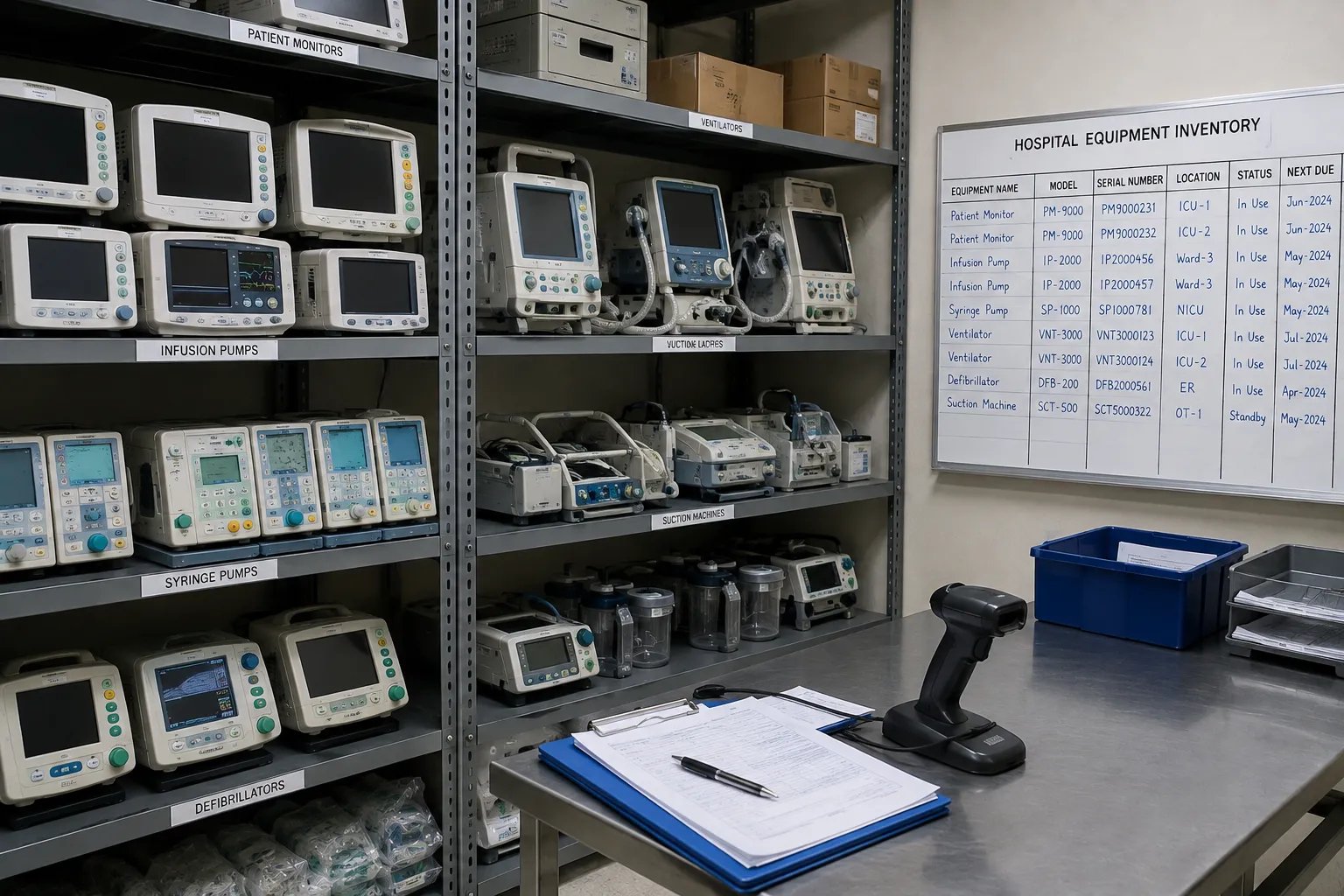
A hospital equipment inventory is more than a list of devices. It is a controlled record that helps healthcare organisations identify where equipment is located, who is responsible for it, whether maintenance is up to date, and when replacement may be required.
For hospital buyers and healthcare equipment managers, inventory requirements should be considered during procurement. Equipment identity, serial numbers, warranty terms, accessories, software and commissioning records should be collected before the asset enters routine operation.
Biomedical engineers, clinical departments, procurement teams, finance managers, facilities personnel and digital teams may all contribute information. Without clear ownership, equipment can be transferred, repaired or removed without the central register being updated.
A structured hospital equipment inventory improves asset visibility, supports maintenance planning and provides reliable information for audits, budgeting and lifecycle decisions.
Define the Inventory Scope and Ownership
The healthcare organisation should decide which equipment and information to include before building the register.
Medical equipment scope — Define the categories covered, such as imaging, patient monitoring, laboratory, surgery, critical care, sterilisation, rehabilitation and hospital furniture.
Ownership status — Record whether each item is owned, leased, borrowed, donated, rented or supplied temporarily for demonstration.
Clinical accessories — Decide whether high-value probes, modules, batteries, trolleys and reusable accessories require separate asset records.
Non-clinical support equipment — Facilities may include selected technical assets that directly support clinical equipment operation.
Inventory owner — Assign responsibility for maintaining the central record. Biomedical engineering or healthcare technology teams commonly manage the technical inventory.
Department responsibility — Each clinical department should designate a representative to confirm equipment location and operational status.
Data approval — Define who may add, edit, transfer or close an equipment record.
Update requirements — Establish when records must be changed after delivery, installation, repair, transfer, software updates or decommissioning.
In practice, healthcare managers often find that inventory gaps begin when several departments maintain separate spreadsheets without a controlled central record.
A written inventory policy helps prevent duplication and clarifies which team is accountable for each type of information.
Adapt the Inventory to Different Healthcare Settings
The structure of the inventory should reflect the size, complexity and operating model of the healthcare organisation.
Large and teaching hospitals — These facilities may manage thousands of assets across several buildings and departments. A central database with department, room and service-status fields can support stronger control.
District and regional hospitals — Equipment may be spread across clinical areas with limited biomedical engineering coverage. Accurate location and maintenance-responsibility records become especially important.
When sourcing from verified international medical equipment suppliers, healthcare organisations should collect consistent manufacturer, model, serial number, and warranty information before registering the equipment.
Community clinics — Smaller facilities may operate a simpler register, but equipment identity, condition, maintenance and support details should still be recorded.
Laboratories and diagnostic centres — Inventory data may need to include analysers, refrigerators, calibration equipment, software interfaces and associated modules.
Critical care and surgical departments — Equipment may move between rooms, theatres or care areas. Transfer procedures should prevent location records from becoming outdated.
Mobile and remote services — Portable equipment may require additional fields for transport cases, vehicles, battery condition and assigned operating teams.
New hospital projects — Equipment schedules can be converted into initial inventory records during delivery, installation and commissioning.
Multi-facility healthcare groups — A standard asset-numbering system and shared data structure can support equipment transfers and consolidated reporting.
Experienced healthcare asset managers usually standardise core fields across the organisation while allowing category-specific technical details.
Record Accurate Equipment and Asset Information
Each inventory record should provide enough information to identify, locate, maintain and support the asset.
Asset number — Assign a unique internal identifier that remains connected to the equipment throughout its lifecycle.
Equipment description — Use a clear, consistent name rather than informal departmental terminology.
Manufacturer — Record the legal manufacturer listed on the equipment label and in the technical documentation.
Model number — Capture the exact model and variant. Similar model names may have different software, accessories or maintenance requirements.
Serial number — Record the full serial number accurately, as it supports warranty, service and recall traceability.
Equipment category — Assign a standard category to support filtering, reporting and maintenance planning.
Department and location — Record the facility, building, floor, department and room where appropriate.
Ownership status — Identify whether the equipment is owned, leased, borrowed, donated or awaiting return.
Condition status — Classify the asset as operational, restricted, under repair, stored, awaiting installation or decommissioned.
Purchase details — Record the supplier, purchase order, acquisition date and original approved configuration.
Installation and commissioning dates — These dates support warranty activation and lifecycle monitoring.
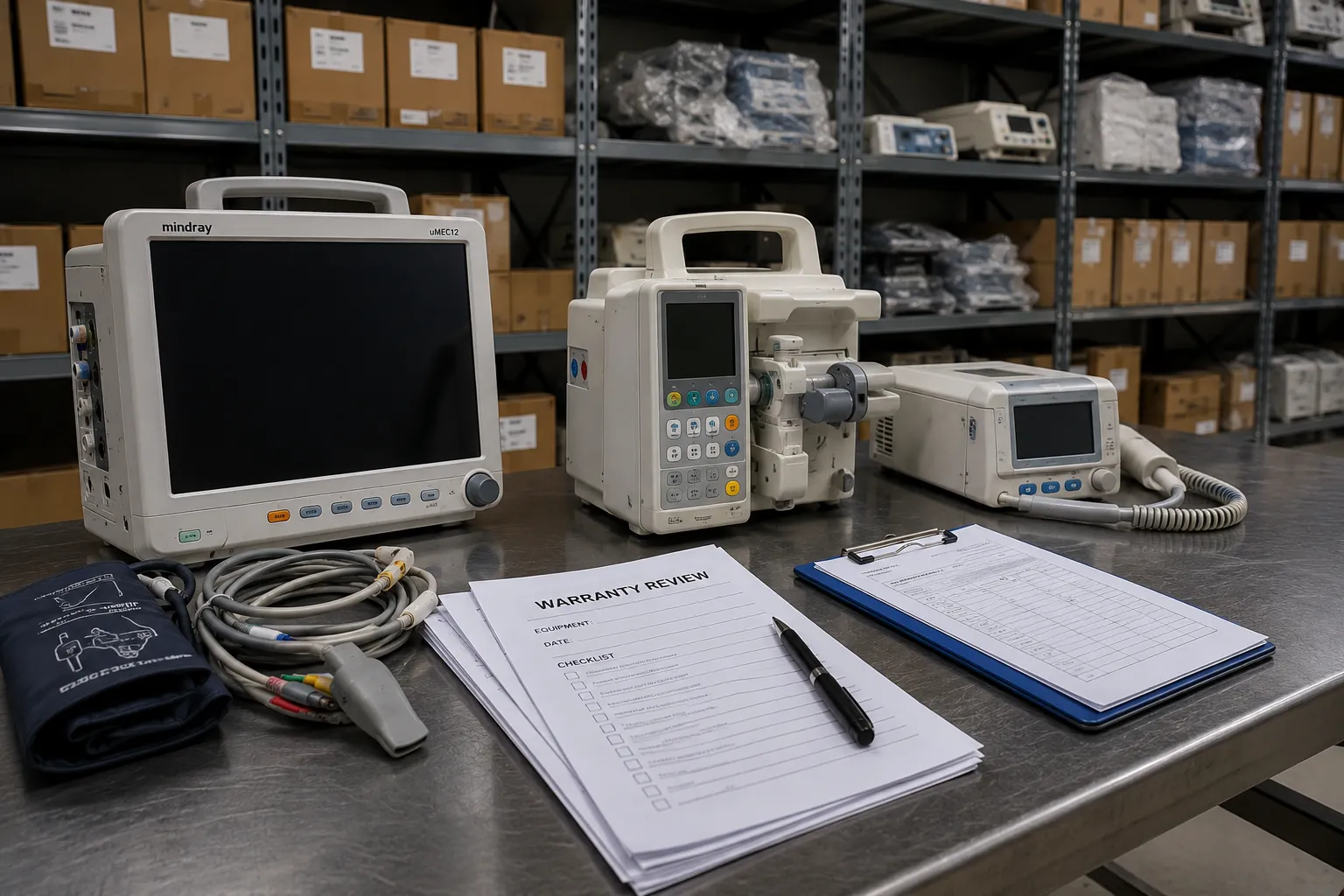
Warranty information — Include the start date, end date, scope, exclusions and supplier contact route.
Maintenance schedule — Record preventive maintenance, calibration and inspection intervals.
Software and connectivity — Connected equipment may require software versions, licences, interfaces, network and cybersecurity details.
Accessories and modules — Important components should be listed or linked to separate inventory records.
Accurate data entry at the beginning reduces the need for later investigation when equipment requires service or replacement.
Verify Procurement, Supplier and Documentation Records
Inventory registration should connect the delivered equipment with the approved purchase and supplier documentation.
Purchase-order match — Confirm that the manufacturer, model, quantity and configuration match the approved order.
Delivery inspection — Record whether packaging, equipment condition, accessories and serial numbers were checked during receipt.
Supplier-document accuracy — Medical equipment companies advertising products to healthcare buyers should provide product descriptions and specifications that match the formal quotation and delivered equipment.
Compliance records — Store or link applicable conformity, registration and product documentation.
User manuals — Current operating instructions should correspond to the exact model delivered and the software version.
Installation documents — Retain installation reports, room-readiness records and supplier engineer details.
Commissioning records — Link functional tests, safety checks, calibration and final acceptance documents to the asset.
Training information — Record whether clinical and technical training was completed and where training records are stored.
Service contacts — Include supplier, manufacturer, and authorised service provider contact details.
Commercial support terms — Record warranty, extended service, spare-parts and software commitments.
Healthcare groups managing recurring or multi-site equipment programmes may benefit from structured international partnerships for nal medical equipment. Each delivered asset should still be registered and verified independently.
Connecting procurement and commissioning records to the inventory creates a reliable evidence trail from purchase through operational handover.
Keep the Inventory Current Throughout Equipment Use
An inventory loses value quickly when equipment transfers, repairs and software changes are not recorded.
Location transfers — Update the register whenever equipment moves between rooms, departments or facilities.
Maintenance completion — Record completed preventive servicing, calibration and technical inspections.
Fault and repair history — Link breakdowns, parts replaced, engineer visits, downtime and return-to-service approvals.
Condition changes — Update the asset when it becomes restricted, damaged, stored or unavailable.
Software updates — Record changes to versions, licences, interfaces and cybersecurity status.
Accessory changes — Add or remove high-value modules, probes, batteries or trolleys when configurations change.
Warranty claims — Retain claim references, supplier responses, repair outcomes and replacement components.
Temporary equipment — Loan or demonstration units should have arrival, responsibility, condition and return-date records.
Physical verification — Conduct periodic checks to confirm that equipment exists, is located correctly and displays the expected asset label.
Duplicate-record control — Review repeated serial numbers, model inconsistencies and records without confirmed locations.
Missing-asset investigation — Establish a process for tracing equipment that cannot be found during verification.
Department confirmation — Clinical managers should periodically confirm the status of equipment assigned to their areas.
One aspect that surprises first-time inventory managers is how quickly asset-location data becomes unreliable when departments transfer portable equipment without notification.
A practical update process should be simple enough for staff to follow and controlled enough to maintain reliable information.
Use Inventory Data for Maintenance and Replacement Planning
A well-maintained inventory supports wider technical, commercial and operational decisions.
Maintenance forecasting — Use service dates and risk categories to identify upcoming preventive maintenance and calibration requirements.
Warranty monitoring — Track warranties approaching expiry so extended support or service contracts can be reviewed in advance.
Parts planning — Connect equipment models and quantities with spare-parts requirements and supplier lead times.
Training planning — Identify departments operating new equipment, software versions or unfamiliar models.
Downtime analysis — Compare fault histories and repair durations across manufacturers, models, and departments.
Supplier-performance review — Assess whether service response, parts delivery and warranty support meet agreed commitments.
Lifecycle-cost analysis — Combine acquisition, maintenance, repair, software and consumable costs where records are available.
Replacement priority — Use condition, downtime, support availability, clinical criticality and service cost to rank assets.
Audit preparation — Accurate records can support internal reviews, financial checks and applicable regulatory inspections.
Decommissioning control — Equipment removed from service should have its status, location, data handling and final disposition recorded.
Healthcare organisations seeking equipment quotations, inventory support or replacement planning can contact the Medigear.uk team for medical equipment sourcing assistance. Enquiries should include the equipment category, required quantity, preferred condition, destination, and implementation requirements.
Inventory information should support real purchasing and lifecycle decisions rather than remaining only as a static asset list.
Final thoughts
A hospital equipment inventory provides the foundation for maintenance, warranty management, budgeting and replacement planning.
Healthcare organisations should define ownership, standardise asset fields and register equipment during delivery and commissioning. Manufacturer, model, serial number, location, condition and support information should remain accurate throughout the asset lifecycle.
Regular updates and physical verification help identify missing assets, outdated locations and incomplete technical records.
A controlled inventory gives healthcare managers clearer visibility of their equipment fleet and stronger evidence for maintenance, procurement and capital-planning decisions.
Disclaimer
Medigear.uk is a global medical equipment supplier, exporter, and distributor. The content published on this site is intended for educational and product awareness purposes only. Nothing on this page constitutes medical advice, clinical guidance, or treatment recommendations. All healthcare procurement and clinical decisions should be made by qualified medical professionals and compliant procurement teams operating within the regulatory frameworks of their respective countries.