Sourcing medical equipment internationally can give healthcare facilities access to more manufacturers, technologies and commercial options. It can also introduce certification, documentation, logistics and after-sales risks that are not always clear in the first supplier quotation.
For medical equipment buyers and healthcare managers, the process should begin with a documented clinical requirement and a review of the destination market’s regulatory obligations. Buyers must confirm that every certificate, technical document and product label applies to the exact manufacturer, model and configuration being offered.
The word “certified” should not be accepted as a general marketing claim. Equipment approved or registered in one market may require different documentation, labelling, or importer arrangements in another.
A controlled sourcing process helps healthcare teams assess clinical suitability, verify suppliers, review compliance evidence and plan international delivery and support.
Define the Clinical and Technical Requirement
Certification does not automatically make equipment suitable for every hospital, clinic or laboratory. Buyers should first establish what the equipment must achieve in practice.
Intended clinical use — Define the examination, procedure, monitoring activity or operational function the equipment must support. The manufacturer’s intended-use statement should align with the planned application.
In practice, medical buyers often find that promotional descriptions suggest more uses than the formal product documentation supports.
Expected workload — Estimate the number of patients, procedures, tests or operating hours. Equipment intended for light use may not be suitable for continuous clinical demand.
Performance criteria — Define capacity, accuracy, measurement range, throughput, battery duration or other relevant operating limits.
Complete configuration — List every required probe, sensor, patient cable, battery, trolley, mount, software package and starter consumable. A certified base unit may still be unusable when essential accessories are missing.
Patient and user requirements — Consider patient size, accessibility, user skill level, control layout, and language requirements.
Infrastructure needs — Confirm electrical supply, ventilation, medical gases, water, drainage, network access and structural support where applicable.
Downtime impact — Critical equipment may require stronger warranty coverage, faster technical response or backup capacity.
A clear requirement allows suppliers to provide comparable quotations and supporting evidence.
Choose the Right International Supply Channel
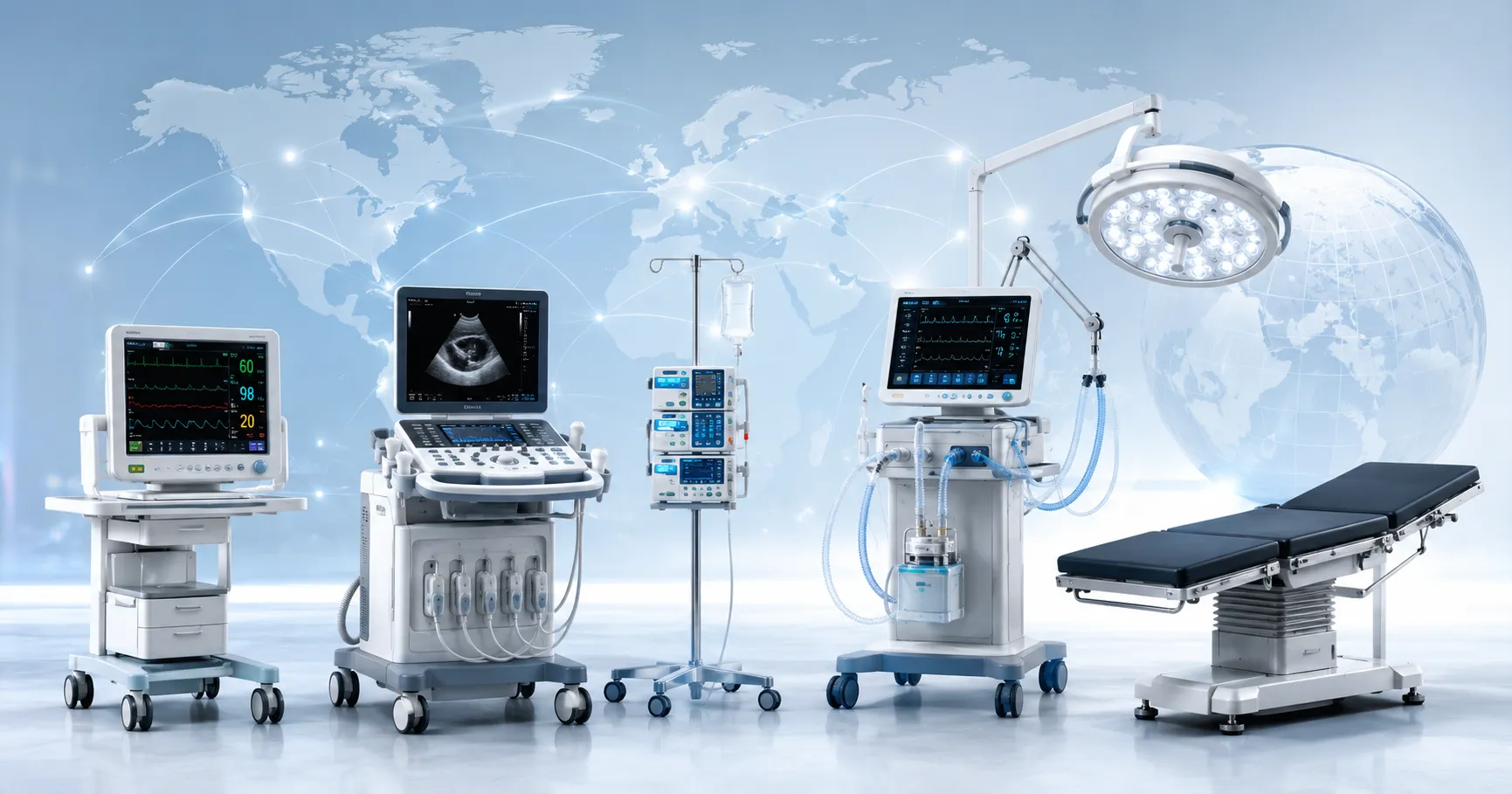
Healthcare facilities can source certified medical equipment directly from manufacturers, authorised distributors, specialist exporters or international supply networks.
Direct manufacturer sourcing — Buying directly may provide clear product information and factory documentation. However, the manufacturer may not provide local installation, customs support or service coverage in every destination.
Authorised distributors — These suppliers may offer manufacturer-backed warranty, training, software, and access to spare parts. Buyers should confirm whether the authorisation covers the exact product and destination.
Specialist global suppliers — Experienced exporters can coordinate equipment from multiple manufacturers and support international documentation and shipping. When reviewing regulated and certified equipment suppliers worldwide, buyers should verify legal identity, product experience, and technical support capabilities.
Local distributors — Local suppliers may offer faster communication and technical response. Buyers should still confirm the source of the equipment and whether the manufacturer recognises the warranty.
New hospital projects — Large projects may require coordinated sourcing across imaging, critical care, laboratory, surgery and hospital furniture categories.
Community clinics — Smaller facilities may prioritise compact equipment, straightforward controls and affordable maintenance.
Remote services — Mobile and remote healthcare operations may require portability, battery operation, protective packaging and remote technical assistance.
Experienced healthcare buyers request evidence of comparable deliveries rather than accepting general claims of global supply experience.
Verify Certification and Compliance Documents
Certification verification should involve more than checking whether a supplier has displayed a logo or certificate image.
Legal manufacturer details — The manufacturer shown on the certificate should match the quotation, product label, user manual and conformity declaration.
Exact product scope — Some certificates cover a product family rather than every individual model. Buyers should confirm that the proposed version and accessories are included.
Certificate validity — Check certificate numbers, issuing organisations, validity dates and current status.
Intended use — The clinical application described in the official documentation should align with the facility’s planned use.
Destination-market requirements — Equipment should meet applicable local regulatory standards, including standards such as CE, FDA or their regional equivalents where relevant.
Product registration — Some markets require additional registration, importer appointment or local representation.
Quality-management evidence — Manufacturer quality-system certification supports organisational processes, but it does not prove that every product is approved in every market.
Document consistency — Product names, model numbers and manufacturer details should remain consistent across certificates, declarations, technical data and invoices.
Software documentation — Connected equipment may require software version records, cybersecurity information, and update policies.
One aspect that surprises first-time buyers is that a valid certificate may apply to a related product rather than the exact equipment being offered.
Assess Suppliers and Compare Quotations
A certified product may still create problems if the supplier cannot provide accurate documentation, reliable delivery or effective after-sales service.
Verify the supplier’s identity — Confirm the legal business name, address, contact details and banking information.
Assess relevant experience — The supplier should demonstrate experience with the equipment type, manufacturer or clinical category being sourced.
Check product advertising — Medical equipment advertising reaching international healthcare buyers should provide accurate information about certification, specifications and support. Buyers should compare public claims with formal documents.
Plan Installation, Warranty and Lifecycle Support
Global sourcing should include a practical plan for keeping the equipment operational after delivery.
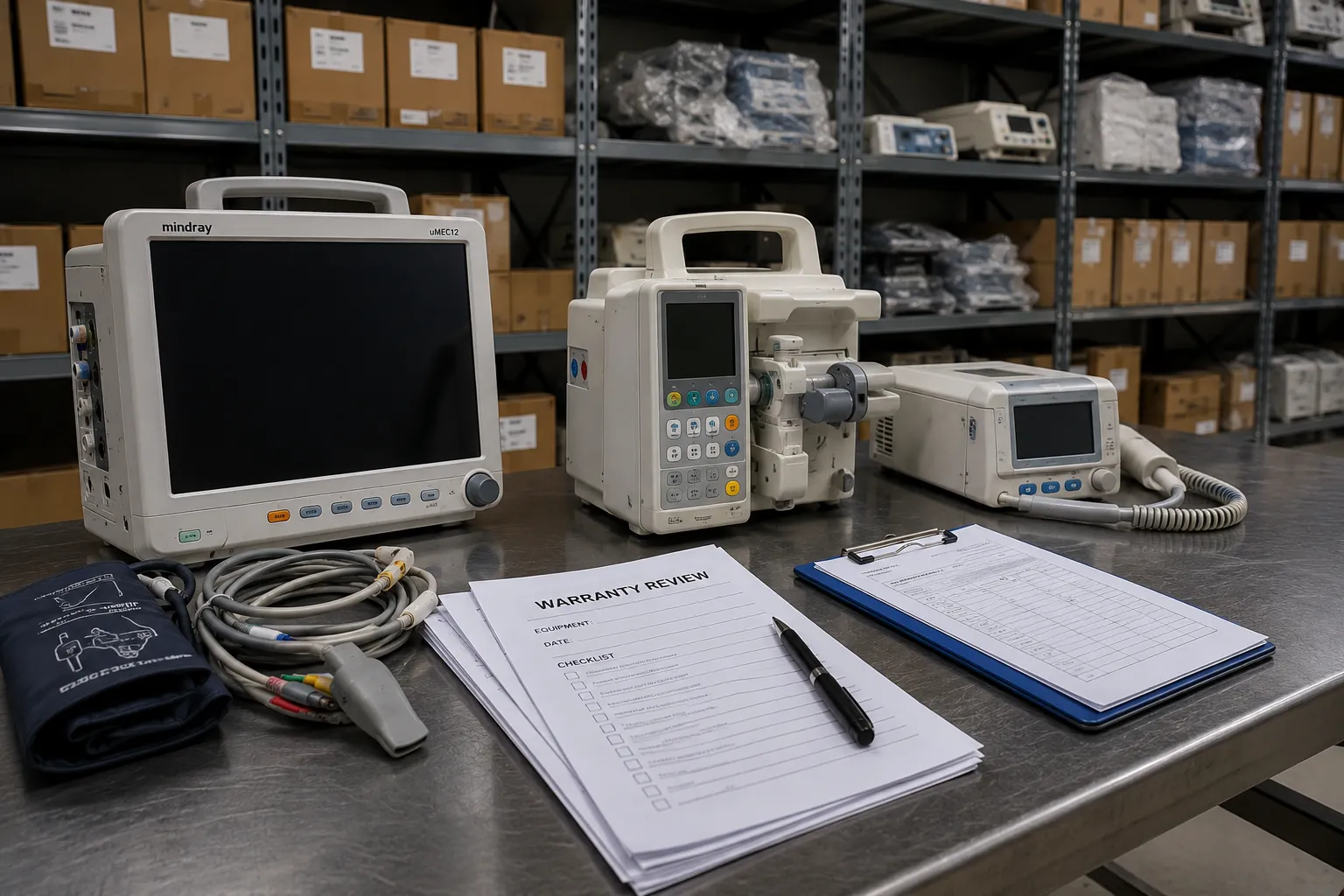
Confirm the warranty starting date — Establish whether warranty begins at shipment, delivery, installation or commissioning. An early starting point may reduce the useful coverage period.
Review warranty scope — Confirm whether parts, labour, software, freight, engineer travel and replacement equipment are included.
Identify the service provider- The manufacturer, an international supplier, a local distributor, or an approved independent engineer may deliver maintenance.
Evaluate technical capability — Service personnel should have suitable training, diagnostic tools, manuals and access to compatible parts.
Plan preventive maintenance — Recommended servicing, calibration and inspection intervals should be understood before purchasing.
Confirm spare-parts support — Suppliers should state expected parts availability and typical lead times for important components.
Control Shipping, Import and Equipment Acceptance
International delivery should be planned alongside equipment selection rather than after the purchase order has been issued.
Confirm shipping responsibilities — The quotation or contract should state who manages freight, cargo insurance, customs clearance, unloading and final delivery.
Review export documents — Commercial invoices, packing lists, transport documents and conformity records should be checked before dispatch.
Maintain consistent product information — Manufacturer names, model numbers, quantities and product descriptions should match across every document.
Verify packaging requirements — Sensitive equipment may need specialist crates, moisture protection, shock indicators or controlled-temperature transport.
Check import responsibilities — Buyers should identify importer obligations, registration requirements, local permits and customs documents.
Consider pre-shipment inspection — High-value or complex equipment may benefit from model verification, accessory checks, functional testing and document review before dispatch.
Inspect the delivered shipment — The receiving team should check the packaging, serial numbers, quantities, accessories, and any visible damage.
Control installation — Installation responsibilities should include positioning, connection, configuration, calibration and safety checks where applicable.
Complete commissioning — Equipment should be tested against the approved specification before clinical acceptance.
Healthcare facilities seeking product comparisons, supplier quotations or international export support can submit a certified medical equipment enquiry to Medigear.uk. The contact should include the equipment category, intended use, required quantity, preferred condition and destination.
Final acceptance should take place only after the equipment, documentation, configuration, and support responsibilities have been confirmed.
Final thoughts
Sourcing certified medical equipment globally requires more than identifying a product with a recognised certificate or compliance logo.
Healthcare buyers should verify that every document applies to the exact manufacturer, model, configuration and destination. Clinical suitability, infrastructure compatibility and accessory requirements should also be reviewed before commercial approval.
Supplier identity, warranty coverage, payment terms, logistics and after-sales support can significantly affect the final value of an international purchase.
A structured sourcing process helps hospitals, clinics and healthcare projects reduce compliance, delivery and lifecycle risks while purchasing equipment that remains practical and supportable.
Disclaimer
Medigear.uk is a global medical equipment supplier, exporter, and distributor. The content published on this site is intended for educational and product awareness purposes only. Nothing on this page constitutes medical advice, clinical guidance, or treatment recommendations. All healthcare procurement and clinical decisions should be made by qualified medical professionals and compliant procurement teams operating within the regulatory frameworks of their respective countries.