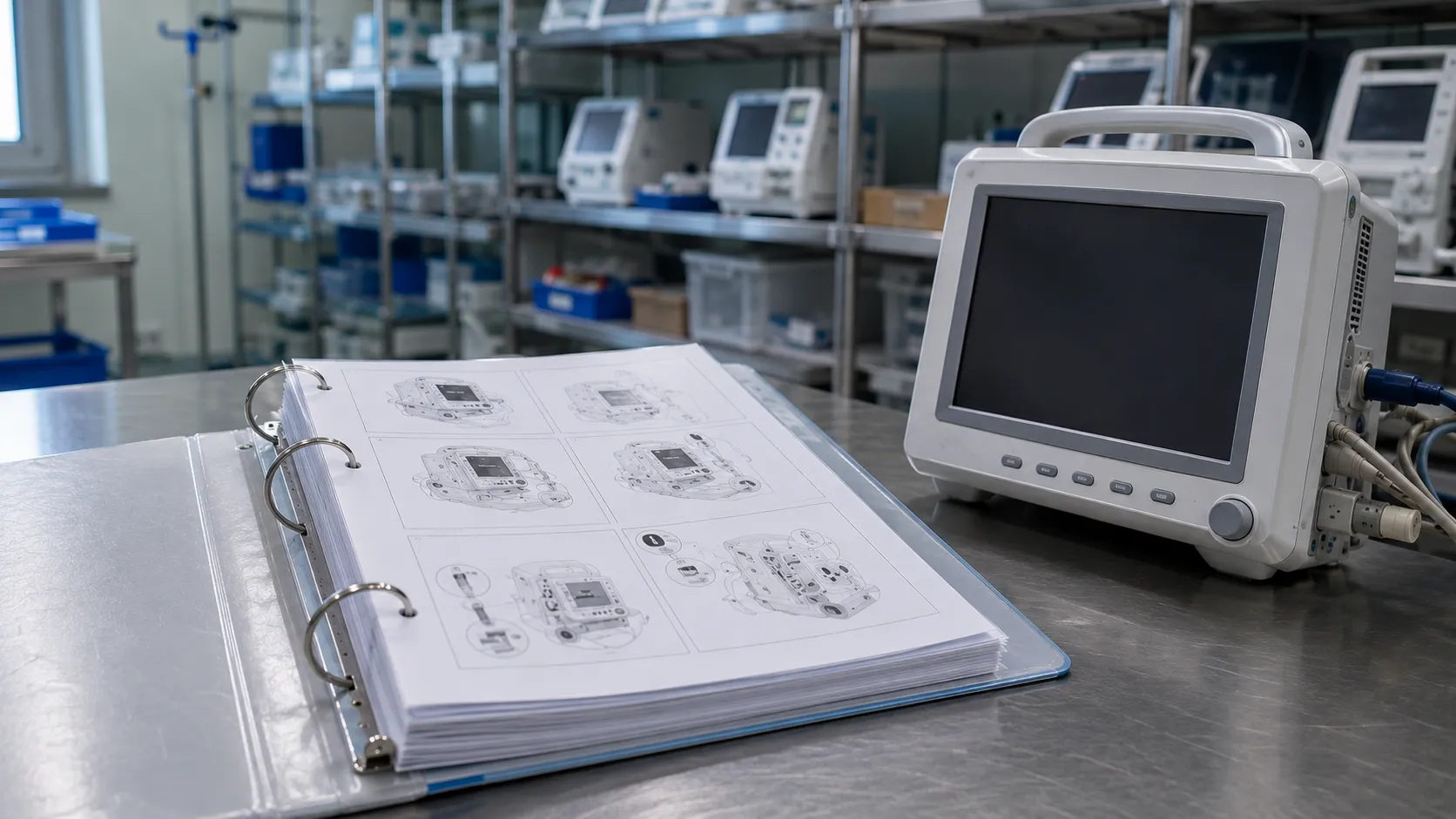
A medical equipment user manual should provide clear instructions for safe operation, routine checks, cleaning, accessories, alarms and basic troubleshooting. An incomplete or incorrect manual can create training gaps, operating errors and confusion during equipment faults.
For hospital buyers and clinical teams reviewing medical equipment, the user manual should be assessed before final acceptance. The document must match the delivered manufacturer, model, configuration, accessories and software version.
Clinical users understand daily workflows, while biomedical engineers can assess technical instructions and maintenance requirements. Infection control, digital, and procurement teams may also need to review relevant sections.
A structured manual review helps hospitals identify missing information, confirm staff training needs, and prevent outdated instructions from remaining in operational areas.
Confirm the Manual Matches the Delivered Equipment
The first review should establish whether the document applies to the exact equipment received by the hospital.
Manufacturer name — Confirm that the legal manufacturer shown in the manual matches the equipment label and supplier documentation.
Equipment name — The product description should clearly identify the equipment category and intended model.
Model and variant — Check the full model number, suffix and variant. Similar models may use different controls, accessories or operating procedures.
Document reference — Record the manual number, publication reference and revision date where provided.
Serial-number applicability — Some instructions may apply only to equipment within specific serial-number ranges.
Equipment condition — For new, refurbished or demonstration equipment, confirm that the manual reflects the delivered configuration.
Software version — Connected equipment instructions should correspond to the installed operating software and interface options.
Language suitability — The manual should be available in a language understood by the intended users and technical staff.
In practice, healthcare buyers often receive a general product-family manual that does not explain the exact options fitted to their equipment.
Any differences between the document and the delivered device should be resolved before training or commissioning is completed.
Check Instructions for Different Hospital Users
Manual content should support the staff groups responsible for operating, cleaning, moving and monitoring the equipment.
Clinical operators — Instructions should explain preparation, controls, operating sequence, alarms, shutdown and routine checks.
Biomedical engineers — Technical teams may require information on service intervals, calibration, fault codes, batteries and approved accessories.
When purchasing through regulated and certified medical equipment suppliers worldwide, hospitals should request user documents that match the exact model, language and destination requirements.
Infection-control personnel — Cleaning, disinfection and reusable-accessory instructions should be clear and compatible with hospital procedures.
Facilities personnel — Fixed equipment may require information on electrical supply, ventilation, water, drainage, gases or environmental conditions.
Digital teams — Connected devices may require instructions for network configuration, access control, updates, data transfer and cybersecurity.
Portering and logistics teams — Mobile equipment manuals should explain safe movement, locking, transport, battery charging and storage.
Training coordinators — The manual should provide enough information to prepare role-based orientation and competency checks.
Department managers — Managers should understand restrictions, storage requirements and escalation procedures for equipment faults.
Experienced clinical supply managers typically review the manual with representatives from each relevant department rather than assigning the task solely to procurement.
Assess Safety, Operation and Troubleshooting Content
The manual should describe routine operation and explain the actions required when equipment does not perform as expected.
Intended use — Confirm that the stated purpose matches the hospital’s planned application.
Operating limitations — Review patient, workload, environmental or accessory restrictions relevant to the equipment.
Safety warnings — Check electrical, mechanical, thermal, radiation, chemical, biological and other applicable warnings.
Pre-use checks — The manual should identify visual, functional, battery, cable and accessory checks required before operation.
Operating sequence — Instructions should follow a logical order from preparation and setup through use and shutdown.
Controls and displays — Buttons, menus, indicators and displayed symbols should match the actual device.
Alarm information — Review alarm meanings, priorities, user responses and conditions requiring technical escalation.
Emergency actions — Staff should understand how to stop, isolate or safely remove equipment from operation when necessary.
Troubleshooting guidance — Fault tables should explain common symptoms, probable causes and actions permitted for users.
Escalation limits — The manual should identify faults that require assistance from biomedical, supplier, or manufacturer personnel.
Storage instructions — Review suitable temperature, humidity, battery and transport conditions.
Prohibited actions — The document should clearly identify unsuitable accessories, modifications, cleaning methods or operating environments.
One aspect that surprises first-time buyers is that troubleshooting sections may describe error codes for software versions not installed on the delivered device.
Operational instructions should be tested during commissioning to confirm that they correspond with actual equipment behaviour.
Verify Supplier, Accessory and Commercial Information
The user manual should remain consistent with the configuration and support commitments included in the supplier’s quotation.
Included accessories — Compare listed cables, probes, sensors, batteries, trolleys and modules with the delivered package.
Compatible accessories — Record manufacturer references for approved optional and replacement components.
Consumables — Confirm ordering references, storage conditions, replacement frequency and approved alternatives where stated.
Accuracy of published information — Medical equipment companies advertising products to healthcare buyers should ensure that manual content and product claims correspond with the offered configuration.
Warranty conditions — Check whether user actions, cleaning methods, accessories or unauthorised repairs could affect warranty coverage.
Service contacts — The hospital should receive suitable supplier, manufacturer, and technical support contact details.
Spare-parts information — User documents may identify replaceable batteries, filters, fuses and other routine components.
Installation limitations — Review restrictions relating to room conditions, electrical connections, networks or utilities.
Training commitments — Compare the manual’s complexity with the clinical and technical training included in the quotation.
Document delivery format — Confirm whether printed, digital or electronic instructions are supplied and how updates will be communicated.
Healthcare organisations managing repeat purchases may benefit from structured international medical equipment documentation and supply partnerships.
Each equipment model should still receive its own manual review because accessories, software and operating requirements may vary.
Review Cleaning, Maintenance and Software Instructions
Hospitals should confirm that user-level care instructions are practical and compatible with internal procedures.
Routine cleaning — The manual should describe surfaces, accessories and parts that require regular cleaning.
Approved cleaning agents — Check permitted products, concentrations, contact times and application methods where stated.
Prohibited products — Identify chemicals or methods that could damage plastics, seals, displays or electronic components.
Preparation before cleaning — Instructions may require shutdown, disconnection, cooling, battery removal or accessory separation.
Reusable accessories — Review cleaning, disinfection, inspection and replacement guidance for reusable components.
User maintenance — Confirm which checks, adjustments or simple replacements may be completed by clinical staff.
Technical maintenance — Identify servicing, inspection, calibration and battery requirements assigned to qualified personnel.
Maintenance frequency — Review time-based, usage-based or condition-based intervals stated by the manufacturer.
Software updates — Record the process for updates, approvals, backups and configuration checks.
User access — Connected systems should explain account roles, passwords and restricted functions where relevant.
Data handling — Review instructions for patient data, exports, backups, deletion and equipment transfer.
Cybersecurity responsibilities — Confirm how security updates, network access and manufacturer notifications will be managed.
Hospital cleaning, maintenance and digital procedures should be compared with the manual before the equipment enters routine use.
Control Approval, Training and Document Revisions
The reviewed manual should be added to the hospital’s controlled equipment record.
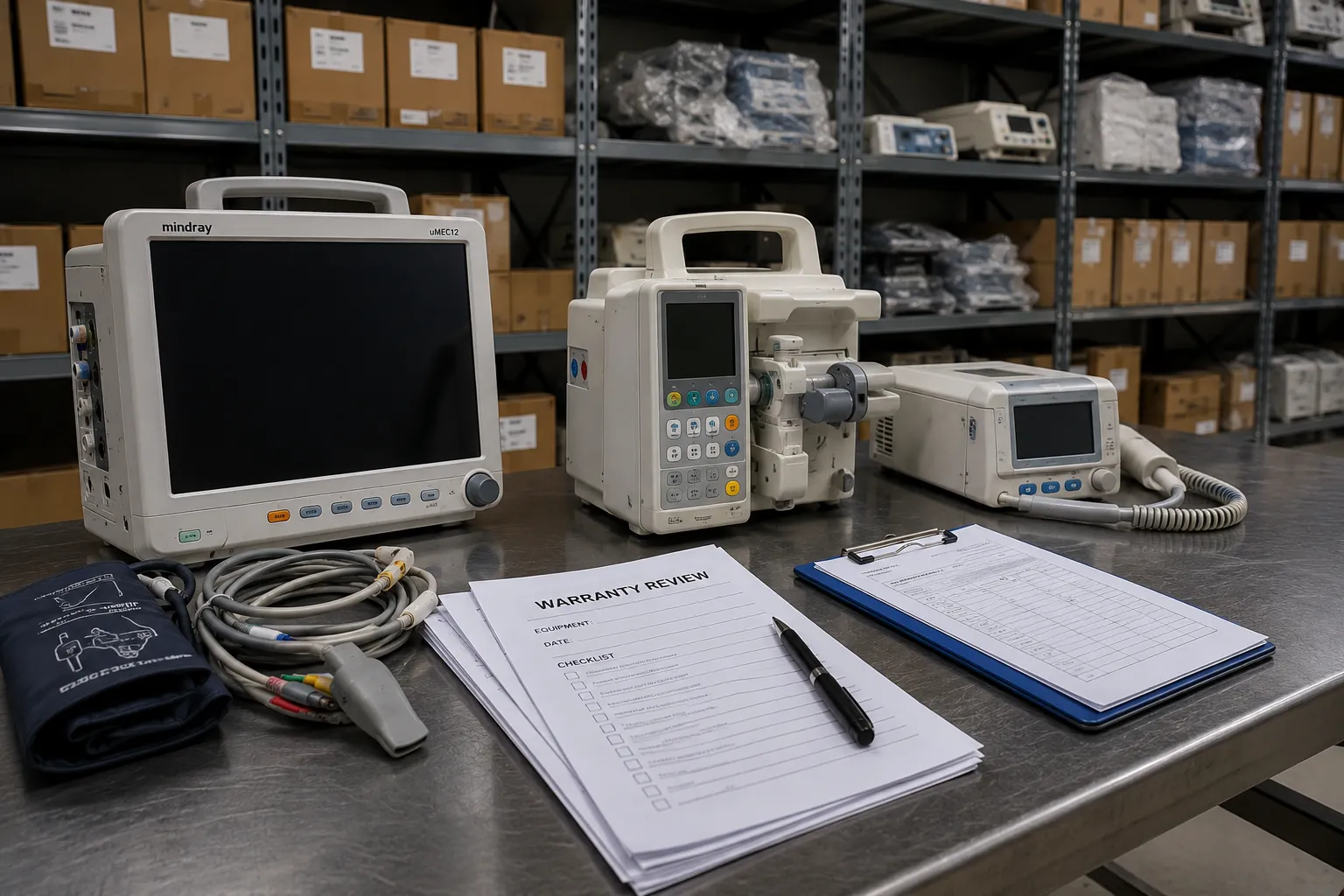
Review checklist — Use a standard checklist covering identity, safety, operation, cleaning, maintenance, software and troubleshooting.
Reviewer approval — Record the departments and individuals who assessed the document.
Missing-information log — List unclear, incomplete or conflicting instructions requiring supplier clarification.
Supplier responses — Retain written answers, corrected pages and updated manuals with the equipment record.
Training materials — Use the approved manual to prepare role-based training without replacing manufacturer instructions with unsupported content.
Competency checks — Assess whether users can perform preparation, operation, alarm response, shutdown and routine care.
Accessible copies — Ensure staff can access the current manual near the equipment or through an approved digital system.
Revision control — Record the current version and remove or clearly mark obsolete copies.
Manufacturer updates — Establish how safety notices, software revisions and corrected instructions will be received and distributed.
Periodic review — Reassess the manual after software updates, accessory changes, recurring user errors or equipment transfer.
Decommissioning records — Retain the final approved manual with the equipment history after withdrawal where required.
Healthcare teams seeking equipment documentation, product clarification, or international sourcing support can contact the Medigear.uk team for assistance with medical equipment. Enquiries should include the manufacturer, model, software version, required quantity and destination.
Final acceptance should confirm that the manual is accurate, accessible and suitable for training and operational use.
Final thoughts
Medical equipment user manual review helps hospitals confirm that the operating instructions match the device received and how it will be used.
Healthcare teams should check the manufacturer, model, software, accessories, safety warnings, cleaning instructions and troubleshooting guidance. Clinical, biomedical, infection-control and digital representatives may all contribute to the review.
Missing or conflicting information should be resolved before commissioning and staff training are completed.
A controlled manual review process supports safer operation, stronger documentation, and clearer equipment responsibilities throughout the asset lifecycle.
Disclaimer
Medigear.uk is a global medical equipment supplier, exporter, and distributor. The content published on this site is intended for educational and product awareness purposes only. Nothing on this page constitutes medical advice, clinical guidance, or treatment recommendations. All healthcare procurement and clinical decisions should be made by qualified medical professionals and compliant procurement teams operating within the regulatory frameworks of their respective countries.