Medical equipment documentation provides the evidence needed to show what was specified, purchased, delivered, installed and maintained. When records are incomplete, healthcare teams may struggle to confirm warranty coverage, servicing history, equipment configuration or responsibility for unresolved technical issues.
For healthcare buyers organising medical equipment procurement, documentation requirements should be defined before requesting quotations. Suppliers should understand which technical, commercial, compliance, installation and support records must be provided with the equipment.
Clinical departments, biomedical engineers, procurement teams, facilities personnel, finance managers and digital specialists may each hold different parts of the equipment file. A controlled system should link these records to a single asset number, model, and serial number.
A structured documentation process helps healthcare organisations improve traceability, prepare for audits, manage warranties and make better maintenance and replacement decisions.
Establish a Controlled Documentation Framework
Healthcare organisations should define how medical equipment records will be created, approved, stored and updated.
Documentation owner — Assign a department to control the official equipment record. Biomedical engineering, procurement or healthcare technology teams may manage different document groups.
Asset-based filing — Connect documents to a unique asset number, manufacturer, model and serial number so that records cannot be confused with similar equipment.
Document categories — Separate procurement, delivery, installation, maintenance, training, software and decommissioning records while keeping them linked.
Approved templates — Use consistent forms for inspections, acceptance, servicing, training and corrective actions.
Version control — Record document dates, revisions and approval status. Outdated manuals or specifications should not be treated as current records.
Access control — Define which teams may view, upload, edit or approve equipment information.
Storage location — Use a controlled digital system, a physical file structure, or an approved combination of both.
Retention period — Establish how long records should remain available in accordance with hospital policy and applicable local regulatory standards.
In practice, healthcare teams often find that important equipment files are divided among personal email accounts, departmental folders, and paper records.
A central documentation framework improves retrieval and reduces the risk of conflicting information.
Adapt Documentation to Different Healthcare Settings
The types and volumes of equipment records may vary according to facility size, clinical services, and internal resources.
Large teaching hospitals — These organisations may require central document systems linked to asset management, maintenance and procurement platforms.
District and regional hospitals — Clear filing responsibilities are important where technical records are shared between local staff and external service providers.
When purchasing through regulated and certified equipment suppliers worldwide, healthcare teams should request documents that match the exact product, condition, configuration and destination.
Community clinics — Smaller facilities may use simpler filing systems, but each device should still have identifiable procurement, warranty and maintenance records.
Laboratories and diagnostic centres — Documentation may include analyser configurations, calibration materials, quality-control information, reagents and software interfaces.
Surgical and critical care departments — High-risk equipment may require stronger controls over maintenance, calibration, training, and operational release records.
Mobile healthcare services — Portable equipment files may include assigned teams, vehicle locations, batteries, chargers, and transport case information.
New hospital projects — Documentation schedules should align with equipment delivery, room preparation, installation, commissioning and operational handover.
Multi-facility healthcare groups — Common naming rules and document templates can support consistent records across different locations.
Experienced clinical supply managers typically standardise core documents while allowing category-specific technical information where necessary.
Build Complete Technical and Operational Records
The equipment file should contain sufficient information to correctly identify, operate, maintain, and support the asset.
Approved technical specification — Retain the final requirements used to compare supplier proposals and approve the purchase.
Manufacturer information — Record the legal manufacturer, exact model, variant and product description.
Serial and asset numbers — These identifiers should appear consistently across delivery, service, warranty and commissioning documents.
Product condition — State whether the equipment is new, refurbished, demonstration, used or reconditioned.
Applicable compliance records — Retain documentation required under applicable local regulatory standards and, where relevant, standards such as CE, FDA or their regional equivalents.
User manuals — Operating instructions should correspond to the exact delivered model, software and configuration.
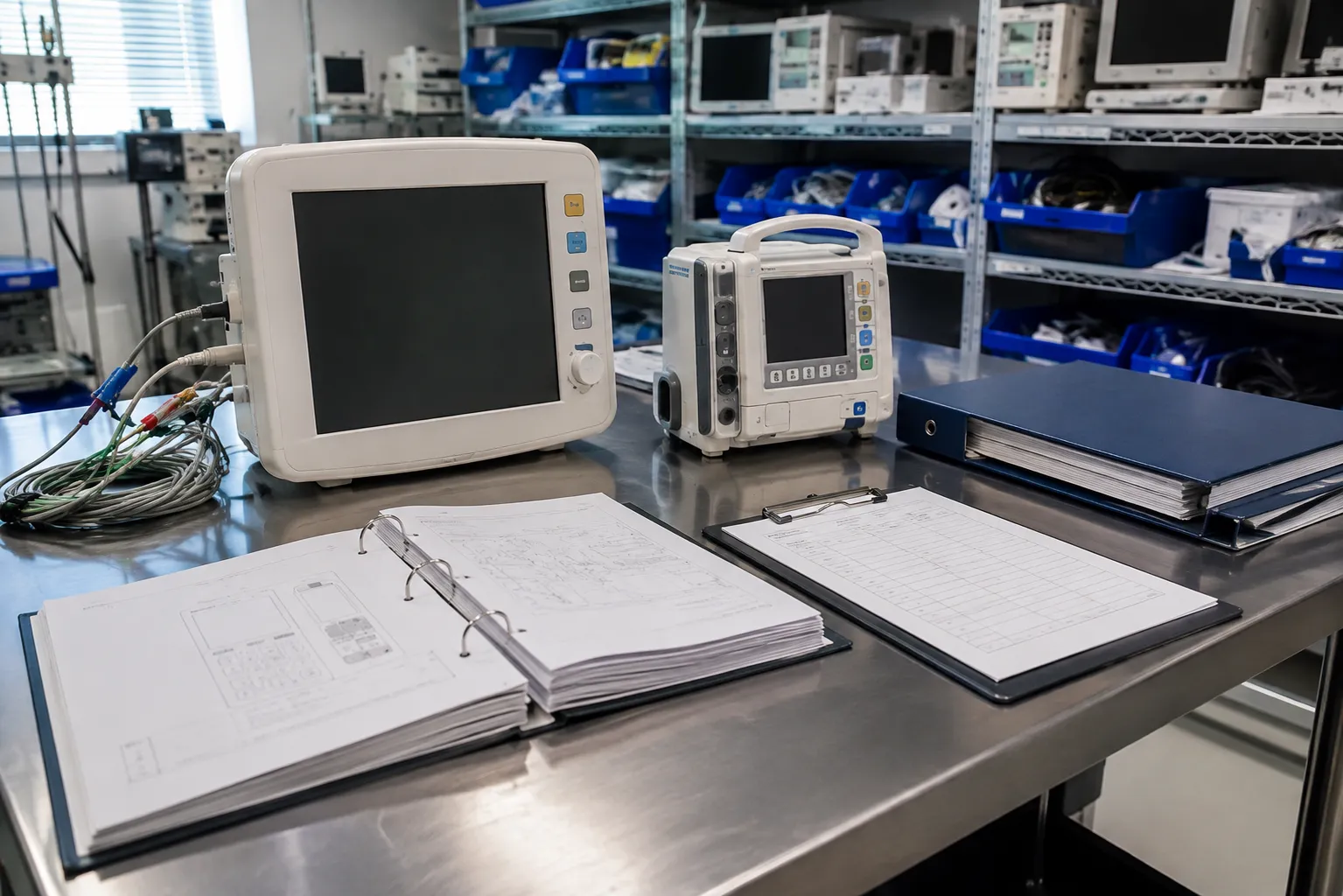
Technical manuals — Where available and permitted, service teams should have access to maintenance instructions, parts information and approved technical procedures.
Software documentation — Record versions, licences, interfaces, update responsibilities and cybersecurity support.
Accessory records — List probes, cables, batteries, modules, trolleys and other components supplied with the main equipment.
Consumable information — Record approved consumables, ordering references, storage requirements and replacement intervals.
Infrastructure requirements — Retain information covering electrical supply, network connections, water, drainage, gases, ventilation and environmental conditions.
Risk and acceptance criteria — Document the checks required before the equipment can be released for use.
One aspect that surprises first-time buyers is that a product brochure rarely contains enough detail to support installation, maintenance and long-term asset control.
Technical records should describe the equipment actually delivered, not just the product family.
Verify Supplier and Commercial Documentation
Commercial files should show what the supplier committed to provide and how the healthcare organisation approved the purchase.
Supplier identity — Record the legal business name, address, contact details, manufacturer relationship and payment information.
Formal quotation — The quotation should identify the manufacturer, model, condition, quantity, accessories and included services.
Accuracy of published information — Medical equipment companies advertising solutions to healthcare buyers should ensure that product, warranty and support claims match their formal proposals.
Quotation revisions — Retain the final approved revision and clearly identify superseded versions.
Purchase order — Confirm that the order matches the approved technical and commercial offer.
Payment records — Link invoices and payment milestones to agreed delivery, installation or acceptance stages.
Delivery terms — Document responsibility for packaging, freight, insurance, customs, unloading and positioning.
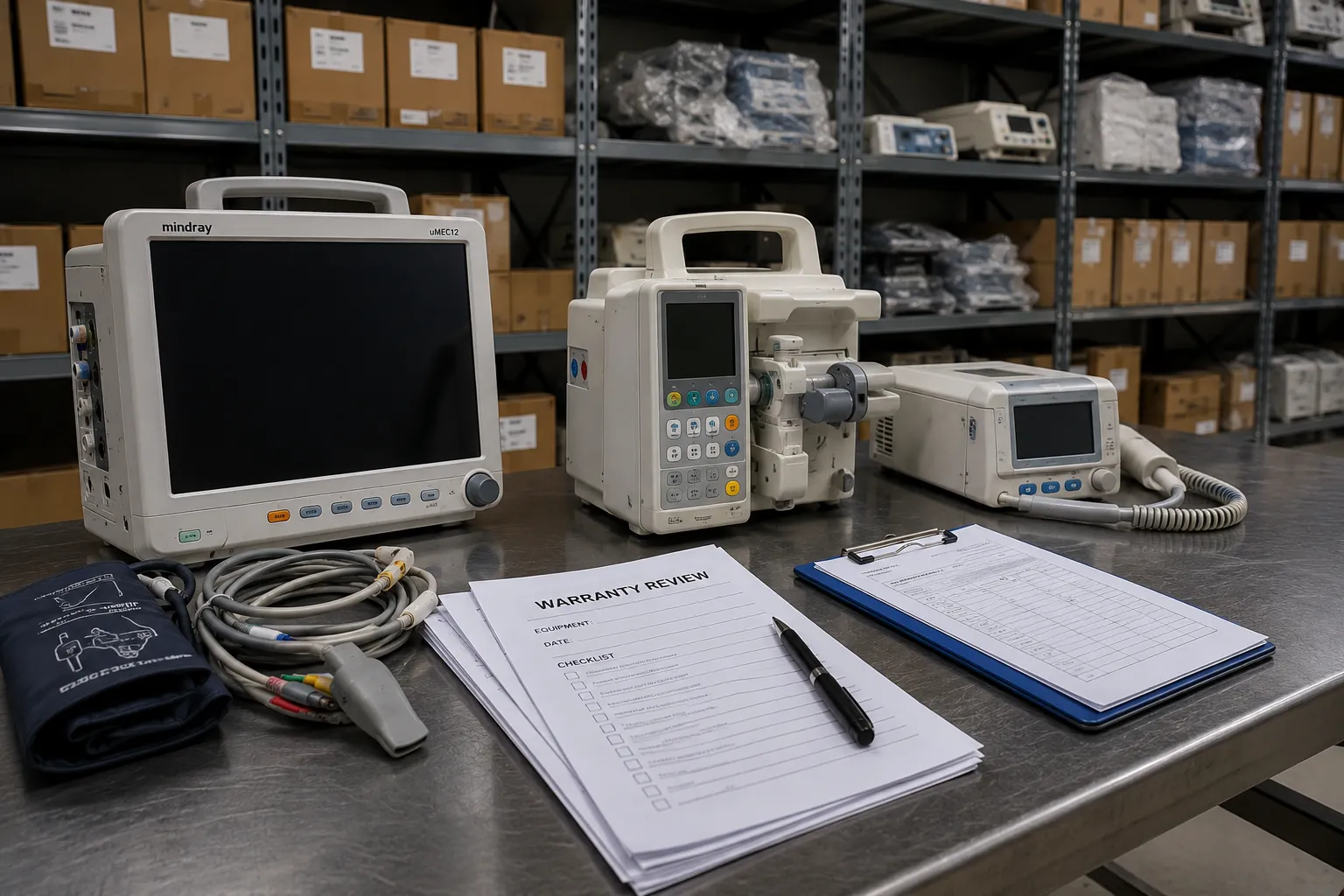
Warranty terms — Retain the activation date, coverage, exclusions, response times and claim process.
Training commitment — Record included sessions, participant numbers, trainer responsibilities and supporting materials.
Service support — Document preventive maintenance, repair response, spare-parts access and software commitments.
Commercial changes — Variations involving models, accessories, delivery dates or pricing should receive written approval.
Healthcare organisations managing recurring or multi-site projects may benefit from structured international medical equipment sourcing partnerships.
Each order should still retain its own quotation, purchase approval, delivery evidence and support terms.
Maintain Records Through Installation and Service
Documentation should continue after the equipment arrives and is put into operational use.
Delivery inspection — Record package condition, quantities, serial numbers, accessories and visible discrepancies.
Installation report — Document equipment assembly, positioning, utility connections, configuration and engineer details.
Commissioning report — Retain functional tests, safety checks, calibration results and final acceptance approval.
Training records — Record the equipment model, trainer, participants, date, subjects covered and outstanding follow-up needs.
Preventive maintenance records — Service reports should show inspection dates, findings, work completed and the next due date.
Corrective repair records — Document faults, diagnosis, parts used, technician details, downtime and return-to-service approval.
Calibration certificates — Certificates should identify the equipment, test result, date and next due date where applicable.
Software-change records — Record updates, licence changes, interface modifications and cybersecurity actions.
Warranty claims — Retain fault reports, supplier responses, replacement parts, repair outcomes and claim references.
Supplier-performance records — Monitor response times, engineer attendance, parts delivery and unresolved actions.
Transfer documentation — Update location and responsibility when equipment moves between departments or facilities.
Restriction notices — Equipment removed from operation should have a recorded reason, status and corrective action.
Maintenance and operational records provide evidence of how the asset has performed throughout its working life.
Control International Files and Final Approval
International sourcing and final project closure may require additional documentation controls.
Shipping documents — Review commercial invoices, packing lists, freight documents and equipment descriptions for consistency.
Serial-number records — Confirm that shipping and delivery documents identify the equipment received where serial-number reporting is required.
Export packaging evidence — Sensitive equipment may require records covering protective packaging, moisture control or transport indicators.
Customs documentation — Product descriptions, quantities and origin information should remain consistent across the shipment file.
International warranty support — Document responsibility for repair freight, customs, engineer travel and replacement delivery.
Local installation approval — Confirm whether equipment requires installation or commissioning by an authorised engineer.
Destination documentation — Ensure that the required product and commercial records are appropriate for the final healthcare location.
Final document index — Prepare a list of all required documents, their status, and storage locations.
Missing-document actions — Assign responsibility and completion dates for unresolved files before operational acceptance.
Final approval — Clinical, technical and procurement representatives should confirm that required records are complete before project closure.
Lifecycle transfer — Move the approved equipment file from procurement into the hospital’s asset, maintenance and replacement systems.
Healthcare teams seeking equipment quotations, documentation support or international sourcing assistance can contact the Medigear.uk team for medical equipment support. Enquiries should include the equipment category, manufacturer, model, quantity, condition and destination.
Final approval should confirm that both the physical equipment and its supporting documentation are complete.
Final thoughts
Medical equipment documentation supports procurement, installation, maintenance, audits and lifecycle planning.
Healthcare teams should establish controlled document categories, consistent naming rules, and clear ownership before purchasing equipment. Technical, commercial and supplier records should refer to the exact model and delivered configuration.
Delivery, commissioning, training, and maintenance documents should remain linked to the equipment asset and its serial numbers throughout its operation.
A structured documentation system provides healthcare organisations with stronger traceability, faster access to evidence, and clearer information for service and replacement decisions.
Disclaimer
Medigear.uk is a global medical equipment supplier, exporter, and distributor. The content published on this site is intended for educational and product awareness purposes only. Nothing on this page constitutes medical advice, clinical guidance, or treatment recommendations. All healthcare procurement and clinical decisions should be made by qualified medical professionals and compliant procurement teams operating within the regulatory frameworks of their respective countries.