Medical equipment can only deliver reliable operational value when staff understand how to set it up, use it, clean it and respond to alarms or faults. Training that is rushed, poorly attended or limited to a general demonstration may leave important competency gaps after installation.
For healthcare buyers planning medical equipment implementation, training requirements should be defined during procurement rather than arranged after delivery. The purchase documents should identify the users, the training format, the supplier responsibilities, the expected learning outcomes, and the records required before the operational handover.
Clinical users and biomedical engineers usually need different levels of instruction. Department managers, facilities personnel, digital teams and infection-control representatives may also require role-specific information for specialised systems.
A structured medical equipment training plan helps healthcare organisations prepare staff, document competency and maintain safe, consistent operating practices throughout the equipment’s service life.
Define Training Objectives for Each Equipment Category
Training should be based on the exact equipment, configuration and intended workflow rather than a generic product presentation.
Clinical operating objectives — Identify what users must be able to do after training. This may include starting the equipment, selecting operating modes, confirming patient information and completing routine shutdown procedures.
Alarm and warning management — Users should understand audible and visual alarms, warning messages, response priorities and escalation routes.
Patient and accessory preparation — Training should cover the correct probes, sensors, cables, consumables, and patient-use accessories, where applicable.
Cleaning and decontamination — Staff should receive model-specific instructions covering approved cleaning products, contact times and components that must not be immersed or exposed to liquid.
Routine user checks — Clinical teams should understand the visual, functional and battery checks required before operation.
Basic fault reporting — Users should know which issues can be resolved through approved operating steps and which problems require technical support.
Emergency procedures — Training should explain safe shutdown, power failure, battery operation and removal from service where relevant.
Documentation requirements — Departments should understand how to record checks, faults, cleaning and equipment incidents.
In practice, healthcare teams often find that supplier demonstrations focus on advanced functions while basic daily operating tasks receive insufficient attention.
Match Training to Clinical Roles and Healthcare Settings
The same training session may not meet the needs of every participant. Content should reflect staff responsibilities, experience and the operating environment.
Primary clinical users — Staff using the equipment regularly require practical instruction on setup, operation, alarms, cleaning and routine checks.
Occasional users — Personnel who use equipment infrequently may require simpler reference materials and more regular refresher sessions.
Biomedical engineering teams — Technical staff may need maintenance, calibration, diagnostics, software, and spare parts information.
When working with verified international medical equipment suppliers, healthcare teams should confirm whether separate clinical and technical training packages are available.
Department managers — Supervisors may need information about competency records, authorised users, incident escalation and refresher requirements.
Large and teaching hospitals — Training may need to cover several shifts, departments and user groups. A train-the-trainer programme can support wider implementation.
District and regional hospitals — Facilities with limited technical support may require training in fault identification and remote support.
Community clinics — Smaller teams may need concise, practical sessions covering daily operation and straightforward maintenance arrangements.
Laboratories and diagnostic centres — Training may include calibration, reagents, quality-control procedures, data management and equipment shutdown.
Critical care and surgical departments — Users may require scenario-based instruction covering alarms, emergency operation and rapid equipment checks.
The training plan should reflect actual users and workflows rather than the number of people who can attend one supplier session.
Build a Structured Medical Equipment Training Plan
A written training plan helps the healthcare facility coordinate participants, rooms, equipment access and documentation.
Training scope — List the equipment models, modules, accessories and software included. Training should use the final installed configuration.
Participant list — Identify clinical users, technical staff, supervisors and support personnel who must attend.
Learning outcomes — Describe what each participant group should be able to demonstrate after the session.
Training format — Select classroom instruction, practical demonstration, supervised operation, simulation, online learning or a blended approach.
Training schedule — Sessions should be planned around shift patterns, clinical activity and equipment availability.
Class size — Practical groups should be small enough for participants to see, ask questions and operate the equipment.
Training location — Where possible, instruction should take place in the actual clinical environment using the installed equipment.
Materials required — Prepare manuals, quick-reference guides, checklists, videos and competency forms.
Language needs — Training and supporting documents should be understandable to the intended users.
Assessment method — Decide whether competency will be confirmed through observation, questions, practical demonstrations or supervised use.
Repeat sessions — Allow additional sessions for night staff, new starters and employees who could not attend the original training.
A written plan also helps the project team identify training gaps before commissioning and operational release.
Coordinate Supplier Training and Commercial Responsibilities
Supplier-led training should be clearly defined in the quotation, purchase order, or contract.
Training inclusions — Confirm the number of sessions, duration, location, participant limits and materials included in the equipment price.
Trainer qualifications — The supplier should provide a trainer with sufficient knowledge of the specific model and clinical application.
Installed configuration — Training should reflect the software, accessories and options delivered to the healthcare facility.
Product information accuracy — Medical equipment companies advertising solutions to healthcare buyers should ensure that training claims match the services included in the formal quotation.
Travel and accommodation — For international or remote locations, clarify responsibility for the trainer's travel, accommodation, local transport, and permits.
Additional training costs — The quotation should state the price of extra sessions, repeat visits or training for new staff.
Training materials — Confirm whether manuals, digital resources, quick guides and competency tools will be supplied.
Remote training arrangements — Online sessions should include suitable demonstrations, secure access and opportunities for questions.
Training completion conditions — Final acceptance should not be signed when required training remains incomplete.
Healthcare organisations managing repeat installations may benefit from collaborative international equipment training and supply partnerships. Each equipment project should still define its own learning objectives, participant groups and acceptance criteria.
Supplier training should support the hospital’s competency process rather than replace its internal responsibility for authorising users.
Deliver Practical Training and Assess Competency
Attendance alone does not confirm that a participant can operate equipment correctly.
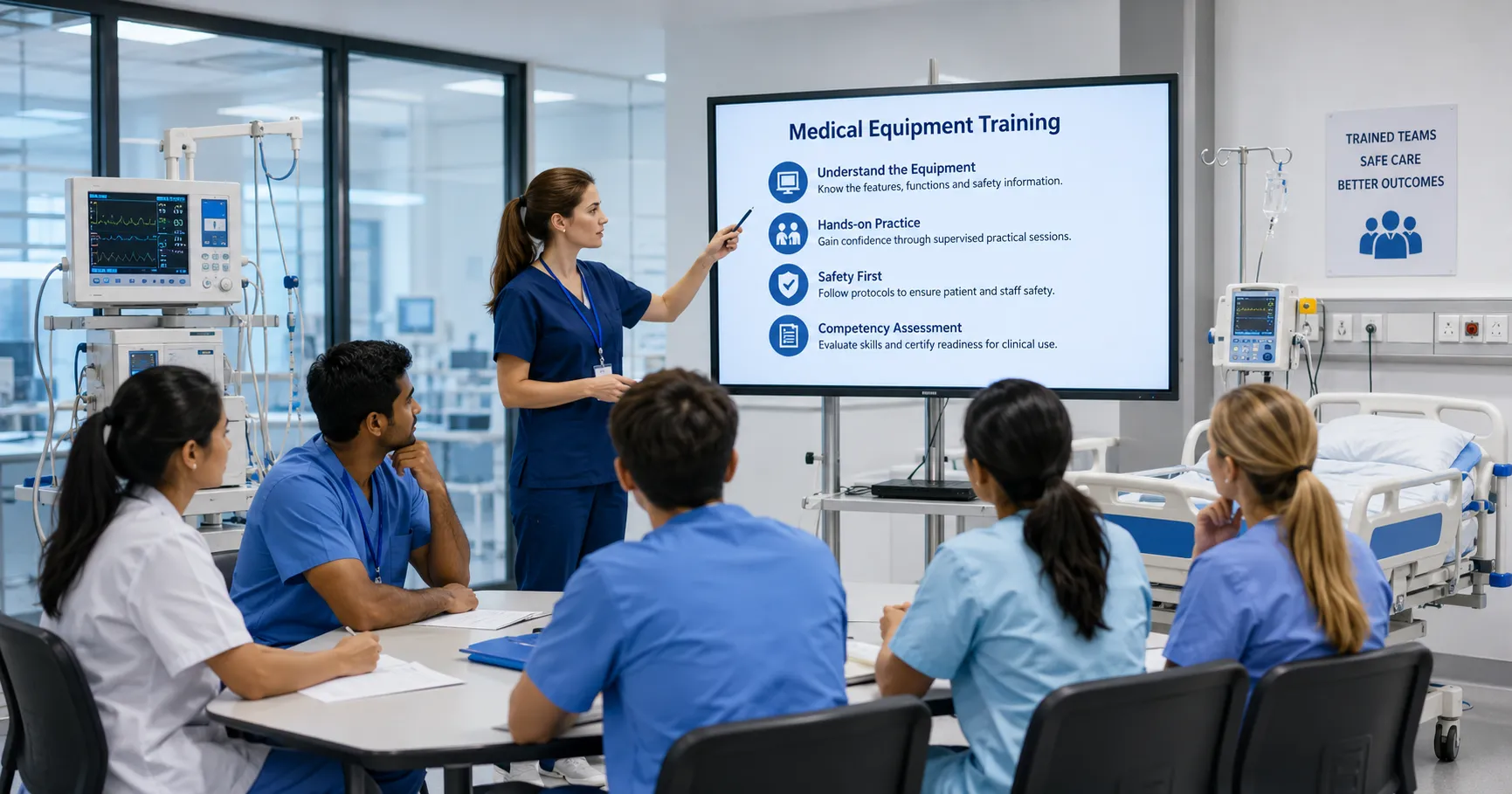
Begin with essential information — explain equipment use, approved uses,iusesn components, and user responsibilities.
Demonstrate complete workflows — Training should follow realistic steps from setup and pre-use checks through operation, cleaning and shutdown.
Allow hands-on practice — Participants should operate controls, connect accessories and respond to normal alarms under supervision.
Use realistic scenarios — Scenario-based learning can help users practise common workflows, warnings and equipment faults.
Assess individual competency — Each participant should demonstrate competence in the tasks relevant to their role rather than relying solely on group attendance.
Record assessment outcomes — Use pass, further practice required or reassessment needed according to the facility’s process.
Identify limitations — Staff should understand which adjustments or repairs they are not authorised to complete.
Provide quick-reference materials — concise guides that support routine setup, cleaning, and fault escalation after training.
Collect participant feedback — Feedback can identify unclear instructions, missing materials or areas requiring further explanation.
Restrict untrained use — Departments should control access where equipment requires formal user authorisation.
Experienced clinical educators typically combine demonstrations with supervised practice because users retain more when they perform the required tasks themselves.
Maintain Training Records and Ongoing Competency
Training should continue after the initial installation and commissioning period.
Attendance records — Record participant names, roles, departments, dates and trainer details.
Competency results — Retain assessment outcomes and any actions required before authorisation.
Training materials — Keep copies of presentations, manuals, checklists and digital resources used during the session.
Equipment identification — Records should show the manufacturer, model and software version covered by the training.
New staff onboarding — Departments should have a process for training employees who join after the original supplier sessions.
Refresher training — Repeat instruction may be required after incidents, competency gaps or long periods without equipment use.
Software and configuration changes — Updates, new accessories or workflow changes may require additional instruction.
Incident review — Equipment-related incidents can reveal training needs even when no technical fault is found.
Trainer development — Internal trainers should maintain their knowledge and receive updates when equipment changes.
Audit readiness — Training records should be accessible for internal reviews, supplier discussions and applicable regulatory inspections.
Healthcare teams requiring equipment sourcing, supplier-led training or implementation coordination can contact the Medigear.uk team for medical equipment support. Enquiries should include the equipment category, model, quantity, destination and required clinical or technical training.
Ongoing competency monitoring helps the facility maintain consistent practices after initial supplier support ends.
Final thoughts
Medical equipment training should be planned alongside procurement, installation and commissioning rather than treated as a final supplier demonstration.
Healthcare teams should define role-based learning objectives, practical training requirements and competency-assessment methods before equipment enters service.
Clinical users, biomedical engineers and managers require different levels of information. Training records, refresher sessions and new-starter arrangements should therefore form part of the equipment’s ongoing lifecycle plan.
A structured training programme helps healthcare organisations develop confident users, improve equipment consistency and maintain clearer operational accountability.
Disclaimer
Medigear.uk is a global medical equipment supplier, exporter, and distributor. The content published on this site is intended for educational and product awareness purposes only. Nothing on this page constitutes medical advice, clinical guidance, or treatment recommendations. All healthcare procurement and clinical decisions should be made by qualified medical professionals and compliant procurement teams operating within the regulatory frameworks of their respective countries.