
Medical equipment can appear suitable during a demonstration, even while its written operating instructions are incomplete, outdated, or difficult to understand. Important details about alarms, accessories, cleaning, maintenance or operating limitations may only become clear when the complete user manual is examined.
For hospital equipment buyers and healthcare managers, reviewing the user manual before purchase helps confirm whether the proposed device can be operated, cleaned and maintained within the facility’s actual working environment. The manual should cover the exact manufacturer, model, configuration and software version being offered.
A user manual should not be collected only for filing after delivery. It supports safe operation, staff training, troubleshooting, cleaning, maintenance and long-term equipment management.
Documentation requirements vary according to product complexity, intended use and applicable local regulatory standards. This guide explains how hospital buyers can review equipment manuals before purchase and identify documentation gaps that may affect clinical use or after-sales support.
Why Buyers Should Review Manuals Before Purchase
A user manual translates product specifications into practical operating instructions. It allows hospital teams to understand how the device should be prepared, used and managed during routine clinical work.
Intended clinical use — The manual should define the equipment’s purpose, intended users, patient groups and operating environment. This information should match the hospital’s planned application.
In practice, hospital buyers often find that promotional descriptions suggest more uses than the manufacturer’s formal instructions support.
Operating sequence — Setup, startup, patient connection, routine operation and shutdown should be presented in a clear order. Buyers should consider whether staff can follow the process during routine and urgent situations.
Safety warnings — The manual should identify foreseeable risks, prohibited actions and conditions requiring additional precautions. Important warnings should be clear, visible and easy to locate.
Alarm information — Equipment with alarms should explain alarm priorities, meanings, adjustable limits and recommended responses. Buyers should confirm that the alarm system is appropriate for the proposed clinical environment.
User responsibilities — The document should separate tasks that trained users can perform from work requiring authorised technical personnel. This reduces the risk of inappropriate adjustment or repair.
Product limitations — Environmental, patient-related and performance restrictions can affect suitability. A device may not support every department, procedure or patient group.
A structured review allows buyers to compare formal product capabilities with the healthcare facility’s actual requirements.
Manual Requirements Across Healthcare Environments
The amount and depth of documentation required depend on equipment complexity, clinical risk and access to technical support.
Large hospitals and teaching facilities — Major hospitals may require separate operating, installation, software, and technical service documents. Connected equipment may also require cybersecurity and network integration guidance.
Documentation should support clinical users, biomedical engineers, digital teams and infection-control personnel.
District and regional hospitals — Written instructions become especially important where immediate technical support is limited. When assessing trusted international healthcare supply partners, hospital buyers should confirm that complete manuals will be supplied before installation.
Experienced healthcare managers typically prefer documentation that supports basic troubleshooting while clearly identifying tasks that require professional servicing.
Community clinics and outpatient centres — Smaller facilities may need clear instructions that a limited number of staff can follow. Complicated procedures can create continuity problems when trained users are unavailable.
Diagnostic and laboratory facilities — Manuals may need to cover calibration, quality control, reagents, software, sample handling and result management. Buyers should confirm whether these instructions are supplied together or through separate controlled documents.
Surgical and critical care areas — Higher-risk equipment requires detailed information about alarms, emergency operation, backup power, accessories and cleaning procedures.
Mobile and remote healthcare services — Manuals should address battery use, transport, charging, environmental limits and storage. Instructions written only for fixed-site use may not be sufficient.
Multi-facility healthcare groups — Standardised equipment can simplify documentation and staff training. Each location should still retain the correct manual for its installed model and software version.
The depth of the review should reflect the consequences of incorrect use and the facility’s available support resources.
Technical Information the Manual Should Include
A useful manual should provide enough information for the hospital to prepare the site, operate the equipment and recognise when technical assistance is required.
Manufacturer and model identification — The document should identify the legal manufacturer, product name and model range. Buyers should confirm that the offered configuration is covered.
Document revision status — The manual should carry a revision number or publication date. The supplier should confirm that it is the current approved version for the proposed equipment.
Installation requirements — Electrical power, ventilation, water, drainage, medical gases, network access and environmental limits should be stated where relevant.
These requirements should be compared with the proposed installation area before purchase approval.
Accessory compatibility — The manual should identify approved probes, cables, batteries, sensors, mounts and reusable components. Similar-looking accessories should not be accepted without verified compatibility.
Performance limits — Measurement ranges, capacity, accuracy and operating restrictions should support the hospital’s clinical needs.
Software requirements — Connected equipment may require specific software versions, licences, access controls and update procedures. Buyers should confirm which instructions apply to the installed version.
Cleaning compatibility — The manual should identify permitted cleaning agents, application methods and fluid restrictions. Infection-control representatives should review these instructions.
Storage conditions — Temperature, humidity, battery and long-term storage requirements may affect delivery and equipment readiness.
Manual information should remain consistent with quotations, product labels, technical data and conformity records.
How Hospital Buyers Should Complete the Review
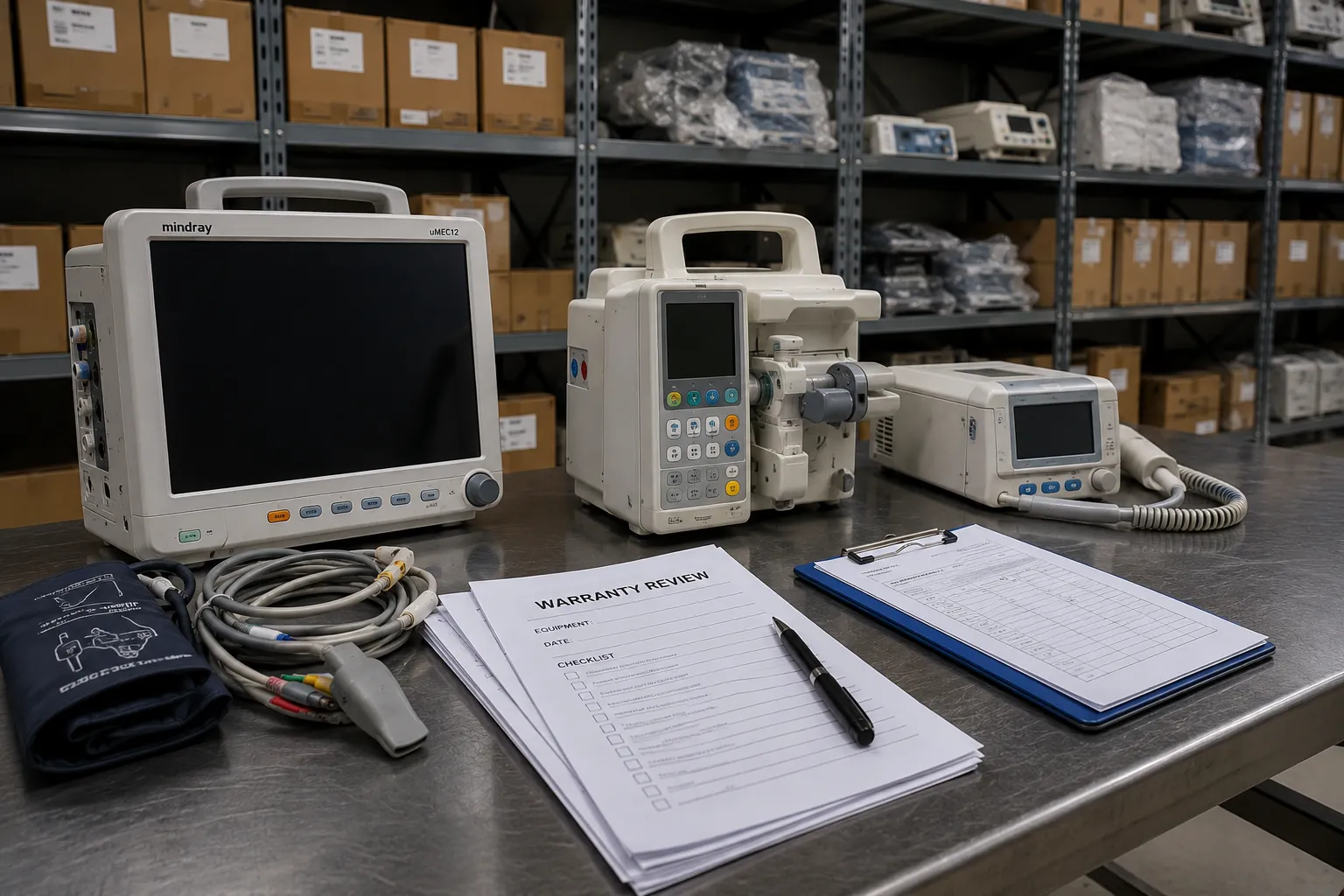
A manual review should follow a documented checklist rather than rely on a single person to read the document without defined criteria.
Request the manual before approval — Hospital buyers should receive the manual before making the purchasing decision and waiting until delivery removes the opportunity to identify unsuitable requirements early.
Compare advertising claims with formal instructions — Suppliers and manufacturers advertising to global healthcare buyers should provide accurate information about product functions, accessories and support. Buyers should verify these claims against the official manual and technical documentation.
Assign appropriate reviewers — Clinical users should assess operation and workflow. Biomedical engineers should review installation and maintenance, while infection-control representatives examine cleaning instructions.
Record missing information — Unclear warnings, absent procedures or contradictory specifications should be documented and returned to the supplier for formal clarification.
Use the manual during demonstrations — Hospital staff can follow the written instructions during a product demonstration to assess whether the procedures are complete, practical and understandable.
Check language and readability — The manual should be available in a language and format that intended users can understand. Critical safety information should not depend on informal translation.
Confirm the delivery format — Hospitals may require printed copies, searchable digital documents or both. Access should not depend entirely on an external webpage that could later become unavailable.
Healthcare groups purchasing equipment for several facilities may benefit from formal international supply chain partnerships. These arrangements should still require model-specific manuals, document revision control and complete information before acceptance.
Cleaning, Training and Maintenance Instructions
The user manual should support the complete equipment lifecycle rather than focus only on initial setup and basic operation.
Cleaning procedures — The document should explain equipment preparation, approved products, application methods, drying and return to service. Reusable accessories may require separate instructions.
Prohibited cleaning methods — Buyers should look for warnings against immersion, direct spraying, abrasive materials or unsuitable chemicals. These limitations may affect workflow and equipment selection.
Initial staff training — The manual supports learning but does not always replace practical instruction. Complex devices may require supplier-led training and formal competency assessments.
Routine user checks — Staff should know which checks must be completed before use, including cables, batteries, alarms, accessories and visible damage.
Preventive maintenance guidance — The manual should identify inspection, calibration and service intervals where relevant. Buyers should determine which tasks require authorised technicians.
Troubleshooting instructions — Basic fault codes and safe corrective actions can reduce unnecessary service requests. The document should also identify when users must stop operating the equipment.
Battery management — Charging cycles, storage conditions and replacement warnings should be clear for portable and mobile equipment.
Consumable replacement — Filters, cartridges, electrodes and other recurring items should include clear compatibility and replacement guidance.
One aspect that surprises first-time buyers is how strongly manual requirements can influence staff training, cleaning processes and recurring equipment costs.
International Supply and Document-Control Risks
International equipment purchases require additional checks to ensure that the correct documentation reaches the hospital before installation and training begin.
Manual language availability — The supplier should provide instructions in an approved and usable language. Uncontrolled translations may omit important safety or technical information.
Model-specific documents — Manuals produced for another market or configuration may contain different electrical, software, accessory or compliance information.
New and refurbished equipment — Professionally refurbished equipment should include a manual matching the exact model, installed accessories and current software version.
Electronic manual access — Digital manuals should remain available throughout the equipment lifecycle. Hospitals should retain controlled local copies rather than relying only on external access.
Import and regulatory requirements — Manuals may form part of the technical documentation needed for product registration, import approval or inspection. These requirements should be confirmed before shipping.
Revision updates — Buyers should know how new warnings, safety notices and revised instructions will be communicated after purchase.
Document retention — Manuals should be linked to equipment asset, training and maintenance records. Outdated versions should be removed from active use while remaining traceable where required.
Specialist equipment support — Hospital buyers requiring model-specific manuals, technical documentation or international supply assistance can contact the Medigear.uk team for supply support. A useful enquiry should include the equipment type, manufacturer, model, quantity and destination.
Document readiness should be confirmed before dispatch so installation, staff training and clinical acceptance are not delayed.
Final thoughts
A hospital equipment user manual should be reviewed before the purchasing decision rather than collected only after delivery. It provides essential information about intended use, operation, safety, cleaning and maintenance.
Hospital buyers should confirm that the manual matches the exact manufacturer, model, software and equipment configuration. Generic or outdated documentation can create operational, training, and technical support problems.
Clinical users, biomedical engineers, infection-control representatives and healthcare managers should contribute to the review. Questions should be resolved through formal supplier clarification and recorded within the purchasing file.
A complete, readable and controlled manual helps hospital teams operate equipment consistently and manage it effectively throughout its service life.
Disclaimer
Medigear.uk is a global medical equipment supplier, exporter, and distributor. The content published on this site is intended for educational and product awareness purposes only. Nothing on this page constitutes medical advice, clinical guidance, or treatment recommendations. All healthcare procurement and clinical decisions should be made by qualified medical professionals and compliant procurement teams operating within the regulatory frameworks of their respective countries.