Medical equipment quotations can appear comparable even when describing different configurations, performance levels, and support commitments. One supplier may include patient accessories, installation and training, while another quotes only the base device. Without a clear technical specification, buyers may compare prices that do not represent equivalent clinical packages.
For medical equipment buyers and healthcare managers, a technical specification provides a controlled statement of what the equipment must achieve, where it will operate and which compliance, installation and service requirements must be met. It provides suppliers with a consistent basis for preparing proposals and evaluation teams with clear criteria for comparison.
A specification should not simply reproduce a manufacturer’s catalogue. It should translate clinical and operational needs into measurable requirements without creating unnecessary restrictions.
This guide explains how medical buyers can prepare performance-based technical specifications, define complete configurations and evaluate supplier compliance before purchasing hospital equipment.
Why Technical Specifications Matter Before Buying
A medical equipment technical specification connects clinical requirements to the purchasing process. It helps buyers communicate what is essential without allowing unnecessary features or incomplete configurations to distort the decision.
Defined clinical purpose — The specification should explain the service, procedure, patient group and operating environment the equipment must support. This prevents suppliers from offering products that are technically capable but unsuitable for the intended workflow.
In practice, medical buyers often find that supplier proposals differ because the clinical purpose was not clearly stated at the beginning.
Comparable supplier quotations — Every supplier should respond to the same performance, configuration and support requirements. This allows buyers to identify genuine differences rather than comparing unrelated packages.
Controlled minimum requirements — The specification should define the lowest acceptable performance level without demanding excessive features. Requirements should be justified by clinical need, risk or operational workload.
Transparent evaluation criteria — Mandatory and desirable requirements should be separated. Suppliers and evaluators can then understand which conditions determine technical eligibility and which contribute additional value.
Reduced purchasing ambiguity — Clear descriptions of accessories, software, delivery and service responsibilities reduce disputes after the order has been placed.
Documented approval basis — The specification provides evidence of what the healthcare facility intended to purchase. It supports technical evaluation, contract management, delivery inspection and commissioning.
A strong specification allows competition between suitable products while protecting the facility from incomplete or unsuitable offers.
Specification Priorities Across Healthcare Environments
Medical equipment requirements should reflect the conditions in which the device will operate. A specification developed for one hospital may not suit another facility with different workloads, infrastructure or technical resources.
Large hospitals and teaching facilities — Major hospitals may require equipment that integrates with central monitoring, imaging archives, laboratory systems or electronic records. Specifications should address interoperability, data security and multi-department use.
Complex equipment may also require advanced service, training and uptime requirements.
District and regional hospitals — Regional facilities may have limited access to specialist engineers and spare parts. When requesting offers from verified global medical equipment suppliers, buyers should include realistic requirements for service coverage, remote support, and parts availability.
Experienced clinical supply managers typically strengthen support specifications where repair delays could interrupt essential services.
Community clinics and outpatient centres — Smaller facilities may prioritise compact dimensions, simple controls and manageable power requirements. Advanced functions should only be specified when they support the intended service.
Diagnostic and laboratory facilities — Specifications may need to include accuracy, throughput, sample capacity, reagents, calibration, quality controls and information-system connectivity.
The full cost per test or examination may be more useful than the price of the main equipment.
Surgical and critical care departments — Equipment requirements should cover alarms, backup power, accessories, cleaning compatibility and emergency operation. Reliability and service response may carry greater weight than optional functions.
Mobile and remote healthcare services — Specifications should address portability, battery duration, protective cases, environmental tolerance and charging options.
Multi-facility healthcare groups — Standard specifications can reduce product variation and simplify training, accessories and maintenance. Each location should still confirm that local infrastructure and clinical requirements are met.
Technical requirements should be adapted to actual operating conditions rather than copied from an unrelated project.
Technical Fields Every Specification Should Include
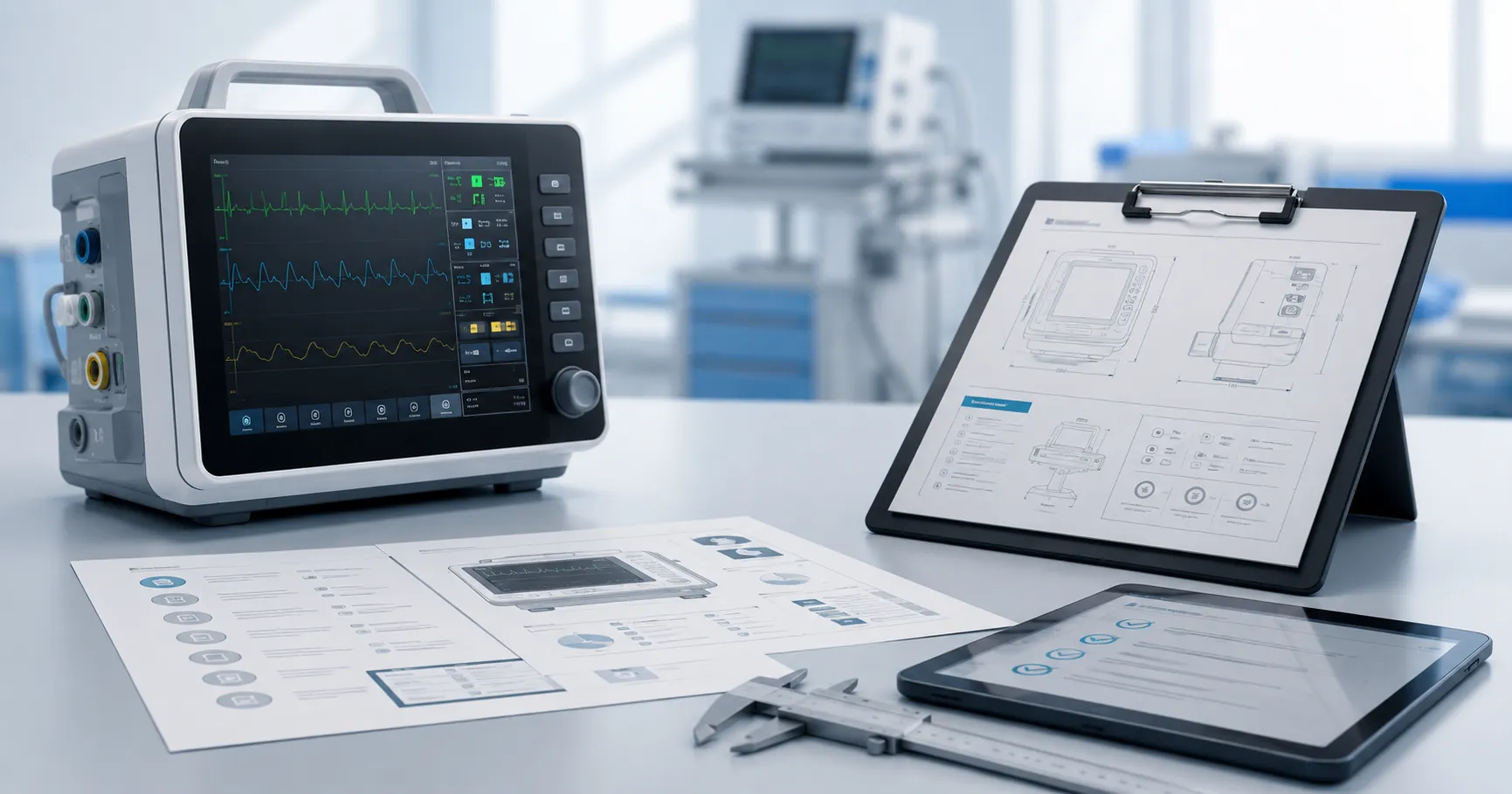
A complete technical specification should describe the equipment, clinical configuration and conditions required for successful operation.
Generic equipment description — Use a clear product description based on clinical function. Avoid wording that identifies a single manufacturer unless compatibility or an approved standardisation provides a documented reason.
Intended use and patient group — State the clinical application, intended users and relevant patient categories. This helps suppliers determine whether their proposed model is appropriate.
Performance range — Define required capacity, measurement range, accuracy, throughput or operating limits. Requirements should be measurable and connected to expected workload.
Complete accessory configuration — List probes, sensors, cables, batteries, trolleys, mounts, software modules and starter consumables separately. Wording such as “standard accessories included” does not provide enough clarity.
Electrical requirements — Specify acceptable voltage, frequency, plug type, power consumption, battery backup and protection requirements where relevant.
Physical and environmental conditions — Include dimensions, weight, mobility, temperature, humidity, ventilation and storage requirements. Equipment should fit available rooms and access routes.
Software and connectivity — Define required interfaces, data formats, network compatibility, licences, cybersecurity controls and update responsibilities.
Cleaning compatibility — State that equipment and reusable accessories must support the facility’s approved cleaning and contamination-control processes.
Regulatory documentation — Equipment should meet applicable local regulatory standards, including CE, FDA, or their regional equivalents, where relevant. Evidence should apply to the exact manufacturer and proposed model.
Installation and commissioning — Specify unloading, positioning, installation, calibration, safety testing and acceptance responsibilities.
Every technical field should help buyers determine whether the proposed equipment can be used and supported successfully.
How Medical Buyers Should Prepare and Evaluate Specifications
The specification-development process should involve clinical, technical and commercial reviewers. One department should not define the entire requirement without input from the teams responsible for using and maintaining the equipment.
Begin with a clinical needs assessment — Buyers should understand the required service, expected workload, current capacity and consequences of equipment failure before drafting technical criteria.
Use performance-based wording — Requirements should explain what the equipment must achieve, not how one manufacturer designed its product. This supports fair competition and broader supplier participation.
Review advertised product claims — Suppliers and manufacturers advertising to global healthcare buyers should provide accurate information on performance, configuration, and compliance. Buyers should compare these claims with official technical documents and product manuals.
Separate mandatory and desirable criteria — Mandatory criteria determine whether a proposal is technically acceptable. Desirable features can be scored according to their practical value.
Require a compliance response — Suppliers should respond to every specification line with confirmation, deviation or supporting evidence. General statements such as “fully compliant” should not replace item-level responses.
Control specification changes — Every revision should have an owner, approval date and version number. Suppliers should receive the same controlled version.
Evaluate deviations before price — A lower-priced offer should not progress if it fails an essential clinical, compliance or service requirement. Deviations should be resolved before final commercial comparison.
Healthcare organisations purchasing across multiple departments or locations may benefit from structured distribution and reseller partnership arrangements. These arrangements should still maintain controlled specifications, transparent deviations and measurable supplier commitments.
Maintenance, Warranty and Lifecycle Requirements
Technical specifications should cover the entire equipment lifecycle, not just delivery and installation.
Preventive maintenance schedule — Suppliers should state recommended service intervals, required tasks and whether authorised engineers must complete maintenance.
Calibration requirements — Measuring and diagnostic devices may require periodic calibration or performance verification. The specification should identify certificates, reference standards and expected frequency.
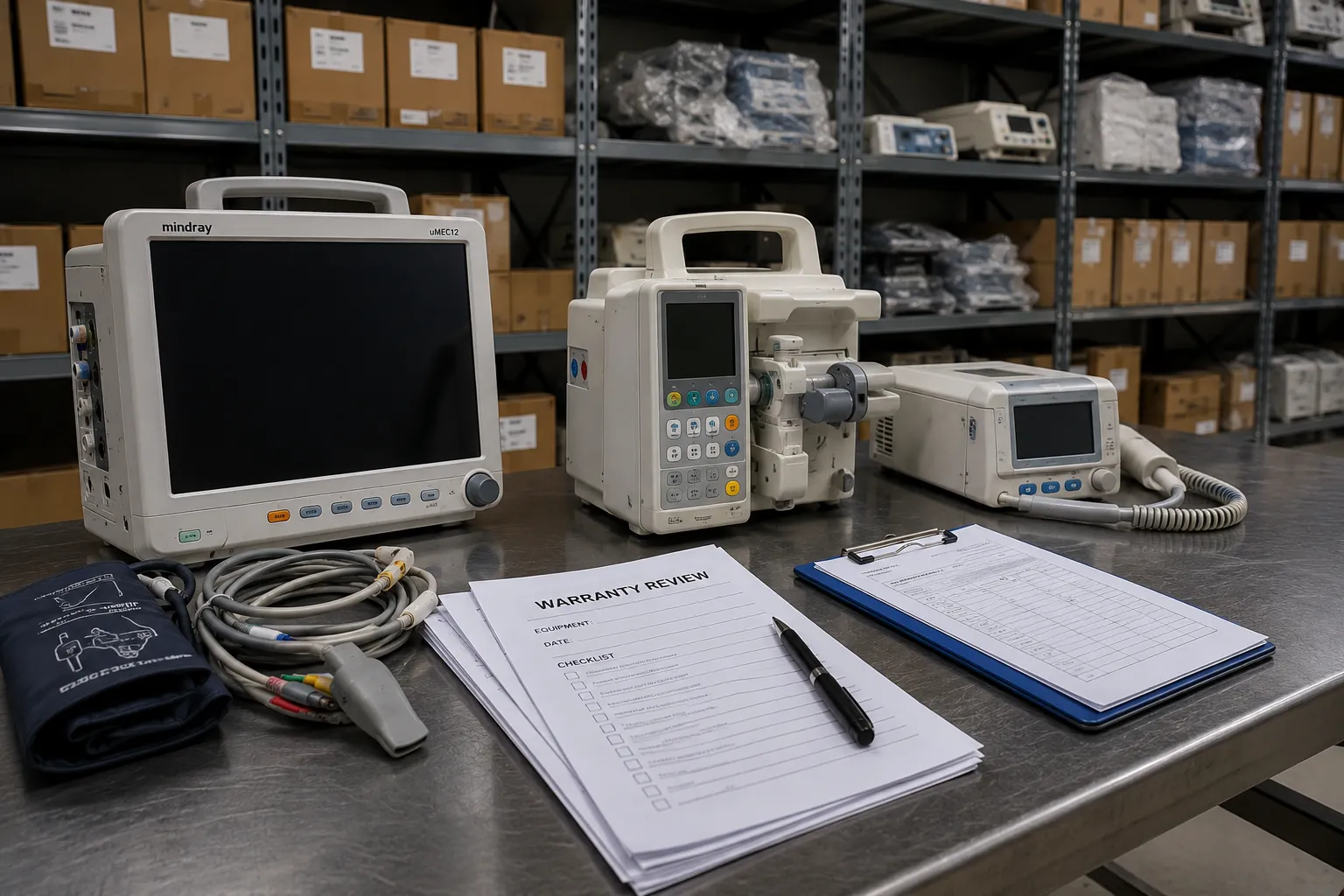
Warranty coverage — Buyers should define minimum coverage for parts, labour, software, engineer travel and freight. Exclusions should be stated clearly.
Service response expectations — Critical equipment may require defined targets for acknowledgement, attendance, and repair. Requirements should reflect location, backup capacity and clinical risk.
Spare-parts support — Suppliers should confirm the availability of expected parts and lead times. Equipment can remain technically functional yet become unusable when essential components are discontinued.
Software support period — Connected devices may require licences, security updates, and operating system compatibility. Buyers should ask how long the platform will receive active support.
Training requirements — Operator and biomedical engineering training should be specified separately. The training scope, participant numbers, materials, and competency checks should be clear.
Lifecycle cost information — Suppliers may be asked to provide indicative costs for consumables, maintenance, software and common replacement parts. This supports total ownership evaluation.
One aspect that surprises first-time buyers is how strongly service and accessory requirements can influence the long-term value of technically similar equipment.
International Sourcing and Specification Control
International purchasing requires additional technical and commercial detail because the supplier, manufacturer, service provider and hospital may operate in different markets.
Destination-market requirements — Buyers should confirm product registration, importer responsibilities and applicable regulatory documentation before approving the specification.
Language and documentation — User manuals, technical documents and training materials should be available in a format and language suitable for the receiving facility.
Shipping configuration — The specification should state whether accessories, batteries, software and protective packaging must ship with the main equipment.
Customs documentation — Product descriptions, manufacturer details and model numbers should remain consistent across specifications, quotations, invoices and conformity records.
New and refurbished equipment — Where refurbished equipment is permitted, the specification should define condition, age, service history, software, testing, warranty and remaining support requirements.
Site-readiness coordination — Equipment should not be shipped until power, space, utilities, network and installation access are confirmed.
International service coverage — Suppliers should explain whether warranty includes local labour, engineer travel, parts freight and remote support. General claims of worldwide service should be verified.
Specialist specification support — Medical buyers preparing technical requirements, equipment schedules or international sourcing enquiries can contact the Medigear.uk team for supply support. A useful enquiry should include the equipment category, intended use, quantity, destination and required delivery period.
The final specification should remain controlled from quotation through delivery inspection and commissioning.
Final thoughts
A medical equipment technical specification gives buyers a clear basis for requesting, comparing and approving supplier proposals. It should describe the required clinical outcome, performance, configuration, compliance and lifecycle support.
Specifications should use measurable, performance-based wording rather than reproducing one manufacturer’s catalogue. Accessories, software, installation, training, and maintenance requirements should be included so that suppliers can quote complete clinical packages.
Clinical users, biomedical engineers and other relevant teams should contribute before the specification is issued. Supplier deviations should be recorded and evaluated before commercial comparison.
A well-prepared specification reduces ambiguity, improves purchasing transparency and helps healthcare facilities select equipment that remains suitable and supportable throughout its service life.
Disclaimer
Medigear.uk is a global medical equipment supplier, exporter, and distributor. The content published on this site is intended for educational and product awareness purposes only. Nothing on this page constitutes medical advice, clinical guidance, or treatment recommendations. All healthcare procurement and clinical decisions should be made by qualified medical professionals and compliant procurement teams operating within the regulatory frameworks of their respective countries.