Endoscopic mucosal resection (EMR) removes abnormal or early-cancerous tissue from the lining of the gastrointestinal tract through a flexible endoscope, with no external incision. The endoscopist lifts the target lesion off the deeper muscle wall by injecting fluid beneath it, then cuts it free with an electrosurgical snare and retrieves it for pathology. It is used in the oesophagus, stomach, duodenum and colon to treat flat polyps, dysplasia and early mucosal cancers that have not invaded the deeper layers.
For an endoscopy manager or procurement lead, EMR is not a single device but a coordinated set of consumables and capital kit. Getting the injection needles, snares, electrosurgical generator, lifting agents, and haemostasis clips to work together is what makes a resection clean, complete, and safe, so this guide explains the technique and then what to compare when you buy it.
Why EMR is them over open surgery
Removing an early lesion endoscopically avoids a laparotomy, a general anaesthetic of long duration, and a lengthy inpatient stay. Because it only takes the mucosa and a cushion of submucosa, EMR preserves the underlying muscle wall and the organ itself. That keeps day-case throughput high and recovery short, which is why endoscopy units invest in the consumable stack rather than sending every flat polyp to a surgical list. The technique is appropriate only for lesions confined to the mucosa; deeper invasion changes the plan, which is a clinical judgement made at the point of care, not a purchasing decision.
How an EMR procedure works, step by step
The endoscopist first defines the lesion margins, often with dye spray or virtual chromoendoscopy on the processor. A fine needle then injects fluid into the submucosa to raise the lesion on a cushion, separating it from the muscle layer beneath and reducing the risk of a full-thickness burn or perforation. A snare is looped around the raised tissue, closed, and energised from an electrosurgical unit to cut and coagulate simultaneously. Larger lesions are taken in several pieces, a piecemeal resection. The specimen is captured with a retrieval net or trap for histology, the resection base is inspected, and any bleeding point or exposed vessel is treated with clips or coagulation.
The equipment set a unit must assemble.
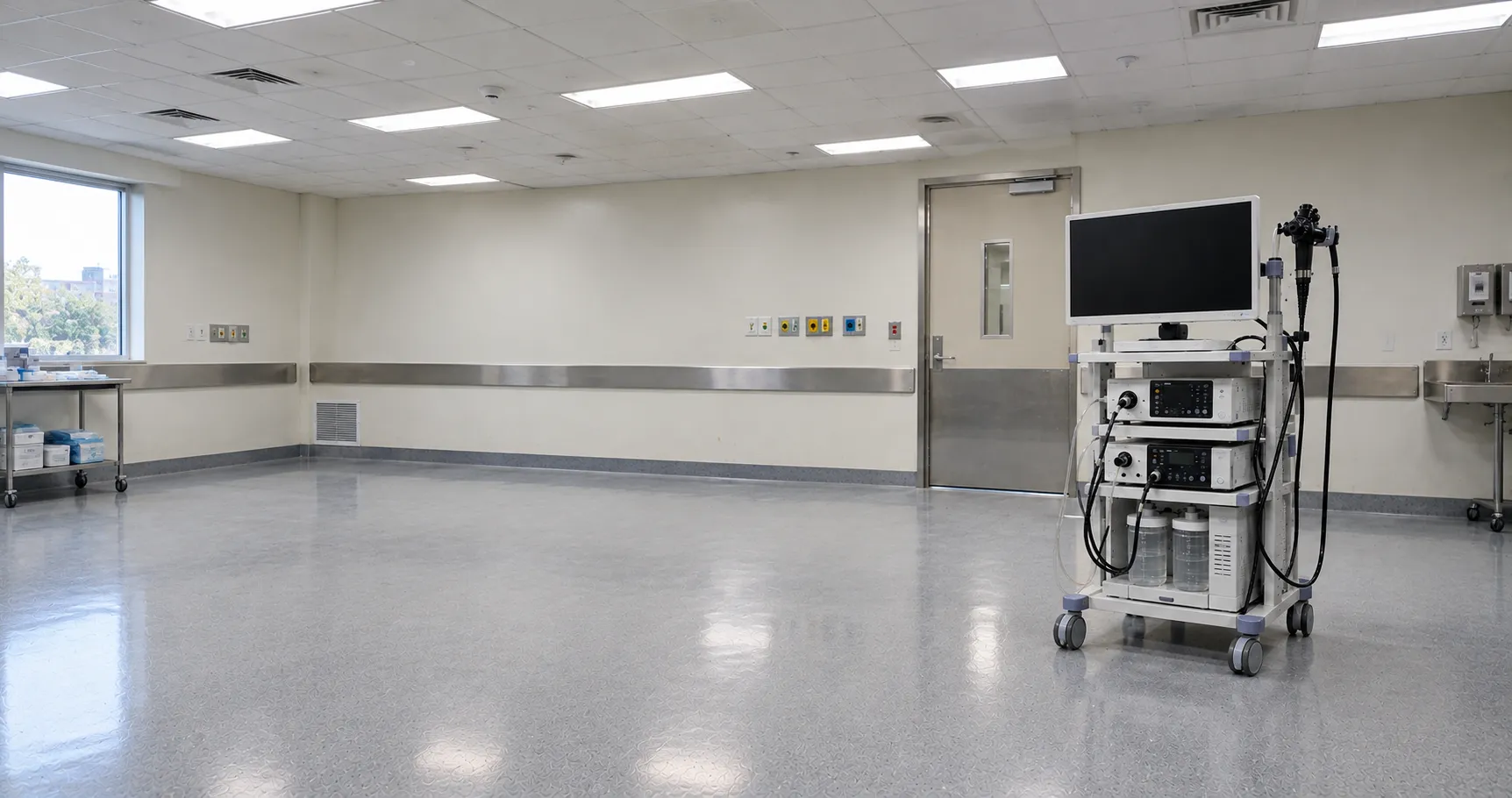
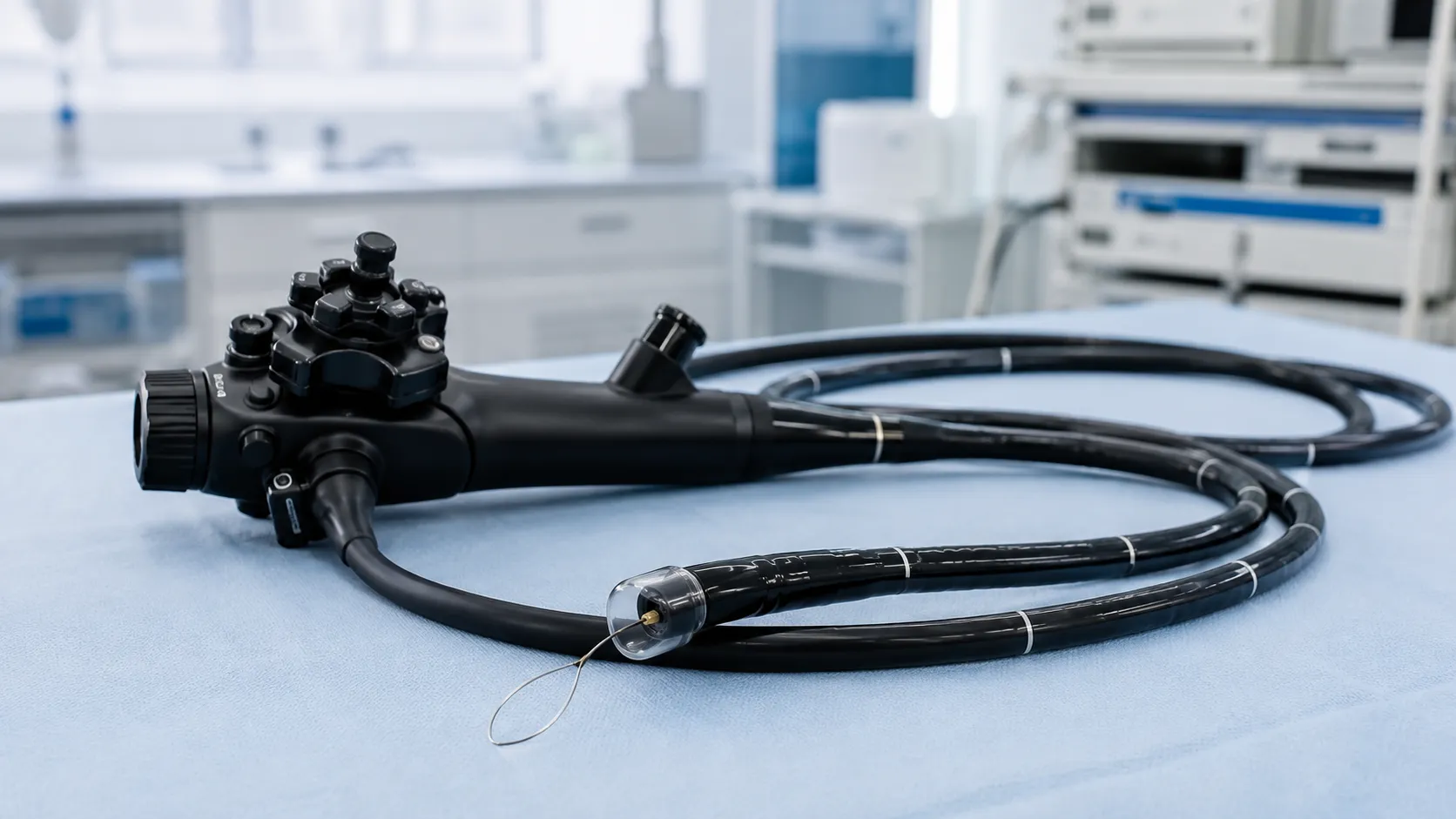
EMR relies on a working chain: a video gastroscope or colonoscope and processor, an injection needle, a submucosal lifting agent, a polypectomy snare, an electrosurgical generator, a specimen retrieval device, and haemostatic clips or thermal tools for closure. A distal attachment cap is often fitted to steady the field. Each item must fit the others: the needle and snare must pass the endoscope's working channel, and the snare must match the generator's output. Buyers should specify the whole stack, rather than piecemeal, and confirm working-channel diameters before standardising a device across a fleet of scopes.
Injection needles and submucosal lifting agents
Injection needles are single-use catheters with a retractable needle, chosen by needle gauge, needle length, and catheter length to match the scope and the target. The lifting agent forms the cushion. Options range from simple saline, which disperses quickly and needs repeat injection, to more viscous colloid and gel solutions that hold a durable lift for longer resections; a dye such as indigo carmine is commonly added so the endoscopist can see the plane and margins. Buyers should stock a needle and decide on the clinical team, which will decide which lifting agents to hold, balancing lift durability against cost per case.
Snares and electrosurgical settings
Snares vary by shape, wire type, and diameter: oval, hexagonal, and crescent geometries; braided or monofilament wire; and stiff or soft construction for different lesion sizes and positions. The snare works with the electrosurgical generator, which delivers blended cutting and coagulation current; modern generators offer microprocessor-controlled modes that pulse energy to limit deep thermal injury. Compatibility between snare and generator is essential, and the unit's settings are a clinical responsibility. When buying, confirm the snare's channel fit, its opening width relative to the lesion, and that it is validated on your generator platform.
Haemostasis and defect closure
A resection leaves a raw base, and delayed bleeding is a common complication, so haemostasis sitshaemostasis is required alongside the resection set. Through-the-scope clips grasp a bleeding vessel or approximate the edges of a defect; coagulation graspers and thermal probes treat visible vessels. Larger defects may be closed with clips or dedicated closure devices. Stocking enough clips per case, along with a manual clip size and instructions, prevents a unit from running short mid-list. These are single-use items, so par levels and reliable supply matter as much as unit price.
Standards, regulation and decontamination
The disposables used in EMR are sterile single-use medical devices and must carry a valid UKCA or CE marking with instructions for use; they must never be reprocessed. The endoscopes are all under contamination-control duties and are high-level disinfected between patients through validated reprocessing. Electrosurgical generators are electrical medical equipment governed by the IEC 60601 family for safety. The MHRA regulates all of these devices in the UK and issues safety guidance, while proced. At the same time, quality standards for endoscopy are set out by clinical bodies, with wider material and broader guidance from ICEE. Keep instructions for use and device traceability records for every resection.
Consumables, total cost of ownership and stock control
Because most of the EMR set is single-use, the recurring spend is the per-case consumable stack, not the capital. Model annual usage by procedure mix and build a bundle: a needle, a snare, a set number of clips, a lifting agent and a retrieval device per case, plus a safety margin for piecemeal work. Standardising devices across your scope fleet reduces my workload and simplifies stock management. Capital co-management, the generator, and any specialist attachments are one-off but need service cover and spares. Short lead times protect list utilisation, since a stock-out cancels a session. We can help you build an EMR consumable bundle and set par levels — register as a buyer or contact our team.
Use across care settings.
EMR is performed in hospital endoscopy suites and day-surgery units, from district general hospitals running routine colonic polyp resection to tertiary centres tackling complex oesophageal and gastric lesions. A high-volume screening service needs a deep, reliable stock of colonic snares, clips and lifting agents. In contrast, a unit weights its stock toward oesophageal and gastric consumables and caps. Training units value consistent, familiar devices. Matching the consumable range to the case mix keeps lists running without over-ordering, which service rarely uses.
Procurement checklist
-
Specify the full stack together: needle, snare, generator, lifting agent, retrieval device and clips.
-
Confirm needle and snare diameters fit your scopes' working channels.
-
Check the snare is validated with your electrosurgical generator platform.
-
Decide which submucosal lifting agents to stock, balancing lift durability against cost.
-
Hold enough clips per case, with a mix of sizes and rotation options.
-
On every disposable, check the UKCA or CE mark, intact sterile packaging, batch and expiry details and clear single-use labelling.
-
Set par levels and reliable lead times so a stock-out never cancels a list.
Conclusion
Endoscopic mucosal resection allows lesions to be removed through a scope rather than requiring open surgery. Still, it only works if the injection needle, snare, generator, lifting agent, retrieval device, and clear choice are chosen to work as a single system. The buying task is to match every consumable to your scope fleet and generator, hold the right par levels, and confirm the regulatory documentation. Get that right, and lists run cleanly and cost-effectively. MediGear can supply the EMR consumable range your endoscopy service needs, matched to your scopes and case mix.
Disclaimer
This article is for informational purposes only. It is published by MediGear (medigear.uk) for general information and guidance; it is not clinical, diagnostic, treatment, technical, engineering, legal, or regulatory advice, nor a product endorsement, guarantee, or substitute for professional assessment. MediGear does not provide medical consultations. Buyers should consult their clinical, biomedical, estates and regulatory contacts, and the manufacturer's documentation, and independently verify all specifications, certifications, compatibility and suitability before purchase. Specifications, certifications and availability are correct at the time of publication and may change without notice. MediGear is a medical-equipment distributor and does not sell medicines or pharmaceutical products.