What a vacuum pipeline system is and how suction reaches the ward
A medical vacuum pipeline system comprises the plant and pipework that generate and distribute negative pressure, enabling clinical staff to apply suction at the bedside, in theatre and in recovery. It is part of the medical gas pipeline system, but it works in reverse of the gas service. Instead of supplying a gas, it removes air to create suction that draws fluids, secretions and debris away from the patient into a collection vessel. The suction a nurse feels at a wall terminal is produced by a central vacuum plant, not by a local pump at the bedspace.
Because it handles potentially infectious aspirate, a medical vacuum system is built to protect both patients and the plant from contamination, with built-in filtration and collection.
The operating principles set out here — duplex pump plant, receiver storage, negative-pressure distribution and bacterial filtration — reflect the ISO 7396-1 and HTM 02-01 requirements for medical vacuum, written to help estates and biomedical teams specify plant rather than to guide clinical suction technique.
How the vacuum plant produces suction
At the heart of the system is a duplex or triplex vacuum pump plant — two or more pumps, each capable of meeting full demand, so suction continues if one fails or is serviced. The pumps draw air out of the pipeline and a receiver vessel, lowering the pressure below atmospheric. The receiver stores this vacuum capacity, smooths demand and lets the pumps cycle rather than run continuously. Automatic changeover and duty-sharing controls rotate the lead pump to balance wear, using the same resilience principle used in compressed-gas plants.
Medical vacuum is distributed as negative pressure: a hospital pipeline is typically maintained below -400 mmHg (around 53 kPa below atmospheric), ensuring adequate suction at every terminal even at peak use.
Bacterial filters and protecting the plant
Aspirate from patients can carry bacteria, viruses and fluid, none of which should reach the pumps or the plant-room exhaust. The system therefore relies on layered protection: a disposable collection liner and vessel at the bedside catches fluid first, and a bacterial/viral filter guards the terminal unit and the equipment above it. Central bacterial filters on the receiver protect the pumps, and the exhaust is discharged safely outside, away from air intakes and openable windows. These filters are scheduled consumables — a core part of vacuum-system maintenance and running cost.
Types of medical vacuum pump
A vacuum plant uses several pump technologies, and the choice affects operating costs, maintenance, and utilities. Oil-sealed rotary vane pumps are common and reliable but require oil changes and oil mist filtration on the exhaust. Liquid-ring pumps use a water seal and suit high, wet duties but consume water and need a water-management arrangement. Dry pumps — claw or scroll types — avoid oil and water altogether, lowering consumable and disposal costs, though capital cost is usually higher. For a buyer, the pump type sets the maintenance pattern and the plant-room services (oil, water, exhaust treatment), so it should be compared explicitly rather than left to the lowest tender.
From plant to terminal unit
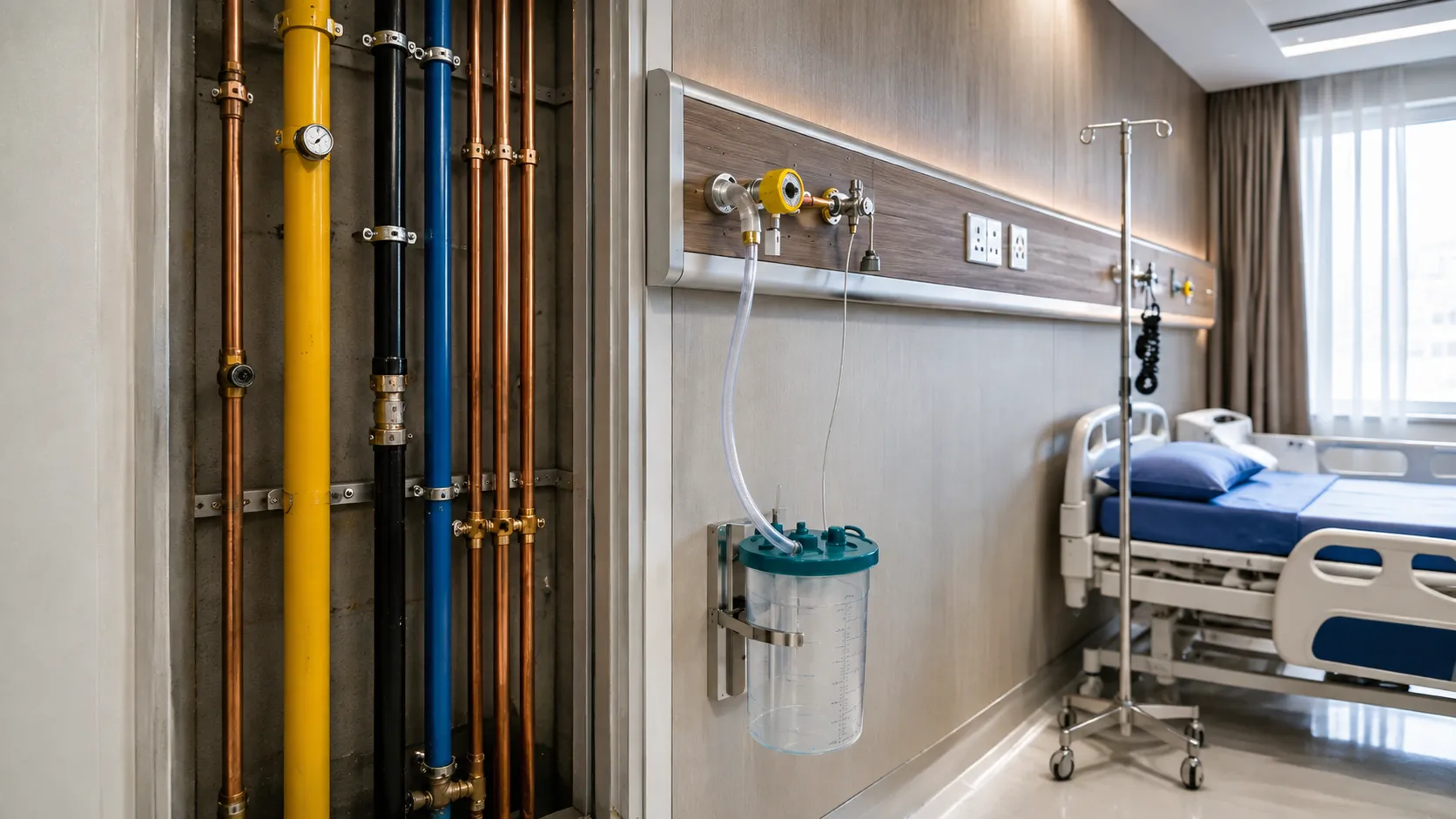
Vacuum pipework runs from the plant through the building with area valve service units to isolate departments, line-pressure (vacuum) indicators and alarms, exactly as the gas services do, but identified in yellow. At the bedspace, the vacuum terminal unit accepts a gas-specific probe that cannot connect to an oxygen or air outlet. Staff attach a suction regulator and a collection jar, and the regulator sets the suction level for the clinical task. Theatres, recovery, critical care and A&E generally have the highest vacuum demand and the most outlets.
Suction regulators and terminal units
At the point of use, staff connect a suction regulator to the yellow terminal unit and set the vacuum level for the task, reading it on the regulator's gauge. Regulators come in high, medium and low ranges, and some areas use dedicated low-vacuum controllers for gentler applications. A collection jar or single-use liner sits between the regulator and the patient to trap aspirate. These items are consumables and accessories a buyer specifies alongside the plant, and standardising on compatible regulators, jars and liners across a site simplifies training, stock-holding and servicing.
Infection control at the collection point
Suction is one of the few pipeline services that draws material directly from the patient, so infection control focuses on the collection point. Single-use liner systems, where a disposable bag sits inside a reusable canister, reduce handling of contaminated fluid and are widely used; reusable jars require decontamination between patients to a validated process. Terminal-unit filters and anti-overfill shut-off protect the pipeline if a jar is overfilled. Deciding between single-use and reusable collection is a cost-and-practice choice worth making deliberately, because it affects consumable spend, staff time and decontamination load.
Where vacuum demand concentrates
Vacuum is needed throughout a hospital, but demand is concentrated in operating theatres, recovery, critical care, A&E and delivery suites, where several outlets may be in simultaneous use per bed space. General wards need fewer outlets but still rely on suction being available on demand. When a department changes use — for example a ward converted to higher-dependency care — the vacuum load can rise beyond the original design, which is why demand should be reassessed rather than assumed. Mapping outlet numbers and simultaneous-use assumptions per area is the basis for sizing the plant correctly.
Exhaust, drainage and plant-room services
Because the vacuum plant handles air that has passed through bacterial filtration from patient aspirate, the exhaust must be routed and discharged safely to open air, away from windows, doors and air intakes. Depending on the pump type, the plant room also needs drainage for liquid-ring water or oil-mist filtration for oil-sealed pumps, as well as ventilation and cooling. Access for filter changes, inspection, and pump servicing is incorporated in the design. These plant-room details are easy to overlook at concept stage and expensive to correct later, so they belong in the specification from the outset.
Standards and safe management
Medical vacuum is covered by the same UK framework as the piped gases: HTM 02-01 and ISO 7396-1, which explicitly include vacuum, with the system managed through Authorised and Competent Persons and a permit-to-work regime. As part of a medical device system, it is regulated by the MHRA and is subject to UKCA or CE conformity. Because staff handle infectious aspirate and the exhaust must be discharged safely, the workplace health and safety duties enforced by the Health and Safety Executive also apply to the plant room and exhaust arrangement.
Sizing and resilience
The vacuum plant is sized based on the number of vacuum outlets, the diversity factor for the departments served, and the peak simultaneous demand, and it must meet full demand with the largest pump out of service. Adequate receiver volume, a full alarm scheme (plant, vacuum pressure, plant fault) and safe exhaust routing are decided at design stage. Undersized vacuum is a common complaint in older buildings, so demand should be reviewed whenever an area's use intensifies, or a department changes function.
Specifying a medical vacuum system: checklist
- Duplex or triplex pumps, each rated to meet full demand alone, with automatic duty-sharing changeover.
- Receiver vessel sized to smooth demand and maintain the required negative pressure at peak.
- Central bacterial/viral filtration protecting the pumps, plus terminal-unit filter provision.
- Exhaust discharged safely outdoors, away from intakes and openable windows.
- Yellow-coded, gas-specific vacuum terminal units, AVSUs and a full vacuum-alarm scheme.
- Compliance with ISO 7396-1 and HTM 02-01, with UKCA/CE conformity evidenced.
- Filter, liner and regulator consumables costed as ongoing maintenance items.
- Peak demand reviewed against pump and receiver capacity for the departments served.
Running costs and servicing
A vacuum plant's costs include electricity to run the pumps, scheduled replacement of bacterial filters and pump consumables (such as sealants or vanes, depending on the pump type), receiver inspection, and the disposable liners and regulators used at the bedside. Comparing plant energy use, filter cadence, and the certification and response of the maintenance provider gives a truer picture than capital cost alone, because suction is a service clinical teams expect to be available at all times.
Specifying suction that works
Reliable suction depends on a properly sized plant, clean filtration and a maintenance regime that keeps both running. MediGear is a UK medical equipment distributor that helps facilities compare verified suppliers of vacuum plant, filtration, terminal units, and suction regulators against the standards a project must meet. Estates and procurement teams can begin with our buyer resources and supplier network to match plant to real clinical demand.
Disclaimer
This article is for informational purposes only. It is published by MediGear (medigear.uk) for general information and procurement guidance. It is not clinical, diagnostic, treatment, technical, engineering, legal or regulatory advice, nor a product endorsement, guarantee or substitute for professional assessment. MediGear does not provide medical consultations. Buyers should consult their clinical, biomedical, estates and regulatory contacts, and the manufacturer's documentation, and independently verify all specifications, certifications, compatibility and suitability before purchase. Specifications, certifications and availability are correct at the time of publication and may change without notice. MediGear is a medical-equipment distributor and does not sell medicines or pharmaceutical products.