Ask a theatre team what makes a good operating table and the answer is rarely about the frame. It is about whether the table reaches the position the surgeon needs, whether the imaging system can see through it, and whether the accessories are to hand when the list overruns. A table that fights the team slows every case on the list.
These ten table types cover general and specialist theatre work. Each entry explains the design, the surgery it suits and the questions worth asking before purchase.
What theatre teams actually assess
Positioning range comes first: height, tilt, Trendelenburg, lateral tilt and the ability to break the table at the right points. Then comes access, meaning how much of the patient the surgeon and the imaging equipment can reach. Column position matters here more than most specifications suggest.
After that come the practical factors: safe working load, including accessories; pad quality for long cases; control reliability; cleaning between cases; and how quickly the table converts for the next procedure on the list.
The ten operating table types
1. General surgical tables
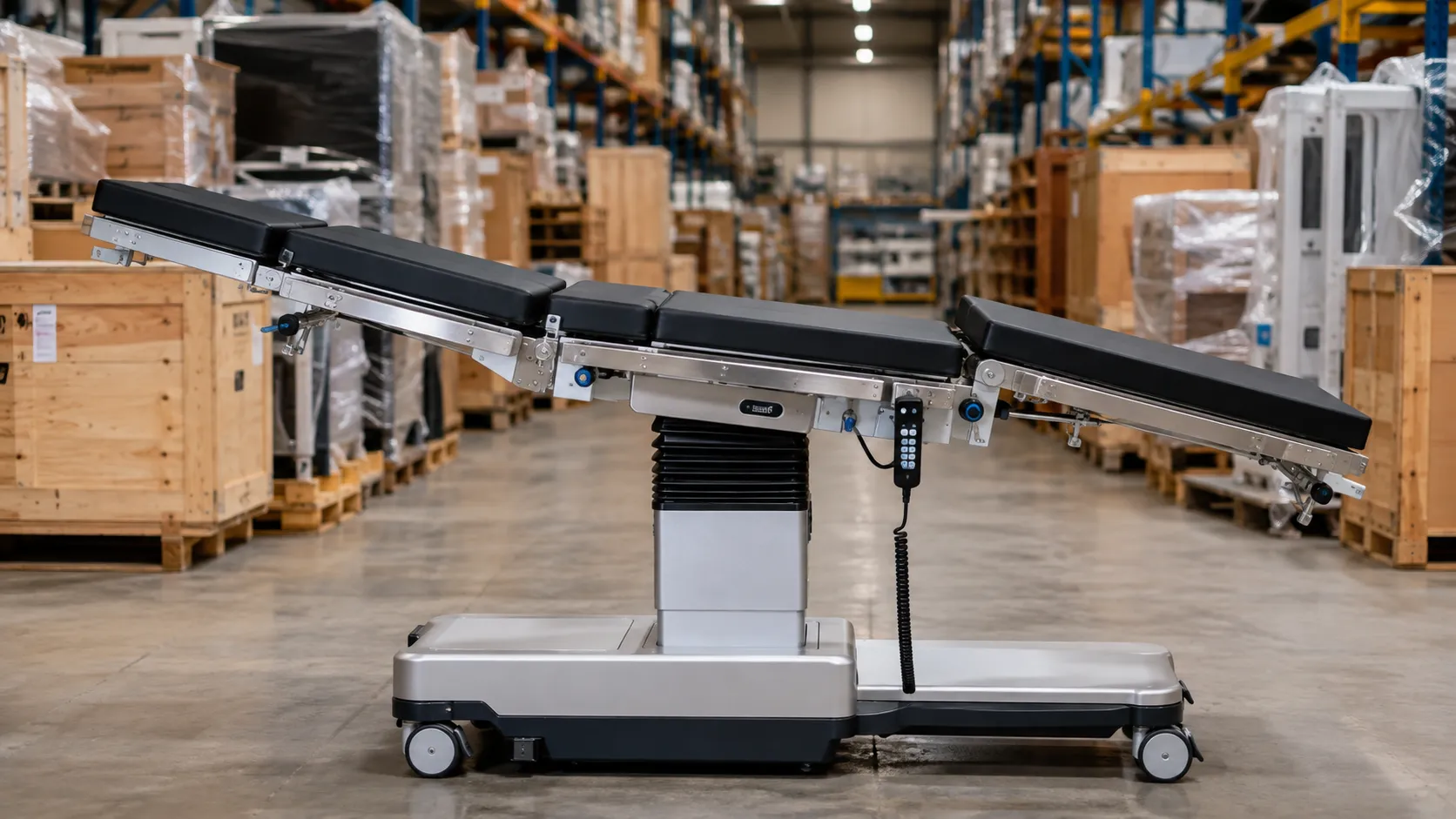
The standard theatre table, with a segmented top, full range of tilt and a broad accessory system. Suited to general, gynaecological and many orthopaedic procedures. Most departments build their estate around this design.
2. Electro-hydraulic tables
Powered positioning through a handset or foot control, usually with battery operation and a mains override. Smooth adjustment during a procedure is the main advantage, along with reduced physical effort for the team.
3. Manual and hydraulic tables
Foot-pump or crank operated, with no dependence on power. They remain useful in day surgery, minor procedure rooms and settings where a simple, robust table is preferred.
4. Mobile column tables with detachable tops
A powered column that accepts interchangeable table tops. Speciality tops are prepared in advance and swapped between cases, which shortens changeover time for mixed lists. Confirm which tops fit the column and how they are stored.
5. Radiolucent imaging tables
Carbon fibre tops with a wide unobstructed area for intraoperative imaging. Essential for vascular, trauma and pain procedures. Verify the actual imaging window and column position against your fluoroscopy equipment rather than assuming compatibility.
6. Orthopaedic and traction tables
Designed for fracture and joint work, with traction attachments, leg positioning frames and imaging access. Setup time is a meaningful factor, so ask the team to trial the accessory arrangement before committing.
7. Bariatric tables
Reinforced frames with wider tops and higher safe working loads. Remember that the load rating must include accessories and positioning devices, not only the patient, and that lateral tilt limits often change at higher weights.
8. Ophthalmic and minor procedure tables
Chair-to-table designs allowing seated entry and flat positioning, with fine height control and headrests suited to microsurgery. Stability under small, precise adjustment matters more than range.
9. Paediatric and neonatal tables
Smaller platforms with appropriate restraint options and compatibility with warming. Access for the anaesthetic team around a small patient is a practical design point that is easy to overlook.
10. Day surgery and endoscopy tables
Simpler powered tables suited to high-turnover lists, with quick cleaning, straightforward positioning and stirrup or lithotomy support where required.
Accessories, compatibility and storage
-
Rail standard. Confirm the side rail profile, since it dictates which clamps and arm supports fit.
-
Existing accessories. Check whether current arm boards, stirrups and head supports transfer to the new table.
-
Pad system. Ask about pad thickness, material and replacement supply, particularly for long procedures.
-
Imaging window. Measure the usable radiolucent area, not the top length.
-
Storage. Detachable tops and traction frames require dedicated space near the theatre, a need often overlooked in planning.
Installation, training and servicing
Commissioning should include a functional check of every powered movement, brake performance testing, electrical safety testing and verification of the safe working load documentation. Mobile columns need floor condition checked, because uneven surfaces affect braking and stability.
Training belongs with the whole theatre team, not just senior staff. Positioning errors and accessory misuse are avoidable with a structured session covering controls, emergency release, battery status and safe patient transfer.
For maintenance, agree on planned service intervals, hydraulic inspections where applicable, battery replacement cycles, and the availability of confirmed spare parts. Ask about response times, since a table out of action can close a theatre. Keeping the department aware of published device safety alerts helps ensure field safety notices are acted on promptly.
Final thoughts
Choose the table around your list profile. A general theatre estate usually needs a reliable powered general table as standard, radiolucent capability where imaging is routine, and specialist designs only where the case mix justifies them. Bring the theatre team into the assessment early, confirm accessory compatibility, and settle service cover before delivery.
This article is general procurement guidance for healthcare organisations. It is not clinical advice and does not replace manufacturer instructions or local operating policy.