An anaesthesia machine is really a system: gas delivery, ventilation, vaporisers, monitoring, scavenging, and record-keeping bound into one platform. That is why the purchase decision reaches the anaesthetic team, medical physics, and procurement. Get the infrastructure questions settled early and the rest of the process becomes straightforward.
These ten machine types cover theatre, day surgery, remote-site and specialist anaesthesia. Each entry explains the design and what to confirm before ordering.
Infrastructure comes first
Check three things before comparing models. What gas supplies are available in the room, at what pressure, and are cylinder mounts required as a backup? How is waste gas scavenged, and does the proposed machine match that system? And what electrical provisions exist, including whether uninterruptible power supply is available for the bays concerned.
Machine capability rarely fails a department. Infrastructure mismatch does, and it is far harder to correct after delivery.
The ten anaesthesia machine types
1. Full-featured theatre anaesthesia workstations
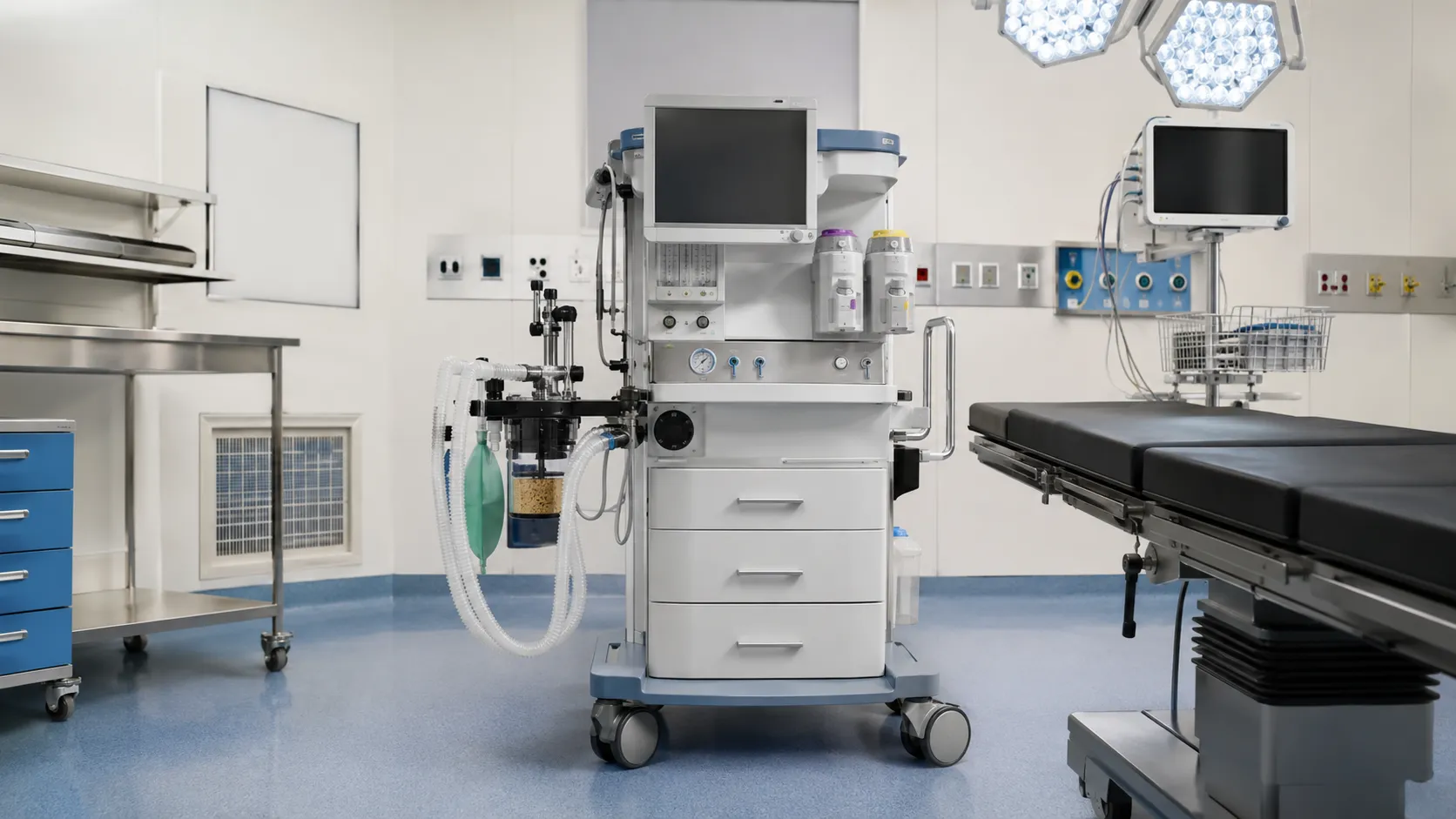
The main theatre platform, combining an advanced ventilator, integrated gas and agent monitoring, electronic flow control, and record-keeping, suits surgery and complex cases.
2. Compact anaesthesia machines
Smaller footprint units for day surgery, endoscopy and procedure rooms. They keep core gas delivery and ventilation while shedding some advanced modes, which suits shorter, less complex lists.
3. Mechanical flow control machines
Traditional rotameter-based gas delivery with mechanical controls. Simple, familiar and robust, they remain in service where straightforward operation is preferred.
4. Electronic flow control machines
Digital gas mixing with precise, repeatable delivery, usually with integrated data logging. They support low-flow techniques well and reduce manual adjustment during a case.
5. Machines with advanced ventilation modes
Platforms offering pressure support, volume-guaranteed and other advanced modes suited to patients with compromised respiratory function or long procedures.
6. Machines with integrated gas and agent monitoring
Built-in measurement of inspired and expired oxygen, carbon dioxide and volatile agent concentration. Integration reduces cabling and consolidates alarms into one interface.
7. Transport and remote-site machines
Designed for locations away from main theatres, such as imaging suites, with cylinder operation and a compact frame. Confirm scavenging arrangements carefully, since remote sites often lack piped extraction.
8. Paediatric-capable machines
Configured for small tidal volumes and low fresh gas flows, with appropriate circuit options. Verify the delivered volume range and circuit compatibility rather than relying solely on a paediatric mode.
9. Lines with integrated syringe pump mounts
Platforms with mounting and power provision for infusion pumps used in intravenous anaesthesia, keeping the workspace organised and cabling controlled.
10. Machines with electronic record integration
Units that export case data to an anaesthetic record system. Confirm the interface standard and who is responsible for the integration work, as this is often underestimated.
Vaporisers, circuits and scavenging
-
Vaporiser fitting. Confirm the mounting standard and whether existing vaporisers can be transferred to the new machine.
-
Agent-specific filling. Check the filling system for each agent used, along with associated safety features.
-
Absorber design. Establish whether the carbon dioxide absorber uses pre-packed canisters or loose fill, and confirm supply.
-
Circuit compatibility. Ensure existing breathing circuits and filters fit, or plan the changeover.
-
Scavenging connection. Match the machine to the extraction system already installed in each room.
Commissioning, training and maintenance
Commissioning should include gas supply verification, leak and compliance testing, alarm checks, scavenging performance verification, and electrical safety testing, all of which are documented. Ask the supplier to confirm which checks are theirs and which fall to your maintenance team.
Training needs to reach anaesthetists, operating department practitioners and anaesthetic nurses. Cover routine use, pre-use checks, alarm response, manual ventilation fallback and machine cleaning between cases.
For servicing, agree planned maintenance intervals, oxygen sensor and battery replacement cycles, gas monitoring calibration, response times and loan machine availability. Confirm spare-parts supply and expected support life in writing. Ensuring the department receives published device safety alerts keeps field safety notices visible to the people who maintain the equipment.
Final thoughts
Buy the machine that fits your rooms and your case mix. Main theatres usually justify a full workstation with integrated monitoring and advanced ventilation; day surgery and remote sites are often better served by compact platforms. Settle vaporiser fitting, circuits, scavenging and record integration before delivery, and involve the anaesthetic team in the assessment from the beginning.
This article provides general procurement guidance for healthcare organisations. It is not clinical advice and does not replace manufacturer instructions, pre-use checking procedures or local policy.