Medical equipment import documentation provides the evidence needed to identify products, confirm commercial terms and support international shipment and customs clearance. Missing or inconsistent records can delay delivery, create unexpected charges or prevent equipment from reaching the intended healthcare facility.
For healthcare buyers sourcing medical equipment internationally, documentation requirements should be agreed before an order is confirmed. The manufacturer, model, quantity, condition, value, destination and delivery responsibilities should remain consistent across technical, commercial and shipping records.
Procurement teams, suppliers, freight providers, customs representatives, biomedical engineers and finance personnel may each prepare or review different documents. Their responsibilities should be recorded in a single controlled import plan.
A structured process gives healthcare buyers clearer shipment visibility and helps connect customs records with delivery inspection, warranty and asset management.
Define Import Responsibilities Before Ordering
The buyer should establish who prepares, checks and submits each document before the equipment leaves the supplier.
Importing organisation — Record the legal name, address and purchasing entity responsible for the order.
Supplier identity — Confirm the legal seller and manufacturer relationship, addresses,s and authorised contact details.
Consignee details — Identify the organisation receiving the shipment and ensure the information is consistent across freight documents.
Final delivery location — Distinguish the customs consignee from the hospital, warehouse or project site receiving the equipment.
Customs representative — Confirm whether a broker, freight forwarder or internal specialist will manage clearance.
Delivery terms — Record responsibility for freight, insurance, customs, duties, unloading and final delivery.
Document owner — Assign a person responsible for collecting and approving the complete import file.
Approval timeline — Set deadlines for reviewing draft invoices, packing lists and freight documents before dispatch.
In practice, healthcare buyers often find that documentation errors are discovered only after the shipment has departed.
Draft documents should be reviewed while the supplier can still correct descriptions, quantities and consignee information.
Match Documents to the Supplier and Shipping Route
Import documentation should reflect the organisations and transport stages involved in the transaction.
Manufacturer documents — These may include product information, model references, technical records and applicable compliance documents.
Supplier documents — The supplier usually prepares the quotation, invoice, packing list and commercial shipment information.
When purchasing from verified international medical equipment suppliers, buyers should confirm which documents will be issued by the manufacturer and which by the seller.
Freight-provider documents — The transport company may issue airway, sea freight, road, or multimodal transport records.
Customs documents — Import declarations and supporting records may be prepared by the buyer or an appointed representative.
Insurance documents — Where applicable, records should identify the insured shipment, coverage period and claim procedure.
Warehouse documents — Temporary storage providers may issue receiving, condition and release records.
Installation documents — Supplier engineers may need packing references, serial numbers and delivery records before attending the site.
Multi-shipment orders — Split deliveries should identify which equipment and accessories are included in each shipment.
Experienced procurement managers typically maintain a single-document index that lists the issuer, recipient, approval status, and shipment reference for each record.
Review Technical, Commercial and Freight Records
The import file should describe the equipment accurately enough for procurement, customs and delivery teams to understand what is being shipped.
Approved quotation — Retain the final commercial proposal showing the manufacturer, model, condition, quantity and included services.
Purchase order — Confirm that the order matches the approved quotation and identifies the correct supplier.
Commercial invoice — The invoice should state the seller, buyer, equipment description, quantity, value, currency and agreed delivery terms.
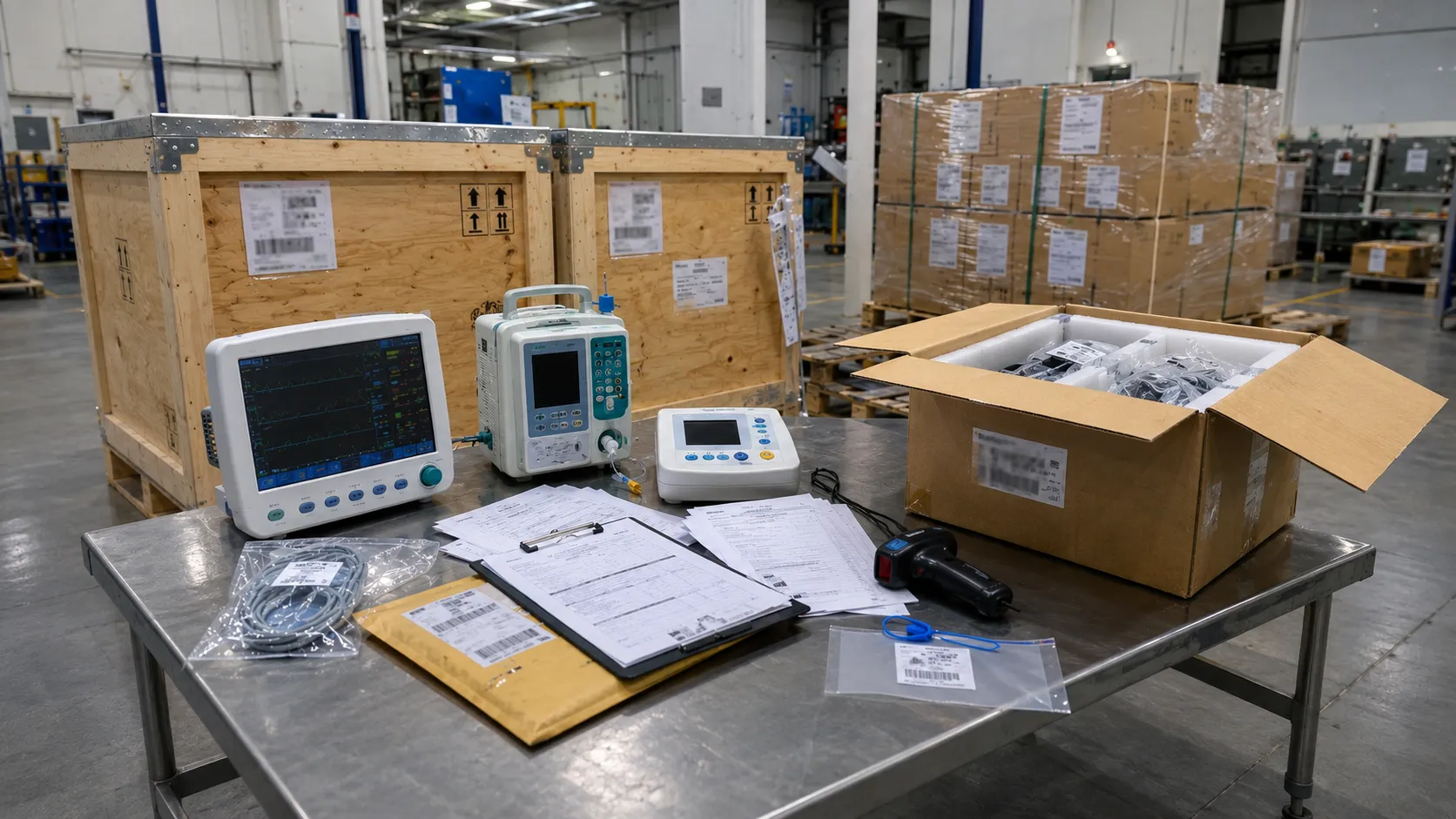
Packing list — Review package numbers, contents, weights, dimensions and accessory quantities.
Product description — Use clear descriptions that distinguish the equipment from accessories, consumables and spare parts.
Manufacturer and model — These details should remain consistent across the invoice, packing list and technical records.
Equipment condition — State clearly whether each unit is new, refurbished, demonstration or used.
Serial numbers — Include serial numbers where available or required, and verify them again after delivery.
Certificate of origin — Where required, confirm that the product and manufacturer information matches the shipment.
Freight document — Check the consignee, notify party, package count, weight and transport reference.
Insurance certificate — Confirm the shipment value, insured party, route and claim requirements where coverage applies.
Technical specification — Retain the approved specification used to evaluate and purchase the equipment.
Applicable compliance records — Review documentation required under applicable local regulatory standards and, where relevant, standards such as CE, FDA or their regional equivalents.
User and technical manuals — Confirm that documentation matches the exact model, software and configuration supplied.
One aspect that surprises first-time importers is that small differences in product descriptions can create questions during customs review.
Technical and commercial descriptions should remain accurate and consistent without presenting unsupported product claims.
Coordinate Supplier and Commercial Documentation
Supplier agreements should state which import documents are included and when they must be provided.
Document schedule — List the records required before production, before shipment, during transit and after delivery.
Draft-document approval — Require the supplier to provide draft invoices and packing lists before dispatch.
Accuracy of product information — Medical equipment companies advertising products to healthcare buyers should ensure that model, condition and configuration claims match their formal shipment records.
Quotation validity — Confirm that the final invoice remains consistent with the approved quotation and purchase order.
Payment milestones — Link payments to measurable stages such as document approval, shipment, delivery or acceptance.
Freight responsibility — Record who selects the carrier, books transport and manages shipping instructions.
Customs-cost responsibility — Clarify responsibility for duties, taxes, brokerage, inspections and storage charges.
Shipping delay responsibility — Agree how documentation errors and avoidable delays will be handled.
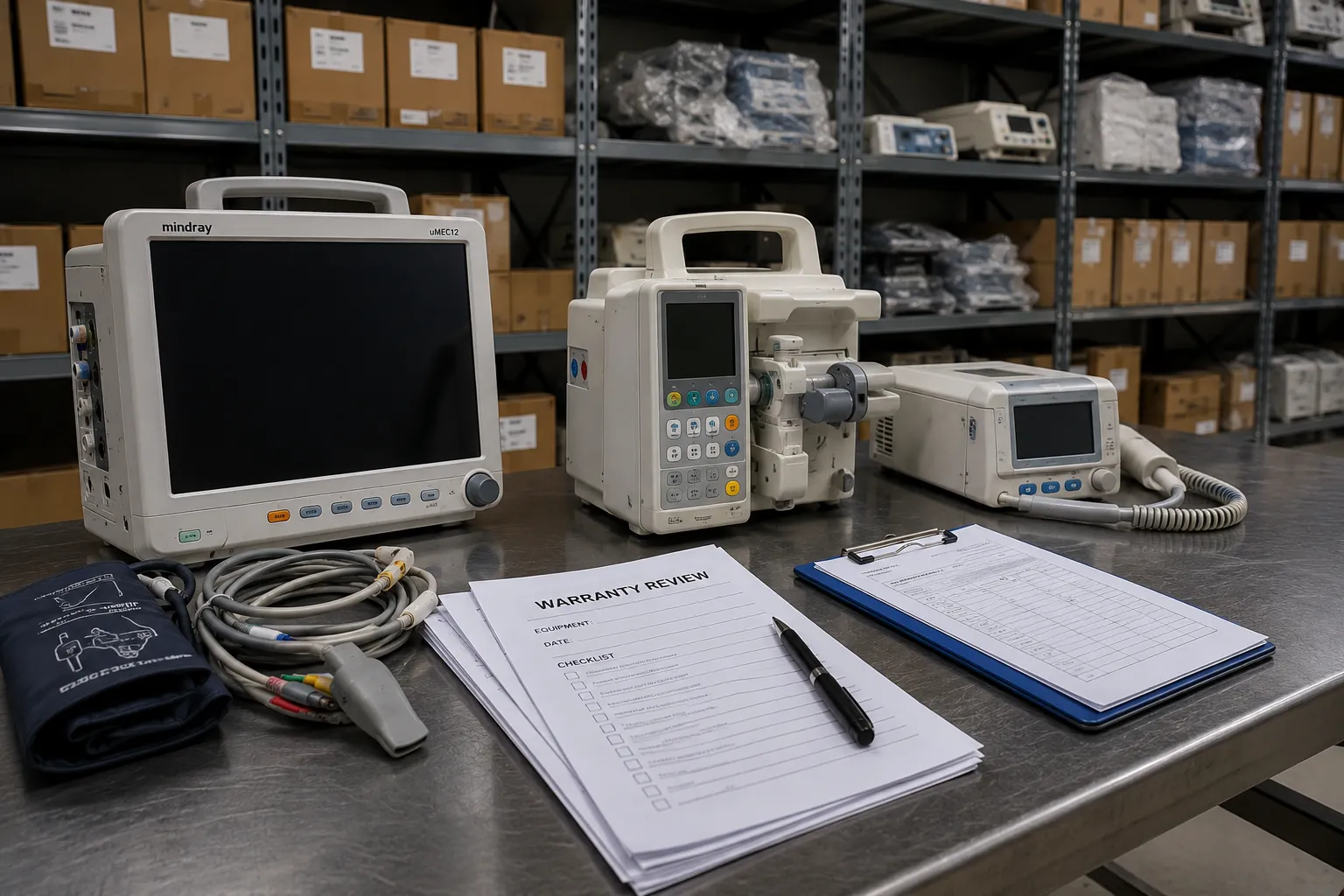
Warranty activation — Confirm whether warranty starts at shipment, delivery, installation or commissioning.
Replacement and claim records — Establish the required documents if equipment is damaged, missing, or incorrectly supplied.
Document corrections — Require suppliers to issue approved corrections rather than informal messages when records contain errors.
Healthcare organisations managing repeat imports may benefit from structured international medical equipment supply partnerships.
Each order should still retain its own approved quotation, invoice, packing list, freight records and delivery evidence.
Prepare for Customs, Delivery and Inspection
Documentation should support the shipment until the equipment is physically received and checked.
Pre-shipment review — Confirm that the invoice, packing list, freight booking and consignee information are aligned.
Customs classification review — Work with qualified customs specialists to confirm appropriate product classification and documentation.
Import permissions — Identify any approvals, registrations or destination-specific records required before shipment.
Original-document control — Confirm whether any original records must travel with the shipment or be sent separately.
Electronic copies — Store accessible digital copies for procurement, customs, finance and receiving teams.
Shipment tracking — Link freight references to the purchase order and expected delivery schedule.
Unloading plan — Use package weights and dimensions to arrange suitable labour, lifting equipment and access routes.
Storage readiness — Confirm that secure and equipment-compatible storage is available before arrival.
Delivery inspection — Check package condition, quantities, model references, serial numbers and accessories.
Damage evidence — Photograph damaged packaging or equipment and record observations before items are moved.
Document discrepancies — Compare received goods with the invoice, packing list and purchase order.
Conditional acceptance — Record unresolved shortages, damage or documentation gaps before final approval.
Delivery inspection should connect import documents with the physical products rather than treating customs clearance as the end of the process.
Control Final Approval and Record Retention
Import records should remain accessible after the healthcare facility receives the equipment.
Complete import file — Retain the quotation, purchase order, invoice, packing list, freight records and customs documentation.
Technical-document file — Link manuals, specifications, compliance records and software information to the equipment asset.
Serial-number register — Match each serial number with the shipment, department, asset number and warranty record.
Financial reconciliation — Compare equipment values, freight charges, customs costs and supplier invoices with approved terms.
Warranty record — Store the activation date, coverage period, exclusions and claim contacts.
Asset registration — Record the manufacturer, model, serial number, condition and final location.
Installation handover — Link delivery records with installation, testing and commissioning documents.
Discrepancy closure — Retain supplier responses, credit notes, replacements and damage-claim outcomes.
Retention schedule — Apply organisational policy and applicable customs, tax and regulatory requirements.
Access control — Ensure procurement, finance, biomedical and audit teams can retrieve the appropriate records.
Final approval — Confirm that commercial, technical and delivery documentation is complete before the order is closed.
Healthcare buyers seeking international quotations, documentation coordination or import support can contact the Medigear.uk sourcing and export team. Enquiries should include the equipment category, manufacturer, model, quantity, condition and destination.
The final import file should remain connected to maintenance, warranty, transfer and replacement records throughout the equipment lifecycle.
Final thoughts
Medical equipment import documentation should be planned before an international purchase is confirmed.
Buyers should define responsibilities for supplier records, freight paperwork, customs preparation and delivery inspection. Product descriptions, quantities, values and consignee information should remain consistent throughout the shipment file.
Technical and compliance records should match the exact equipment model, condition and configuration being supplied.
A controlled documentation process helps healthcare organisations reduce clearance delays, verify deliveries and maintain reliable evidence for finance, audits, warranties and asset management.
Disclaimer
Medigear.uk is a global medical equipment supplier, exporter, and distributor. The content published on this site is intended for educational and product awareness purposes only. Nothing on this page constitutes medical advice, clinical guidance, or treatment recommendations. All healthcare procurement and clinical decisions should be made by qualified medical professionals and compliant procurement teams operating within the regulatory frameworks of their respective countries.