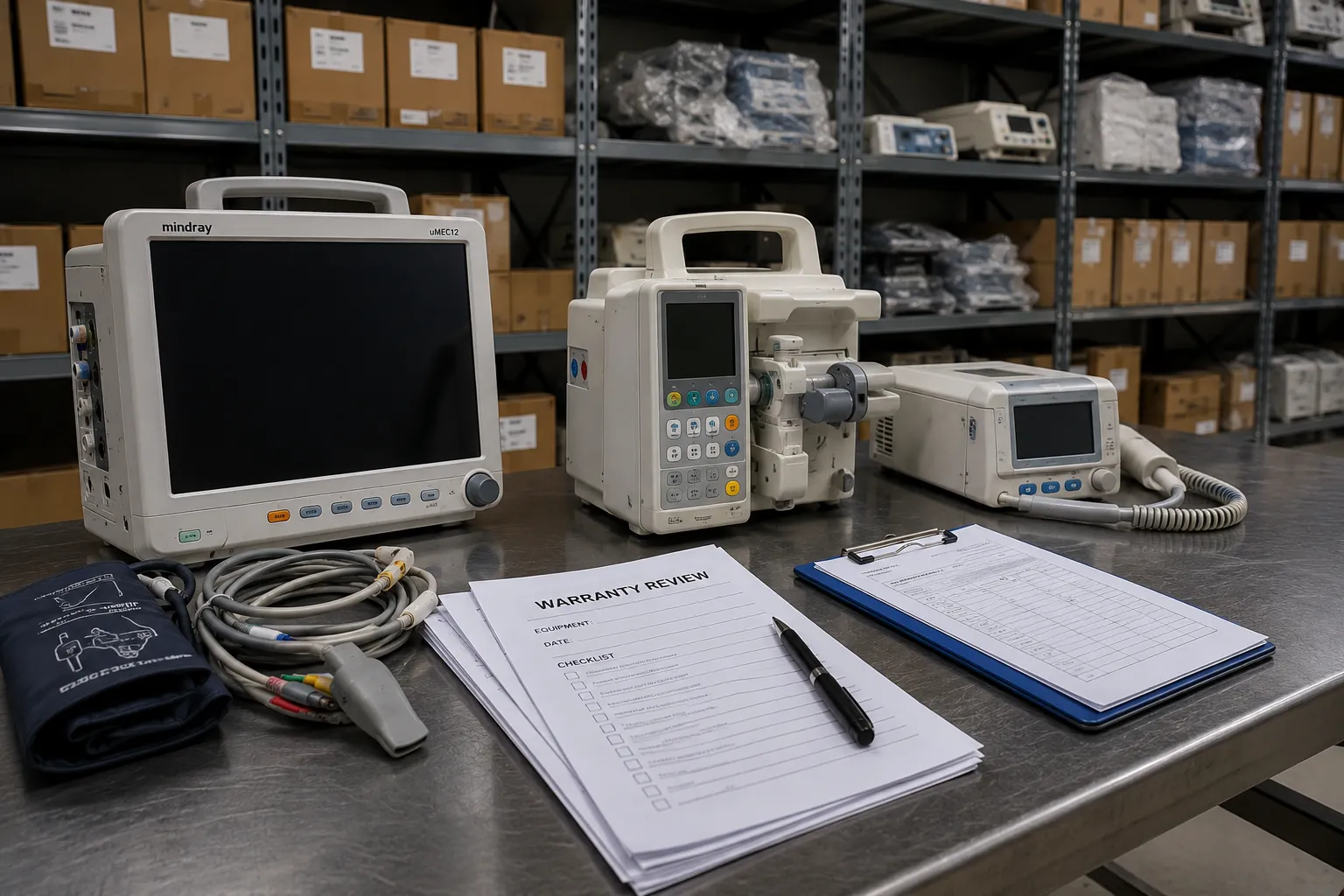
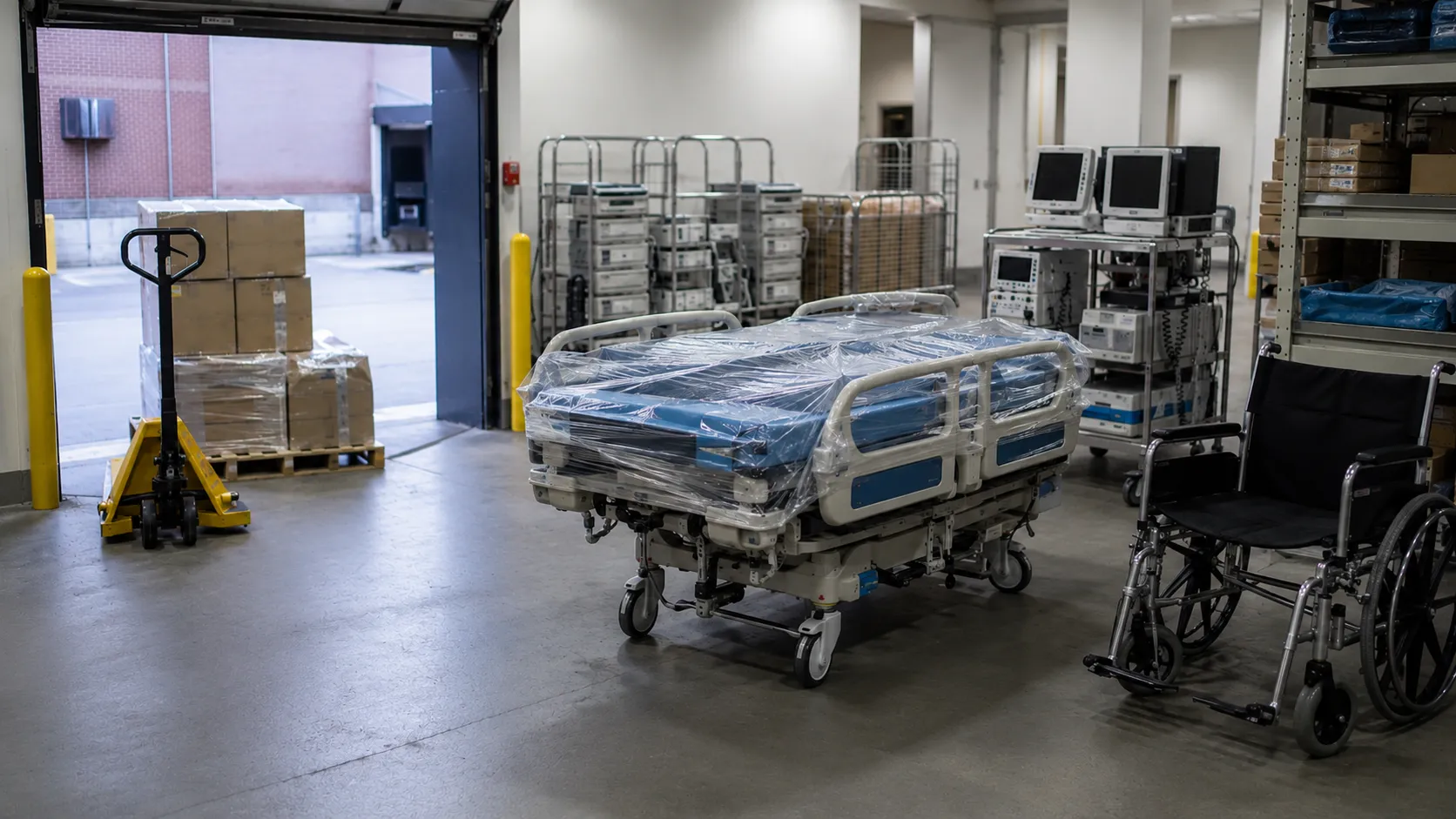
Medical equipment delivery and logistics planning connects supplier dispatch with hospital receiving, inspection, storage and installation. Weak coordination can expose equipment to damage, create unexpected handling costs or cause products to arrive before the receiving facility is ready.
For healthcare buyers coordinating medical equipment deliveries, logistics requirements should be reviewed before a purchase order is approved. Package dimensions, weights, delivery terms, freight responsibilities and installation dates can affect the complete procurement schedule.
Procurement teams, suppliers, freight providers, biomedical engineers, facilities personnel and clinical departments may each control different stages. One delivery coordinator should connect these activities and maintain a clear record of responsibilities.
A structured logistics plan helps healthcare organisations protect equipment, verify shipments and move each item into service through a controlled process.
Define Delivery Objectives and Responsibilities
The logistics plan should identify who manages every stage from supplier dispatch to final hospital handover.
Delivery coordinator — Assign one person or team to control schedules, contacts, records and issue escalation.
Supplier responsibility — Record responsibility for packaging, dispatch preparation, shipment documents and carrier coordination.
Buyer responsibility — Define responsibility for customs, receiving, unloading, storage, inspection and internal movement.
Freight-provider responsibility — Confirm transport mode, collection, tracking, delivery appointment and proof-of-delivery requirements.
Receiving-team responsibility — Identify who checks documents, packaging, quantities and equipment condition.
Technical responsibility — Biomedical engineers should review handling limitations, storage conditions and installation readiness.
Facilities responsibility — Confirm loading areas, access routes, lifts, utilities and room readiness.
Clinical responsibility — Department representatives may need to confirm location, configuration and final operational requirements.
In practice, healthcare buyers often find that delays occur because suppliers, carriers and hospital teams each assume another party will arrange unloading or internal movement.
A responsibility matrix should identify the task, owner, deadline and evidence required for completion.
Adapt Logistics to Equipment and Shipment Types
Delivery controls should reflect the equipment's size, sensitivity, condition, and intended healthcare setting.
Small medical devices — Portable equipment may arrive through standard freight channels but still requires controlled receiving and serial-number verification.
Large diagnostic systems — Imaging, laboratory, and fixed systems — may require specialist transport, lifting equipment, and installation sequencing.
When purchasing through verified international medical equipment suppliers, buyers should request model-specific packaging, handling and storage information before shipment.
Mobile clinical equipment — beds, trolleys, monitors, and portable systems — may require protected movement and suitable storage after unloading.
Sensitive equipment — Optical, electronic and calibrated systems may have orientation, vibration, temperature or moisture limitations.
Refurbished equipment — The receiving team should confirm the stated condition, testing, software, accessories and cosmetic status.
Multi-unit shipments — Packages should be clearly labelled so that quantities and departments can be reconciled efficiently.
Phased hospital projects — Delivery schedules should follow construction, storage, installation and department-opening milestones.
Emergency replacements — Accelerated delivery should not remove essential document, identity and condition checks.
Experienced healthcare project managers typically adjust the logistics plan to the risk and complexity of each equipment group.
Prepare Shipment, Handling and Document Controls
The buyer should confirm that the shipment can be tracked, received and verified accurately.
Approved equipment schedule — Record the manufacturer, model, condition, quantity and destination department.
Package dimensions — Request crate, pallet and carton measurements for unloading and access planning.
Package weight — Confirm whether forklifts, pallet trucks, cranes or specialist lifting teams are required.
Export packaging — Sensitive equipment may require moisture barriers, shock indicators or reinforced protective structures.
Commercial invoice — Check the supplier, buyer, product description, quantity, value and agreed delivery terms.
Packing list — Review package numbers, contents, weights, dimensions and accessory quantities.
Freight document — Confirm consignee information, package count, transport reference and delivery destination.
Serial-number information — Request serial numbers before shipment where available or operationally required.
Handling instructions — Record orientation, stacking, temperature, vibration and lifting restrictions.
Insurance documents — Confirm the insured value, coverage period and claim procedure where applicable.
Shipment tracking — Share freight references and expected milestones with responsible hospital teams.
Document index — Maintain a single list showing received, approved, and outstanding logistics records.
One aspect that surprises first-time buyers is that the packaged dimensions may be substantially larger than the assembled equipment.
Access and unloading plans should therefore use shipping dimensions rather than product brochure measurements.
Coordinate Suppliers and Commercial Logistics Terms
Commercial agreements should state how equipment will be moved, who pays each cost, and what happens when delivery does not proceed as planned.
Delivery terms — Define responsibility for freight, insurance, customs, unloading, storage and final positioning.
Delivery schedule — Record dispatch, arrival, installation, and operational dates rather than using a single general deadline.
Accuracy of logistics claims — Medical equipment companies advertising products to healthcare buyers should ensure that delivery, packaging and installation claims match formal quotations.
Freight charges — Confirm whether transport costs are fixed, estimated or subject to adjustment.
Customs responsibilities — Identify who prepares documents, pays applicable charges and responds to clearance questions.
Unloading costs — State whether lifting equipment and unloading personnel are included.
Storage charges — Clarify responsibility when the buyer cannot receive equipment or customs clearance is delayed.
Delivery delays — Define notification, revised scheduling and responsibility for avoidable supplier or carrier delays.
Damage claims — Record evidence requirements, notification periods and responsibility for replacement or repair.
Partial shipments — Require approval before accessories or essential components are shipped separately.
Installation dependencies — Confirm whether supplier engineers can attend only after equipment is positioned and utilities are ready.
Healthcare groups coordinating multi-site or phased projects may benefit from structured international partnerships for healthcare equipment supplies.
Each shipment should still retain its own delivery schedule, package list, commercial responsibilities and acceptance criteria.
Organise Receiving, Storage and Installation Handover
The healthcare facility should be ready to receive and protect equipment before the delivery vehicle arrives.
Delivery appointment — Confirm the date, time, vehicle details, driver contact and expected package count.
Loading-area access — Keep receiving areas clear and confirm any security or entry requirements.
Unloading equipment — Arrange appropriate lifting tools and trained personnel based on package weights and dimensions.
Internal movement route — Check doors, corridors, lifts, floor capacity and turning space.
Receiving inspection — Compare packages with the freight documents and packing list.
Packaging condition — Check for crushing, punctures, moisture, broken seals or abnormal handling indicators.
Equipment identification — Verify the manufacturer, model, quantity and serial numbers.
Accessory reconciliation — Check probes, cables, batteries, trolleys, software and manuals.
Damage reporting — Photograph and record damage before packaging or equipment is moved unnecessarily.
Storage readiness — Use secure, dry and equipment-compatible areas when installation cannot begin immediately.
Status control — Label equipment as awaiting inspection, approved, restricted or ready for installation.
Installation handover — Transfer approved equipment and documents to the responsible technical or supplier team.
Equipment should not be released for installation when significant delivery discrepancies remain unresolved.
Approve International Delivery and Final Acceptance
International logistics require continued control after customs clearance and physical delivery.
Customs-release confirmation — Retain evidence that the shipment has completed the required clearance process.
Final-mile coordination — Confirm vehicle access, delivery appointments and movement from the arrival point to the healthcare facility.
Temporary warehouse control — Record storage location, condition, access and release requirements where intermediate storage is used.
Environmental review — Check whether temperature, moisture or handling indicators show possible transport exposure.
Delivery discrepancy log — Record missing packages, incorrect models, damaged items and document gaps.
Corrective-action ownership — Assign responsibility and completion dates for supplier, carrier or buyer actions.
Installation readiness — Confirm that rooms, utilities, networks and technical teams are available.
Commissioning linkage — Connect delivery records with functional testing, calibration and acceptance documents.
Payment evidence — Release delivery-related payments only after the relevant milestone has been verified.
Final delivery approval — Procurement, logistics and technical representatives should confirm that the shipment is complete.
Healthcare organisations seeking delivery coordination, international sourcing or equipment project support can contact the Medigear.uk sourcing and export team. Enquiries should include the equipment type, quantity, condition, package information and destination.
Final logistics closure should confirm that every package, accessory and document has moved into the correct installation or storage process.
Final thoughts
Medical equipment delivery and logistics planning should begin before the supplier dispatches the order.
Healthcare buyers should define freight, customs, unloading, storage and inspection responsibilities in writing. Shipment documents and package information should match the approved equipment schedule.
Receiving teams should verify condition, quantities, models, serial numbers and accessories before equipment moves into installation.
A controlled logistics process helps healthcare facilities reduce damage, manage delays and maintain reliable evidence from shipment through final handover.
Disclaimer
Medigear.uk is a global medical equipment supplier, exporter, and distributor. The content published on this site is intended for educational and product awareness purposes only. Nothing on this page constitutes medical advice, clinical guidance, or treatment recommendations. All healthcare procurement and clinical decisions should be made by qualified medical professionals and compliant procurement teams operating within the regulatory frameworks of their respective countries.