Intra-aortic balloon pumps are temporary mechanical support devices that thread a long, sausage-shaped balloon into the descending aorta and inflate and deflate it in precise counter-rhythm to the heartbeat, easing the workload on a heart in cardiogenic shock. This technique — counterpulsation — is deliberately different from the two other mainstays of cardiac support: it neither paces the heart's rhythm nor pumps blood through a rotor. Instead the balloon shifts the timing of pressure in the aorta, boosting blood supply to the coronary arteries when the heart relaxes and lightening the load it must push against when it contracts. For critical-care and cardiology buyers, that places intra-aortic balloon pumps in their own category of short-term, console-driven circulatory assist.
Treat this as a specifier's reference for a temporary counterpulsation console, not a bedside protocol. It is assembled from console service manuals, the relevant IEC standards and MHRA regulatory notes, aimed at the critical-care buyer weighing consoles against their single-use catheters; the timing calls that keep a balloon in step with each heartbeat remain with the treating team.
How counterpulsation supports a heart in cardiogenic shock
The principle turns on timing the balloon against the cardiac cycle. During diastole, when the heart muscle relaxes and the aortic valve is shut, the balloon inflates. That displaces blood back towards the aortic root and raises pressure in the coronary arteries, improving oxygen delivery to the heart muscle itself. A fraction of a second later, at the very start of systole, the balloon deflates rapidly, creating a brief drop in aortic pressure so the left ventricle ejects against less resistance. The two effects together — better coronary perfusion and reduced afterload — are what make counterpulsation useful in cardiogenic shock and other states of acute low output, and they explain why exact timing is everything.
The balloon catheter, helium and the console
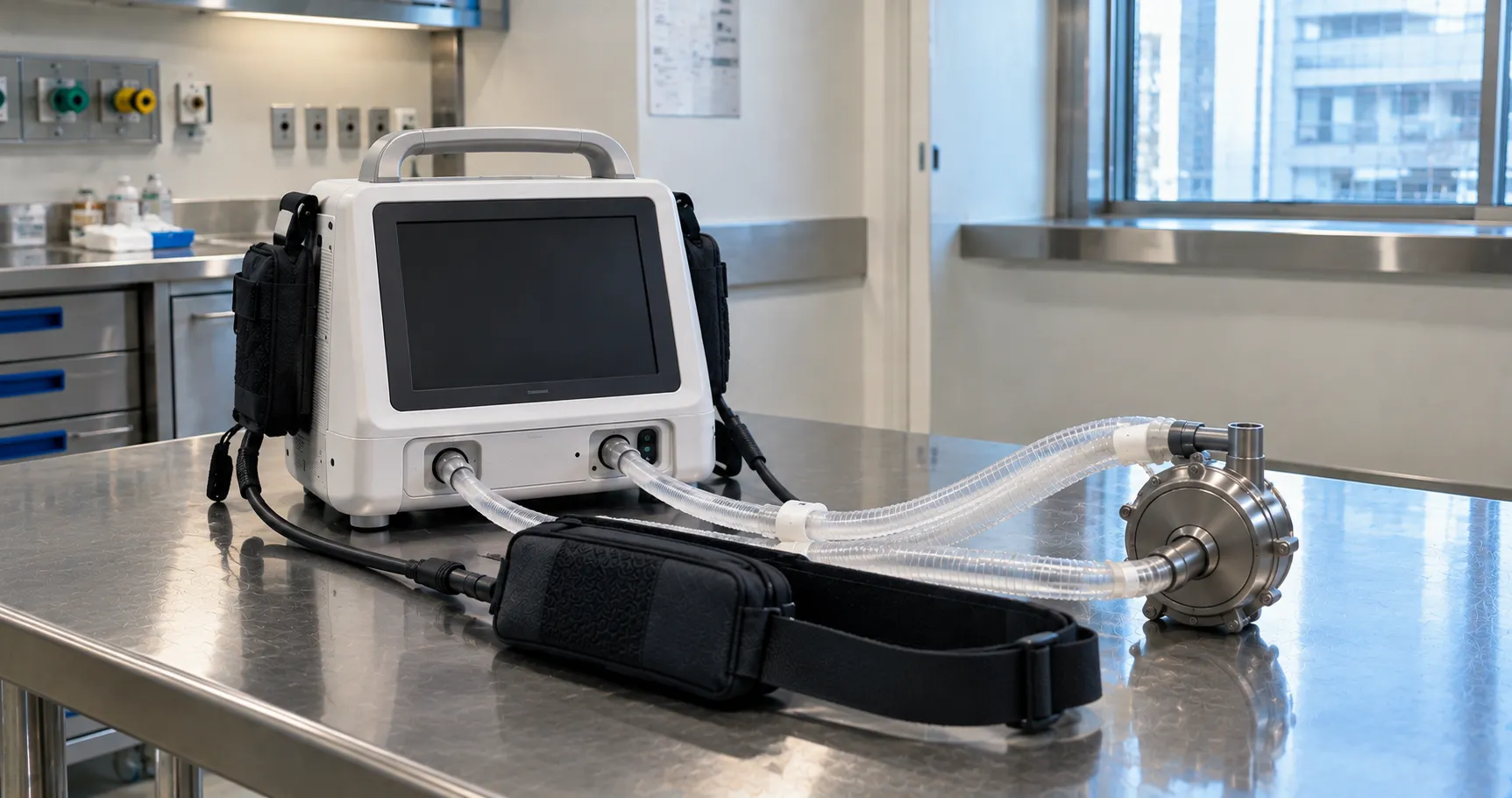
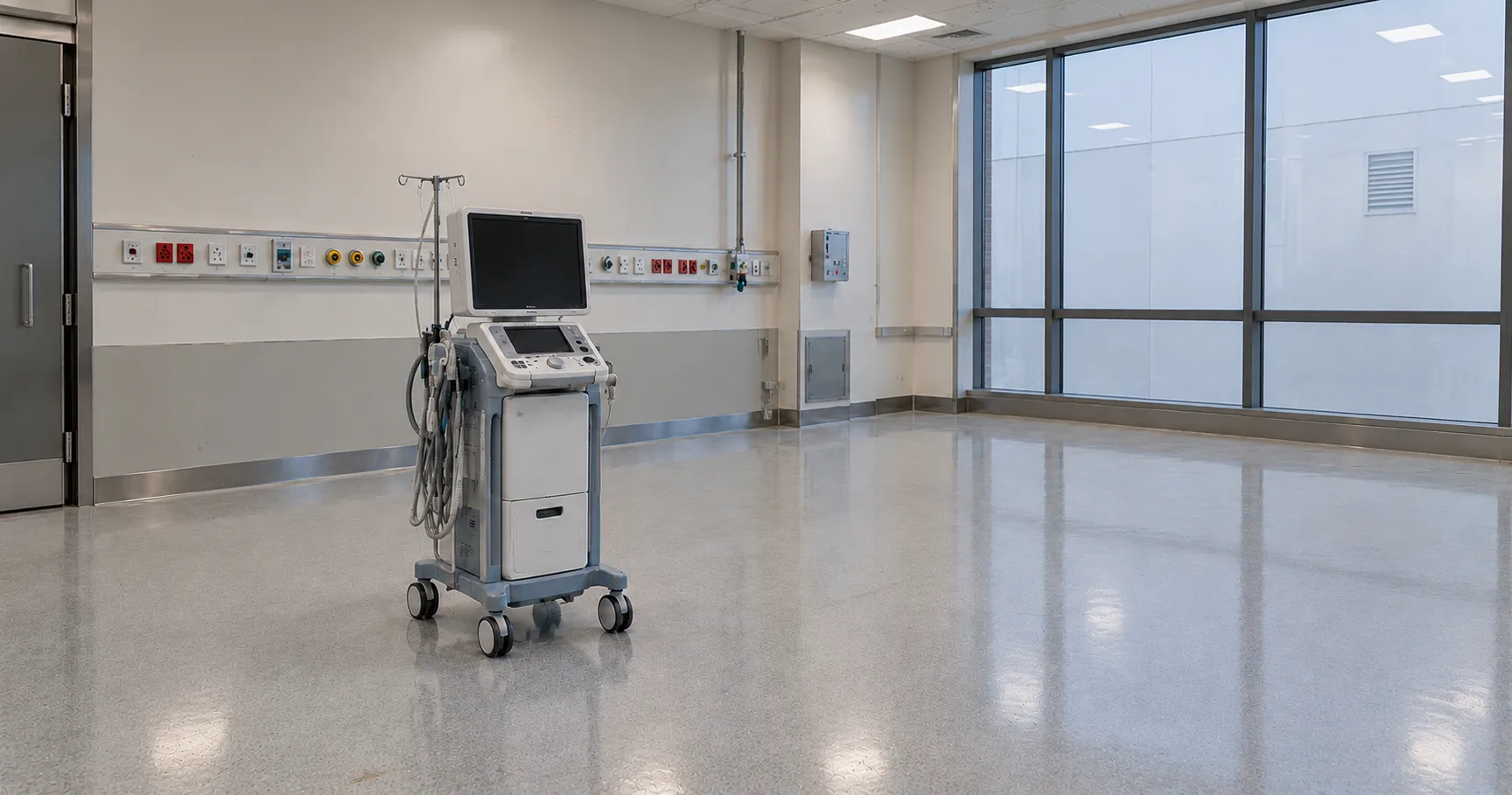
An intra-aortic balloon pump system has two main parts: a single-use balloon catheter and a reusable drive console. The catheter carries a polyurethane balloon, commonly around 30 to 50 millilitres in volume for adults with a range of sizes matched to patient height, mounted near the tip of a slim catheter inserted through the femoral artery. The console shuttles gas in and out of the balloon many times a minute. Helium is the gas of choice because its low density lets it move quickly enough to inflate and deflate the balloon within the tight windows the cardiac cycle allows. The console houses the gas system, the timing electronics, the pressure and ECG inputs, a display and battery backup for transport, all of which the biomedical team must maintain.
Timing: ECG and arterial pressure triggering
Counterpulsation only helps if inflation and deflation land in the right part of every beat, so triggering is central to how intra-aortic balloon pumps work. The console usually triggers from the patient's ECG R-wave, timing inflation to the middle of diastole, and can alternatively trigger from the arterial pressure waveform. Modern consoles offer automatic, real-time timing algorithms that adjust beat to beat, which matters when the heart rhythm is irregular. When comparing devices, the sophistication and reliability of the triggering and timing software is often more clinically important than any single hardware specification, because mistimed counterpulsation gives little benefit.
Insertion, sizing and how long support lasts
The balloon catheter is normally placed percutaneously through the femoral artery and advanced so the balloon sits in the descending thoracic aorta, just beyond the left subclavian artery. Sheathed and sheathless insertion options exist, and balloon size is chosen against patient height so the inflated balloon occludes an appropriate portion of the aorta without obstructing key branches. Support is inherently temporary — typically hours to a few days — as a stabilising measure while the underlying problem is treated or a longer-term decision is made. That short duration, combined with single-use catheters, shapes the procurement picture: the recurring consumable cost can outweigh the one-off console purchase over a busy year. Vascular access also carries risk — limb ischaemia and bleeding at the femoral site are recognised concerns — so the kit supplied with the catheter, and the training that accompanies it, form part of what a buyer is really assessing rather than an afterthought.
Intra-aortic balloon pump standards and MHRA oversight
Intra-aortic balloon pumps are medical devices regulated in Great Britain under the Medical Devices Regulations 2002 (UK MDR 2002), enforced by the Medicines and Healthcare products Regulatory Agency, and must carry valid UKCA or CE conformity marking under the arrangements currently in force. Buyers should confirm current requirements with the MHRA rather than relying on a supplier summary.
The drive console is mains and battery powered electromedical equipment, so it must meet the general medical electrical safety standard IEC 60601-1, with the alarm-system standard IEC 60601-1-8 relevant to its audible and visual alerts. The single-use balloon catheter is a sterile intravascular device supplied with its own conformity documentation. Ask suppliers to state exactly which standards their declarations cover for both the console and the catheter, and request the technical files for your equipment records.
Where balloon pumps sit in the critical-care fleet
These consoles live in cardiac catheter labs, cardiothoracic theatres, coronary care and intensive-care units, and they move with the patient during inter-hospital transfer, so portability, battery endurance and robustness matter. National guidance on managing acute cardiac conditions is set by bodies such as the National Institute for Health and Care Excellence, and reviewing the relevant pathways through NICE helps a service anticipate how often it will call on counterpulsation and how many consoles and catheters to hold. Because the catheter is time-critical in an emergency, reliable consumable stock and rapid resupply are as important as the console specification itself.
Console upkeep, helium logistics and infection control
The reusable console carries its own maintenance load that procurement should cost from the outset. Helium is stored either in an internal cylinder or an external supply, and a service needs a dependable routine for cylinder exchange, leak checking and safe gas handling. The gas circuit, solenoid valves and pressure transducers are wear items subject to planned servicing, and the internal battery that keeps counterpulsation running during transfer degrades over time and must be replaced on schedule. The balloon catheter itself is strictly single-use and sterile; it is never reprocessed, so the discipline here is stock rotation and expiry management rather than decontamination. Consoles that touch multiple patients need surface-cleaning protocols compatible with the manufacturer's materials, which is worth confirming against your infection-control policy before purchase.
What to check before buying intra-aortic balloon pumps
-
Confirm the console's triggering modes (ECG and arterial pressure) and the quality of its automatic timing algorithm.
-
Check the range of balloon catheter sizes and volumes and their match to your patient population.
-
Verify helium supply, cylinder handling and how gas is managed and refilled on the console.
-
Confirm battery endurance and durability for inter-hospital transfer.
-
Request the IEC 60601-1 and IEC 60601-1-8 conformity coverage for the console and the catheter documentation.
-
Establish single-use catheter pricing and guaranteed resupply times, as this drives recurring cost.
-
Clarify servicing intervals, loan-console availability and biomedical training and support.
-
Check display clarity, waveform capture and any data-export or connectivity options.
Weighing consoles and their consumables together, rather than the capital price alone, gives a true comparison. MediGear helps critical-care teams identify and compare verified circulatory-support suppliers, and procurement leads can outline their requirements through the MediGear buyer channel to receive matched proposals.
Making a sound purchase for your critical care unit
Intra-aortic balloon pumps remain a widely used first line of temporary mechanical support, and buying them well means judging the console and its catheter programme as a single system: dependable timing software, a full range of balloon sizes, secure helium and consumable supply, current regulatory conformity and responsive service. Treat the recurring catheter cost and resupply reliability with the same seriousness as the console price, and your critical-care unit will have counterpulsation ready and working at the moment a patient in shock needs it most.
Disclaimer
This article is for informational purposes only. It is published by MediGear (medigear.uk) for general information and procurement guidance, and is not clinical, diagnostic, treatment, technical, engineering, legal or regulatory advice, nor a product endorsement, guarantee or substitute for professional assessment. MediGear does not provide medical consultations. Buyers should consult their clinical, biomedical, estates and regulatory contacts, and the manufacturer's documentation, and independently verify all specifications, certifications, compatibility and suitability before purchase. Specifications, certifications and availability are correct at the time of publication and may change without notice. MediGear is a medical-equipment distributor and does not sell medicines or pharmaceutical products.