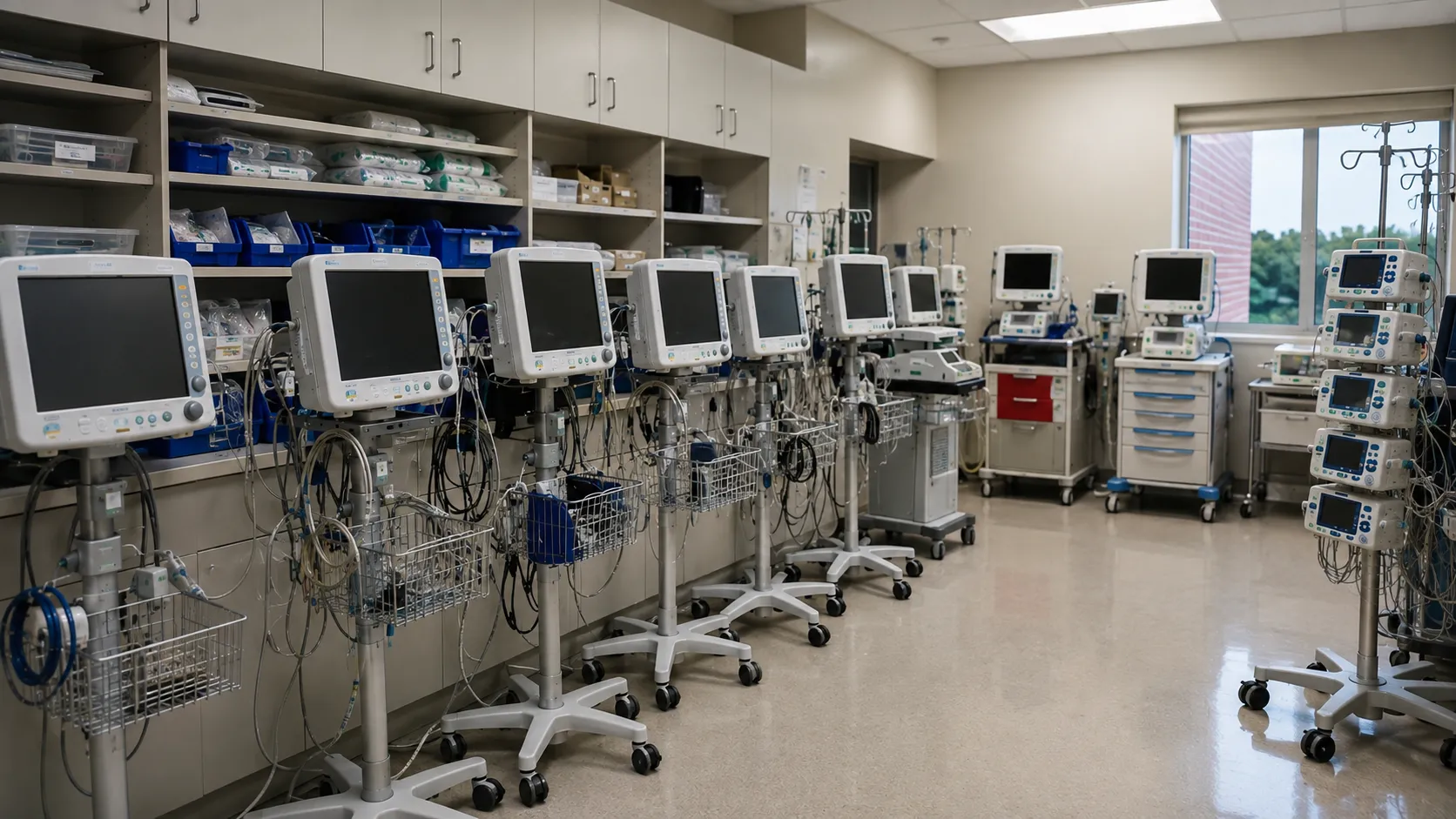
Medical equipment standardisation helps hospitals reduce unnecessary variation between devices used for similar clinical functions. When departments purchase different models independently, the organisation may face duplicated training, incompatible accessories, larger spare parts inventories, and more complex maintenance requirements.
For hospital buyers and procurement teams standardising medical equipment, the process should begin by developing shared clinical and technical requirements. Standardisation should not force every department to use identical equipment when workloads or clinical needs are genuinely different.
Clinical users, biomedical engineers, procurement specialists, facilities teams and digital personnel should review proposed standards together. Their combined input helps the hospital balance consistency with department-specific requirements.
A controlled standardisation programme can improve equipment compatibility, staff familiarity, service efficiency and long-term purchasing decisions.
Define the Scope and Standardisation Objectives
The hospital should identify which equipment categories and departments can reasonably use common standards.
Equipment category — Select comparable equipment groups such as patient monitors, infusion devices, examination lights, defibrillators, beds or laboratory systems.
Clinical function — Confirm that the equipment serves a similar purpose across the departments included in the programme.
Department coverage — Record which wards, theatres, clinics, laboratories or diagnostic areas will follow the standard.
Standardisation level — Decide whether the hospital will standardise the manufacturer, model, interface, accessory set or technical specification.
Operational objective — Identify whether the priority is easier training, faster maintenance, accessory compatibility, purchasing efficiency or equipment sharing.
Current variation — Record the manufacturers, models, software versions and accessories already in use.
Replacement timeline — Determine whether standardisation will happen immediately or through phased replacement.
Exception process — Establish how departments can request equipment outside the approved standard.
In practice, healthcare buyers often find that different model names hide equipment with very similar functions but incompatible accessories and service requirements.
The programme should focus first on equipment categories where variation creates measurable operational or financial problems.
Compare Department and Clinical Requirements
Standardisation should be based on documented needs rather than on selecting a single product for every setting.
Clinical workload — Compare patient volumes, operating hours and procedure frequency across departments.
Required performance — Identify shared requirements for accuracy, capacity, alarms, portability and battery operation.
When reviewing regulated and certified equipment suppliers worldwide, hospitals should confirm that proposed models can support all departments included in the standardisation plan.
Patient and user environment — Consider whether equipment will be used in wards, theatres, critical care areas, clinics or mobile services.
Infrastructure compatibility — Review electrical supply, room dimensions, networks, medical gases and other facility requirements.
Mobility requirements — Some departments may need compact or mobile equipment while others require fixed installations.
Cleaning requirements — Compare materials, reusable accessories and manufacturer cleaning instructions.
Digital integration — Connected equipment may need common data formats, interfaces, user controls and cybersecurity support.
Backup capacity — Critical departments may require additional units or different support arrangements.
Staff competency — Review whether clinical teams already have experience with particular equipment families.
Experienced clinical supply managers typically standardise shared requirements while recording justified differences for specialist departments.
Create Approved Specifications and Model Lists
Controlled technical and procurement documents should support a hospital-wide standard.
Core technical specification — Define the minimum performance and safety requirements that every approved model must meet.
Preferred functions — Separate desirable features from mandatory requirements so that supplier comparisons remain clear.
Approved model list — Record the manufacturer, model, configuration, software and applicable departments.
Accessory standard — Identify common batteries, cables, probes, sensors, trolleys and reusable components.
Consumable compatibility — Confirm whether departments can use the same consumables or ordering references.
Software configuration — Record approved versions, licences, interfaces and update responsibilities.
Documentation requirements — Define the manuals, compliance records, maintenance instructions and training materials required.
Model-substitution control — Suppliers should not replace an approved model with a related product without formal review.
New and refurbished options — Both conditions should meet the approved technical, documentation, warranty and support requirements.
Review date — Every specification and approved list should have a scheduled review or expiry date.
One aspect that surprises first-time buyers is that equipment from the same manufacturer may still use different batteries, connectors or software licences.
The approved list should identify the complete usable configuration, not just the main equipment model.
Evaluate Suppliers and Commercial Benefits
Supplier selection should support consistent equipment delivery and long-term technical service.
Supplier capability — Confirm experience supplying the selected equipment across several hospital departments.
Accuracy of product information — Medical equipment companies advertising solutions to hospital buyers should ensure that model, accessory and support claims match formal quotations.
Quantity availability — Check whether the supplier can provide the required units within the hospital’s implementation schedule.
Configuration consistency — Every delivered unit should match the approved model, software and accessory package.
Volume pricing — Standardised orders may allow the hospital to negotiate more consistent pricing and commercial terms.
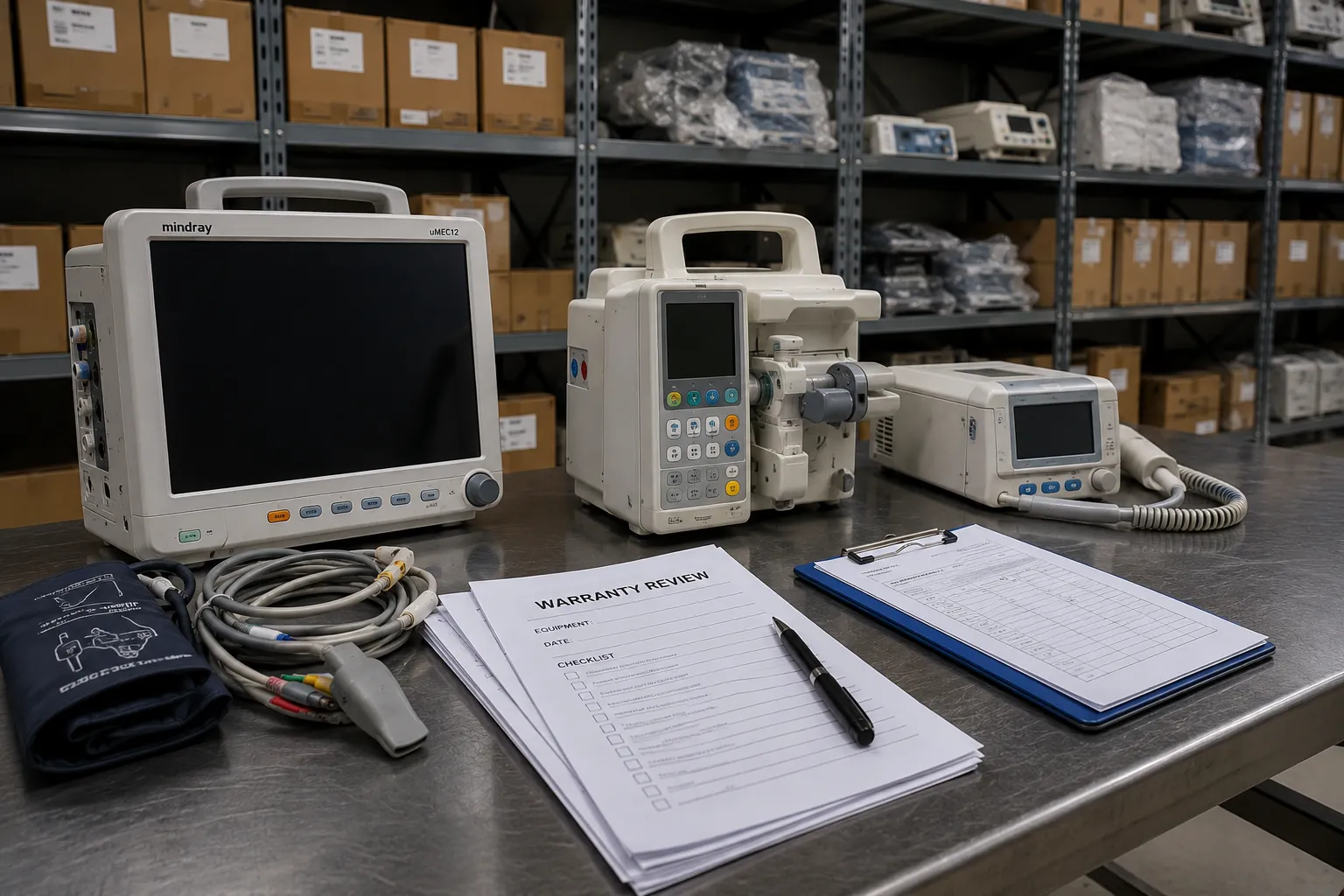
Warranty alignment — Warranty activation, parts, labour, freight and exclusions should be consistent across departments.
Training support — Confirm whether the supplier can deliver common clinical and technical training across several locations.
Service capacity — Review engineer availability, response times, maintenance procedures and remote support.
Spare-parts commitment — Ask how long critical components and accessories are expected to remain available.
Change notification — Suppliers should notify the hospital before discontinuing or modifying an approved product.
Healthcare organisations coordinating multi-department purchasing may benefit from structured partnerships for international medical equipment standardisation and partnership.
Each supplier agreement should still define the approved configuration, quantities, delivery phases and support responsibilities.
Implement Standardisation Across Departments
Implementation should be phased carefully so that existing equipment remains supported during the transition.
Asset review — Identify current models, quantities, conditions, locations and replacement priorities.
Department rollout plan — Sequence implementation according to clinical need, budget and equipment condition.
Training programme — Provide role-based training for clinical users, biomedical engineers and support teams.
Accessory conversion — Replace or separate incompatible probes, batteries, cables and reusable components.
Maintenance preparation — Update service schedules, engineer training, test tools and technical documentation.
Spare-parts planning — Establish stock levels for common parts and reduce unnecessary inventory for retired models.
Storage and charging — Confirm that standardised mobile equipment has suitable home locations and charging arrangements.
Cleaning workflow — Update equipment-specific instructions and department responsibilities.
Asset-register update — Record approved models, software versions, accessories and department locations.
Legacy-equipment control — Clearly identify older models that remain temporarily in use during phased replacement.
User feedback — Collect information on workflow, reliability, alarms, accessories and practical usability.
Acceptance review — Confirm that delivered equipment matches the approved standard before operational release.
Implementation should gradually reduce variation without interrupting clinical services or prematurely removing support from existing assets.
Monitor Performance and Control Exceptions
Standardisation should be reviewed using maintenance, utilisation and user information.
Equipment reliability — Compare fault frequency and downtime across the approved models.
Maintenance efficiency — Review whether service time, engineer training and spare-parts requirements have improved.
Accessory compatibility — Check whether common accessories are functioning as expected across departments.
Training outcomes — Monitor recurring user errors, competency gaps, and refresher training requirements.
Supplier performance — Compare delivery, response time, parts availability and warranty outcomes with agreed commitments.
Utilisation levels — Identify shortages, surplus units and opportunities for controlled equipment sharing.
Lifecycle cost — Review purchase, maintenance, software, consumable and replacement expenditure.
Exception requests — Require a documented clinical or technical reason for equipment outside the approved standard.
Product discontinuation — Reassess the standard when models, components or software become unsupported.
Specification review — Update approved requirements when clinical services, infrastructure or technology needs change.
Replacement alignment — Use future equipment replacement to reduce remaining model variation.
Healthcare organisations seeking standardised equipment quotations, model comparisons, or international supply support can contact the Medigear.uk team for assistance with medical equipment. Enquiries should include the equipment category, departments, preferred configuration, quantity and destination.
Standardisation should remain a controlled lifecycle process rather than a one-time purchasing exercise.
Final thoughts
Medical equipment standardisation can help hospitals reduce unnecessary variation across clinical departments.
The process should begin with shared clinical requirements, existing asset data and clear technical specifications. Specialist departments should retain justified exceptions when a single approved model cannot meet their needs.
Standard models can simplify training, maintenance, accessories, spare parts planning, and supplier management.
A structured review process helps healthcare organisations maintain consistency while adapting standards to changing clinical, technical and lifecycle requirements.
Disclaimer
Medigear.uk is a global medical equipment supplier, exporter, and distributor. The content published on this site is intended for educational and product awareness purposes only. Nothing on this page constitutes medical advice, clinical guidance, or treatment recommendations. All healthcare procurement and clinical decisions should be made by qualified medical professionals and compliant procurement teams operating within the regulatory frameworks of their respective countries.