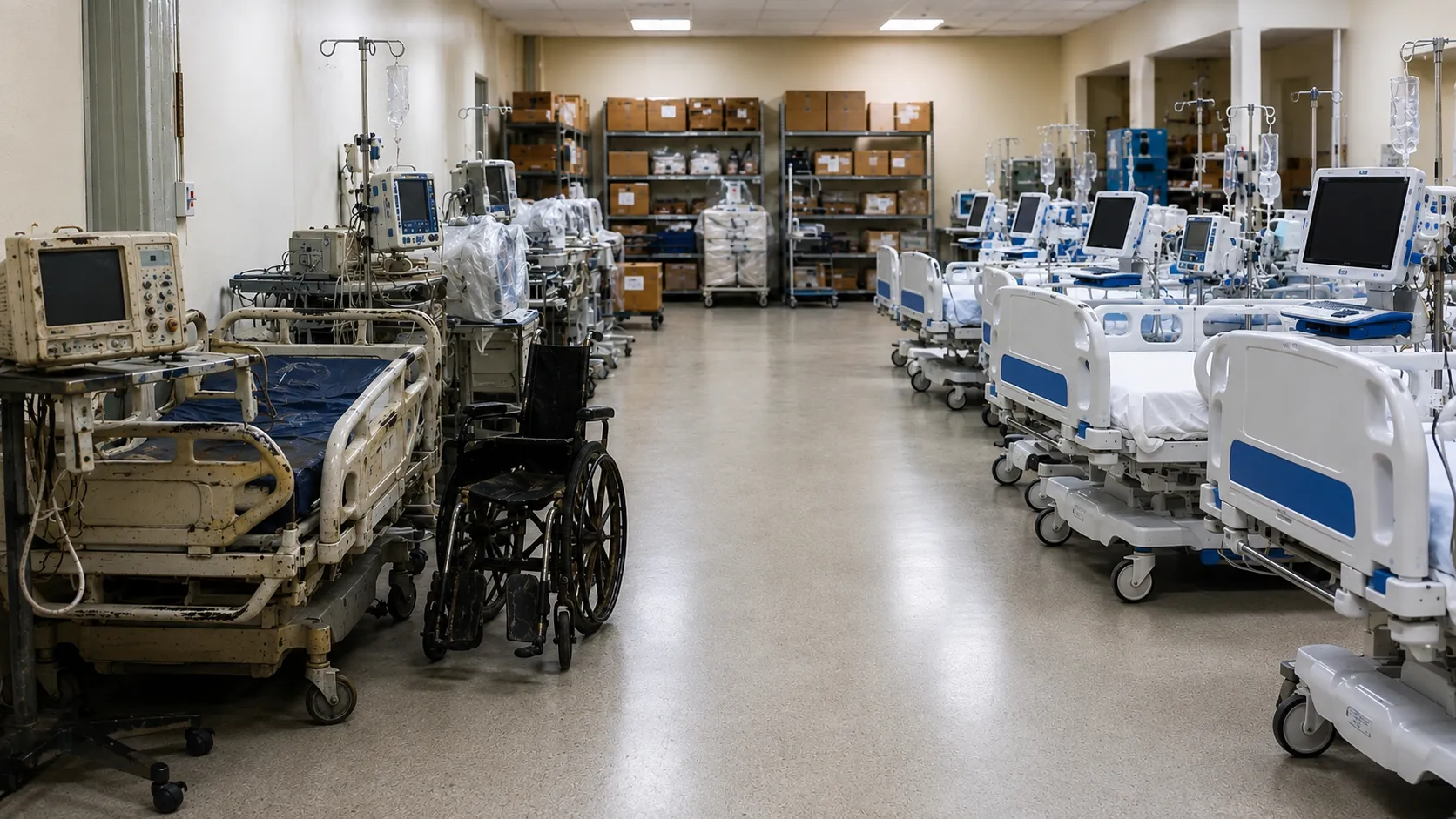
Hospital equipment can remain operational for many years, but continued operation does not always mean that an asset remains reliable, economical or suitable for current healthcare requirements. Repeated breakdowns, unavailable spare parts, outdated software and changing clinical workloads can make replacement necessary before complete failure occurs.
For hospital buyers and healthcare equipment decision-makers, replacement planning should be based on documented asset information rather than equipment age alone. Clinical importance, maintenance history, manufacturer support, lifecycle cost and the availability of backup equipment should all influence the decision.
Biomedical engineers, clinical departments, procurement teams, finance managers and hospital leadership should contribute to the replacement programme. Their combined review helps the organisation balance operational risk with available capital.
A structured plan allows healthcare organisations to identify high-priority assets, prepare budgets, compare replacement options and coordinate procurement before ageing equipment interrupts essential services.
Build an Accurate Asset Replacement Register
Replacement planning begins with a complete and current record of hospital equipment.
Asset identification — Record the equipment name, manufacturer, model, serial number, asset number, location and responsible department.
In practice, healthcare organisations often discover that transferred, donated or refurbished equipment is missing from the central replacement register.
Installation and commissioning dates — These dates help estimate equipment age and review how long the asset has been operating.
Clinical function — Record the service, procedure or workflow supported by each item.
Current condition — Identify whether equipment is operational, restricted, frequently faulty, awaiting repair or no longer in regular use.
Maintenance history — Include preventive servicing, repairs, replacement parts, recurring faults and downtime.
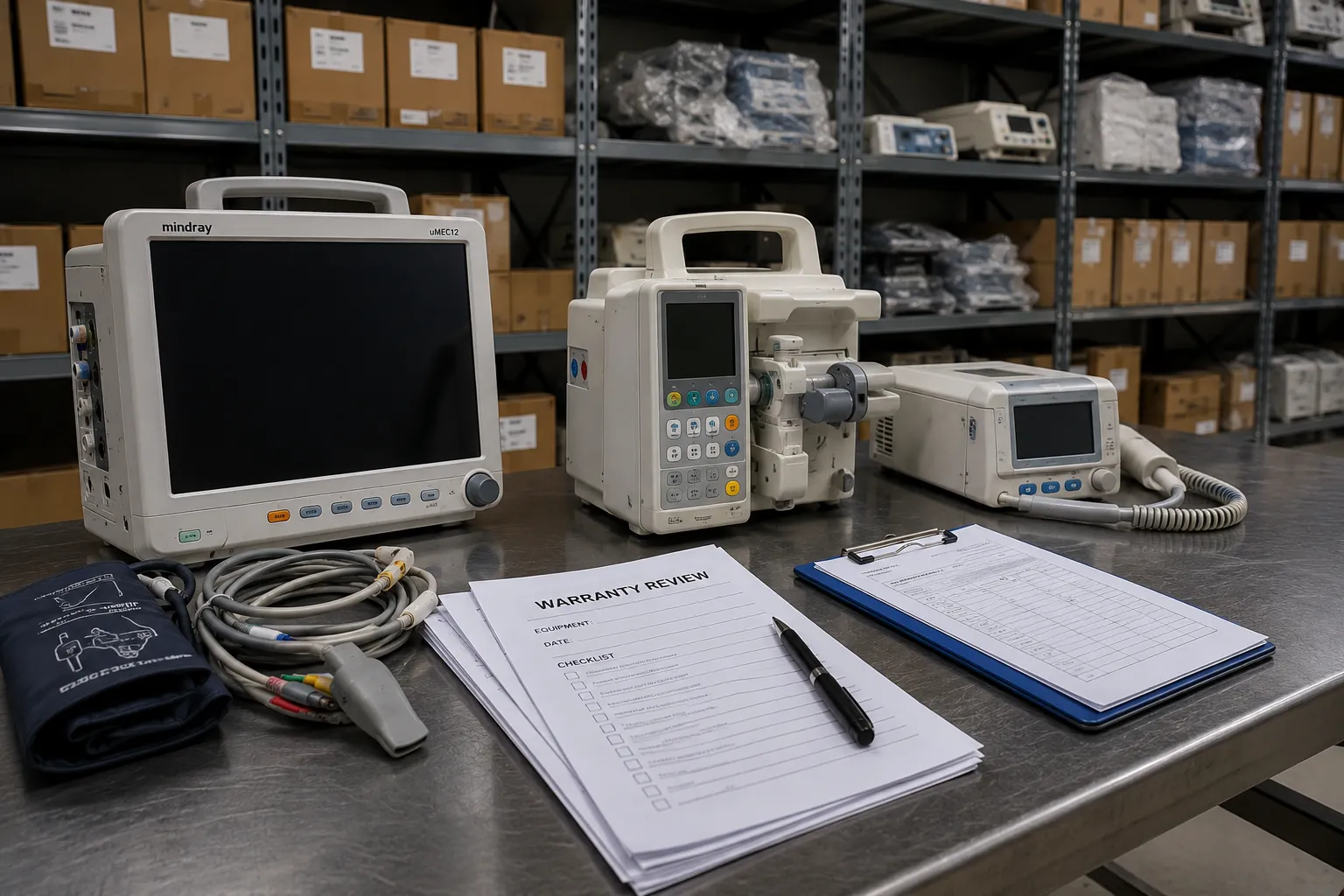
Warranty and service status — Record whether the equipment remains under warranty, under contract, or under manufacturer support.
Software and connectivity — Connected devices should include software versions, interface requirements, security status and update availability.
Expected support life — Document manufacturer information about parts, software and technical-support availability.
Backup capacity — Identify whether another device can maintain the clinical service if the equipment fails.
Estimated replacement period — Assign an initial replacement horizon that can be updated as new information becomes available.
The register should be reviewed regularly and updated after major repairs, software changes, transfers or support notices.
Prioritise Replacement According to Risk
Hospitals should use consistent criteria to rank equipment replacement needs.
Clinical criticality — Equipment supporting emergency, surgical, diagnostic or critical care services may require higher replacement priority.
Failure consequences — Assess whether failure could stop a service, delay procedures or require patient transfer.
Equipment reliability — Repeated breakdowns and short repair intervals may indicate declining performance.
When comparing regulated medical equipment suppliers and replacement options, hospitals should confirm that the proposed systems meet the exact clinical, technical and destination requirements.
Maintenance expenditure — Rising repair, labour, and spare parts costs can make continued operation uneconomical.
Downtime history — Long periods of downtime may affect departmental capacity even when repairs remain technically possible.
Parts and service availability — Equipment may require replacement when components, engineers or manufacturer support are no longer accessible.
Software obsolescence — Unsupported operating systems and interfaces can create cybersecurity, connectivity and compliance concerns.
Infrastructure compatibility — Older equipment may no longer suit current rooms, networks, electrical systems or clinical workflows.
Backup equipment — Assets without reliable backup capacity may require earlier replacement than equipment with sufficient alternatives.
Experienced clinical engineering teams typically assess risk, reliability, and support status rather than replace equipment solely because it has reached a particular age.
Review Technical, Clinical and Financial Replacement Criteria
The replacement decision should consider whether the existing asset can continue supporting the hospital effectively.
Clinical suitability — Confirm whether the equipment still supports current procedures, patient volumes and department requirements.
Performance limitations — Review capacity, accuracy, speed, image quality, battery operation and other relevant functions.
Safety and reliability — Consider recurring faults, damaged components, unstable performance and unresolved technical risks.
Maintenance viability — Determine whether repairs remain practical and whether suitable parts and engineers are available.
Lifecycle expenditure — Compare expected repair, service, parts, software and operating costs with the cost of replacement.
Energy and utility use — Newer equipment may reduce electricity, water, cooling or consumable requirements.
Workflow impact — Replacement may improve standardisation, staff familiarity, room utilisation or patient flow.
Digital compatibility — Review network integration, cybersecurity, data formats, interfaces and software support.
Training requirements — A new system may require clinical and technical staff to complete additional training.
Future demand — Replacement specifications should reflect expected service growth rather than only current workload.
One aspect that surprises first-time buyers is that retaining an inexpensive older asset may lead to higher annual costs due to repairs, downtime, and unavailable components.
The justification for the replacement should clearly explain the operational, technical, and financial reasons for the decision.
Compare Replacement Options and Supplier Proposals
Hospitals should prepare one controlled specification before requesting quotations for replacement equipment.
Approved technical requirement — Define mandatory clinical performance, infrastructure, accessories and support expectations.
New equipment options — New systems may provide longer support periods, current software and manufacturer-backed warranties.
Refurbished equipment options — Refurbished equipment may offer lower initial costs when condition, testing, documentation and remaining support life are suitable.
Accuracy of supplier information — Medical equipment companies advertising replacement solutions to healthcare buyers should ensure that product, warranty and support claims match formal quotations.
Complete configuration — Compare base equipment, probes, sensors, cables, trolleys, software, licences and starter consumables.
Installation requirements — Review room preparation, electrical supply, ventilation, water, drainage, gases and network connections.
Training scope — Quotations should identify clinical and technical training, participant limits and supporting materials.
Warranty coverage — Compare duration, activation date, parts, labour, freight, software and engineer travel.
Maintenance support — Confirm preventive servicing, response times, spare parts availability, and software updates.
Implementation schedule — Suppliers should provide realistic delivery, installation, commissioning and handover dates.
Healthcare groups managing multi-site replacement programmes may benefit from structured international medical equipment procurement partnerships. Each replacement should still follow model-specific technical evaluation and formal approval.
The preferred option should provide the strongest complete lifecycle value rather than the lowest headline price.
Prepare the Budget and Implementation Programme
Replacement planning should connect technical priorities with financial and operational schedules.
Capital forecast — Prepare a multi-period replacement forecast that shows the expected timing and estimated cost for each priority asset.
Complete project cost — Include equipment, accessories, software, freight, customs, installation, training and initial maintenance.
Contingency allowance — Allow for infrastructure changes, exchange-rate movement, installation delays or additional accessories where relevant.
Department coordination — Agree when equipment can be removed and replaced without unnecessary interruption to clinical services.
Temporary capacity — Identify loan equipment, backup units or alternative workflows during replacement.
Room preparation — Complete construction, electrical, ventilation, network and utility work before delivery.
Procurement lead time — Account for specification approval, quotation review, manufacturing, shipping and customs.
Installation sequence — Coordinate removal of the old equipment with delivery and installation of the replacement.
Commissioning requirements — Define functional testing, safety checks, calibration, training and final acceptance.
Warranty activation — Ensure that warranty coverage begins according to the agreed installation or commissioning milestone.
A replacement budget should cover the full operational transition, not only the purchase price of the new equipment.
Decommission Old Equipment and Monitor the Replacement
Removing an asset from service should follow a controlled and traceable process.
Operational withdrawal — Confirm that clinical users have stopped using the equipment and that a suitable replacement or backup is available.
Data management — Remove patient, user, and network information in accordance with the hospital’s approved data process.
Accessory reconciliation — Identify probes, cables, batteries, trolleys, software and spare parts associated with the old equipment.
Asset-register update — Record the withdrawal date, condition and final disposition.
Decontamination — Clean and prepare the equipment according to applicable facility procedures before storage, transfer or disposal.
Resale or refurbishment review — Equipment may retain value when condition, documentation and regulatory requirements allow controlled resale or refurbishment.
Donation assessment — Donations should include suitable documentation, configuration, and support for transferring the supported equipment.
Recycling and disposal — Batteries, electronics and hazardous materials should be managed through appropriate channels.
Replacement performance review — Monitor uptime, user feedback, maintenance needs and workflow after the new equipment enters service.
Project closure — Retain approval records, supplier documents, commissioning reports, training records and decommissioning evidence.
Healthcare organisations seeking replacement equipment, supplier quotations, or international sourcing support can contact the Medigear.uk team for assistance with hospital equipment replacement. Enquiries should include the equipment category, current model, required quantity, condition preference and destination.
Replacement planning should remain connected to maintenance data, capital budgeting and long-term healthcare service requirements.
Final thoughts
Hospital equipment replacement planning should begin before an ageing asset becomes completely unusable.
Healthcare organisations need accurate inventories, risk-based priorities and clear technical, clinical and financial replacement criteria. Maintenance cost, downtime, parts availability and software support should be reviewed alongside equipment age.
Replacement budgets should include the complete cost of sourcing, installation, training, commissioning and decommissioning.
A structured replacement programme helps hospitals reduce unexpected disruption, use capital more effectively and maintain equipment that remains suitable for current healthcare services.
Disclaimer
Medigear.uk is a global medical equipment supplier, exporter, and distributor. The content published on this site is intended for educational and product awareness purposes only. Nothing on this page constitutes medical advice, clinical guidance, or treatment recommendations. All healthcare procurement and clinical decisions should be made by qualified medical professionals and compliant procurement teams operating within the regulatory frameworks of their respective countries.