Medical equipment backup power planning protects essential clinical services when normal electricity is interrupted or unstable. An incomplete plan may leave critical devices without sufficient runtime, overload emergency circuits, or create a gap between mains failure and generator availability.
For hospital equipment buyers and procurement teams, power requirements should be documented before equipment quotations and room designs are approved. The hospital should understand each device’s electrical load, internal battery capability, interruption tolerance and manufacturer requirements.
Clinical engineers, facilities personnel, electrical specialists, clinical users and procurement managers may each hold part of this information. Their requirements should be combined within one controlled equipment and power-continuity schedule.
A structured plan helps hospitals coordinate medical equipment, UPS systems, generators, distribution circuits, monitoring and long-term maintenance.
Define Critical Loads and Continuity Targets
Backup power should be prioritised according to clinical impact rather than applied uniformly to every hospital device.
Clinical criticality — Classify equipment according to how power interruption could affect clinical services, patient monitoring or operational continuity.
Interruption tolerance — Define whether a device can tolerate no interruption, a brief transfer delay or a longer controlled shutdown.
Required runtime — Determine how long the equipment must continue operating before generator supply, relocation or another contingency becomes available.
Internal battery capability — Record the stated battery runtime, charging time, battery age and functions supported during battery operation.
Department priority — Identify critical care, emergency, operating, diagnostic, laboratory, pharmacy and communication areas requiring protected power.
Simultaneous demand — Estimate how many essential devices may operate at the same time during peak activity.
Shutdown requirements — Identify equipment that needs sufficient time for data protection, controlled shutdown or procedure completion.
Future growth — Include reasonable allowance for additional devices, room expansion and increased clinical activity.
In practice, healthcare buyers often find that equipment with an internal battery is assumed to be fully protected without confirming its actual runtime or condition.
Every continuity target should therefore be linked to a defined clinical and operational requirement.
Match Backup Power to Equipment and Care Areas
Different equipment categories may require different combinations of internal batteries, UPS systems, emergency circuits and generator support.
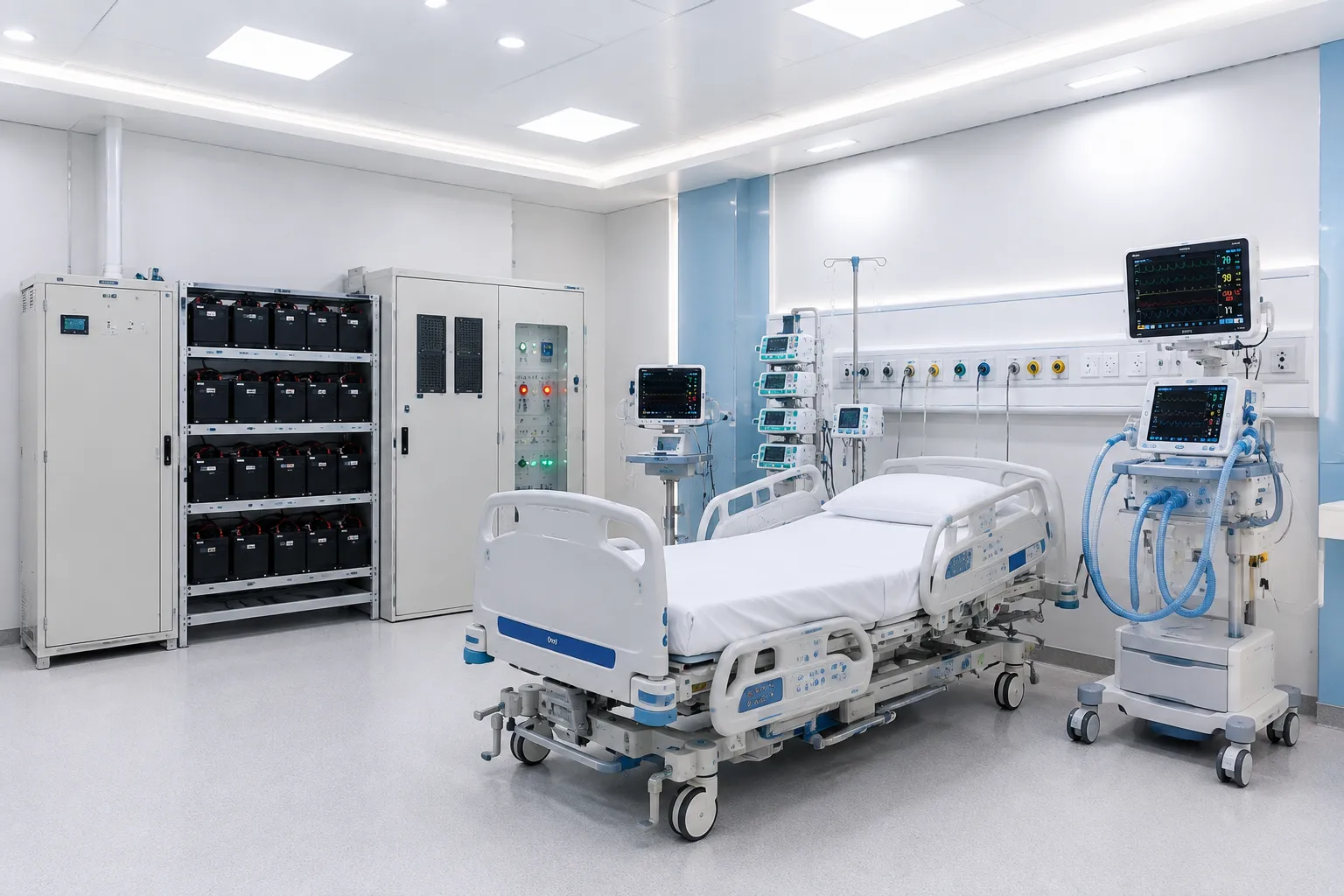
Critical-care equipment — Patient monitors, ventilators, infusion systems and related devices may require immediate continuity and protected distribution.
Operating and procedure equipment — Anaesthesia, monitoring, lighting and supporting systems should be assessed against procedure duration and transfer requirements.
Hospitals comparing regulated and certified equipment suppliers worldwide should request accurate electrical, battery and startup information for every proposed configuration.
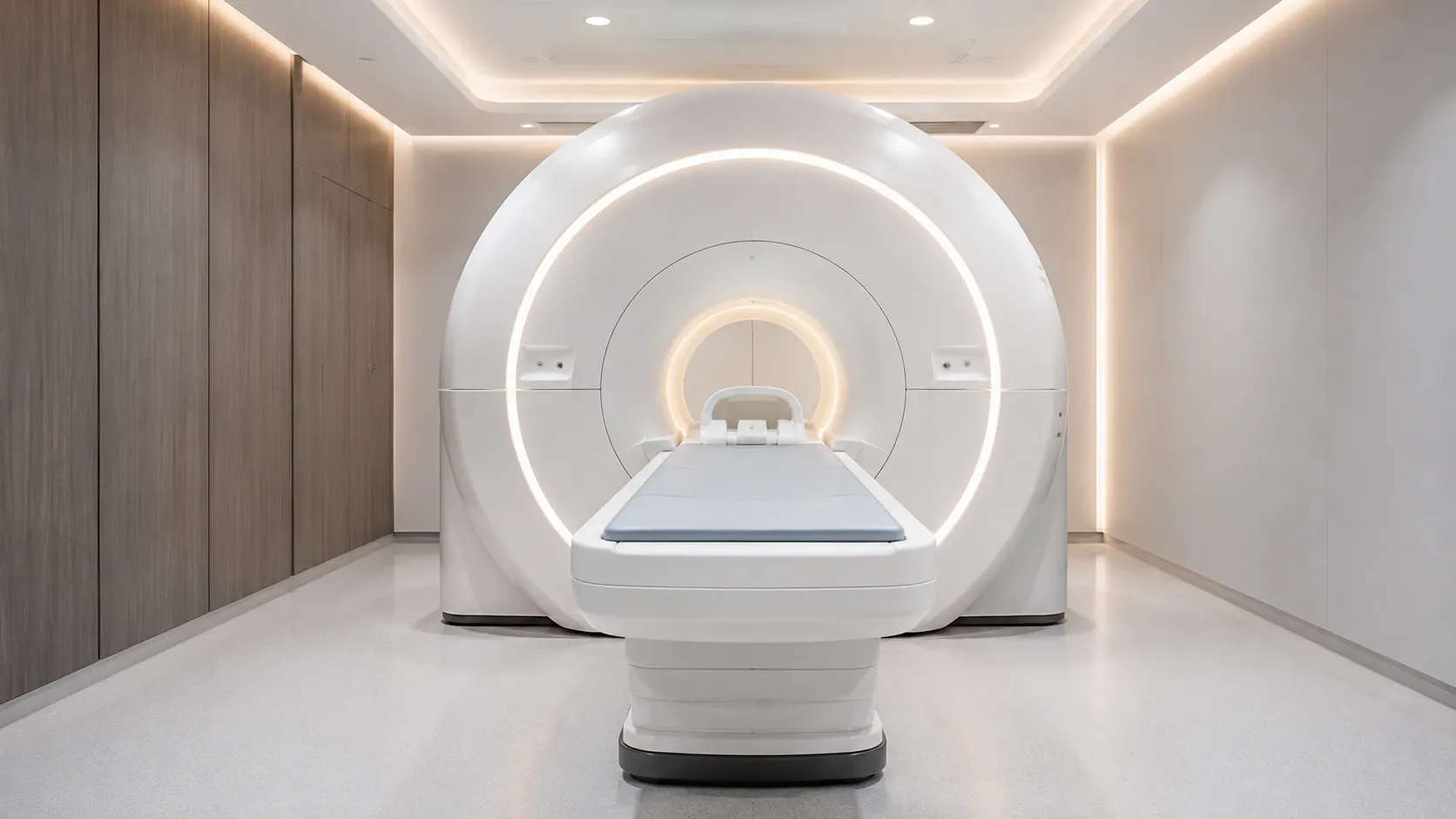
Diagnostic imaging equipment — Imaging systems may have high loads, specialist power-quality requirements or controlled shutdown procedures.
Laboratory equipment — Analysers, refrigeration, storage and information systems may need prioritisation according to sample stability and service continuity.
Pharmacy equipment — such as medicine refrigeration, temperature monitoring, automation, and inventory systems — may require protected power.
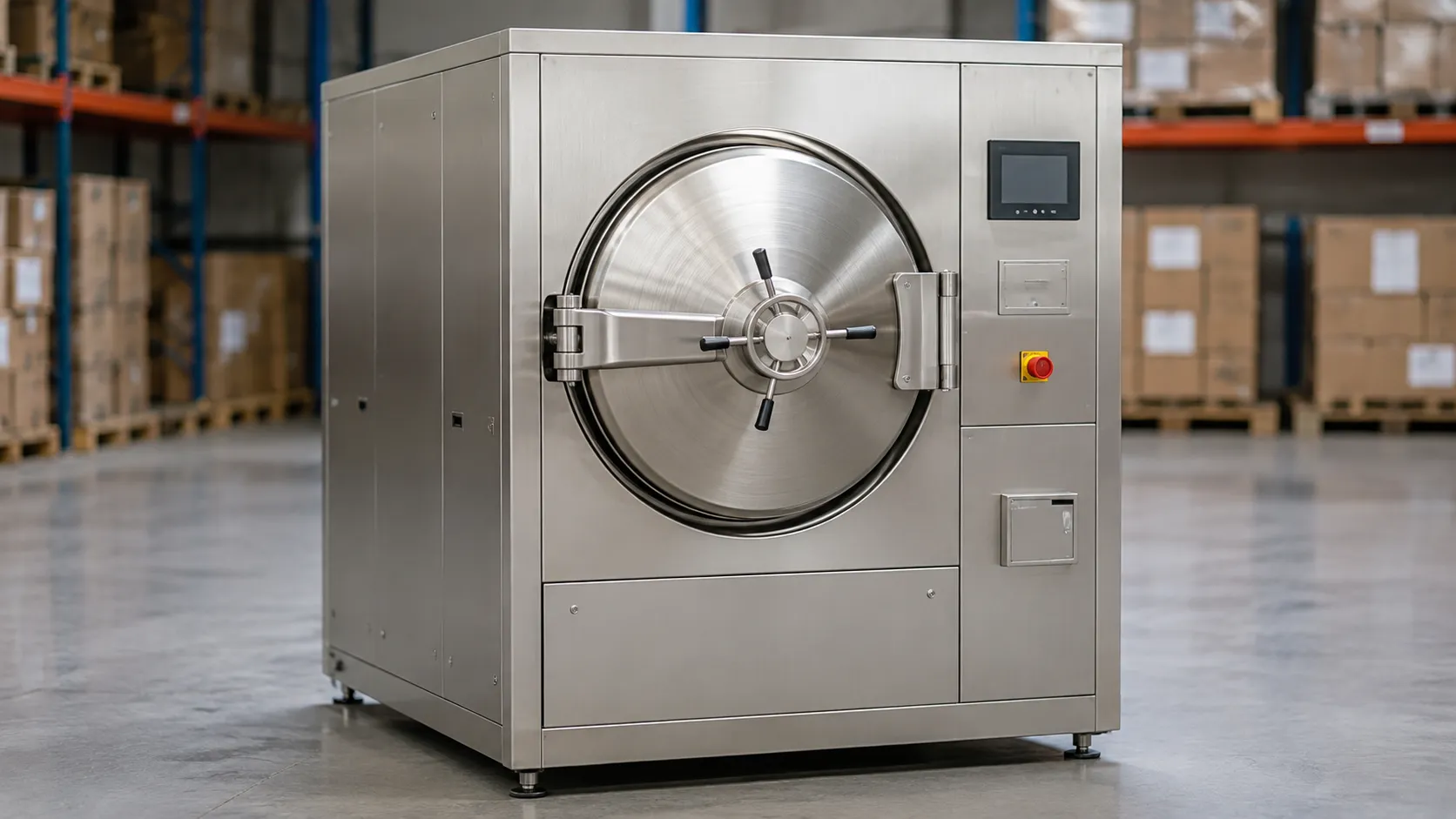
Sterile services equipment — Sterilisers, washers, traceability systems and supporting utilities should be reviewed for safe interruption and restart.
Mobile medical equipment — Devices moving between departments need controlled charging, battery checks and access to approved protected outlets.
Medical refrigerators and freezers — Backup arrangements should reflect storage requirements, alarm systems and expected outage duration.
Digital and network systems — servers, gateways, switches, and workstations supporting medical equipment — may require separate continuity planning.
Experienced clinical supply managers typically assess the complete operating system, including workstations, routers, pumps, cooling and monitoring, rather than only the main medical device.
Calculate Electrical and Technical Requirements
Final power-system design should be completed and verified by appropriately qualified technical professionals.
Connected load — Record the rated electrical demand of every device and included accessory connected to the protected supply.
Peak and starting demand — Identify equipment that draws higher power during startup, heating, motor operation or battery charging.
UPS capacity — Select capacity based on total supported load, required runtime, future allowance and the manufacturer’s operating limits.
Battery runtime — Calculate runtime under realistic connected loads rather than relying only on the maximum stated duration.
Generator transfer time — Compare the expected transfer period with equipment interruption tolerance and internal battery performance.
Automatic transfer arrangements — Confirm how essential circuits move from normal supply to generator-backed power.
Power quality — Review voltage stability, frequency, harmonics, surges and other conditions that may affect sensitive equipment.
Output compatibility — Confirm that UPS output characteristics suit the connected medical equipment and supporting systems.
Electrical distribution — Identify protected circuits, outlets, distribution boards and equipment connected to each supply.
Earthing and grounding — Coordinate equipment and power-system requirements with the approved hospital electrical design.
Bypass arrangements — Determine how maintenance or UPS failure can be managed without unnecessarily interrupting essential loads.
Monitoring and alarms — Define local displays, remote notifications, battery-health information and escalation responsibilities.
One aspect that surprises first-time buyers is that a UPS may have an adequate headline rating but insufficient runtime or output capacity under the actual equipment load.
Hospitals should evaluate usable performance, connected loads, and future expansion together.
Compare Suppliers and Commercial Packages
Supplier proposals should describe complete backup power systems rather than only the UPS or battery cabinet.
Supplier capability — Assess experience with hospital power continuity, medical equipment loads, installation and after-sales support.
Quotation structure — Require separate details for UPS units, batteries, cabinets, bypass equipment, monitoring, installation and services.
Accuracy of product information — Medical equipment companies advertising power-support solutions to healthcare buyers should ensure that capacity, runtime and compatibility claims match formal quotations.
Rated and usable capacity — Record the system rating, supported load, power factor, expansion limits and expected runtime.
Battery configuration — Identify battery type, quantity, design life, replacement process and environmental requirements.
Complete project cost — Include equipment, delivery, electrical work, installation, testing, training and initial support.
Infrastructure exclusions — Clarify responsibility for cables, distribution boards, ventilation, room work and generator connections.
Monitoring package — Confirm included displays, network monitoring, alarms, licences and notification functions.
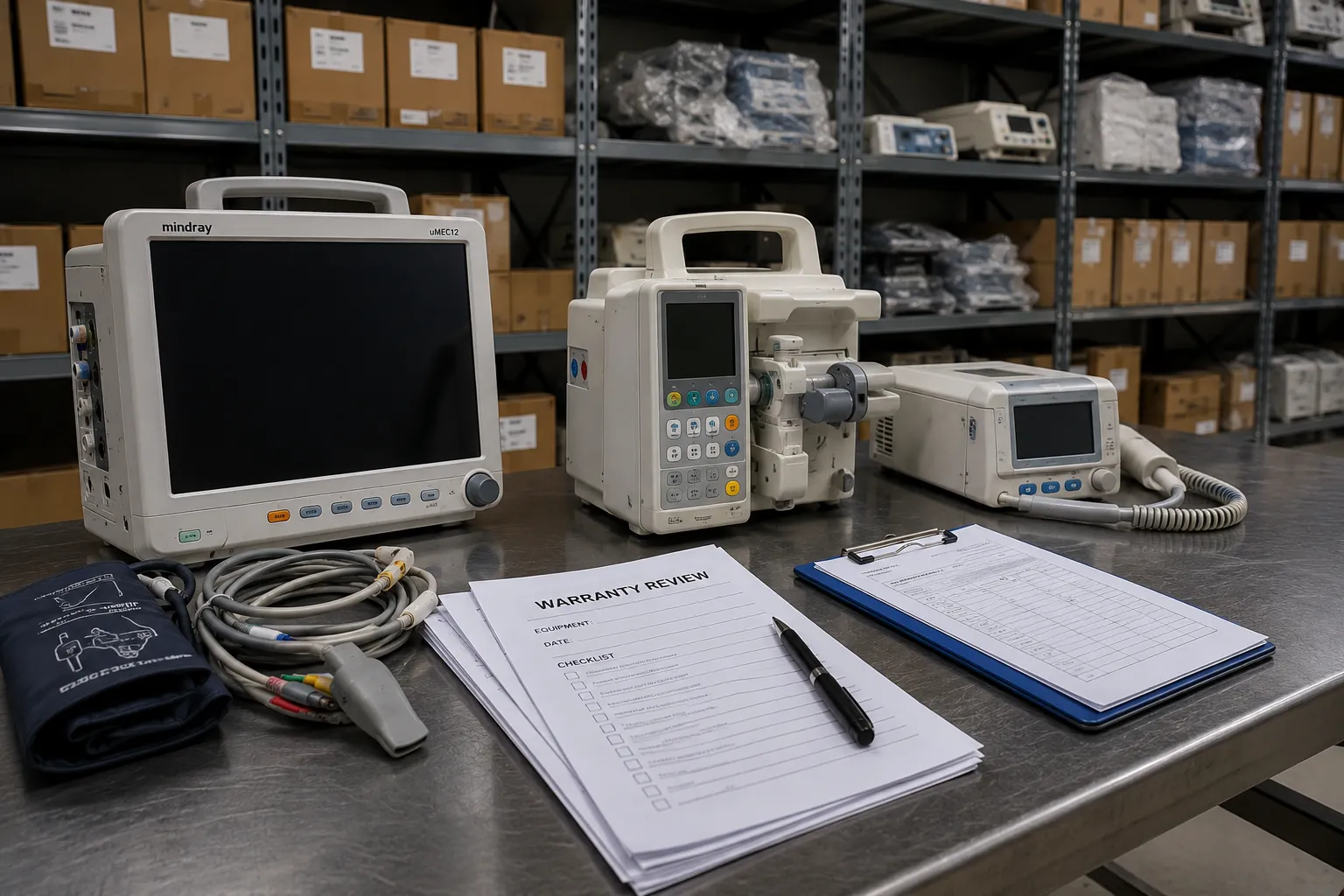
Warranty coverage — Review the start date, duration, batteries, components, labour, travel and exclusions.
Maintenance support — Confirm inspection schedules, response targets, spare parts and emergency technical assistance.
Testing responsibilities — Define who will conduct load tests, transfer tests, runtime checks and final acceptance.
Replacement planning — Request expected battery and component replacement intervals for lifecycle budgeting.
Healthcare organisations developing protected power systems across multiple departments may benefit from structured international partnerships for sourcing healthcare equipment.
Each backup power package should still identify its exact capacity, runtime, battery configuration, installation scope and support responsibilities.
Coordinate Installation, Testing and Lifecycle Support
Backup power equipment should be installed only after loads, locations, access routes and electrical responsibilities are confirmed.
Site preparation — Verify available space, ventilation, environmental conditions, floor loading and maintenance access.
Delivery inspection — Check manufacturers, models, quantities, serial numbers, batteries, accessories and visible condition.
Electrical installation — Coordinate suppliers, electrical contractors, facilities personnel, clinical engineers and equipment representatives.
Circuit identification — Clearly identify protected circuits, outlets, UPS supplies and generator-backed distribution.
Equipment connection — Confirm that only approved loads are connected to each backup system.
Transfer testing — Verify the change from normal power to UPS and generator-supported supply under controlled conditions.
Load testing — Test the system with realistic connected demand and agreed operational scenarios.
Runtime verification — Confirm usable battery duration at the approved load.
Alarm testing — Verify local indicators, remote notifications, battery warnings, overload alarms and escalation routes.
Asset registration — Record the manufacturer, model, serial number, location, capacity, warranty and maintenance schedule.
Staff training — Provide role-based instruction covering alarms, normal operation, fault reporting and outage procedures.
Preventive maintenance — Plan battery checks, inspections and servicing without unnecessarily exposing critical equipment.
Equipment should not enter routine service until installation, testing, documentation and training requirements are complete.
Govern Readiness and Outage Performance
Backup power planning should remain active after commissioning because medical equipment loads and hospital services continue to change.
Load monitoring — Compare actual connected demand with the approved system capacity.
Battery-condition review — Track battery age, test performance, warning events and replacement requirements.
Generator coordination — Confirm that generator tests include the circuits and clinical loads expected during an outage.
Alarm response — Assign responsibility for investigating UPS faults, battery warnings and failed transfer events.
Outage records — Document power interruptions, affected equipment, system performance and completed actions.
Maintenance compliance — Review inspections, servicing, battery replacement and unresolved technical issues.
Change control — Assess new equipment, relocated devices or altered circuits before connecting them to protected power.
Supplier performance — Monitor response times, maintenance quality, parts availability and corrective-action completion.
Contingency planning — Define approved alternatives if the UPS, generator, distribution system or protected outlet becomes unavailable.
Replacement planning — Prioritise systems according to condition, capacity, clinical importance and support status.
Healthcare organisations seeking medical equipment, UPS systems or international sourcing support can contact the Medigear.uk team for medical equipment assistance. Enquiries should include equipment categories, quantities, electrical loads, required runtime, hospital areas and destination.
The backup power plan should be reviewed whenever medical equipment, electrical infrastructure, clinical services or continuity requirements change.
Final thoughts
Medical equipment backup power planning should begin with critical-load identification, interruption tolerance and realistic runtime requirements.
Healthcare teams should coordinate internal batteries, UPS systems, protected circuits, generators and monitoring through a single controlled plan. Electrical loads, startup demand, power quality, bypass arrangements and future growth should be reviewed against exact equipment configurations.
Supplier quotations should identify usable capacity, battery configuration, installation responsibilities, testing and lifecycle support.
A structured approach helps hospitals improve power resilience, equipment availability and continuity across essential clinical services.
Disclaimer
Medigear.uk is a global medical equipment supplier, exporter, and distributor. The content published on this site is intended for educational and product awareness purposes only. Nothing on this page constitutes medical advice, clinical guidance, or treatment recommendations. All healthcare procurement and clinical decisions should be made by qualified medical professionals and compliant procurement teams operating within the regulatory frameworks of their respective countries.