
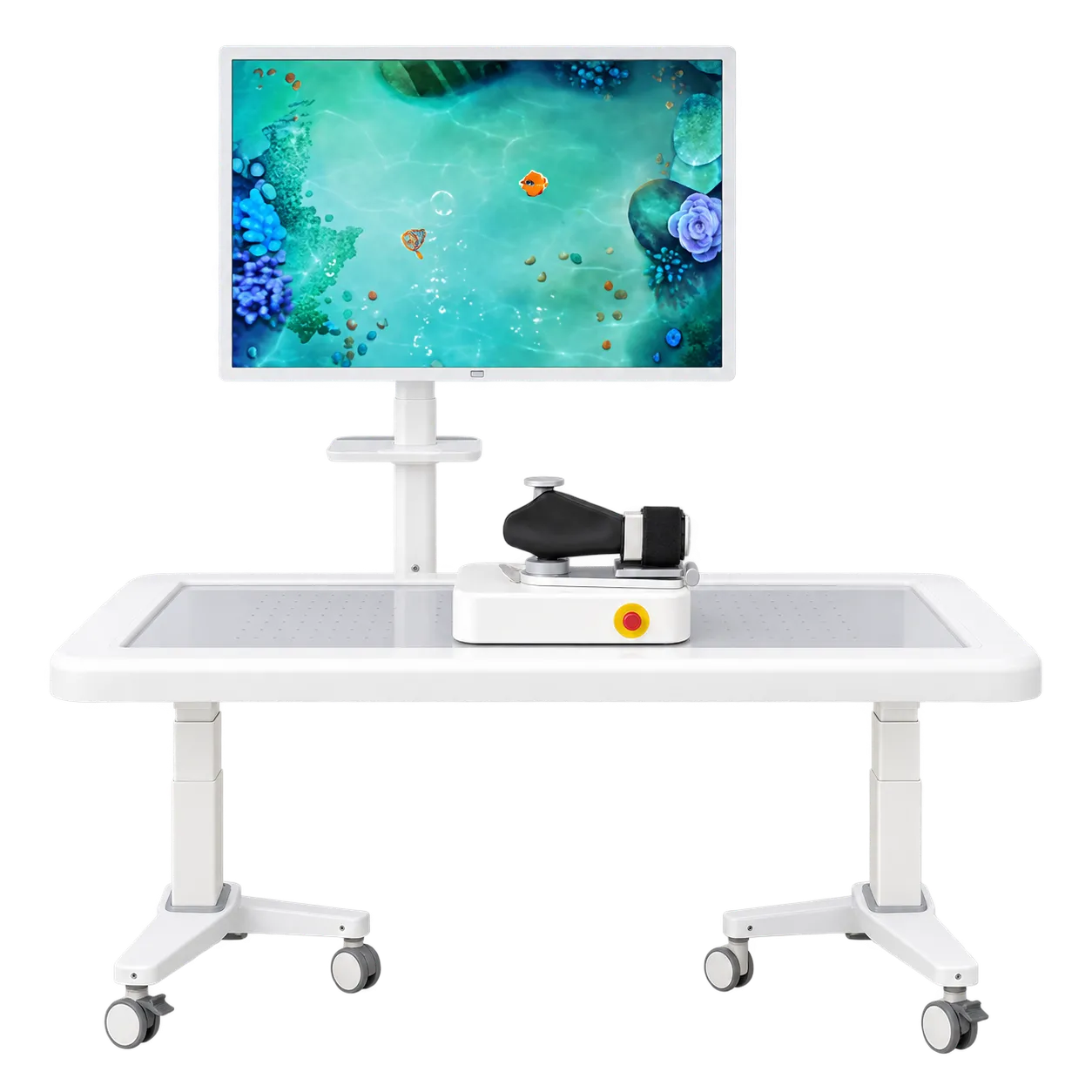
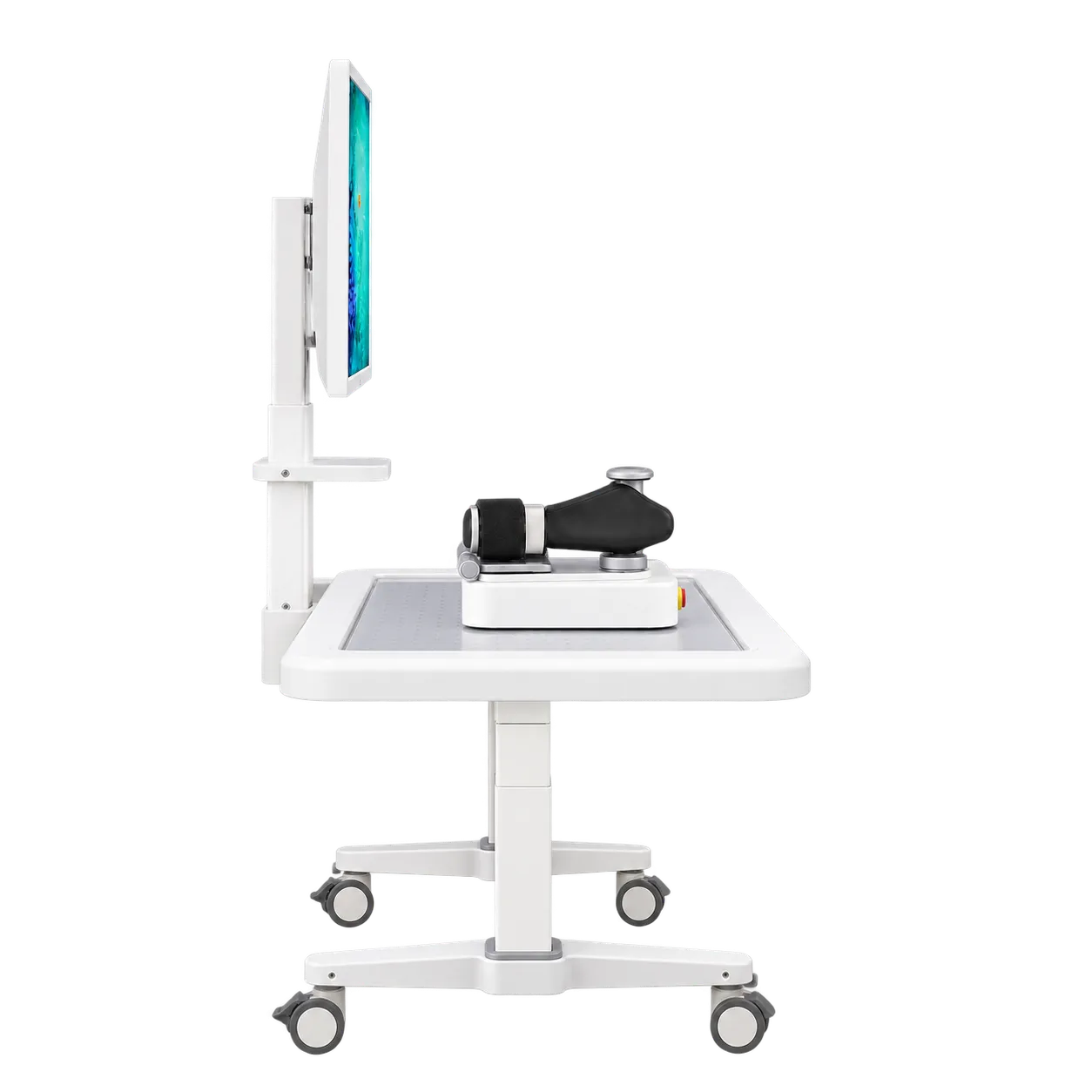
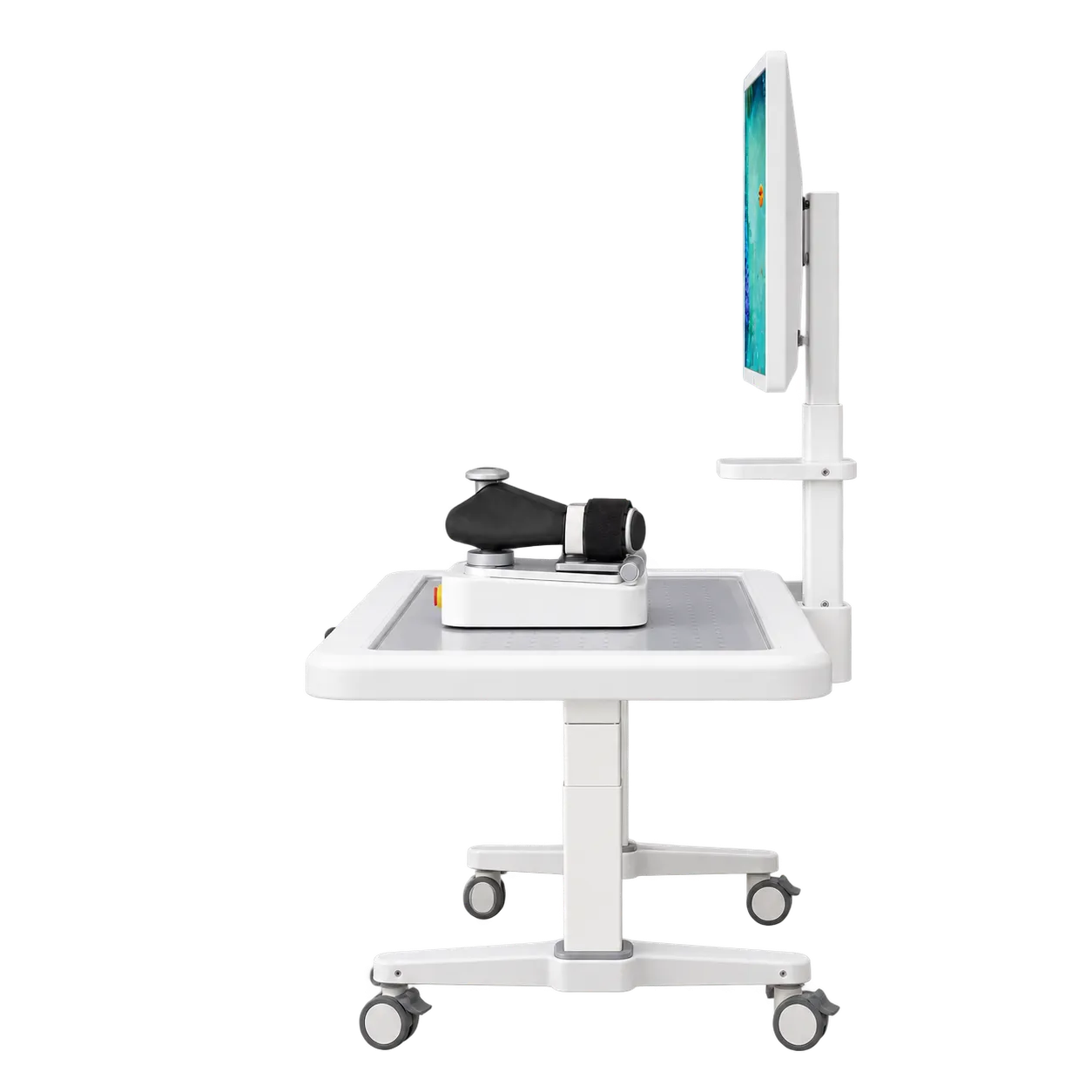
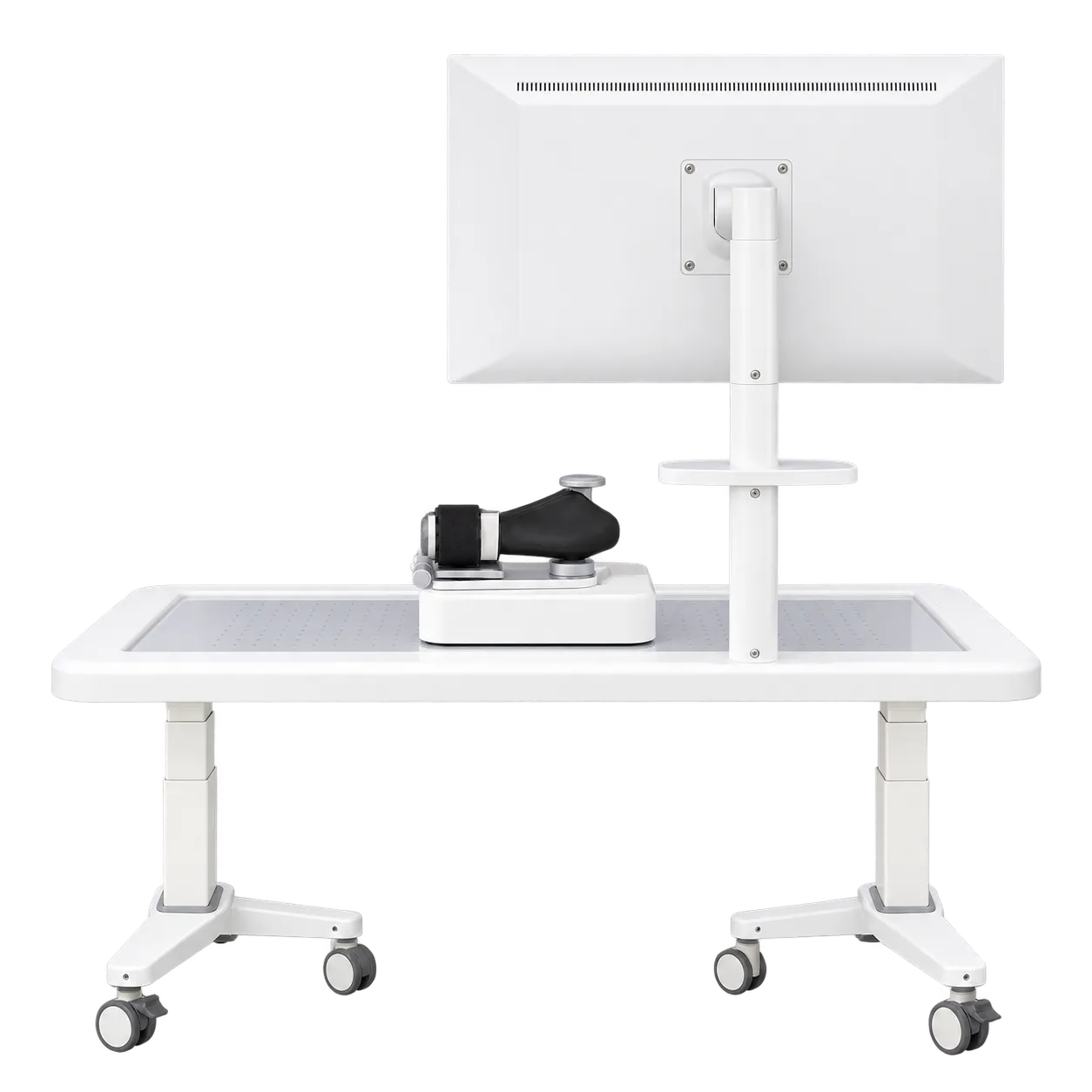
The SY-UEA2 serves therapists who treat upper-limb dysfunction at the bedside, in a chair, or in a standing frame. Its omnidirectional chassis and 8 kg body let one therapist move the robot between patients. The table height adjusts for bedside, sitting, and standing postures, and a one-touch height adjustment supports barrier-free wheelchairs.
The manufacturer lists upper limb dysfunction from stroke, brain injury, cerebral palsy, hand trauma, Parkinson's disease, lymphedema and Alzheimer's disease among the conditions the system addresses. Patients are matched to a motor mode by manual muscle test grade. Grade 0 uses passive training, grades 1 and 2 use assistance, grade 3 uses active training and grades 4 and 5 use resistance.
Movement training follows set trajectories. These include scapular protraction and retraction, elbow flexion and extension, and shoulder internal and external rotation, and the therapist adds range-of-motion and balance work as the patient progresses. Unilateral neglect training gives patients who ignore one side of space a task that draws attention back. The arm length adjusts, so the same robot fits a wide range of patients.
Cognition games exercise colour and shape recognition, spatial memory, focused and divided attention and working memory. Daily living scenarios such as tidying a room and shopping combine attention with muscle strength.
The therapist sets a plan for each patient, and optical positioning tracks speed, strength and range in real time. Multi-project training planning joins evaluation data with training data. An electronic fence, force-limitation protection, overload protection, and an emergency stop protect the patient throughout.