
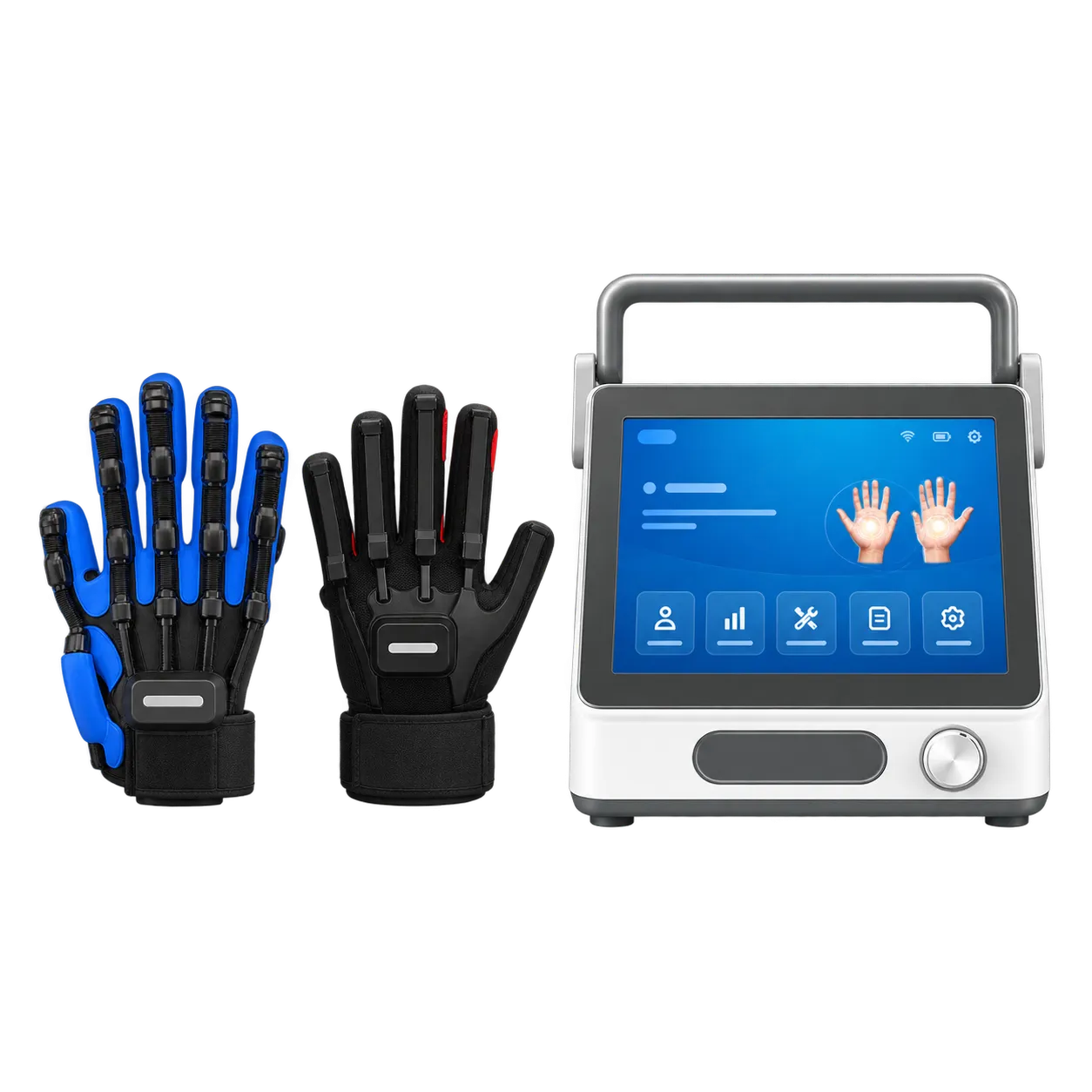
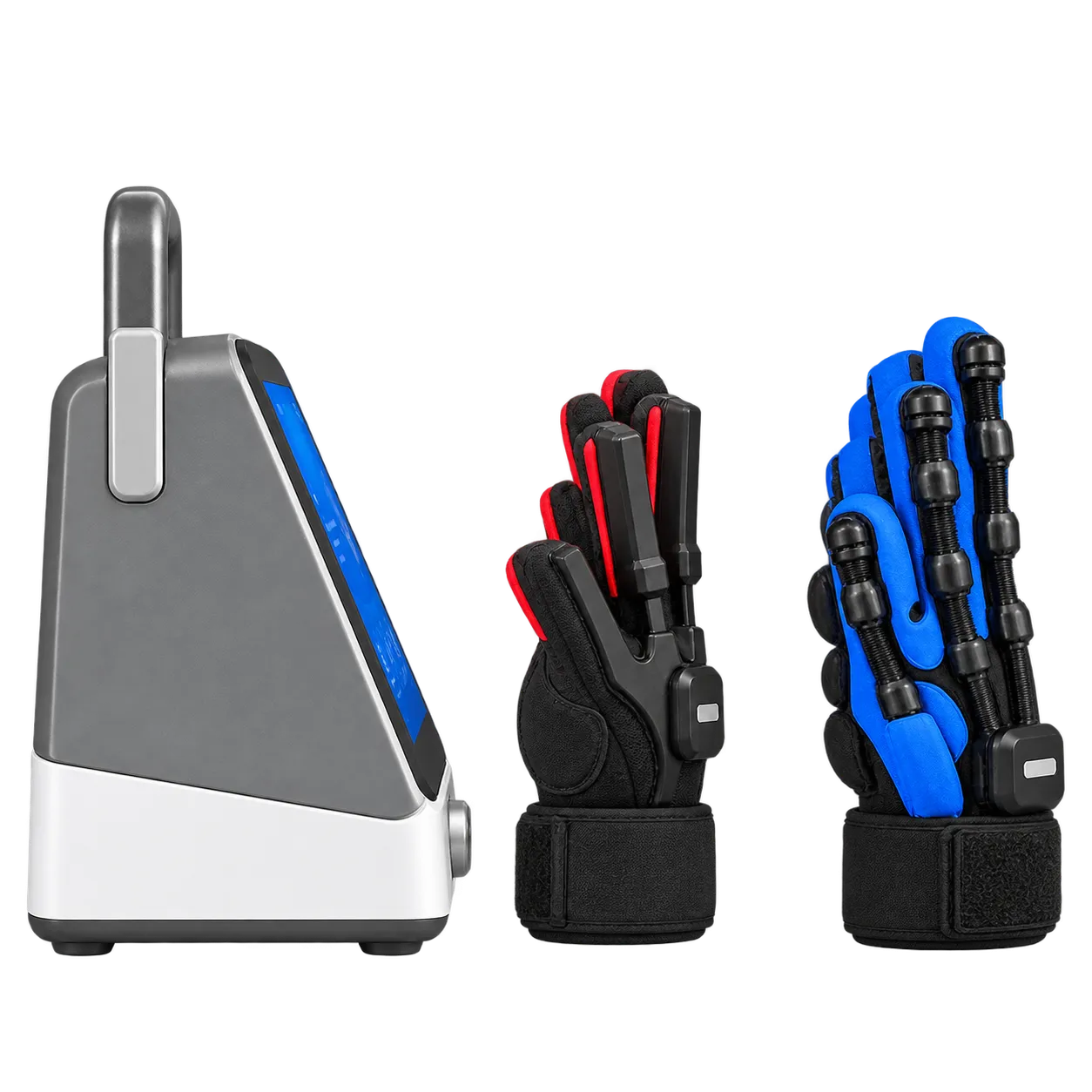
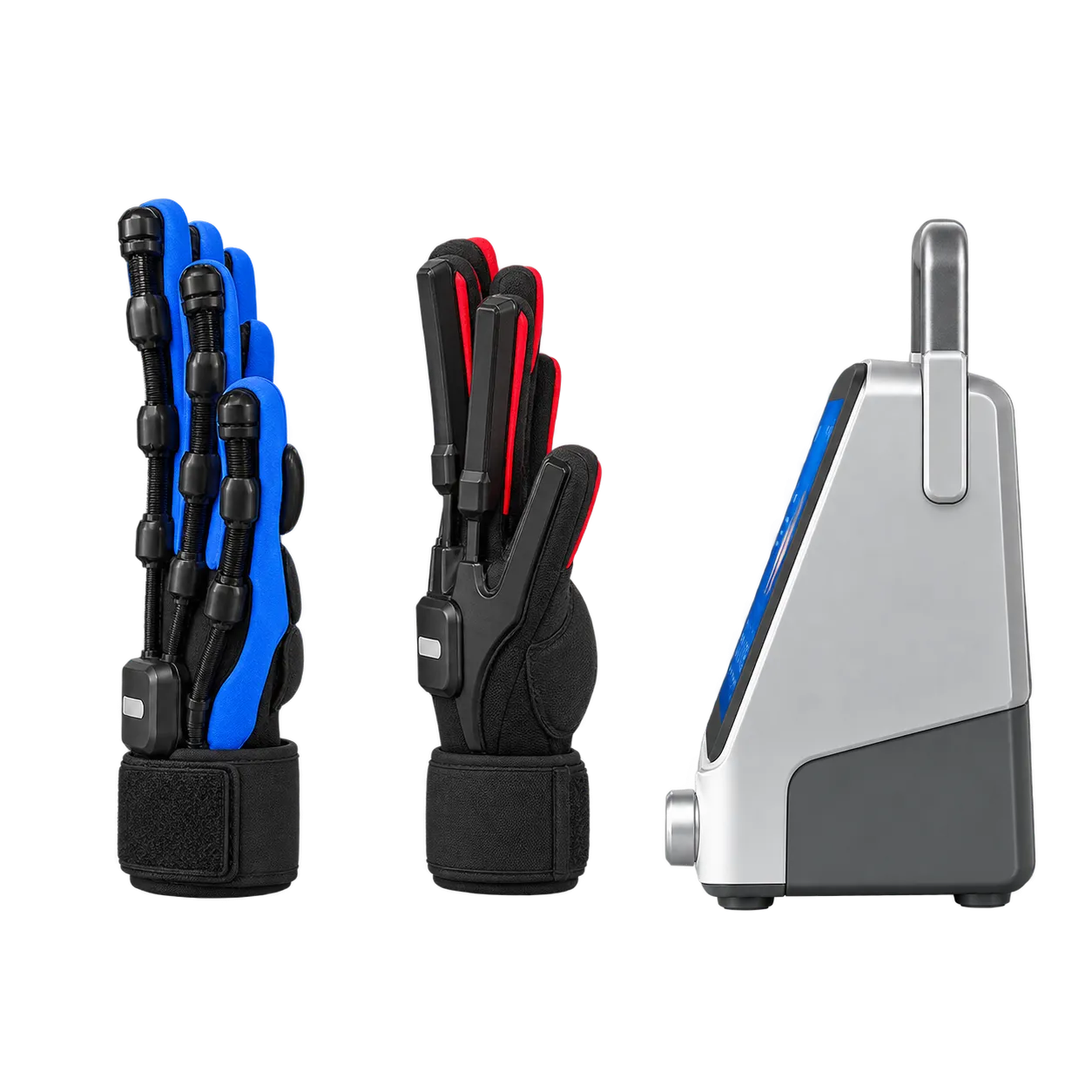
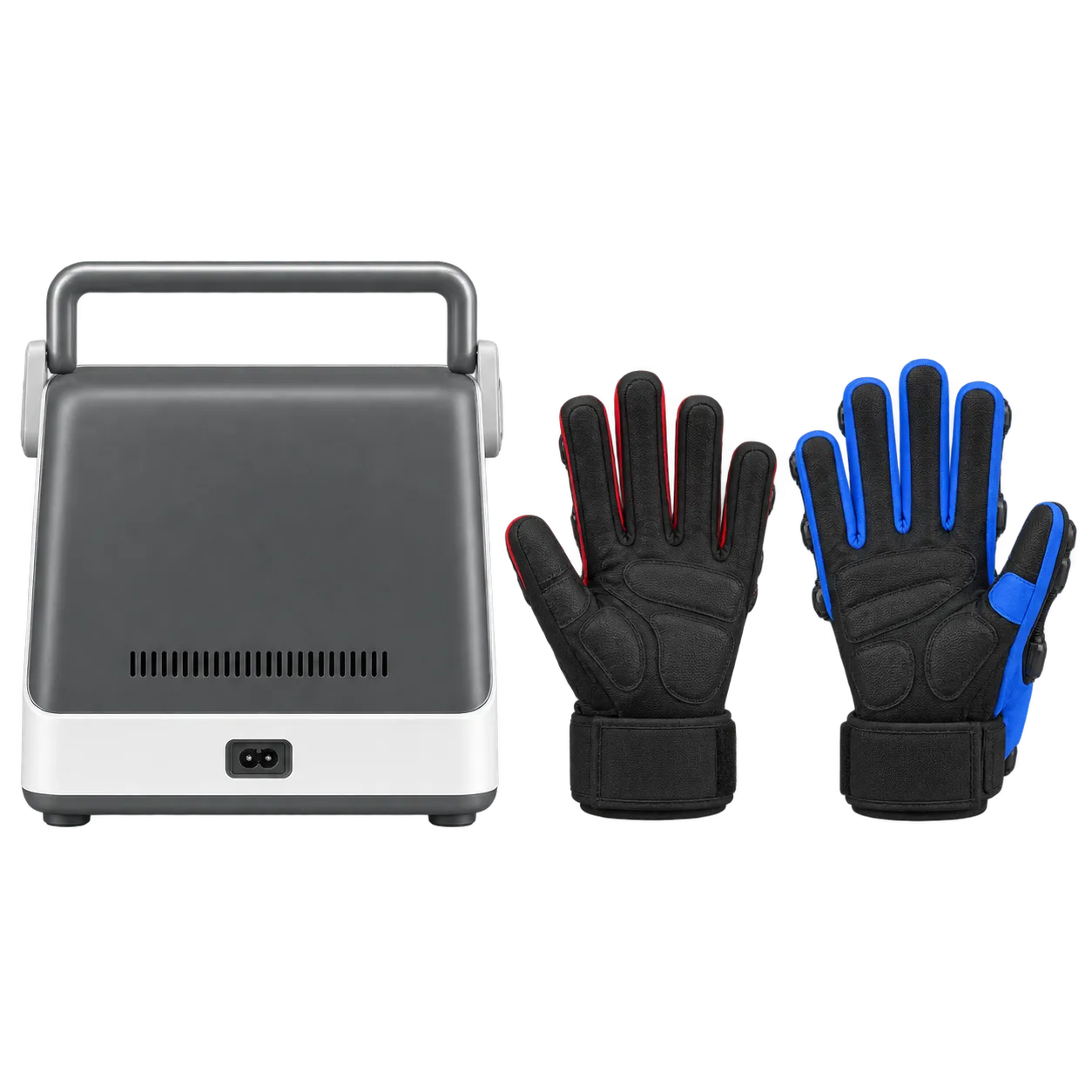
The SY-HR10A is built for rehabilitation, neurology, geriatrics, paediatrics and orthopaedics departments. A therapist sets the exercise from the host and can change it without stopping the patient.
The manufacturer lists hand dysfunction caused by diseases or injuries, including stroke, traumatic brain injury, spinal cord injury, Parkinson's disease, hand injury, lymphedema and Alzheimer's disease. Paediatric cerebral palsy is also named. Because the modes cover every stage of rehabilitation, one robot serves a patient from first movement to refined finger control.
At the earliest stage, passive and cyclic training let the glove carry the hand through flexion and extension. Mirror and bilateral training bring the healthy hand into the exercise, with visual and proprioceptive feedback. As control returns, assistance and intention-driven training add force when the sensors detect movement signals, and resistance and active-resistive training give the hand a load to work against.
Task-oriented training uses daily hand tasks such as grasping a ball. Active game, active-virtual and active-grasping modes pair games with grip control, attention, calculation and cognition in daily living. A grip dynamometer measures the force the patient applies during the games, and the results feed into the evaluation.
Refined training targets single-finger flexion and extension and finger-to-finger pinch, while random gesture mode presents finger gestures of varying difficulty. Strength and coordination evaluations feed data-based reports. Multiple user profiles keep each patient's results, and reports can be printed for the file. The multilingual interface supports mixed-language teams, and the television connection lets patients follow the training screen from the table.