
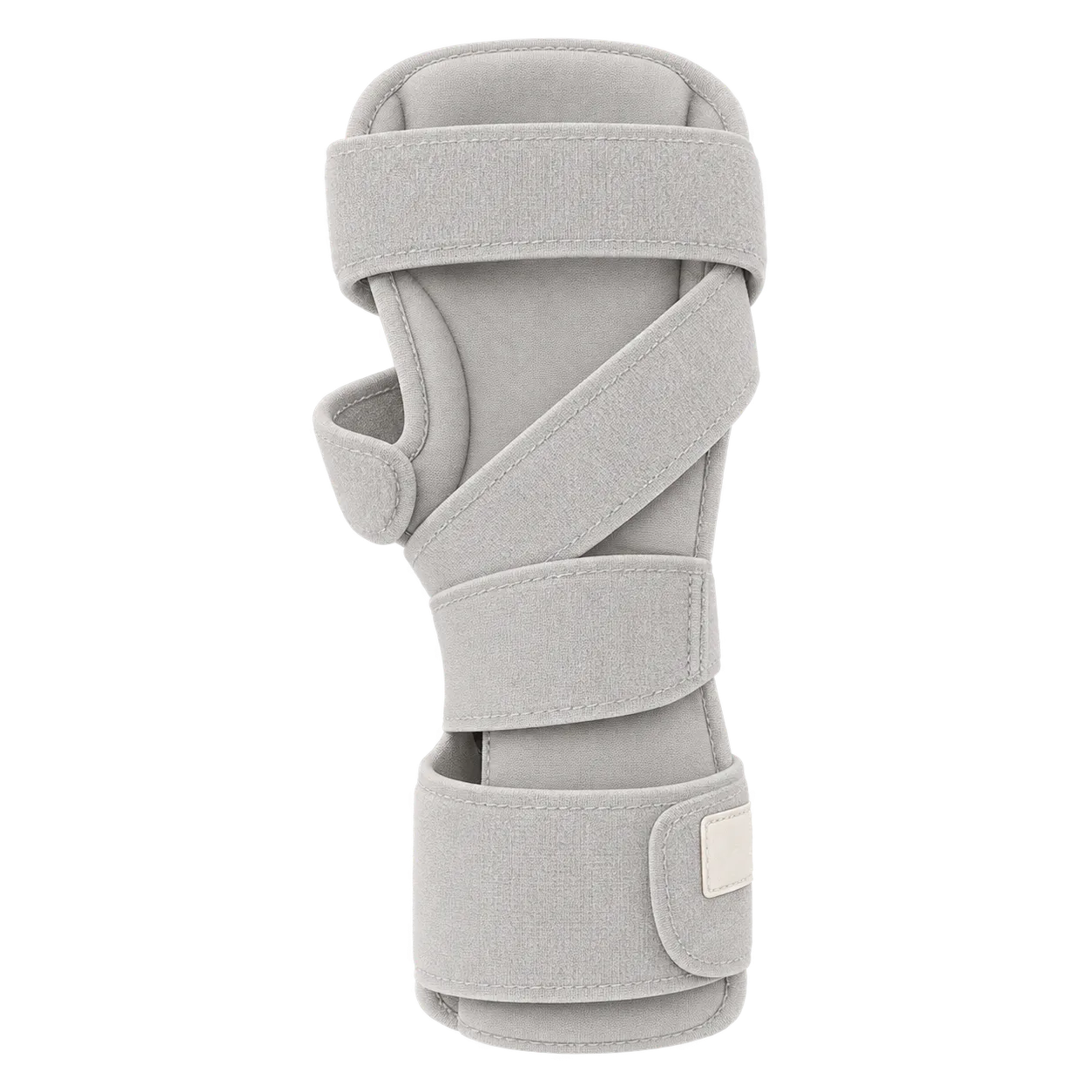
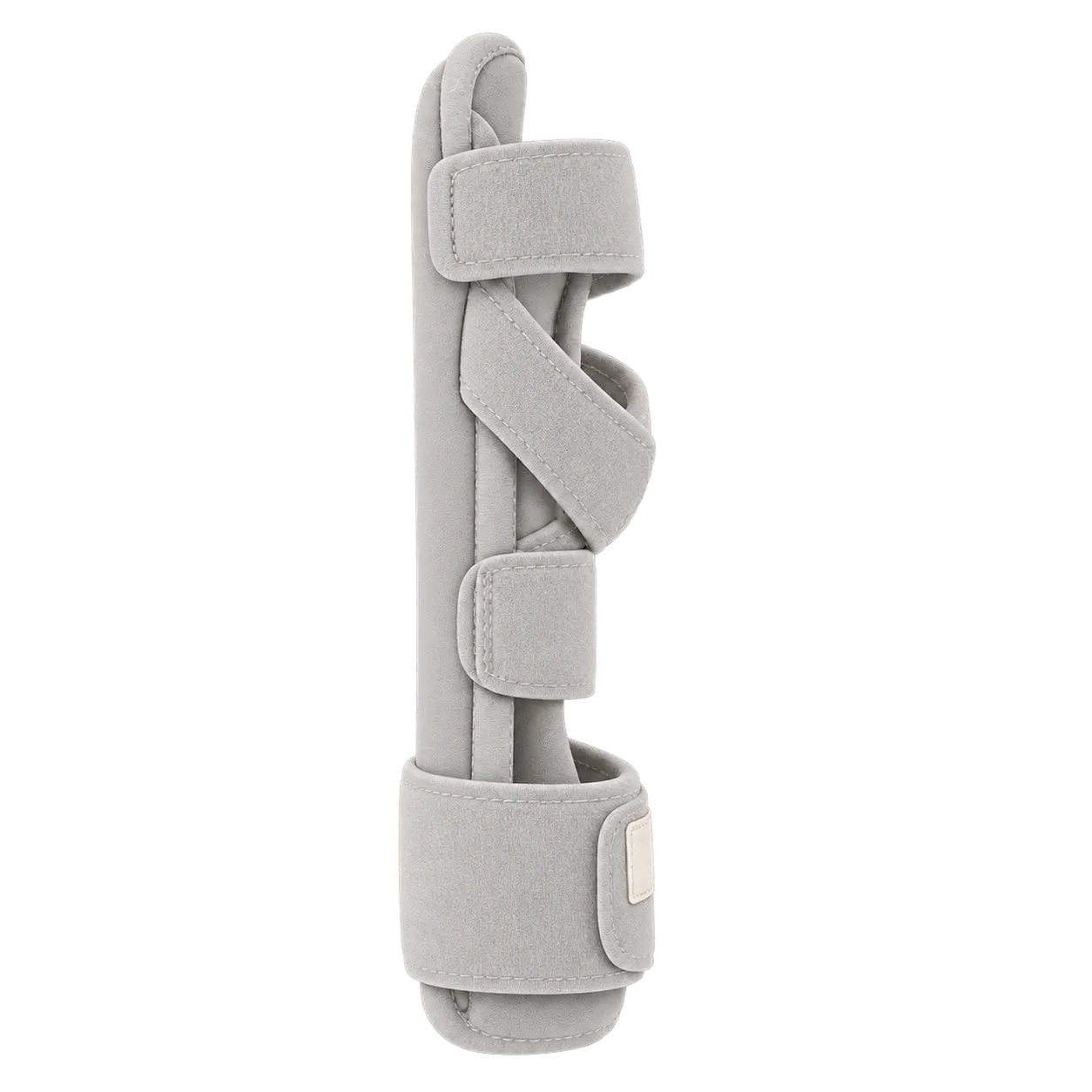
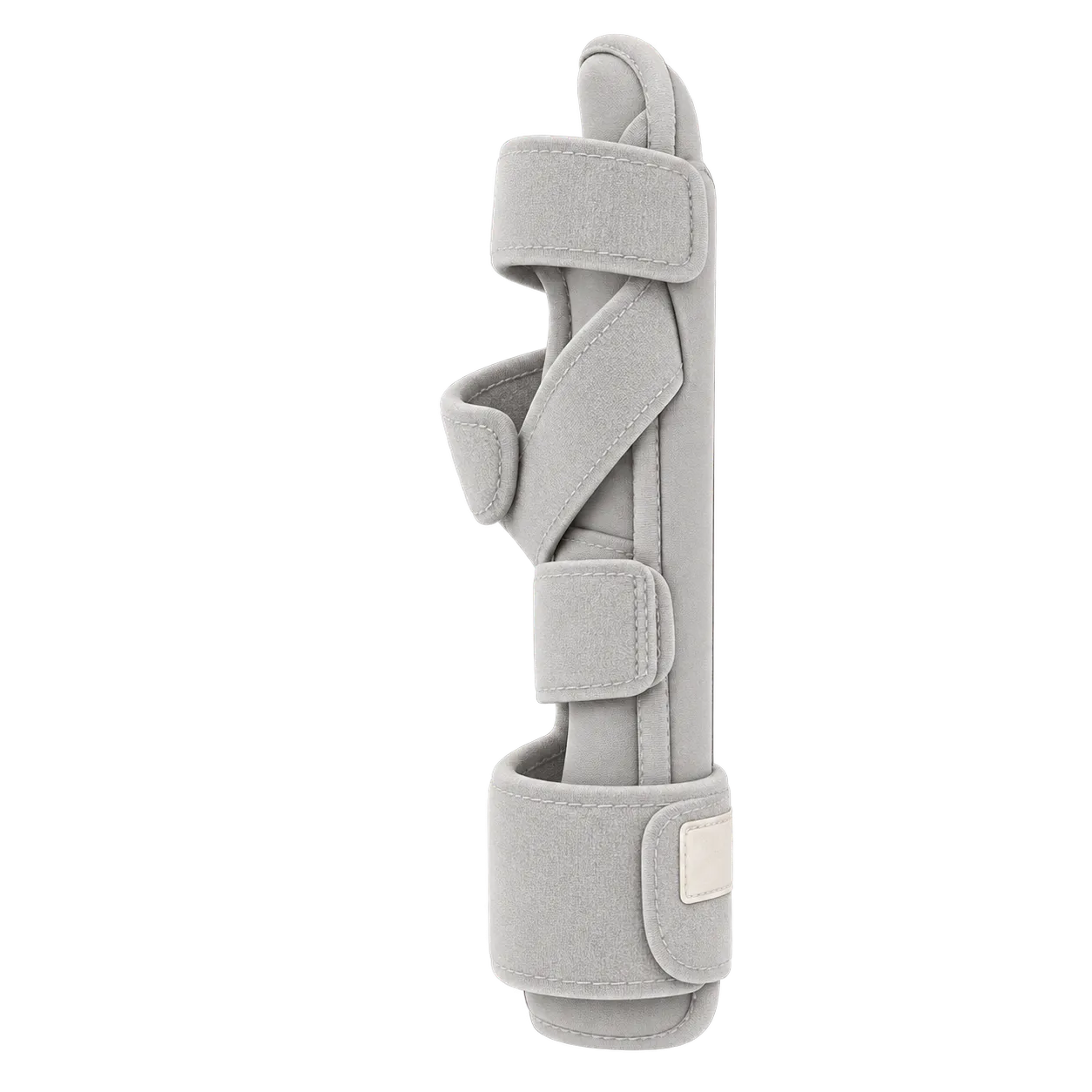
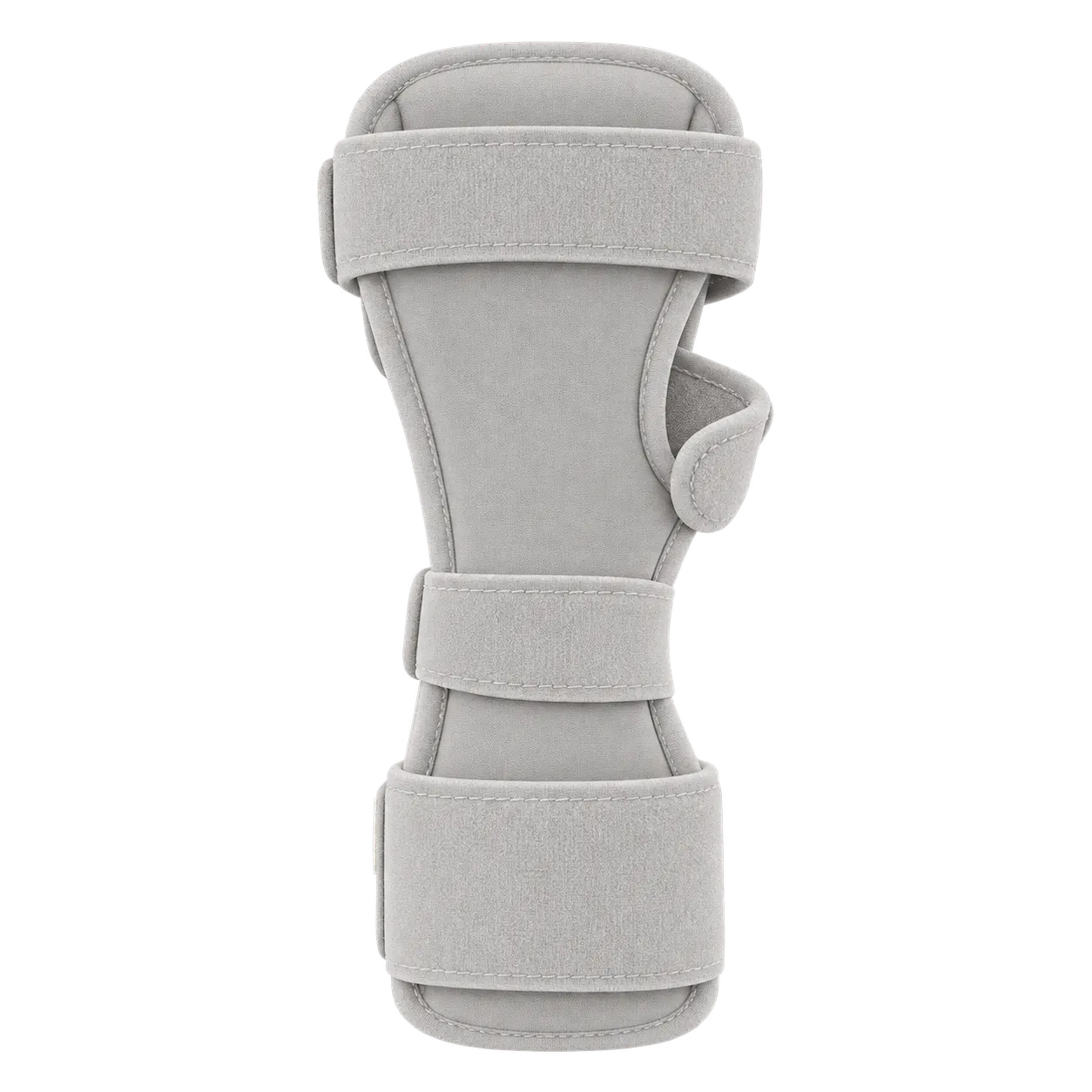
The Hand Splint serves therapists who work with survivors of stroke and brain injury, and with adults after wrist injury or surgery. Syrebo lists daily rest and a clinician-directed home rehabilitation plan among its uses. The splint supports wrist, palm, thumb, and fingers in a resting position. A therapist can match the splint to the resting position that suits the user.
Four finger loops hold the fingers, and a separate thumb support holds the thumb. A bendable aluminium plate at the thumb lets the therapist shape the angle gradually to a comfortable position for each user. Adjustable wrist straps and hook-and-loop fastening then set the fit, letting the therapist adapt the splint to the person in front of them.
Fitting follows a short sequence. The user inserts four fingers into the loops and secures the wrist strap. The therapist bends the thumb plate to a comfortable angle and fastens the thumb and palm straps. Syrebo describes the fitted splint as supportive.
The left and right versions are made, each shaped for its stated side. A therapist therefore selects the version that matches the affected hand. A single adult size covers the range of users in a department. The fixation covers the four fingers and the thumb, which is the five-digit fixation Syrebo lists.
Syrebo lists an ergonomic design, five-finger detachable fixation and multiple functional positions. Breathable fabric and a supportive sponge cushion the contact points, making it suitable for a splint worn for daily rest. The splint is non-powered, so a fitting depends on the straps and the plate alone.