
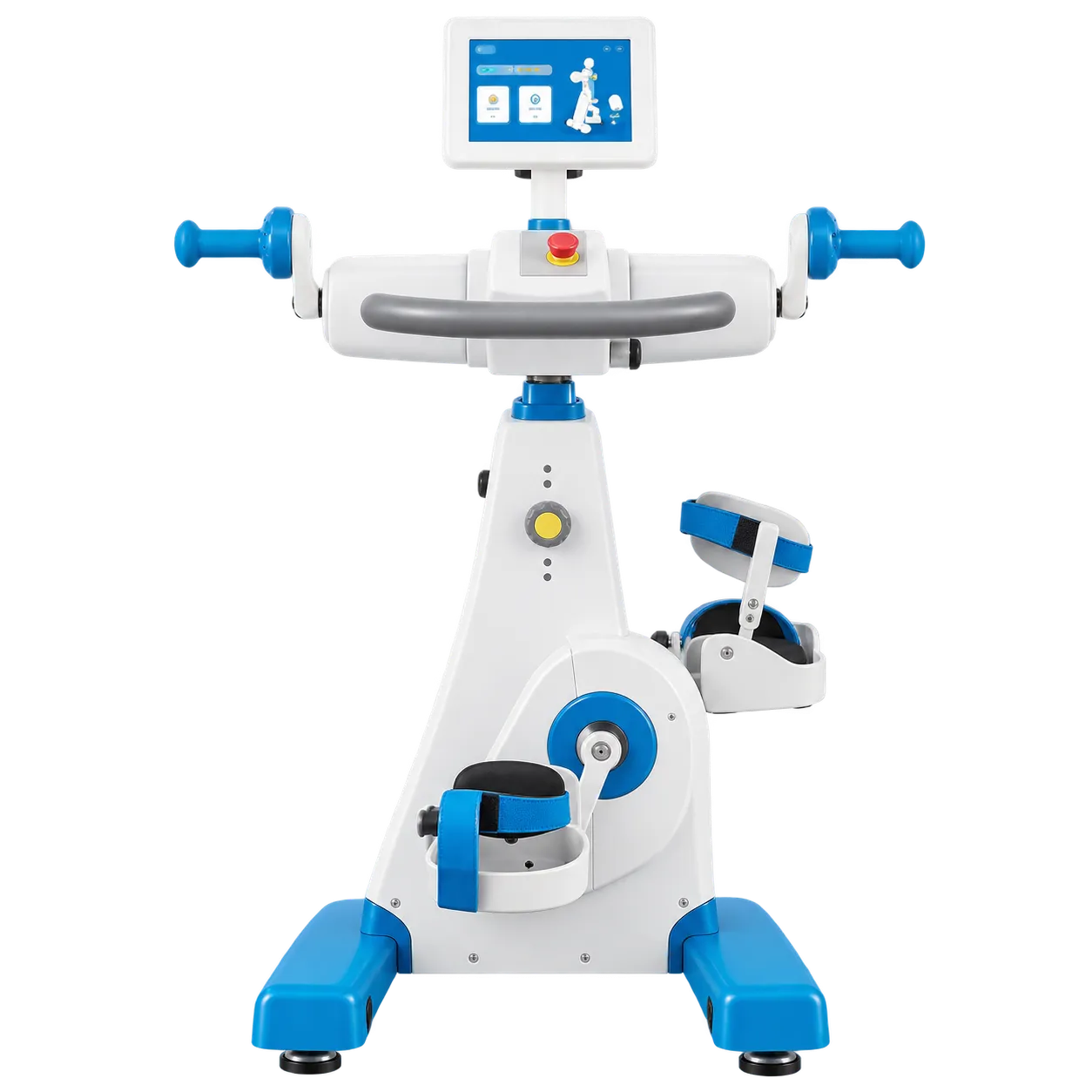
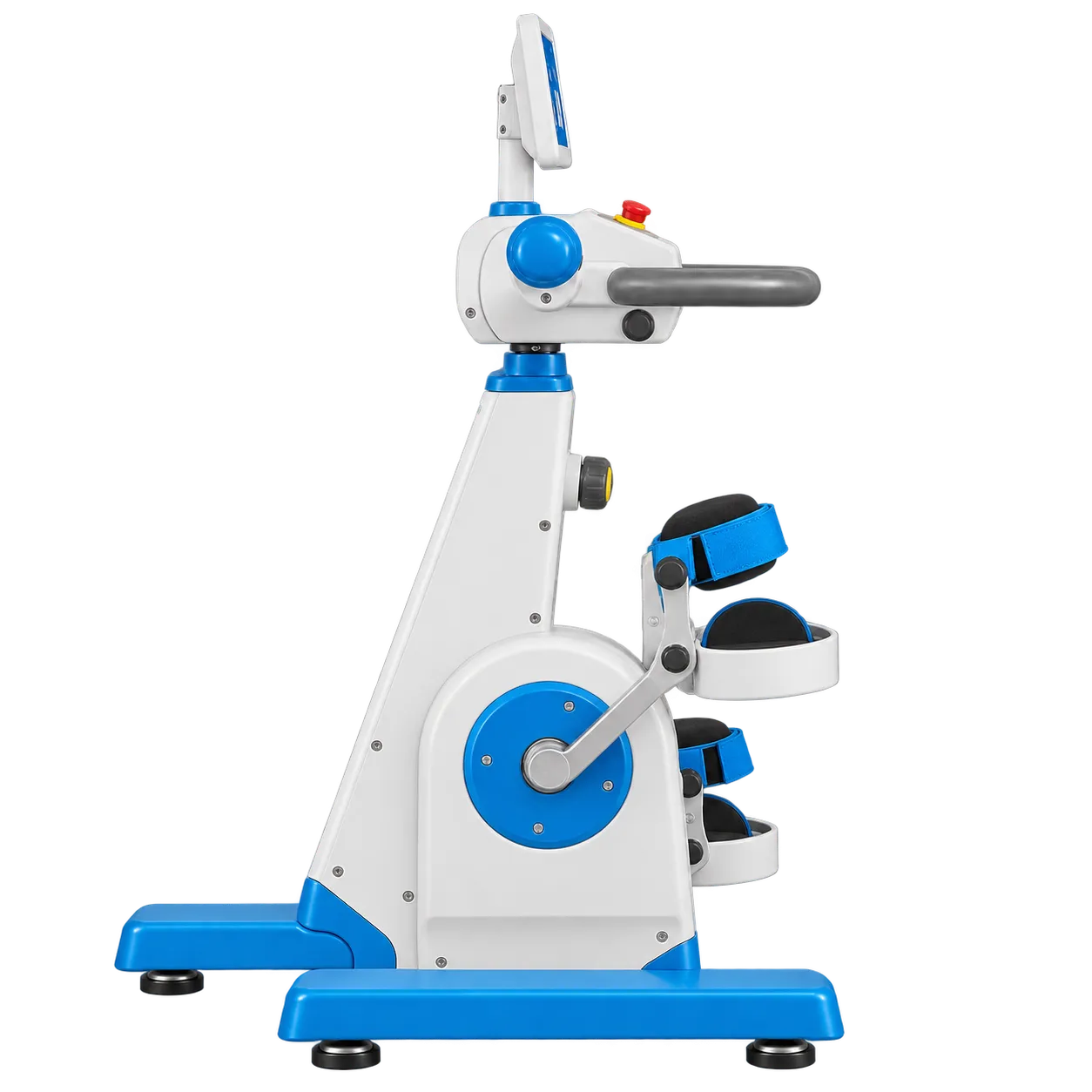
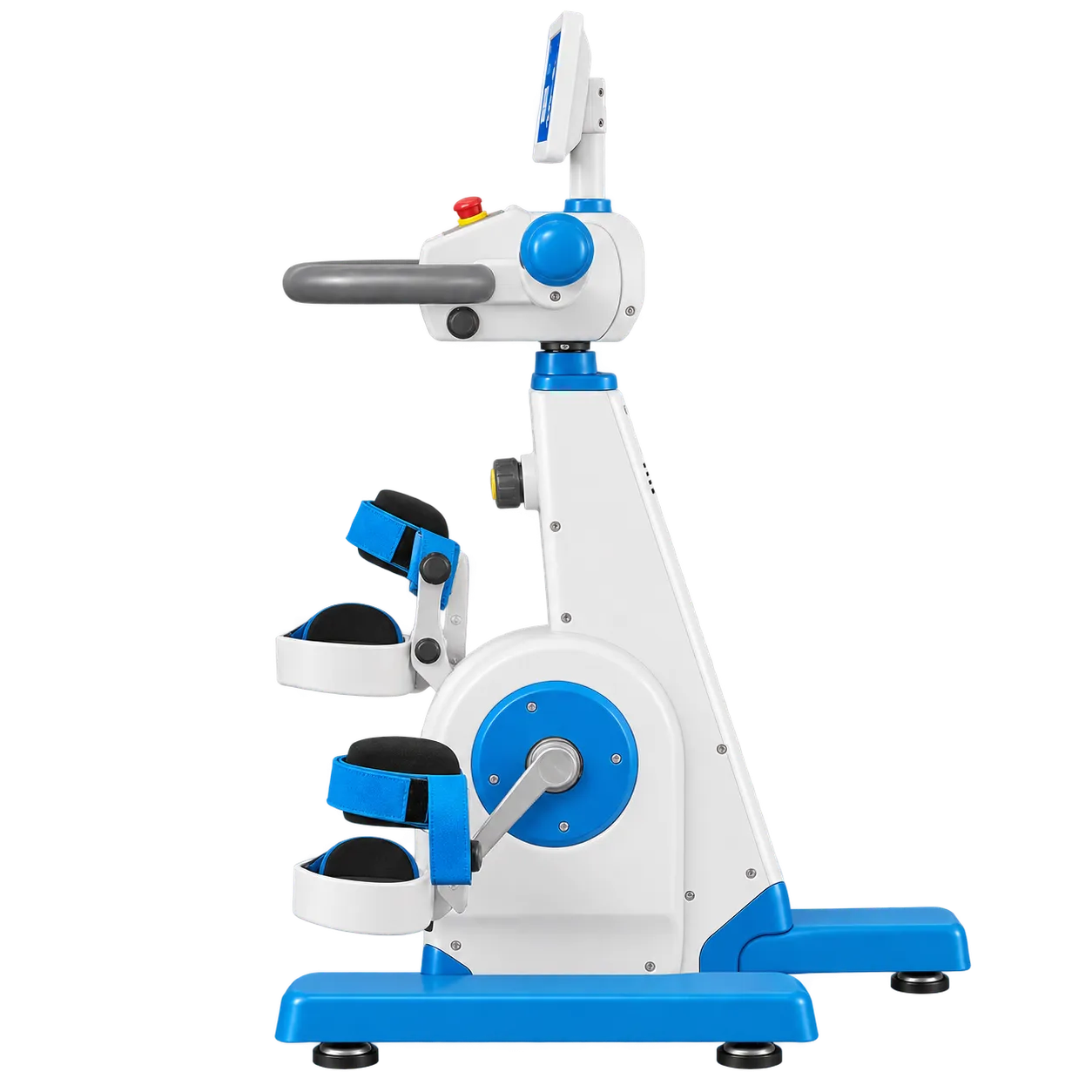
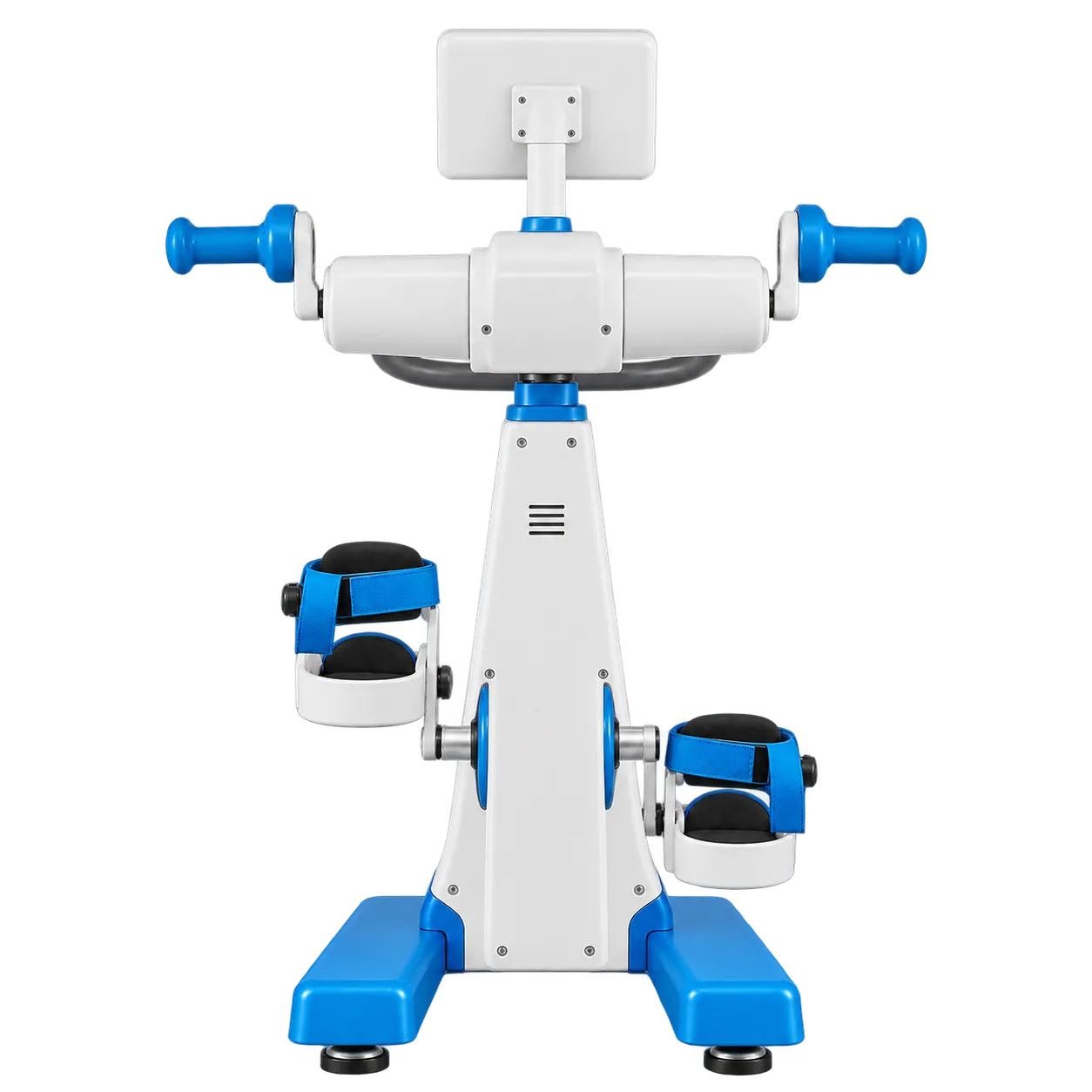
The trainer serves therapists who treat patients with upper- and lower-limb dysfunction and coordination disorders. It drives the shoulders, elbows, wrists, fingers, hips, knees and ankles, so one unit can cover an arm programme, a leg programme or both together.
Syrebo lists neurological, pain, cardiopulmonary, geriatric, orthopaedic and paediatric rehabilitation as application areas. The same trainer can therefore sit in a general rehabilitation room and serve several specialities without a change of equipment.
Syrebo describes mode use by stage of recovery. Early on, passive training supports joint mobility and blood circulation. During recovery, they are used together. When spasticity is present, slow-movement exercise relieves cramps. Adaptive training follows the user through these stages by switching modes based on the user's condition. A therapist can therefore keep one device in use as a programme of care moves from the first sessions to the later ones. Early passive work and later active work both run on the same trainer.
Spasm detection, emergency stop protection, and an intelligent speed-regulation programme protect the user during each session. Syrebo lists the prevention or relief of muscle spasm, relief of muscle atrophy and joint contracture symptoms, and better joint mobility among the aims of training.
Reports record mileage, time, power, and speed, and the detailed data helps the therapist understand the patient's condition. Height and training radius adjust to the user, and the voice-guided touchscreen guides the session. Syrebo describes the colour screen as clear and user-friendly for older users, which suits geriatric rehabilitation rooms.