
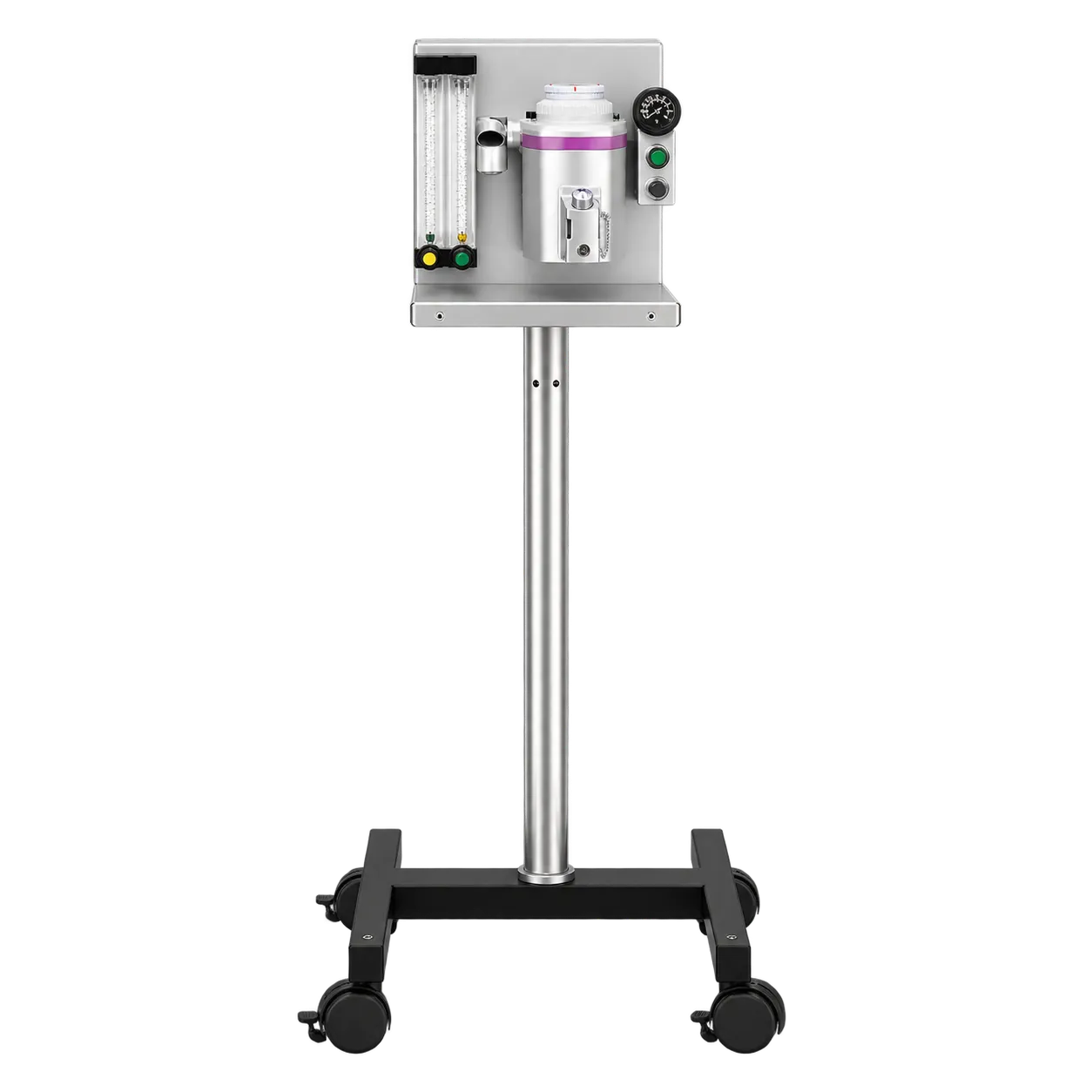
The RSA belongs in exotic animal practices, rabbit and small mammal clinics, avian and reptile practices, and small animal practices with a steady list of pocket pets. Its whole design answers one question: how to anaesthetise animals under 12 kg on equipment sized for them.
A typical day might include a rabbit dental, a rat with a skin mass, a bearded dragon for a procedure, and a cat for a short anaesthetic examination. Where a practice has the optional induction chambers, each animal can be induced in one before it is maintained on isoflurane through the modified Mapleson C system. The anaesthetist sets air and oxygen on their own flowmeters to suit the species, and the red rotary floats keep the chosen flows easy to read during the procedure.
Reptiles and other animals that need help with breathing can receive breaths by hand through the same circuit, because occluding the pop-off valve turns it into a means of IPPV. The change from spontaneous breathing to assisted breaths happens at the valve, with nothing to reconnect. The recessed flush button keeps a 10 L/min oxygen flush ready while guarding against an accidental press during handling.
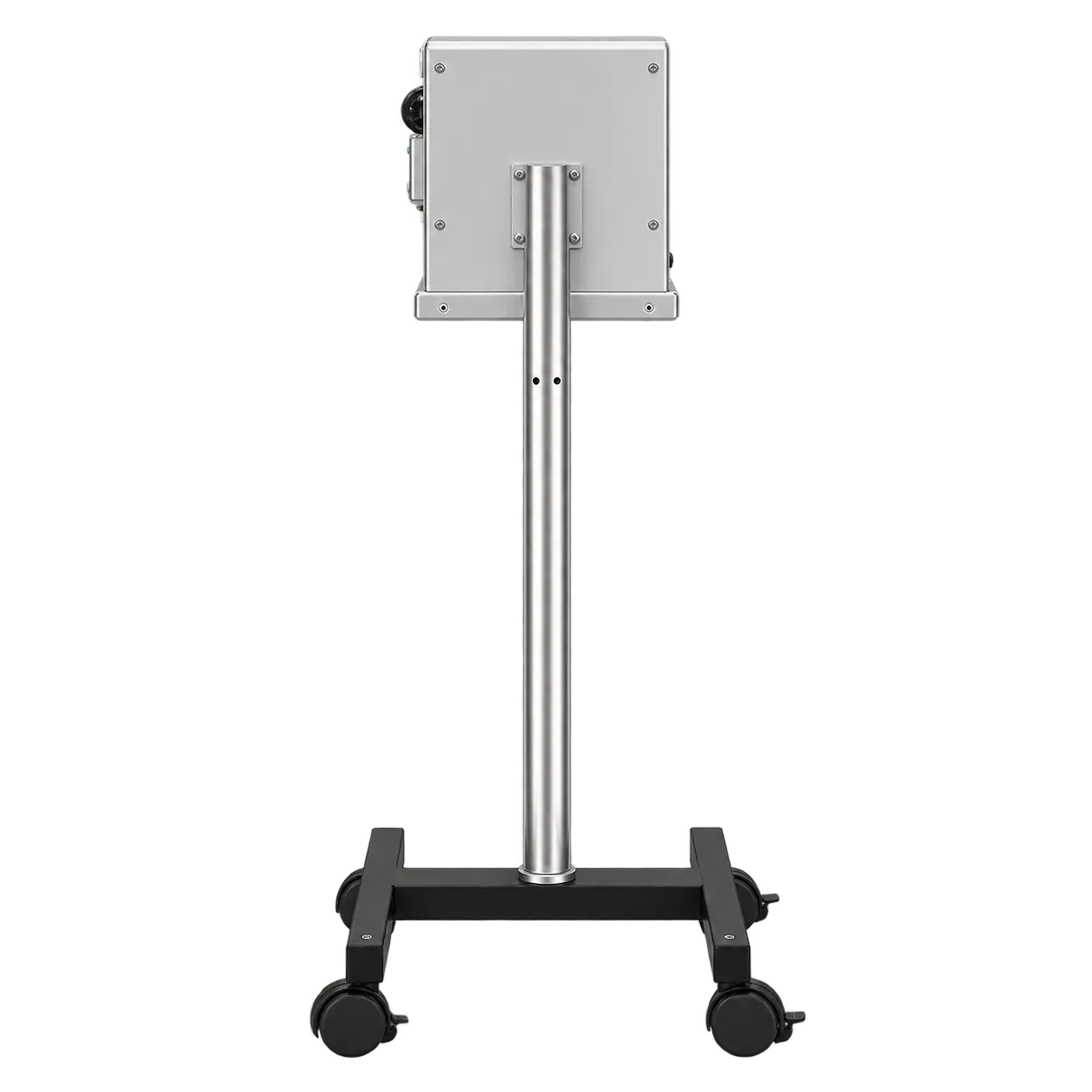
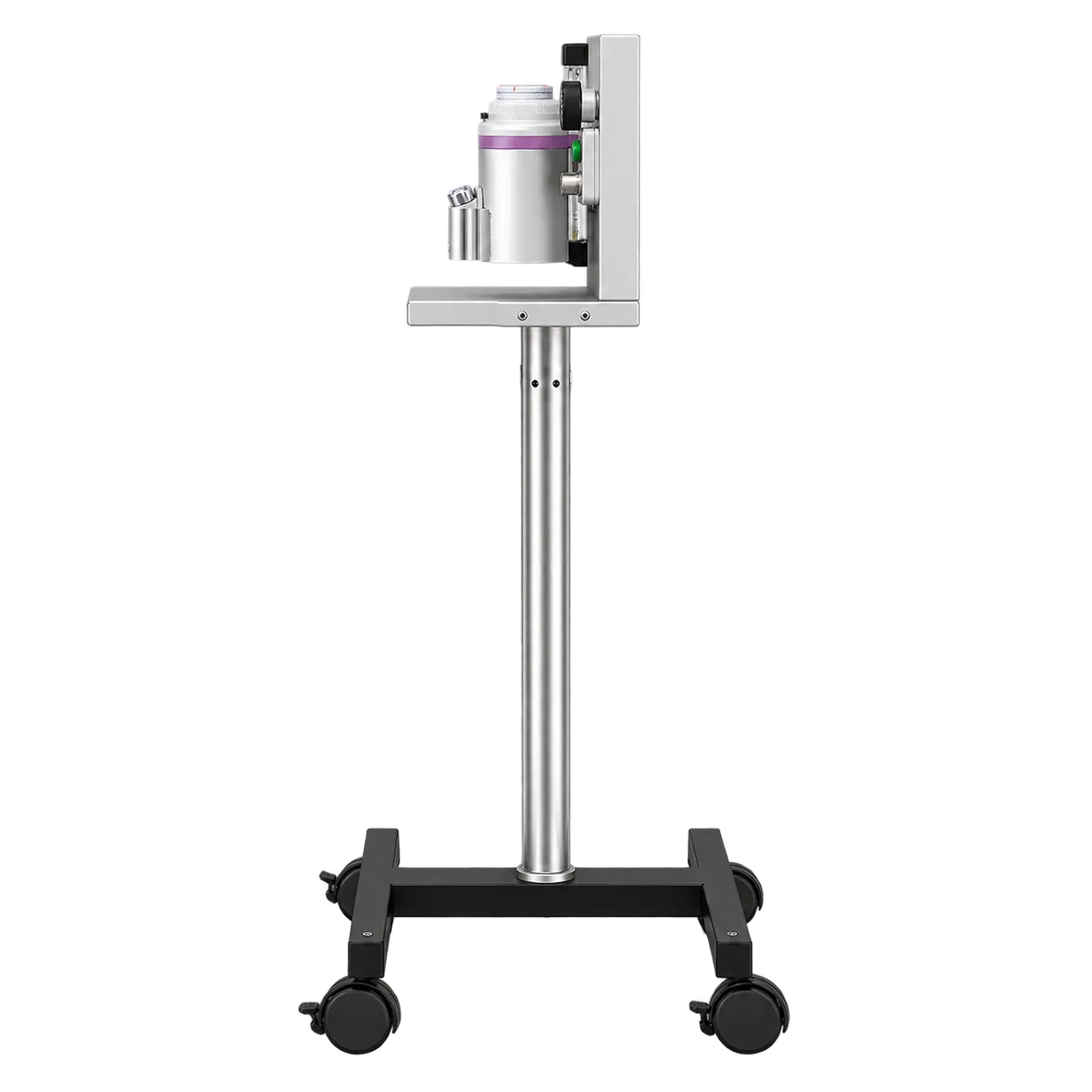
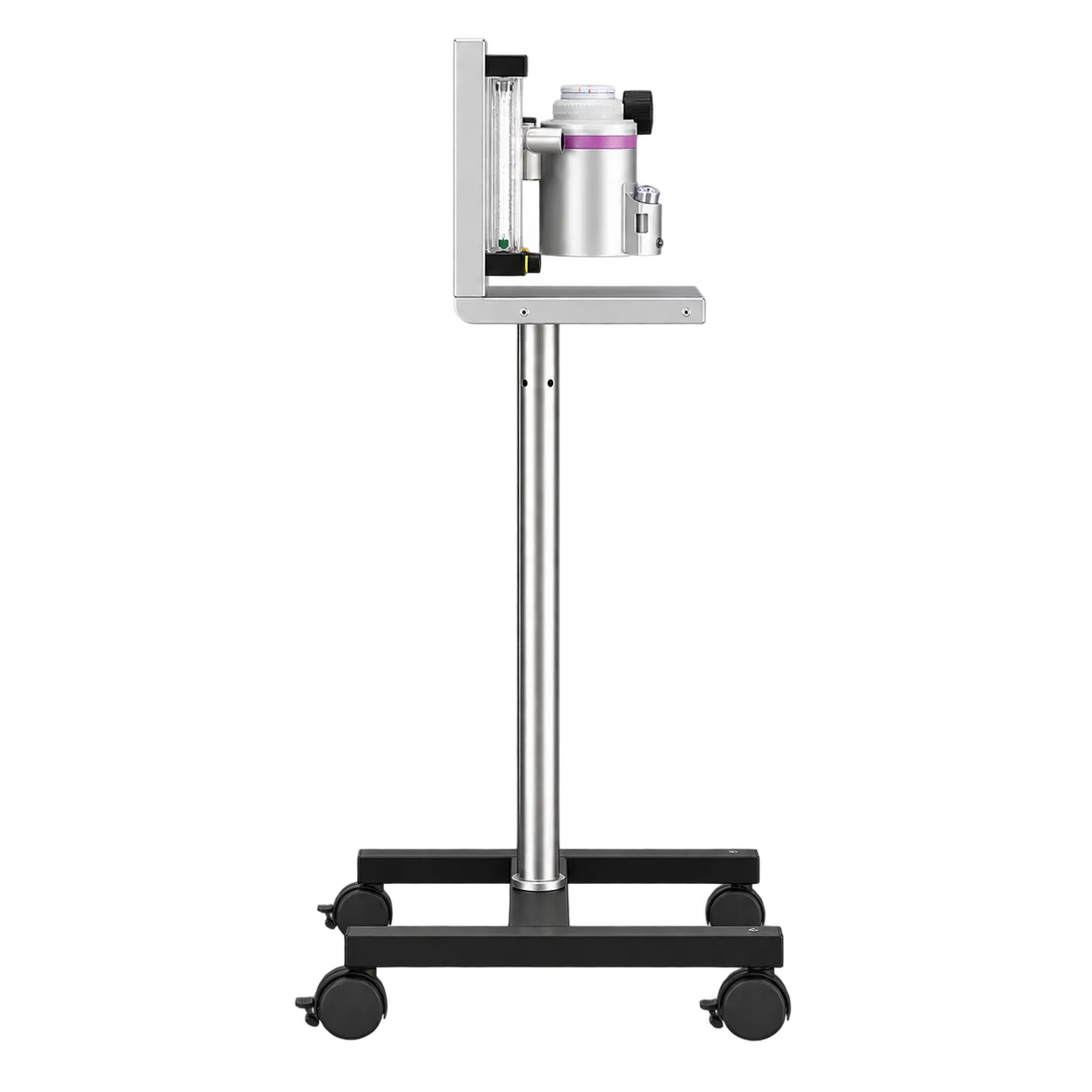
Practices that see small pets alongside dogs can keep the RSA as a dedicated small-pet station. On its wheeled H-base, it moves between the preparation area and the procedure room, and the optional shelves add space for a monitor or an oxygen concentrator.
Day-to-day users are veterinary surgeons, nurses, and anaesthetists, and the compact head gathers flowmeters, the vaporiser, and the flush so one person can reach them all.