
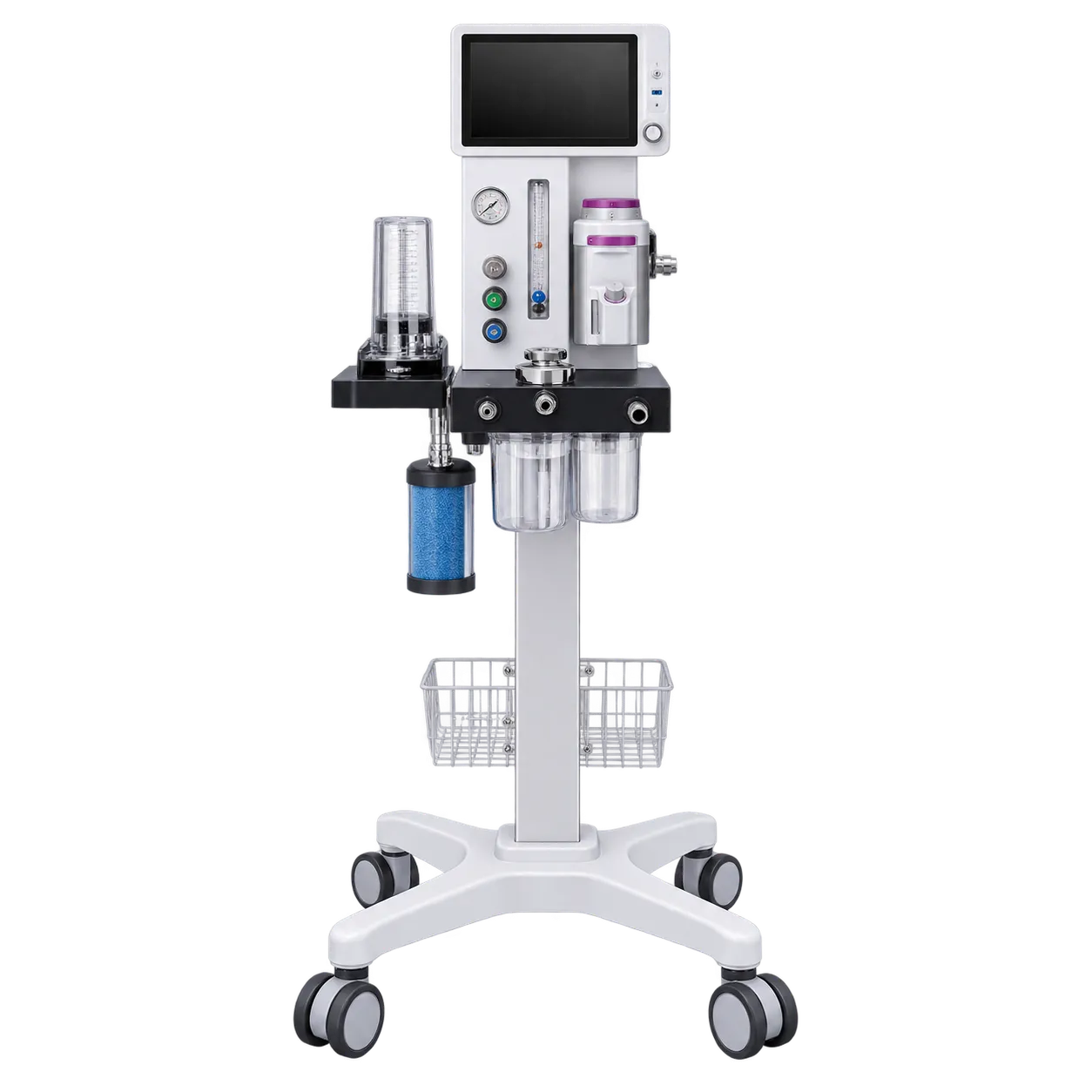
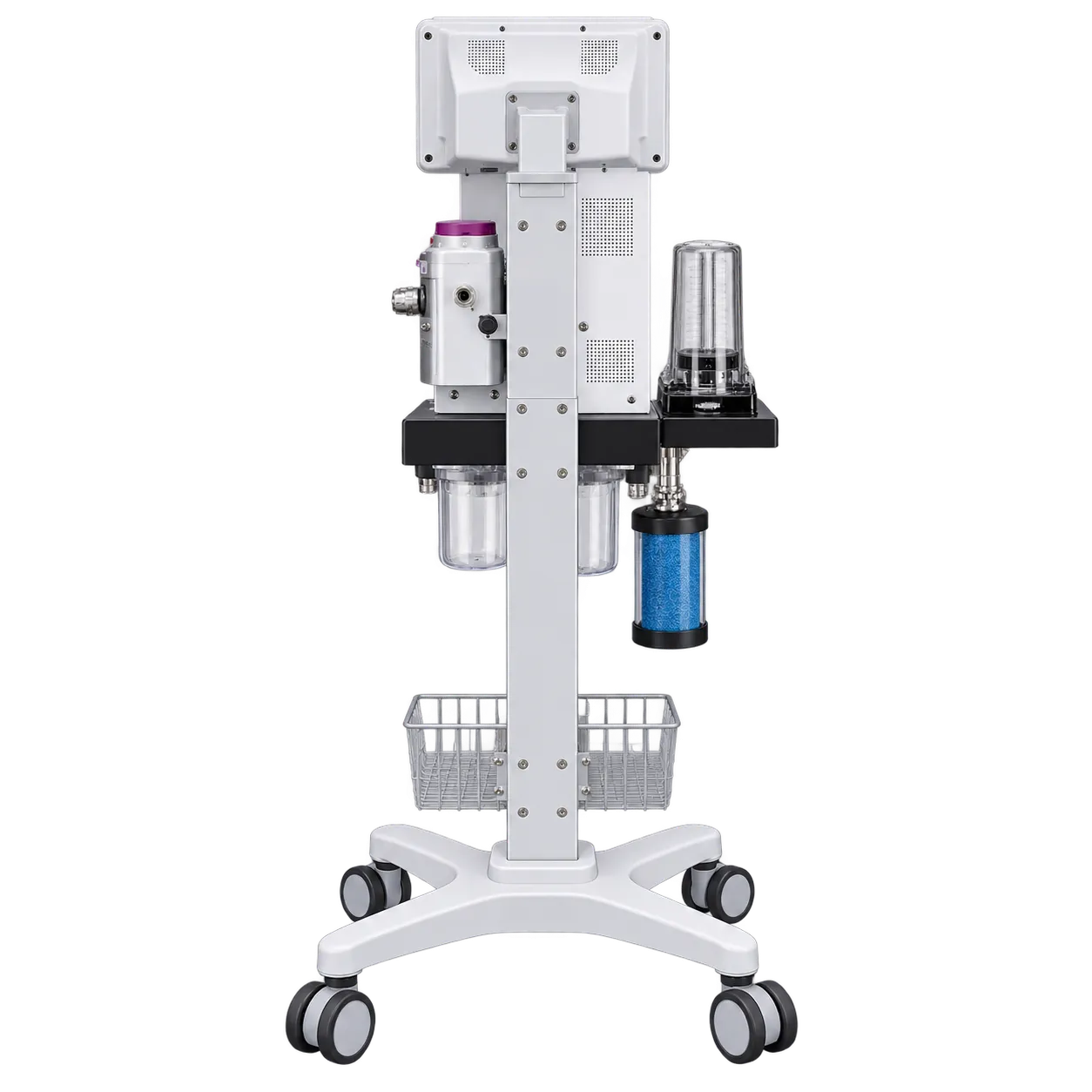
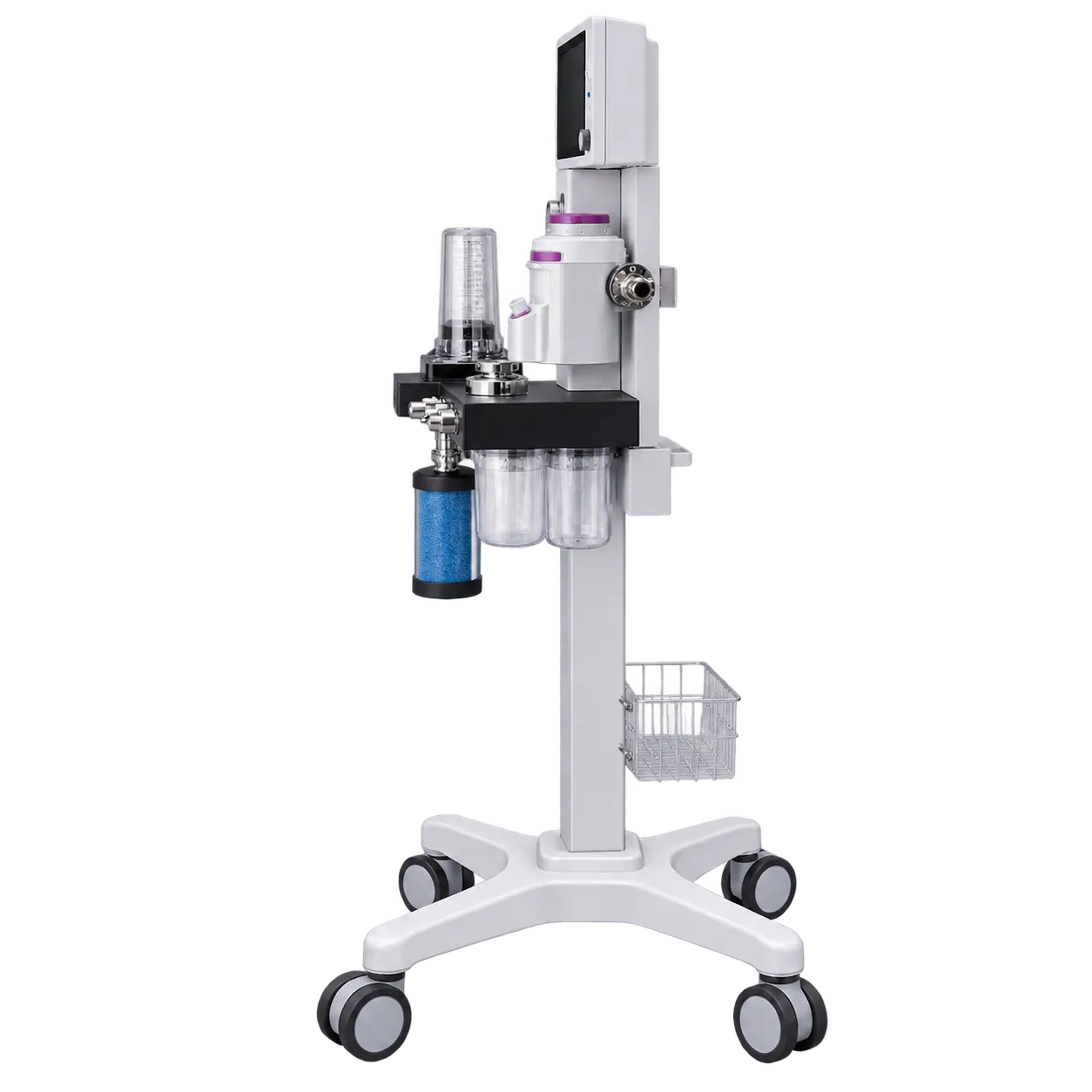
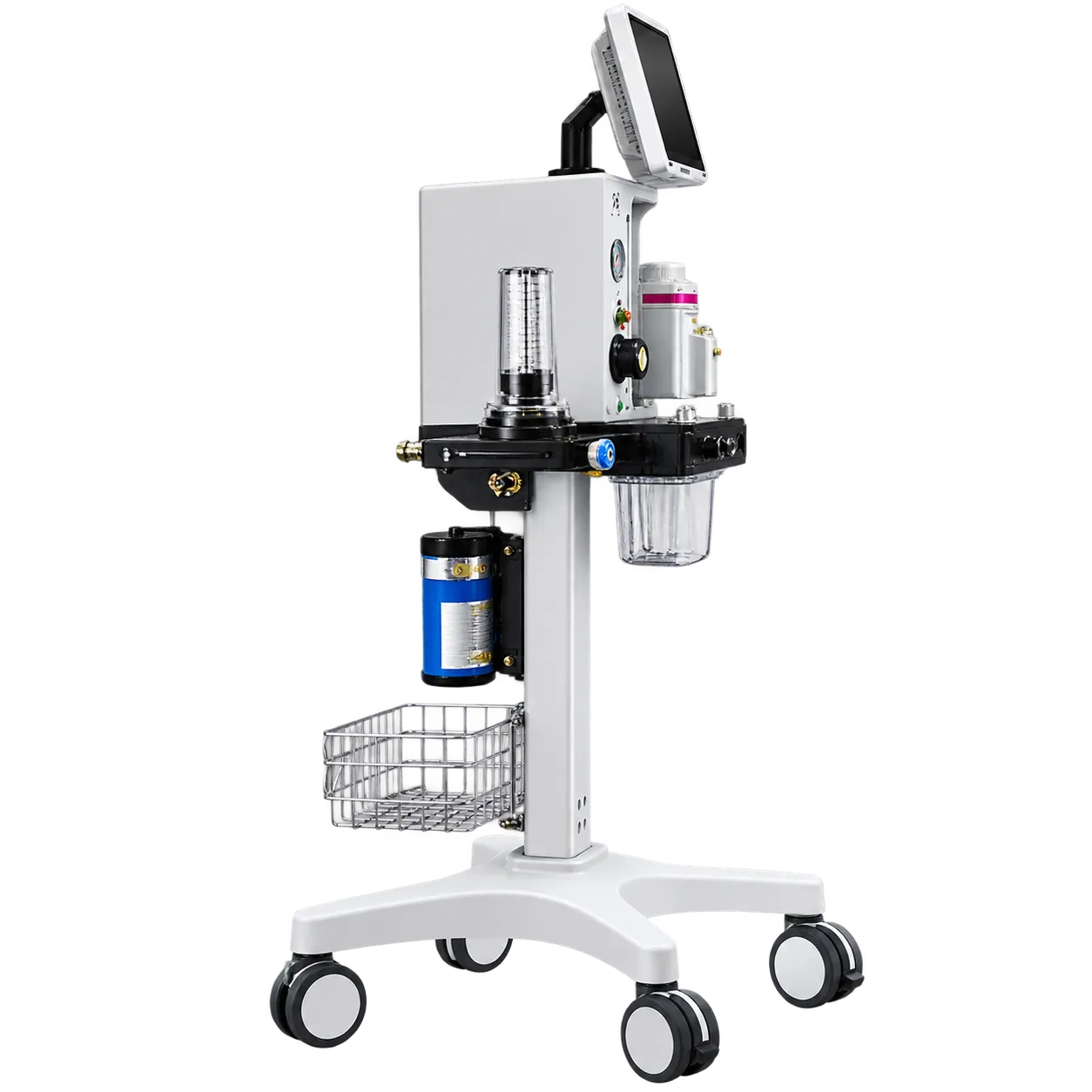
In a veterinary hospital with a CT scanner, the R660-Pro does what it does best. The anaesthetised animal is ventilated on the scanner table. When acquisition starts, a press of the infrared remote freezes the breath at inspiration, so the images capture a motionless chest, with the anaesthetist choosing the moment of each hold. Side-stream sampling keeps end-tidal CO2 in view before and after each hold so that ventilation can be read throughout the visit to the suite.
In theatre, end-tidal CO2 follows ventilation from the first breath on the machine to the last, so rate and tidal volume can be adjusted as the reading changes. PEEP of 3 to 20 cmH2O is available for the moments when SpO2 falls. Because the smart preset sets starting values from body weight, an animal moves from induction to ventilation without every parameter being built by hand. The four modes then let ventilation follow the case as it develops.
Research facilities working across species use the machine's breadth. The species RWD names run from birds, rodents and reptiles to cats, dogs, monkeys and pigs. Its two bellows covers carry tidal volume from 4 ml at the small end to 1500 ml for a large pig. Imaging studies can call on the inspiratory hold, while rodent and bird work sits at the low end of the volume range.
Veterinary anaesthetists, surgeons and nurses run the R660-Pro alongside imaging staff and research animal technicians. The 10.1-inch touchscreen is legible at 2 m, circuit choice and APL closure each take one touch, and the slide-type absorber and gas filter tank keep routine upkeep at the machine.