
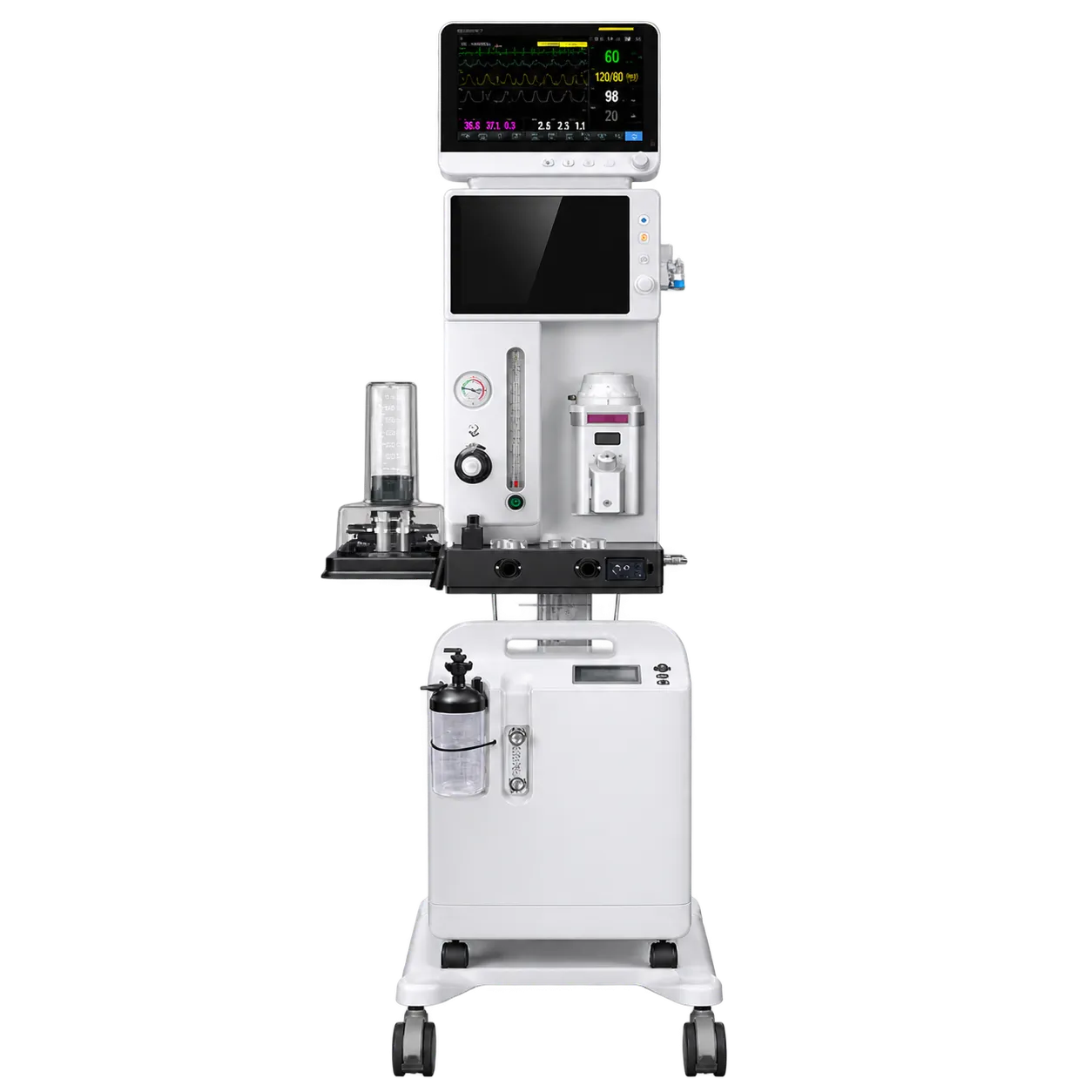
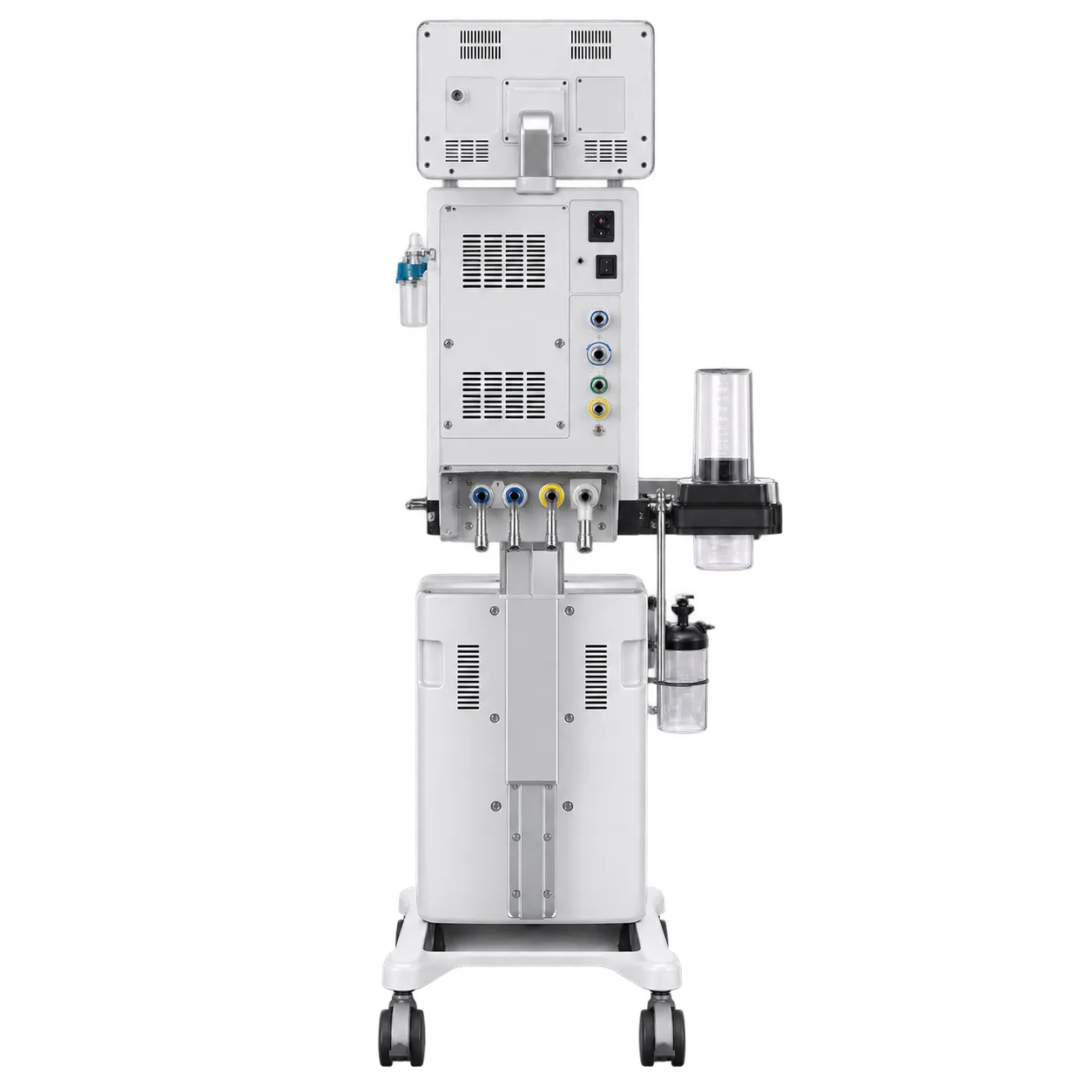
Veterinary clinics, referral hospitals and animal research facilities use the R660 wherever inhalation anaesthesia needs controlled ventilation alongside it. RWD lists dogs, cats, pigs, monkeys, rodents, reptiles and birds among the animals it serves, so one machine covers a mixed caseload from small companion animals to large research species.
In companion animal surgery, VCV holds a set tidal volume through a long procedure, while PCV caps each breath at a chosen pressure. SIMV suits animals that keep some breathing of their own, adding mandatory breaths with pressure support behind them. PEEP of 3 to 20 cmH2O helps hold the lungs open at the end of each breath, and the trigger settings respond to small inspiratory efforts. At the light end, a 4 ml tidal volume brings rodents and small exotics such as birds and reptiles within range. At the heavy end, 1500 ml covers large dogs and pigs of up to 150 kg.
Research facilities working with rodents, pigs and primates gain one platform across species, with isoflurane or sevoflurane on a high-accuracy vaporiser and waste agent captured in the canister at the machine.
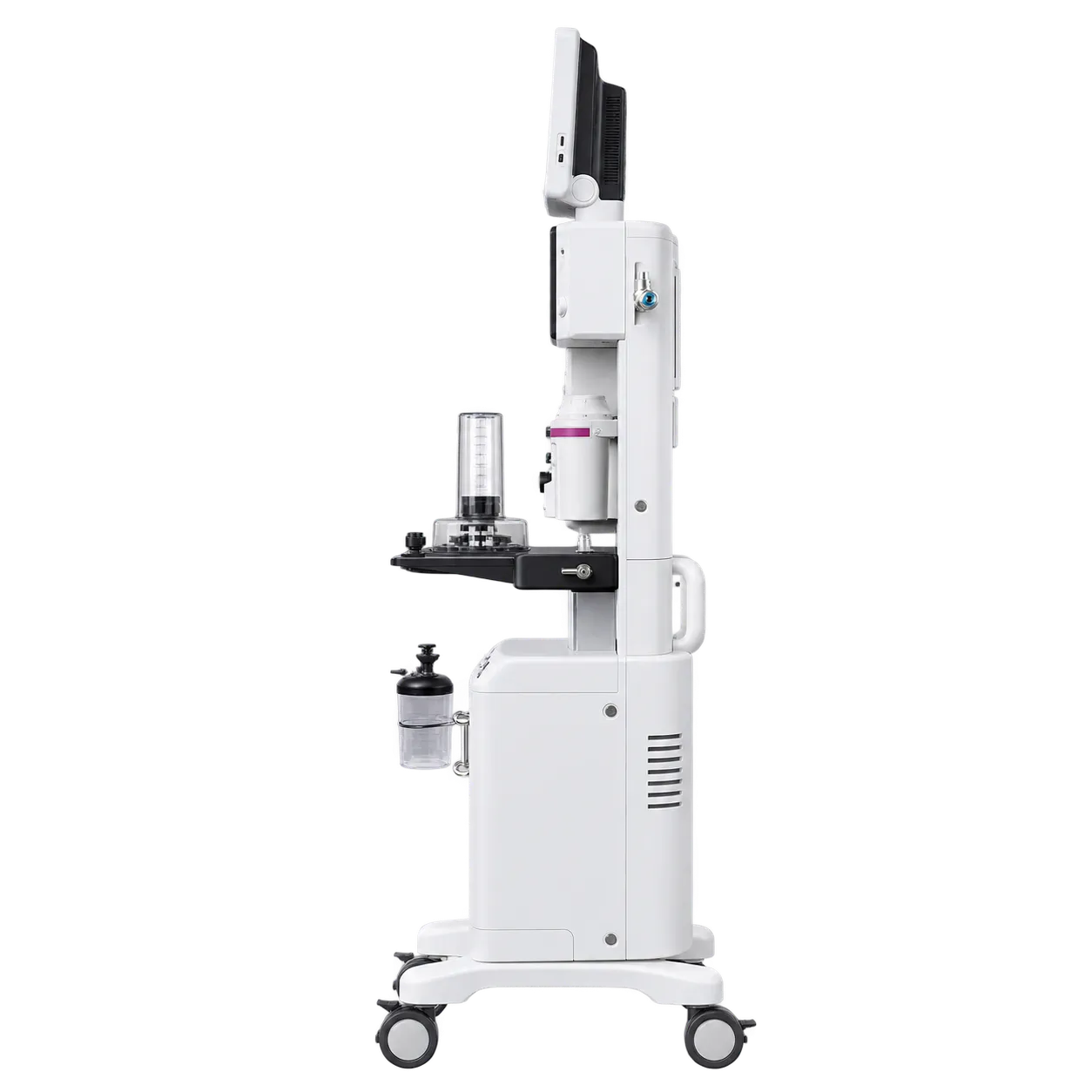
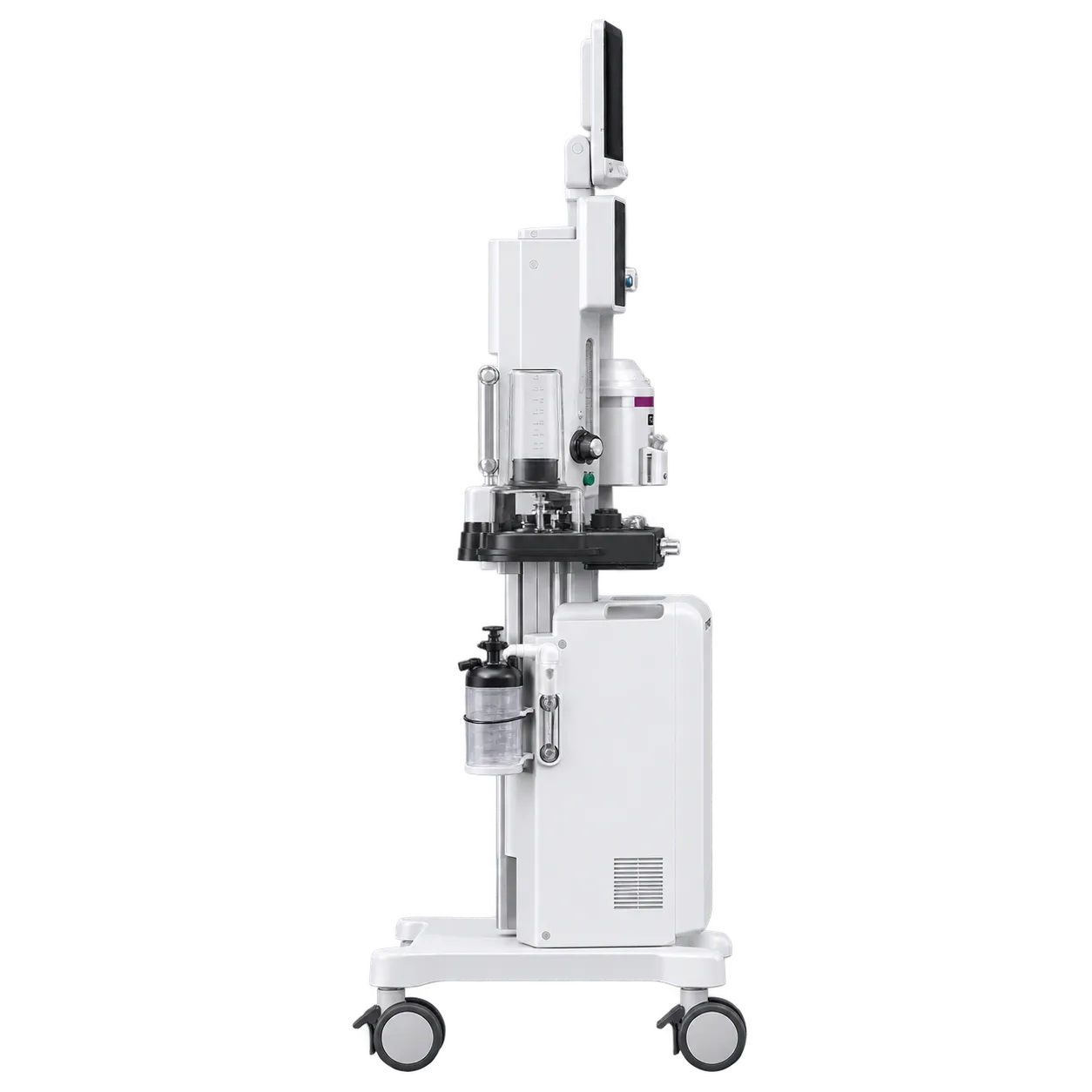
Day to day, the R660 is run by veterinary surgeons, veterinary anaesthetists, veterinary nurses and research technicians. The front-facing panel keeps circuit choice, APL valve closure and the change to manual ventilation within one reach, and the touchscreen can be read from across the table. With a monitor and oxygen concentrator mounted on the same stand, the anaesthesia station wheels between theatre and preparation room as a single unit.