
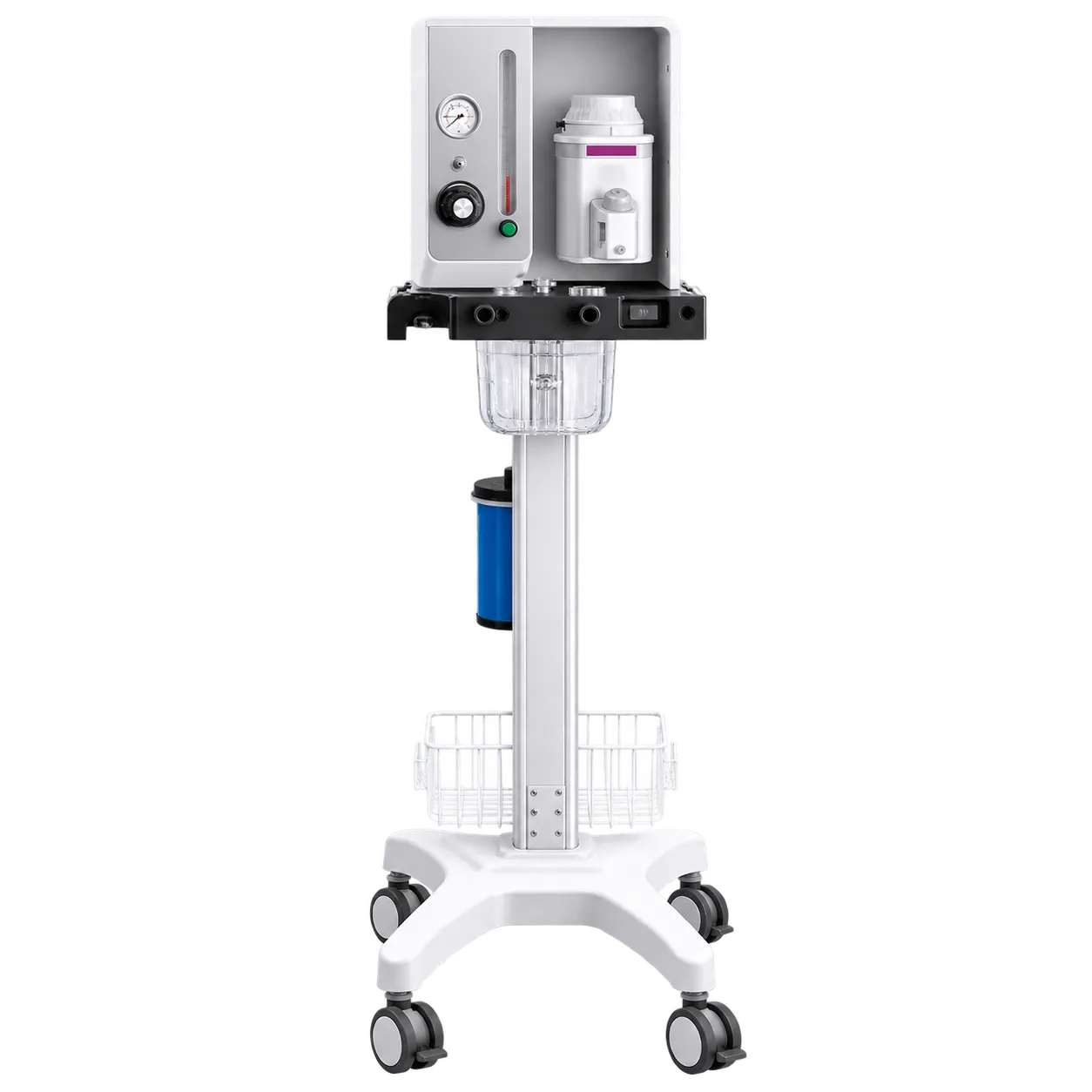
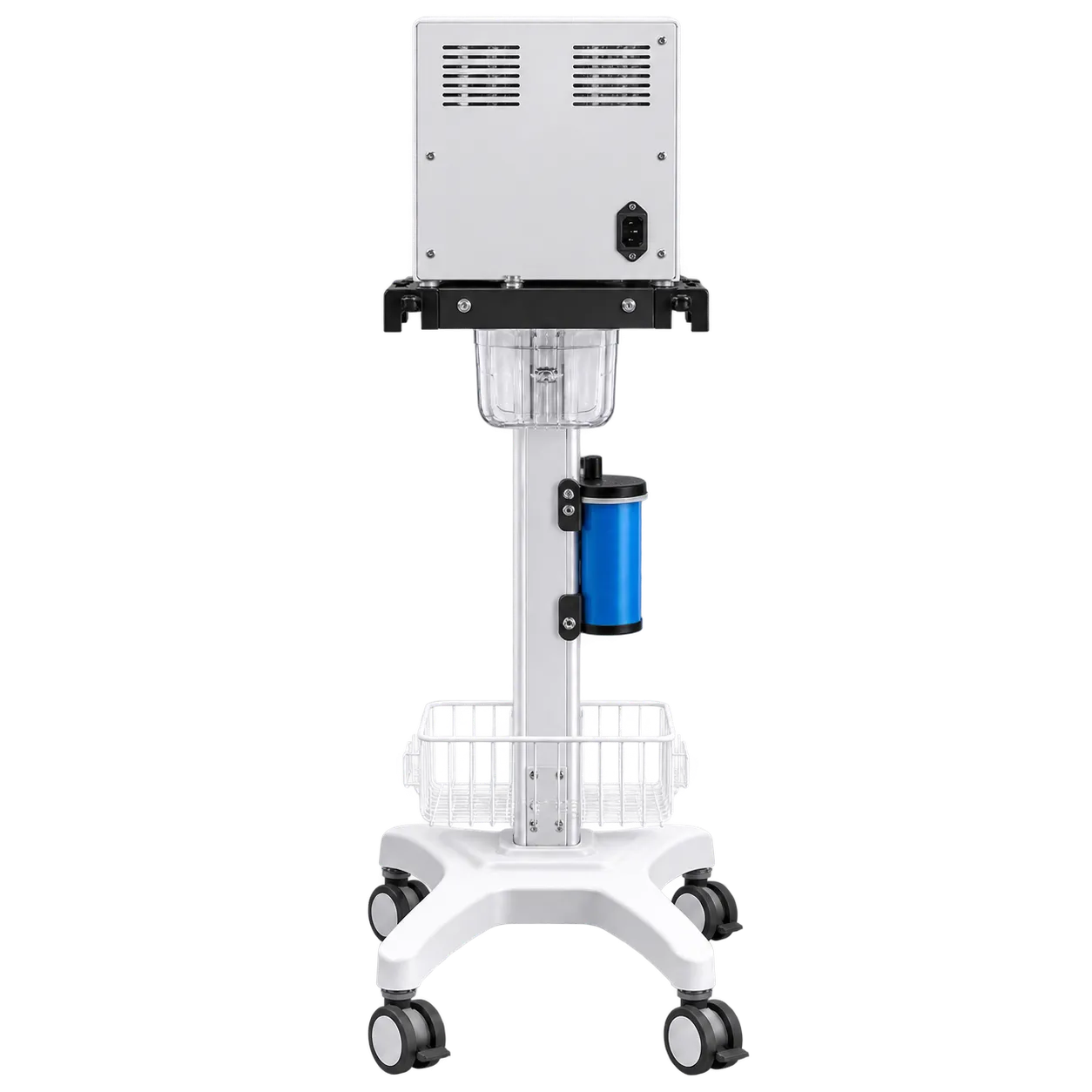
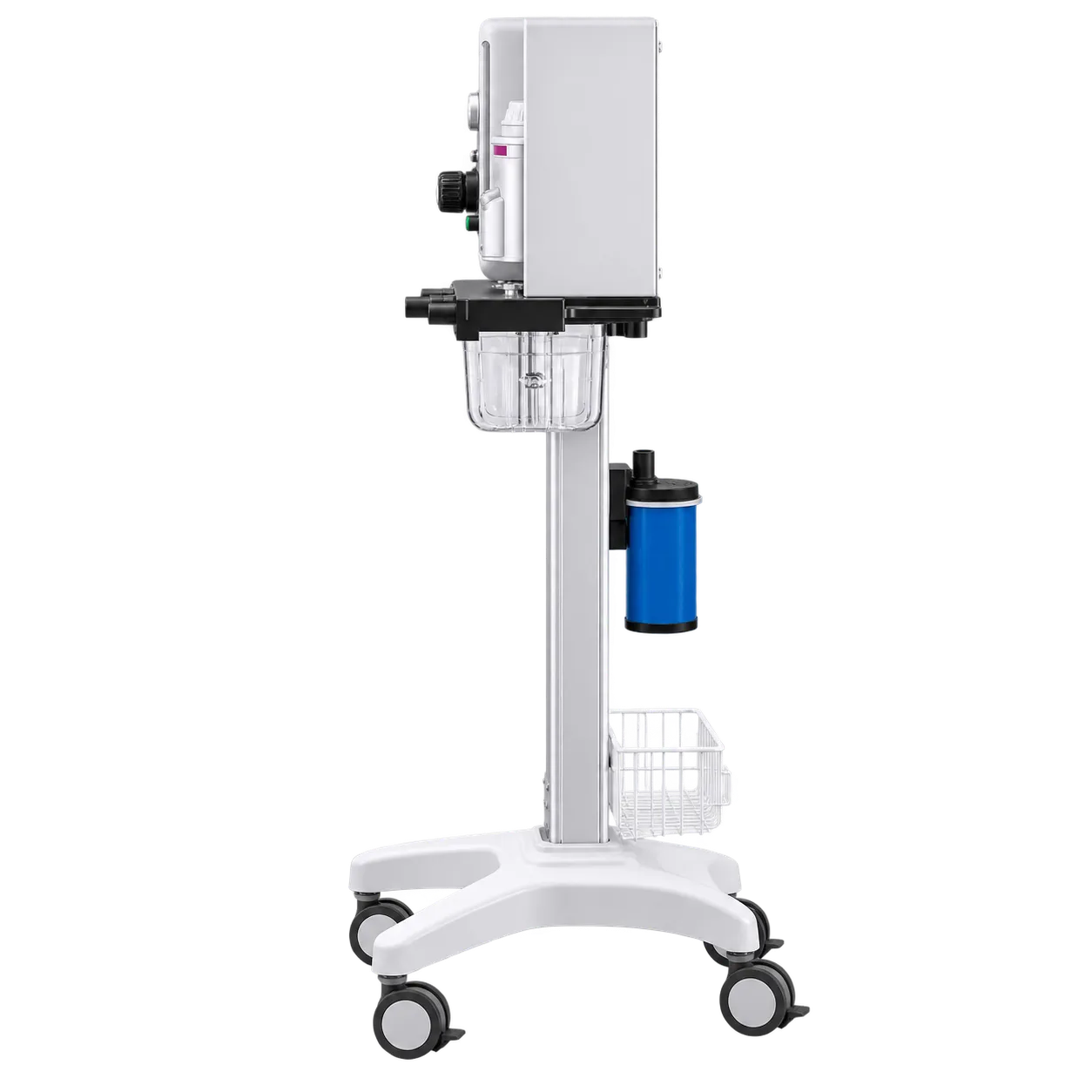
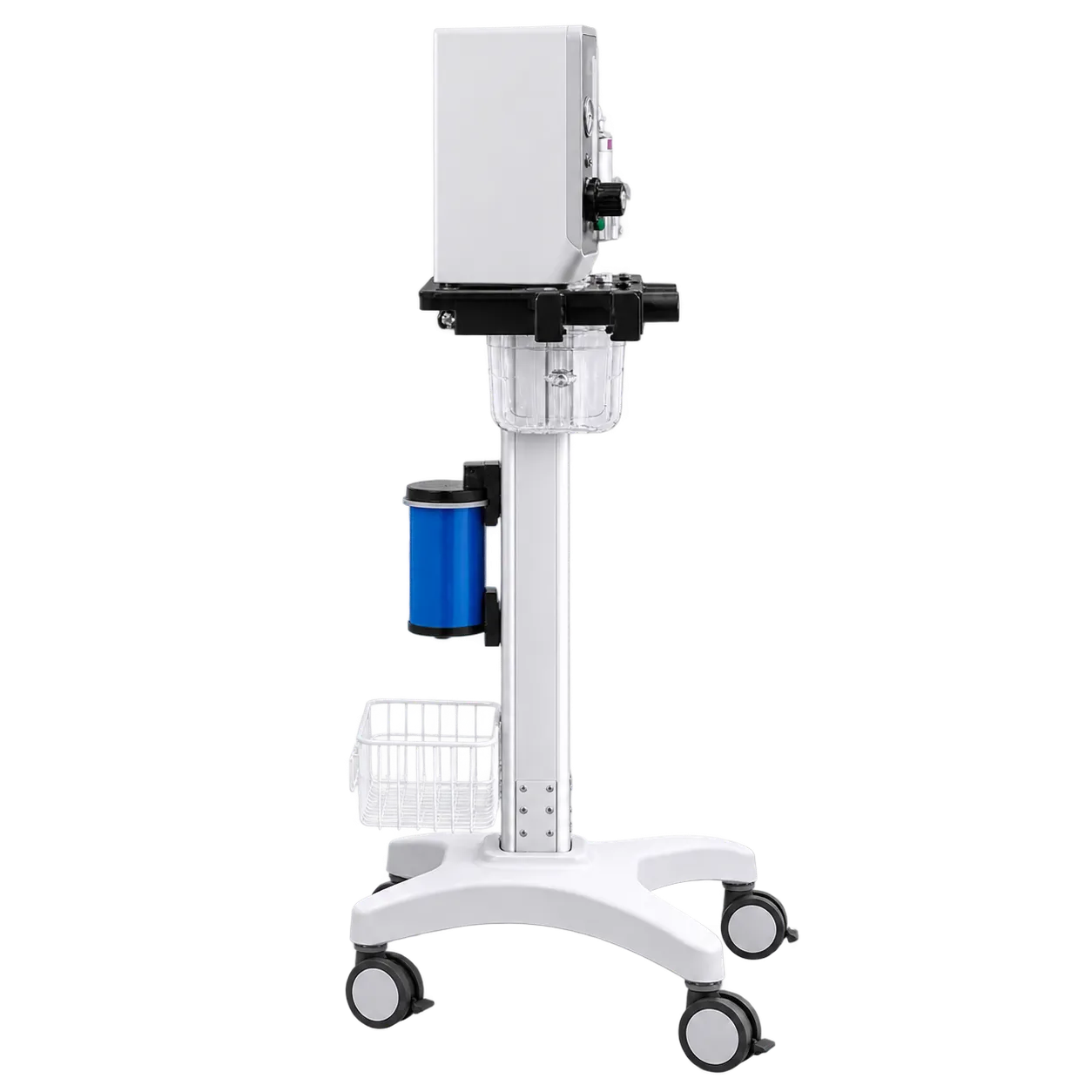
Small animal clinics, mixed practices, exotic animal clinics and research facilities use the R650 for inhalation anaesthesia, where the animal breathes on its own or receives manual breaths from the team. RWD serves dogs, cats, pigs, monkeys, rodents, reptiles, and birds, and typical theatre days run from neutering and dental work to soft-tissue surgery.
Circuit choice depends on the animal's size. Rebreathing circuits typically carry larger dogs through surgery, with the 2.1 L absorber removing exhaled carbon dioxide, while non-rebreathing circuits such as the Mapleson F suit cats, puppies and other small patients. On the R650, that change happens at one switch, so a clinic can run a large dog spay and a cat dental back to back without re-plumbing the machine. Reusable non-latex bagsinin 0.5, ,1, and 2 L, cuffed endotracheal tubes from ID 2.0 to 10.0 mm, and a corrugated tube complete the breathing set RWD builds around it.
Before squeezing the bag, a nurse closes the APL valve with one click. The circuit stays capped at 30 cmH2O when closed, and the gauge colours show whether each breath sits in the green, yellow, or red zone. Waste isoflurane or sevoflurane collects in the canister at the machine.
Veterinary surgeons, veterinary nurses, and anaesthetists run it day to day, while research animal teams use it for procedures under inhalation anaesthesia. Practices that later add mechanical ventilation can mount a ventilator on the machine's holder, and an oxygen concentrator or monitor can be added the same way.