
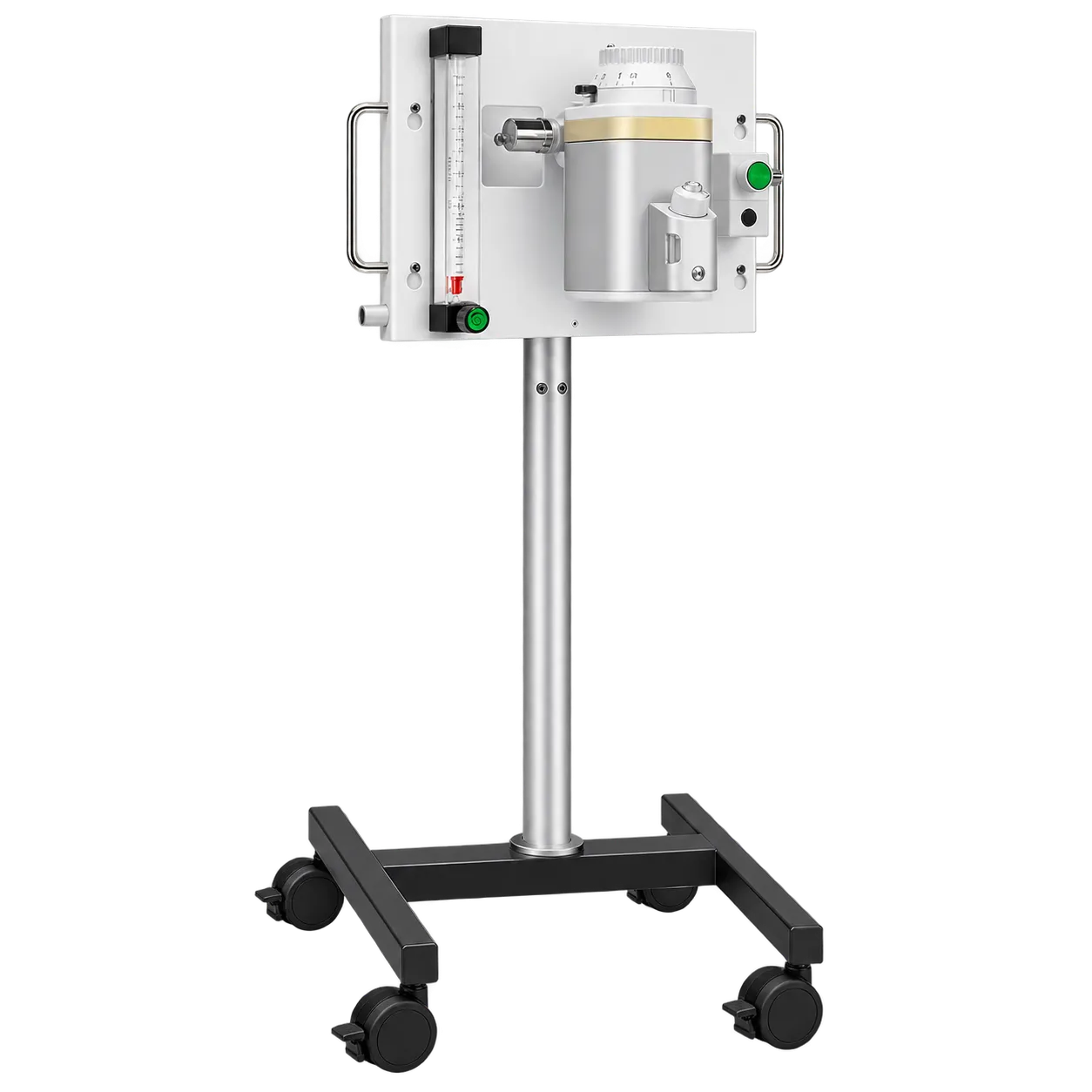
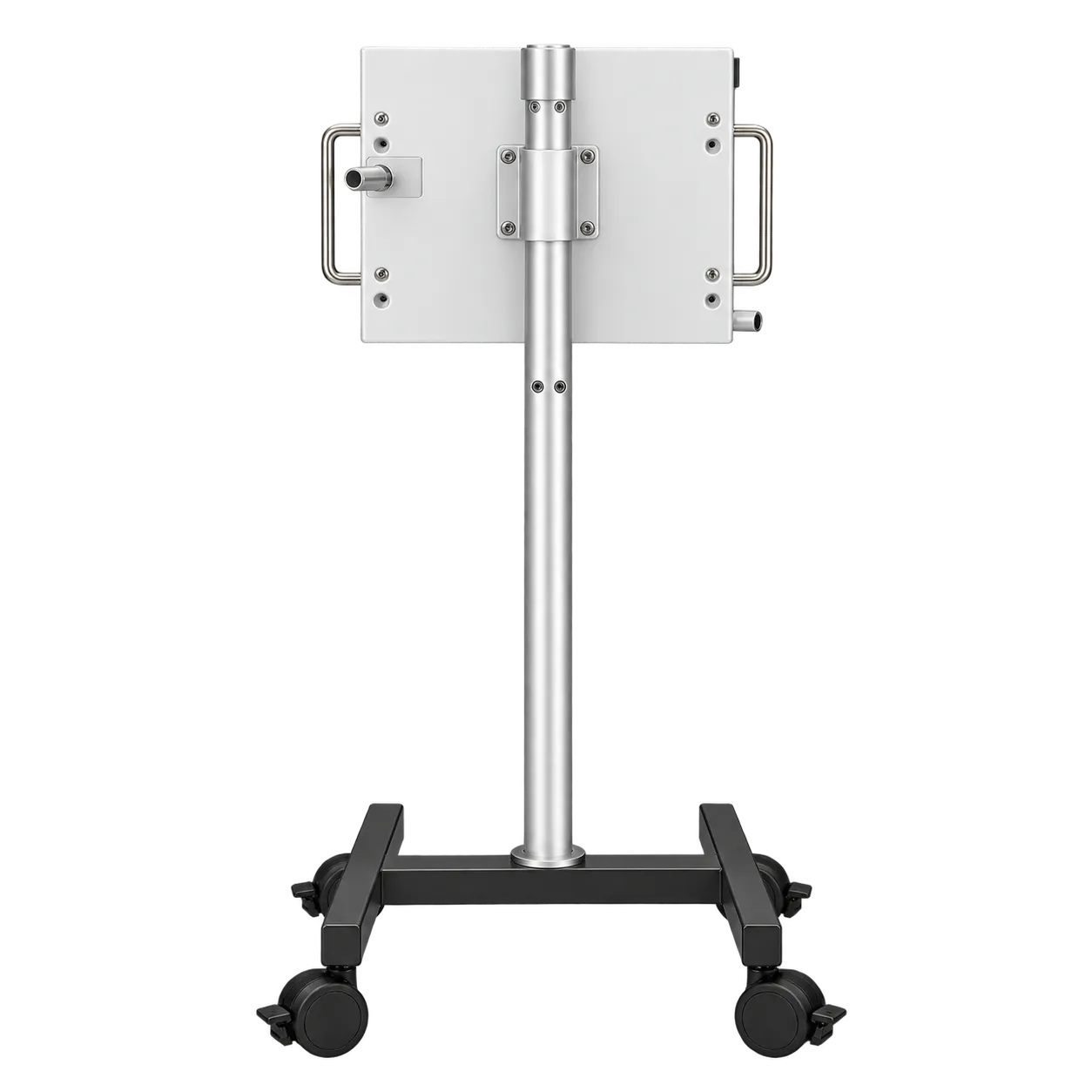
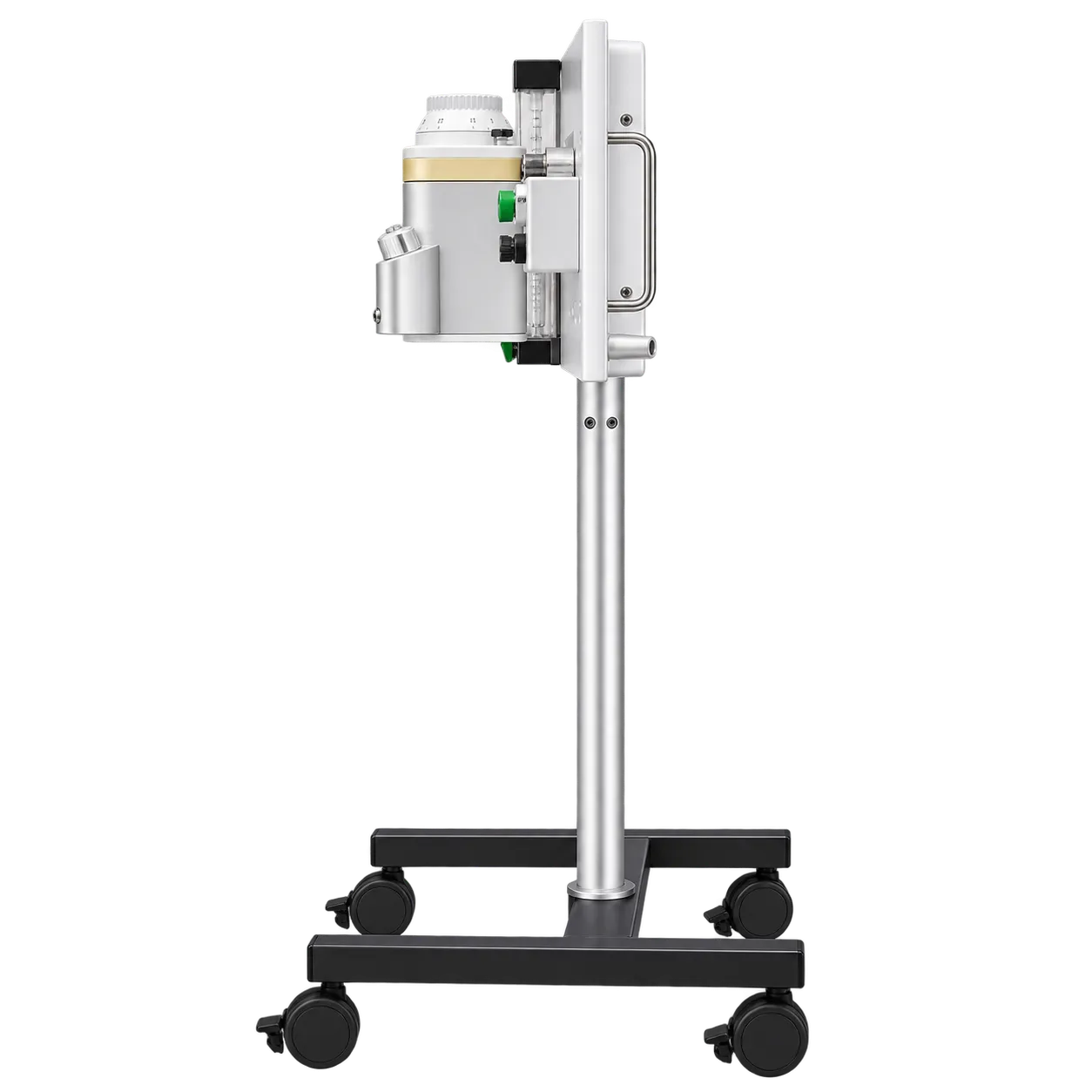
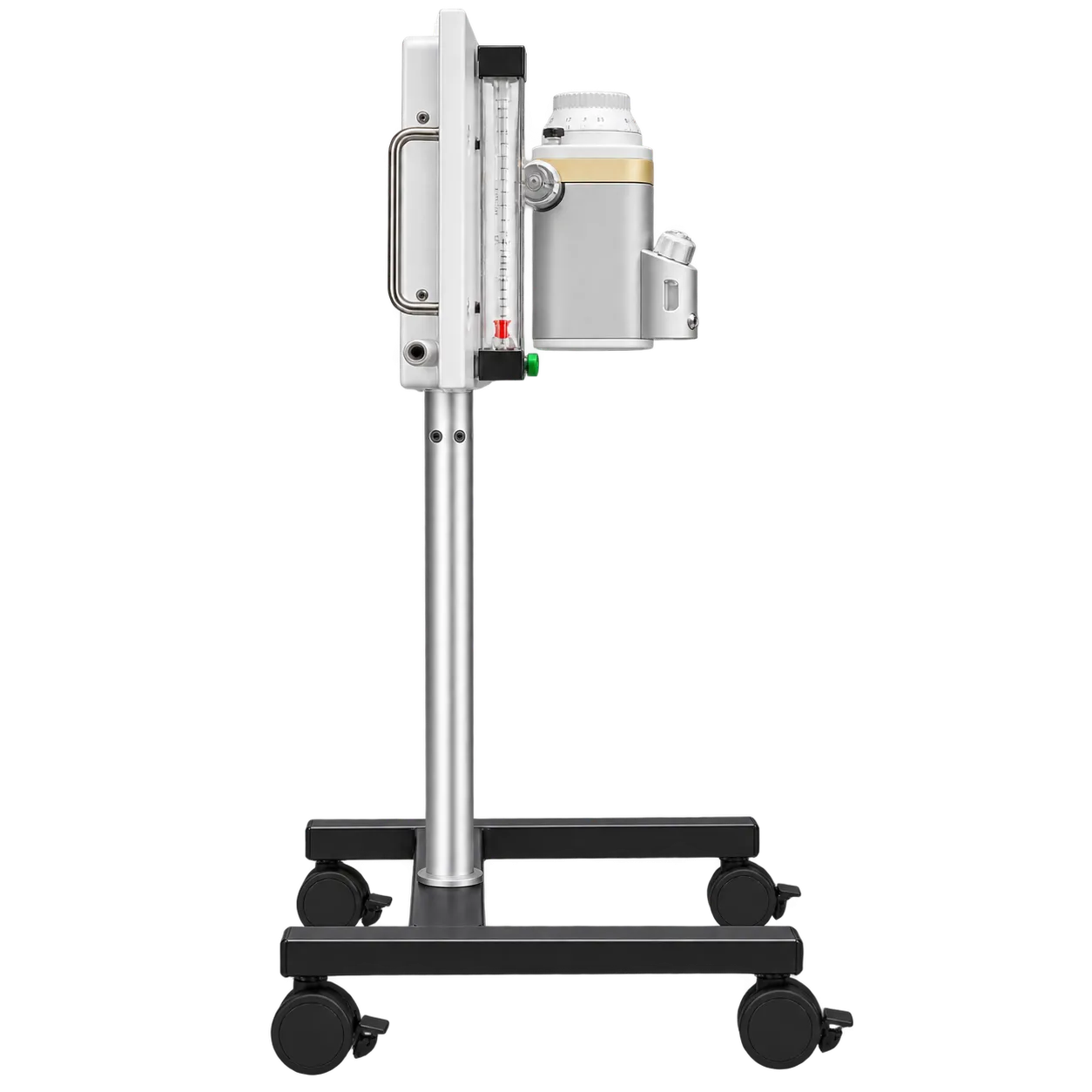
Any veterinary practice that runs the R640-S1 or the RSA and monitors anaesthetised animals at the machine can use this shelf. It turns the anaesthesia machine and monitor into one station the team sets up, moves, and works at together. With the R640-S1 specified for species from birds and reptiles to dogs, pigs and monkeys, the shelf sits at the centre of a mixed caseload.
In theatre, the anaesthetist or veterinary nurse managing the case works at the machine during the procedure. With the monitor on the shelf, the readings they follow and the flowmeter and vaporiser they adjust are on the same unit, so the animal's values change, and the response happens in one place.
Where a practice induces in a preparation room and then moves the animal and the machine into theatre, the monitor travels on the shelf and arrives connected and in position. The same applies when the machine follows the animal into recovery. Small practices with tight rooms put the freed worktop space straight to use.
On the RSA, which RWD builds for small pets under 12 kg, the shelf is listed among the optional items. Exotic and small mammal practices can use that machine for monitoring in the same way, keeping a compact station for rabbits, birds, reptiles and other small patients.
Veterinary surgeons, veterinary nurses, and anaesthetists work with it. The shelf serves whoever runs the anaesthetic on the day, and the monitor keeps one fixed position from case to case.