

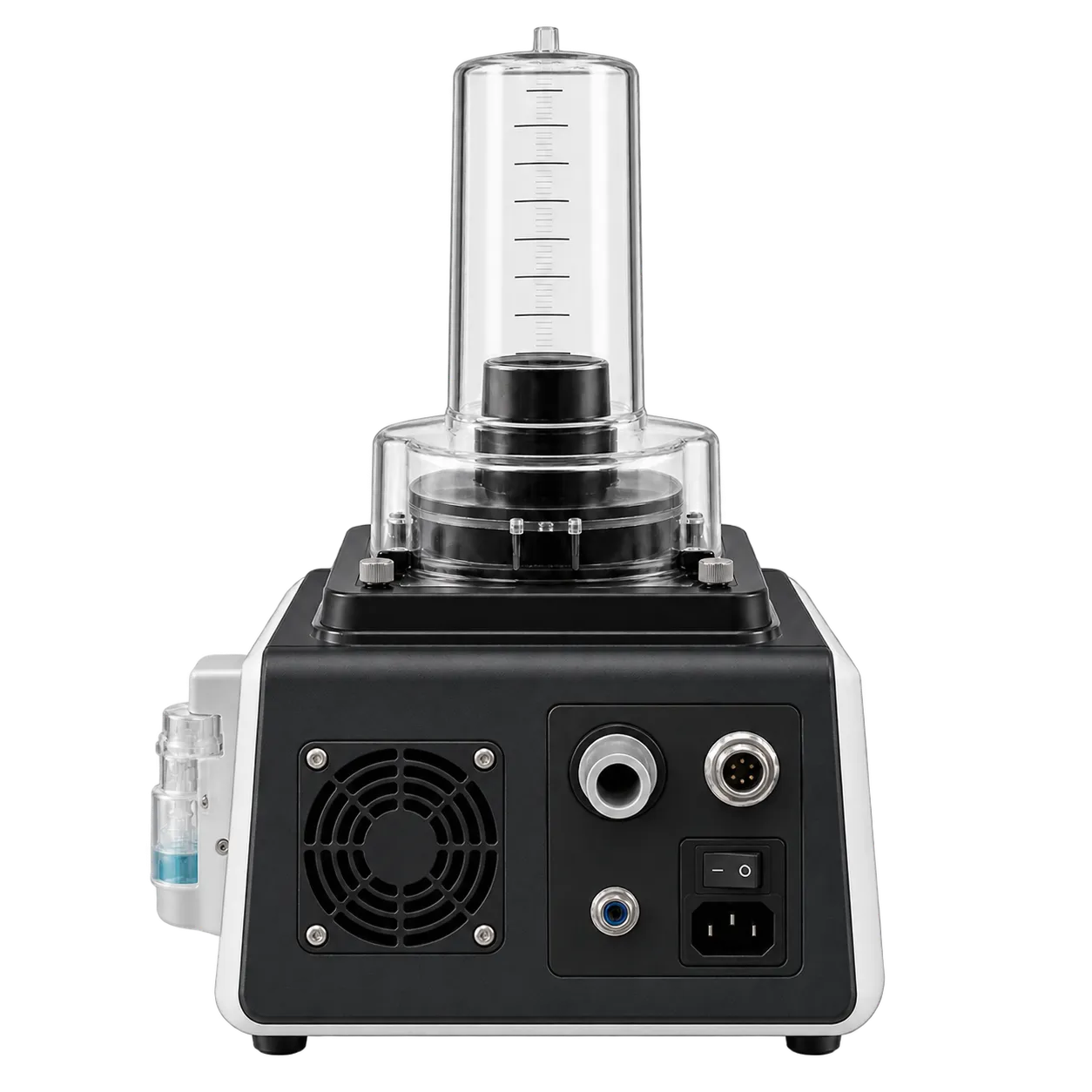


Any veterinary practice that ventilates anaesthetised animals can use the R420, from small-animal clinics to hospitals that see dogs up to 150 kg. A turbine drives each breath so that the ventilator can be set up in a theatre, preparation room, or imaging suite without a drive-gas supply.
During surgery, the anaesthetist sets the mode, rate, I: E ratio, and pressure on the touchscreen, or lets the smart preset suggest parameters based on the animal's weight. The PEEP function helps veterinarians deal with low SpO2 during an operation, and the monitored airway pressure curve and minute volume show how each breath is going. Alarms and their prompts support the person running the case.
With a minimum tidal volume of 4 mL, the R420 reaches the tiny patients of exotic and small-mammal practice. The lower bellows covers 0 to 300 mL for these animals, and the upper bellows covers 300 to 1500 mL for larger dogs and other bigger patients.
Where capnography is needed, the R420-Plus adds sidestream EtCO2 monitoring with a water trap and sampling line, so end-tidal values can be followed alongside airway pressure and minute volume.
In imaging, the R420-Pro adds a wireless remote for inspiratory hold. During a CT scan of the chest or abdomen, the anaesthetist holds the animal's breath so it stays still and the scan can be completed.
Veterinary surgeons, nurses, and anaesthetists all use it, and the auto leak test lets a new team member quickly check the system at start-up.