
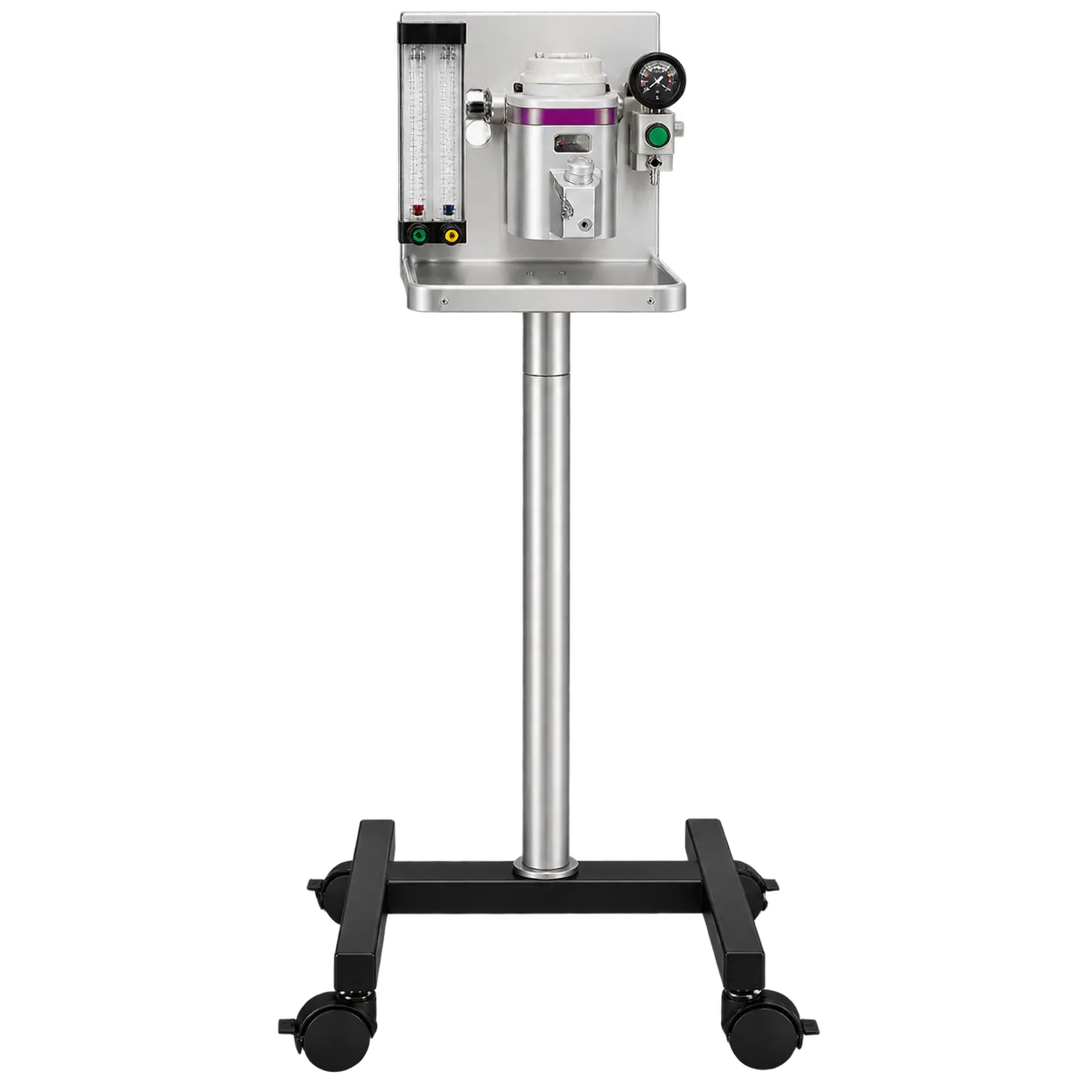
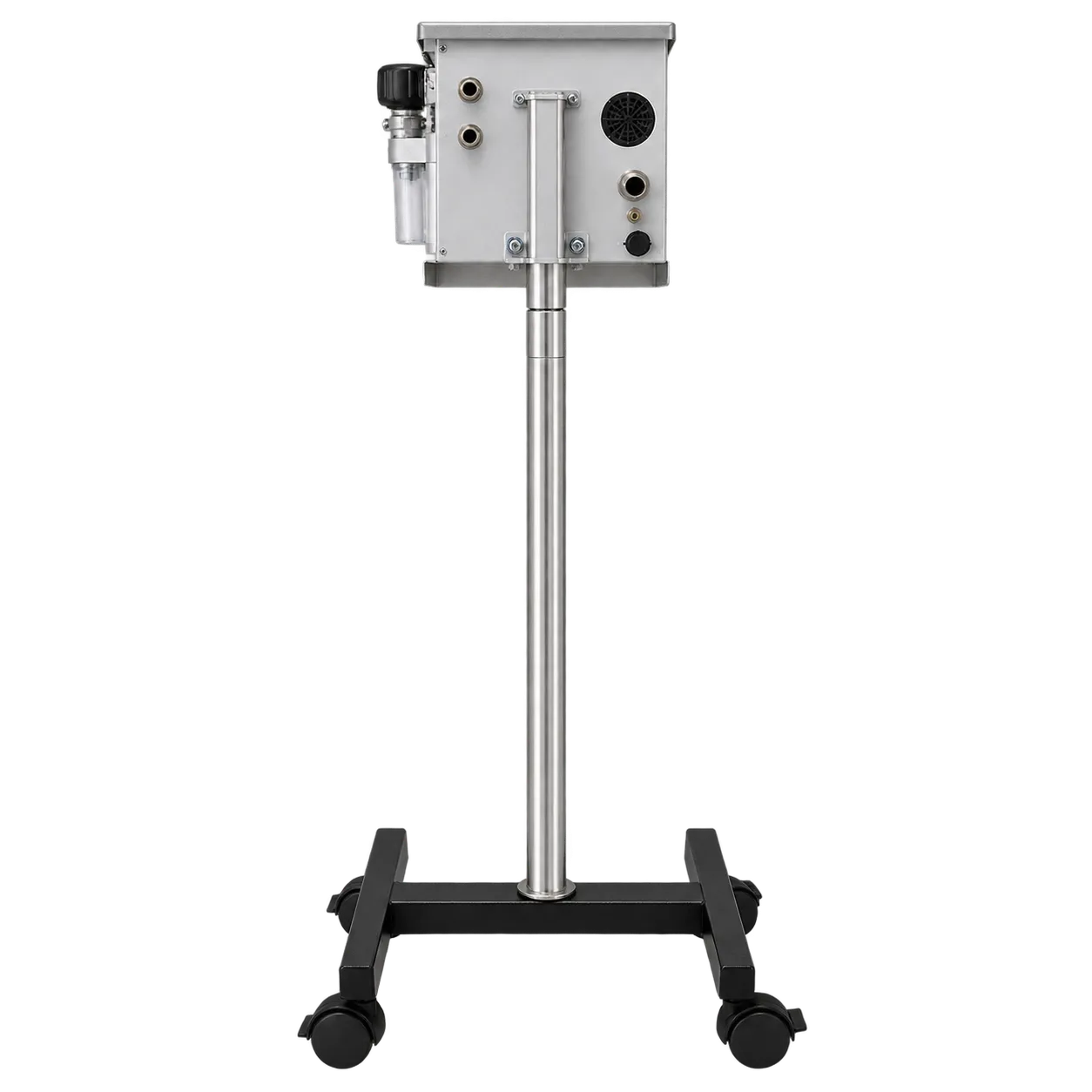
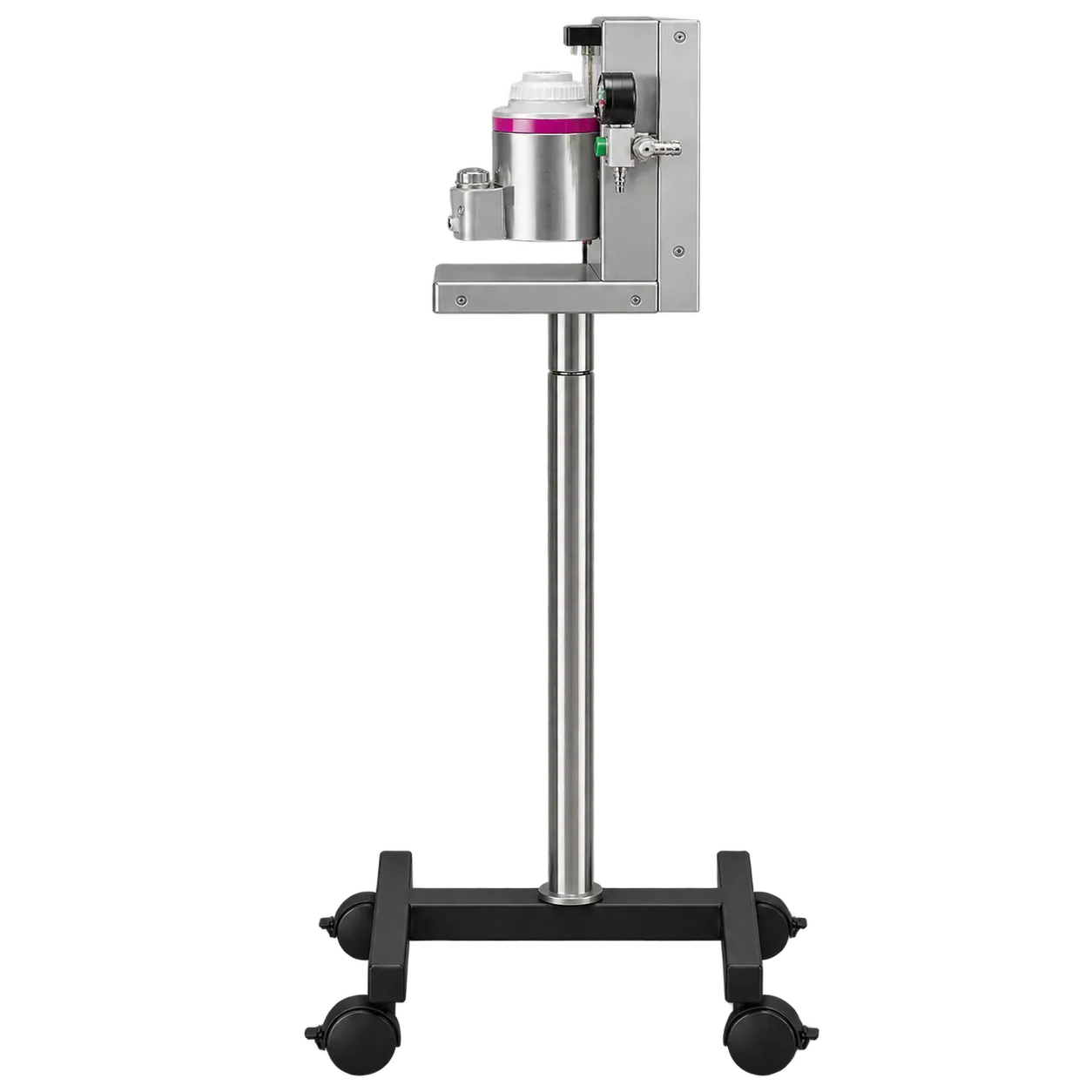
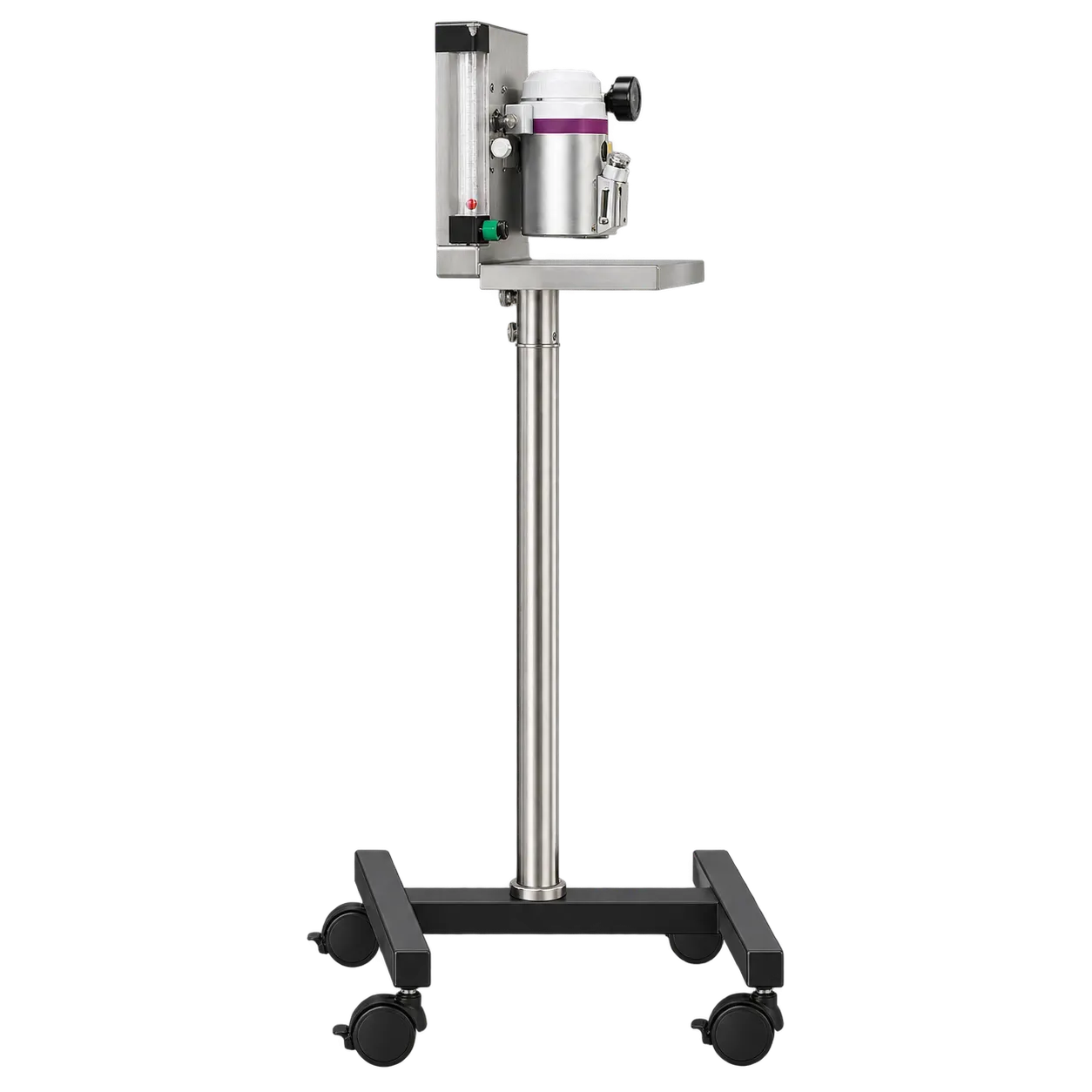
The R-HS belongs in small pet and exotic practices that run an RWD H-base anaesthesia machine and draw oxygen from a concentrator. On the RSA, that station anaesthetises reptiles, birds, rabbits, and other small pets, with air and oxygen metered through the machine's dual flowmeter, and the shelf-mounted concentrator providing the oxygen.
Exotic lists put a premium on room around the table. Rabbits, birds and reptiles are handled close to the anaesthetic, often with heat support, monitoring leads and small instruments laid out within reach. Keeping the concentrator on the machine's base takes it off the bench and frees up floor space around that small working area, so the team works from a single base.
Prep rooms and small theatres benefit in the same way. Where the anaesthesia machine is set up in a corner of a shared room, a concentrator carried on its base leaves nothing else to arrange or route around, and the station can be positioned as one unit for each list. A concentrator on the base is set up once, when the shelf is fitted, and stays in place for every list that follows. Mixed practices that see exotic patients on certain days keep the RSA, its concentrator and the shelf together as one prepared assembly.
Veterinary nurses and anaesthetists prepare and run the station during the list, while the veterinary surgeon operates. Because the R-HS is optional, practices fit it when a concentrator becomes the station's oxygen source, with the rest of the RSA set-up unchanged.