

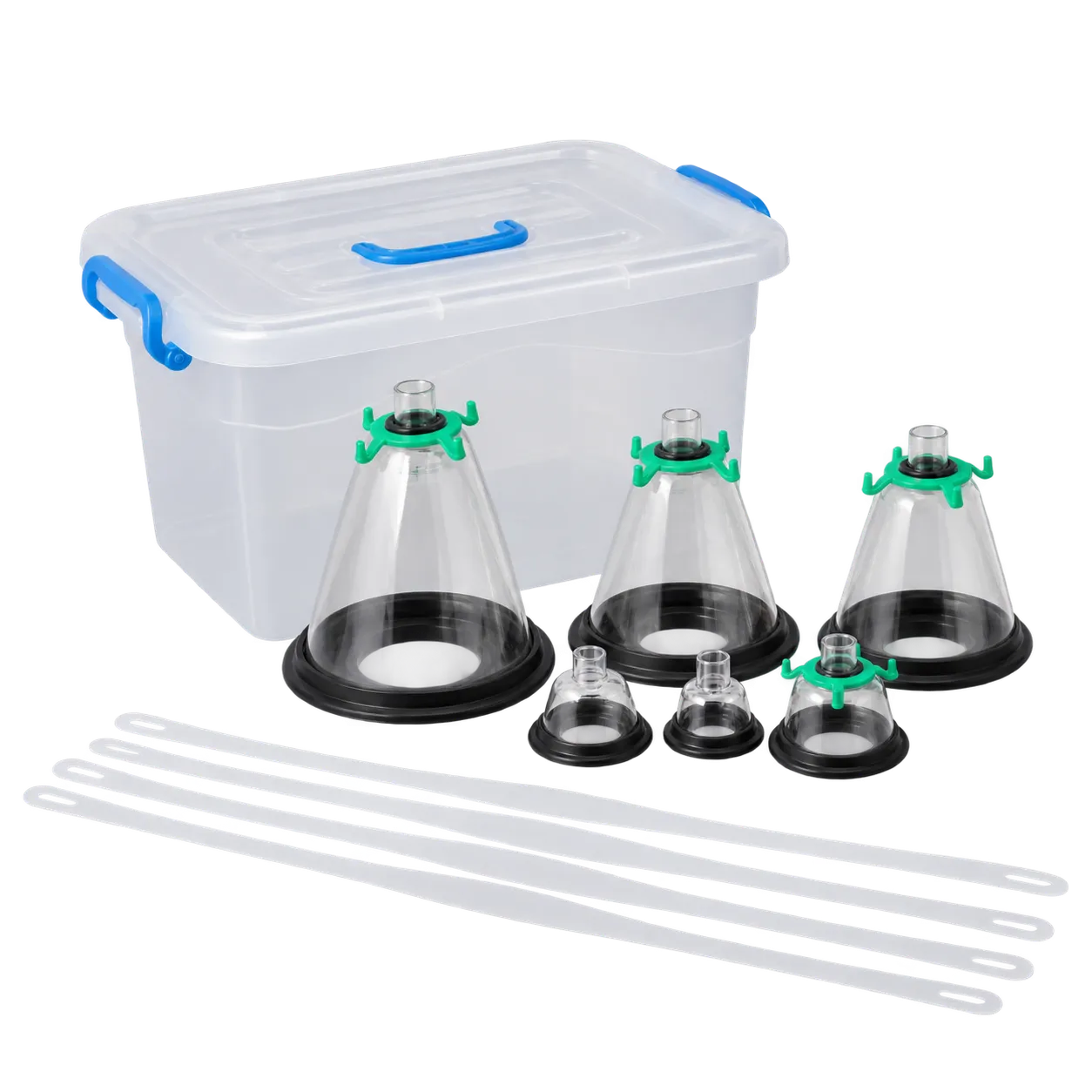
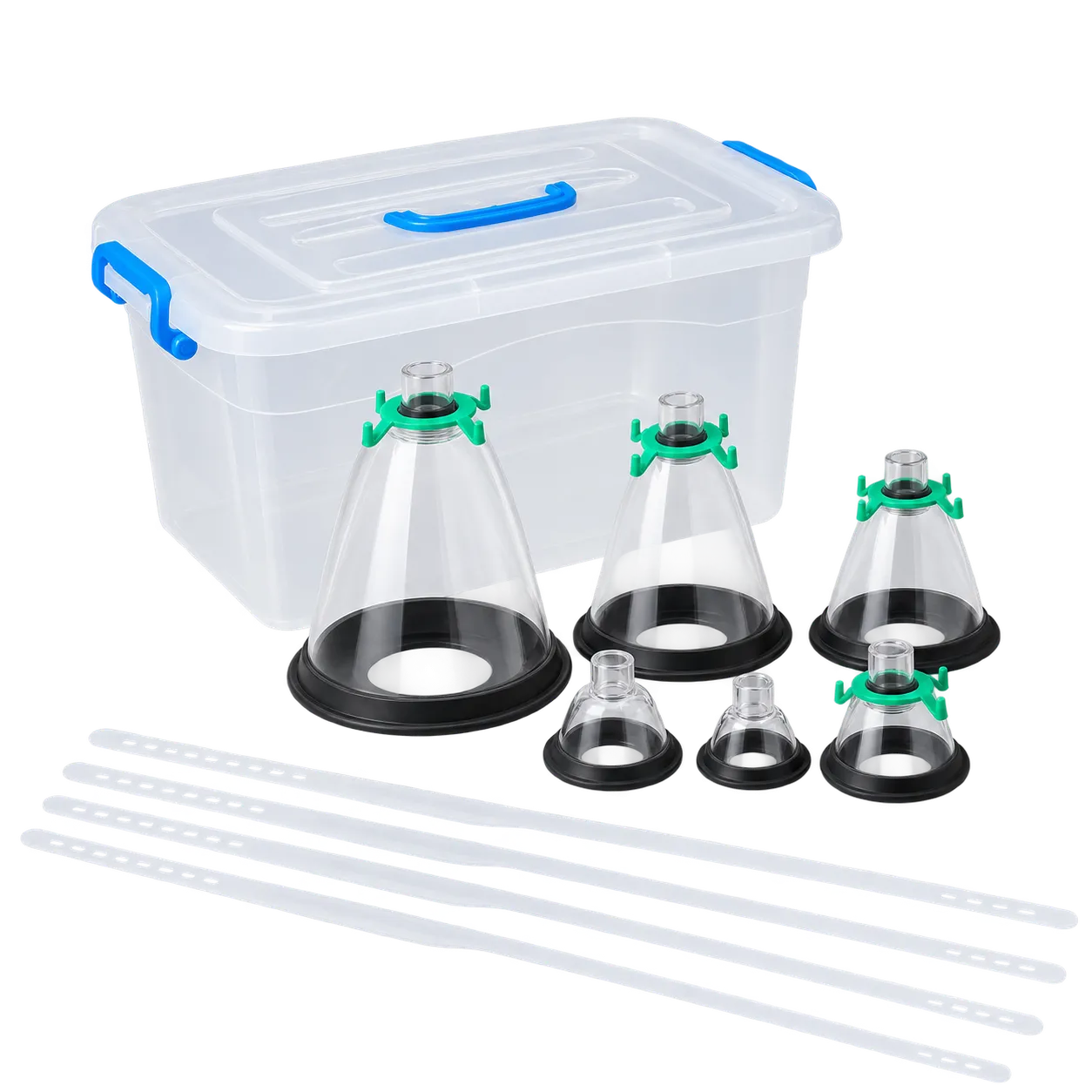
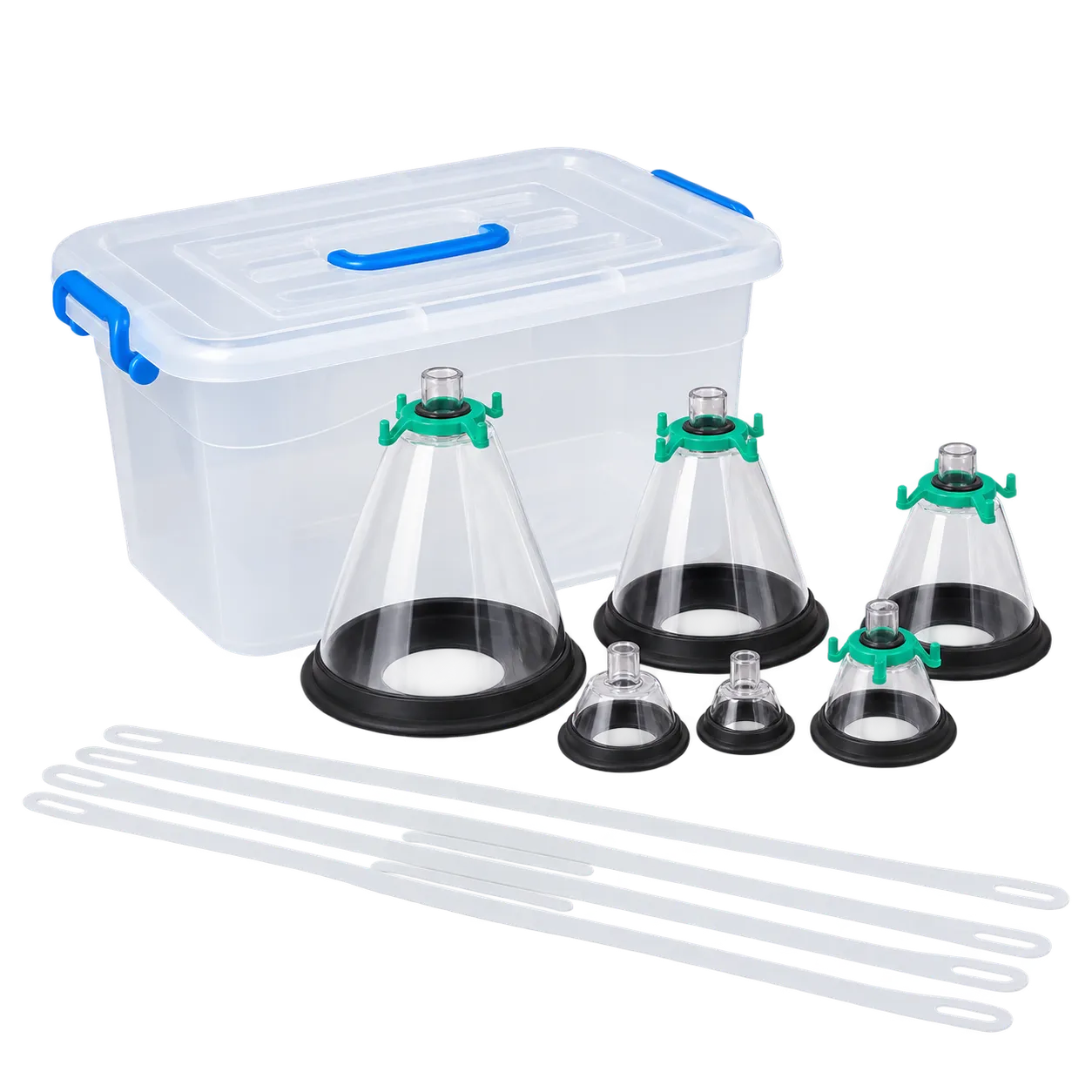
Any veterinary practice or hospital that anaesthetises cats uses the 68637, as does a team caring for other animals of comparable size. Its four applications, from induction and breathing rescue to oxygen inhalation and nebulisation, give it a place in the theatre, the preparation area, and the ward.
At induction, the veterinary surgeon or nurse holds the mask over the cat's nose and mouth while the anaesthesia system delivers the agent, and the cat breathes it in through the cone. The transparent body keeps the face in view throughout, so the person holding the mask can see how it sits and how the cat is breathing.
Breathing rescue is the second job RWD names for it. When a cat's own breathing becomes inadequate, breaths can be given through the same mask, and a mask of the right size is then already to hand for a cat of this build.
Outside the theatre, the 68637 delivers oxygen inhalation and nebulisation. A cat that needs supplementary oxygen breathes it through the cone, and a nebulised medication reaches it as a fine mist in the same way. One mask therefore follows a feline patient from induction to ward treatment.
Day to day, it passes between veterinary surgeons and nurses. RWD describes the medical-grade material as corrosion-resistant, oxidation-resistant, and odour-free, with safe, long-lasting use as the aim, which matters for a mask returned to service between animals. It needs no power, so it is ready wherever the gas supply is connected.