
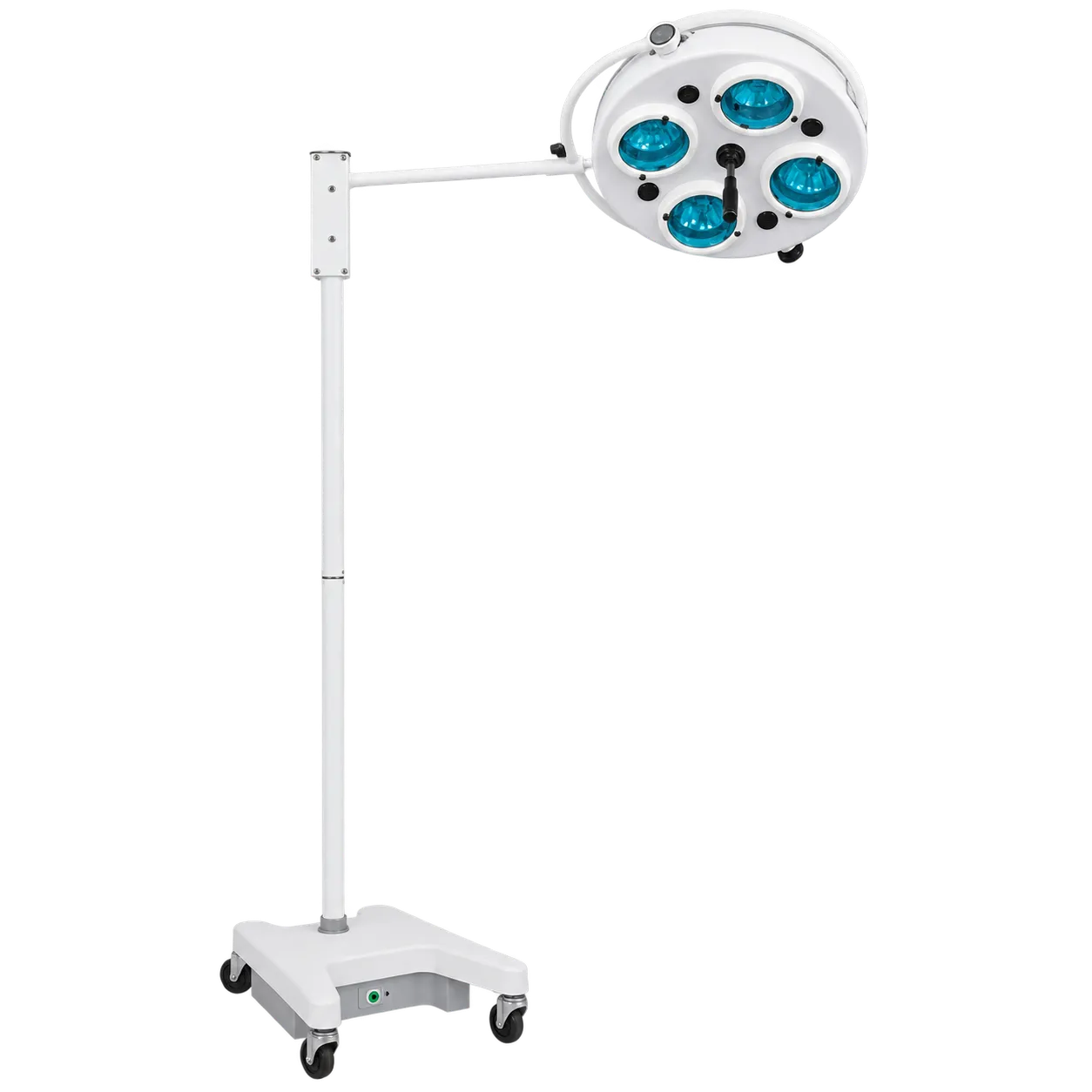
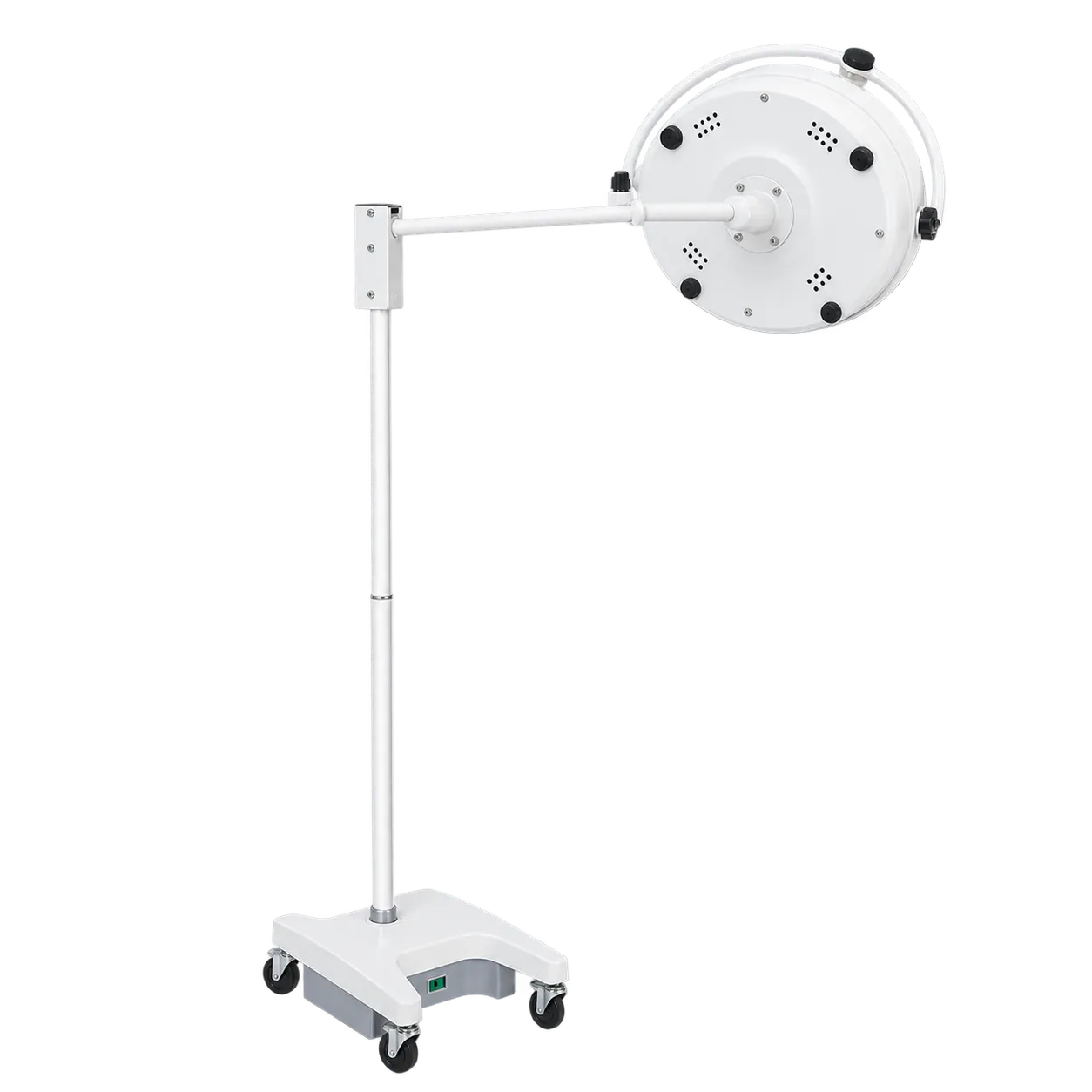
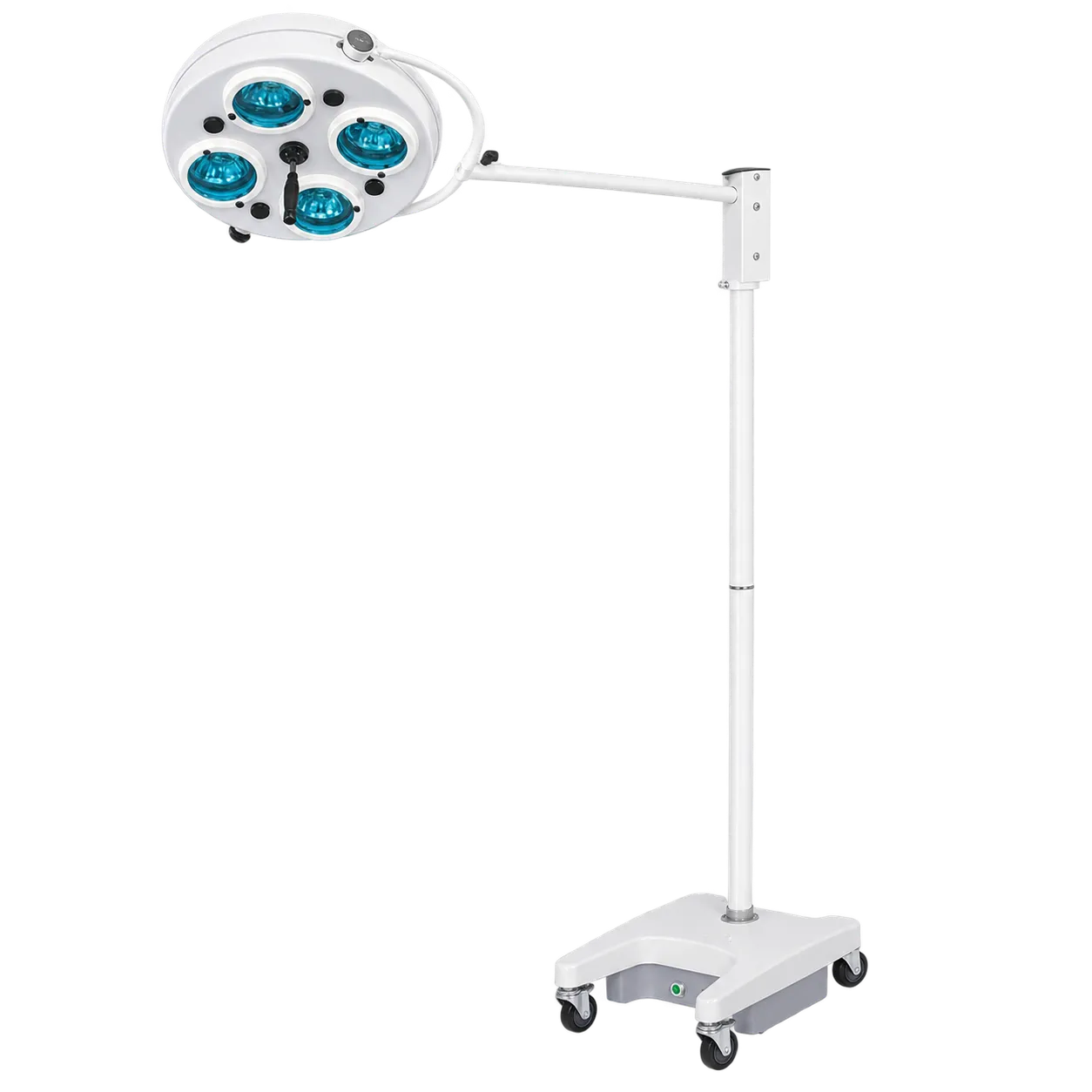
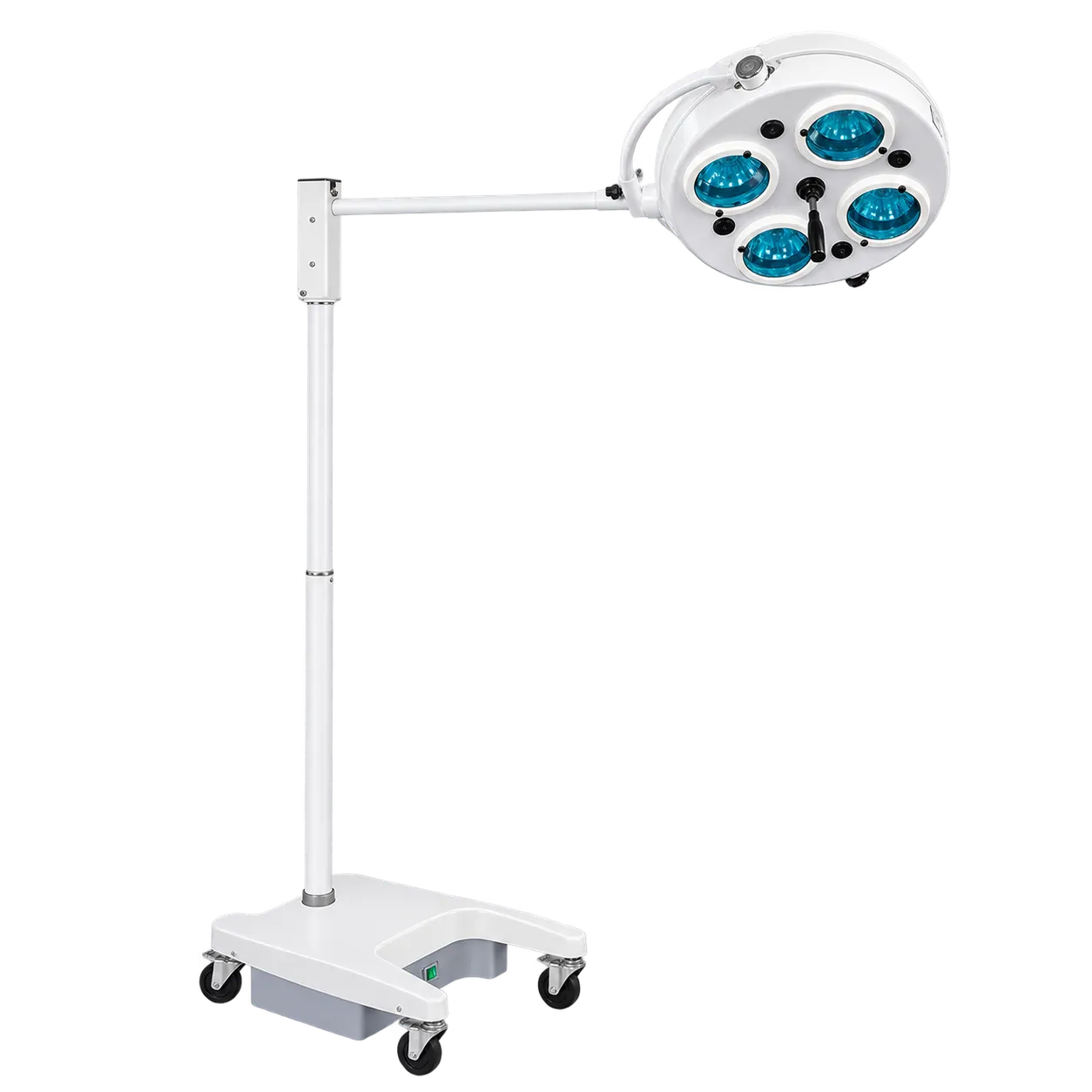
The KL04L.I is a surgical light for places where the power supply is uncertain. Surgeons, obstetricians, midwives, anaesthetists, and theatre nurses use it when they need the field lit for the whole procedure, regardless of what happens to the mains.
District and rural hospitals are its clearest setting. When grid power is interrupted during the day, a battery-backed lamp lets the team safely finish a laparotomy, hernia repair, or amputation while the generator starts or the supply returns. Field hospitals, mission hospitals and disaster-response units rely on the same capability in temporary buildings and tents.
Maternity units use it in delivery rooms and obstetric theatres. Caesarean sections, perineal repairs and the management of postpartum haemorrhage continue through any interruption to the mains, and 60,000 lux at 1 metre with colour rendering up to Ra 100 lets the team see bleeding points clearly. Because the temperature rise at the patient’s head stays at 2 °C or less, a mother awake under regional anaesthesia is not bothered by heat from the lamp.
Emergency departments and minor operation rooms in larger hospitals wheel it in as a mobile light and brake it beside the trolley or table. It then lights wound debridement, suturing of complex lacerations, and abscess drainage. Surgical centres also keep it as a standby lamp, ready to be brought to any room if a ceiling light fails mid-list.
Upkeep combines two routines: keeping a supply of 24 V, 100 W bulbs on the spares shelf, and keeping the battery ready for use between lists.