
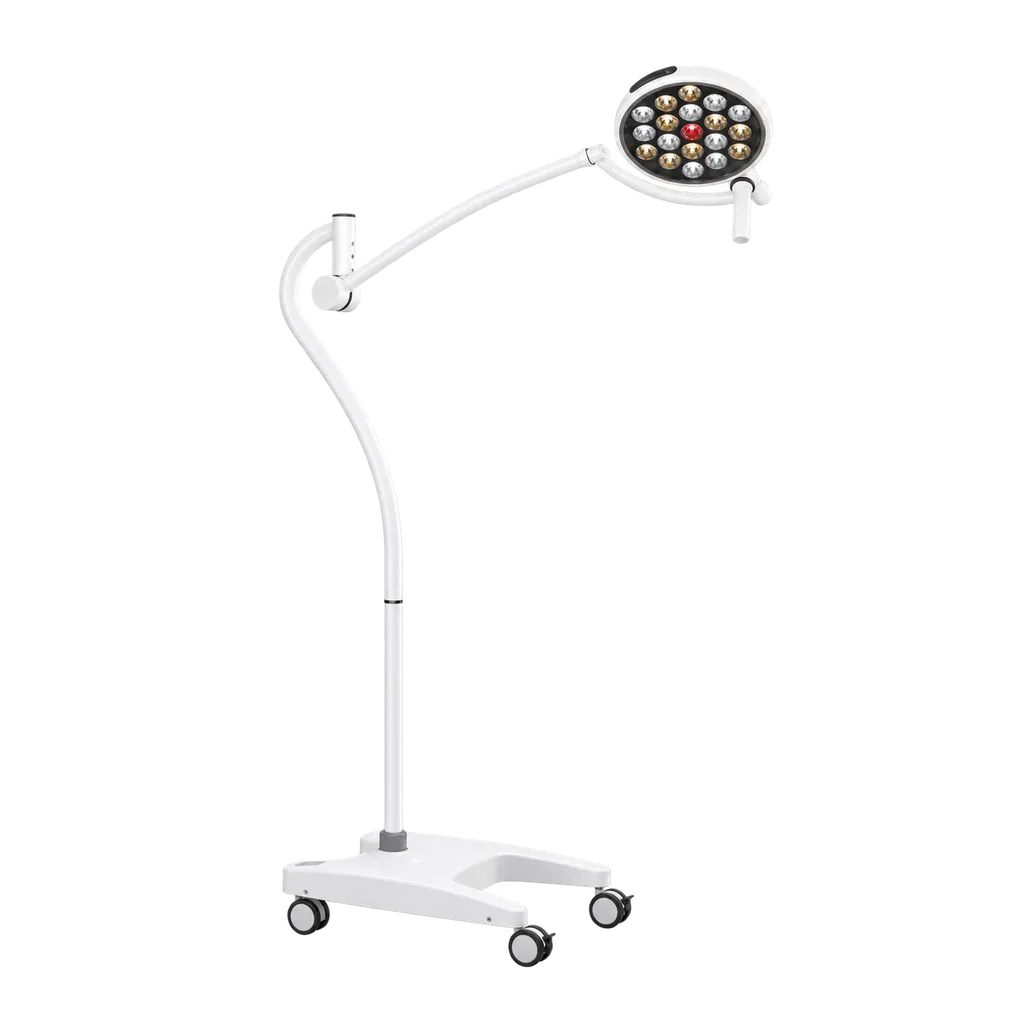
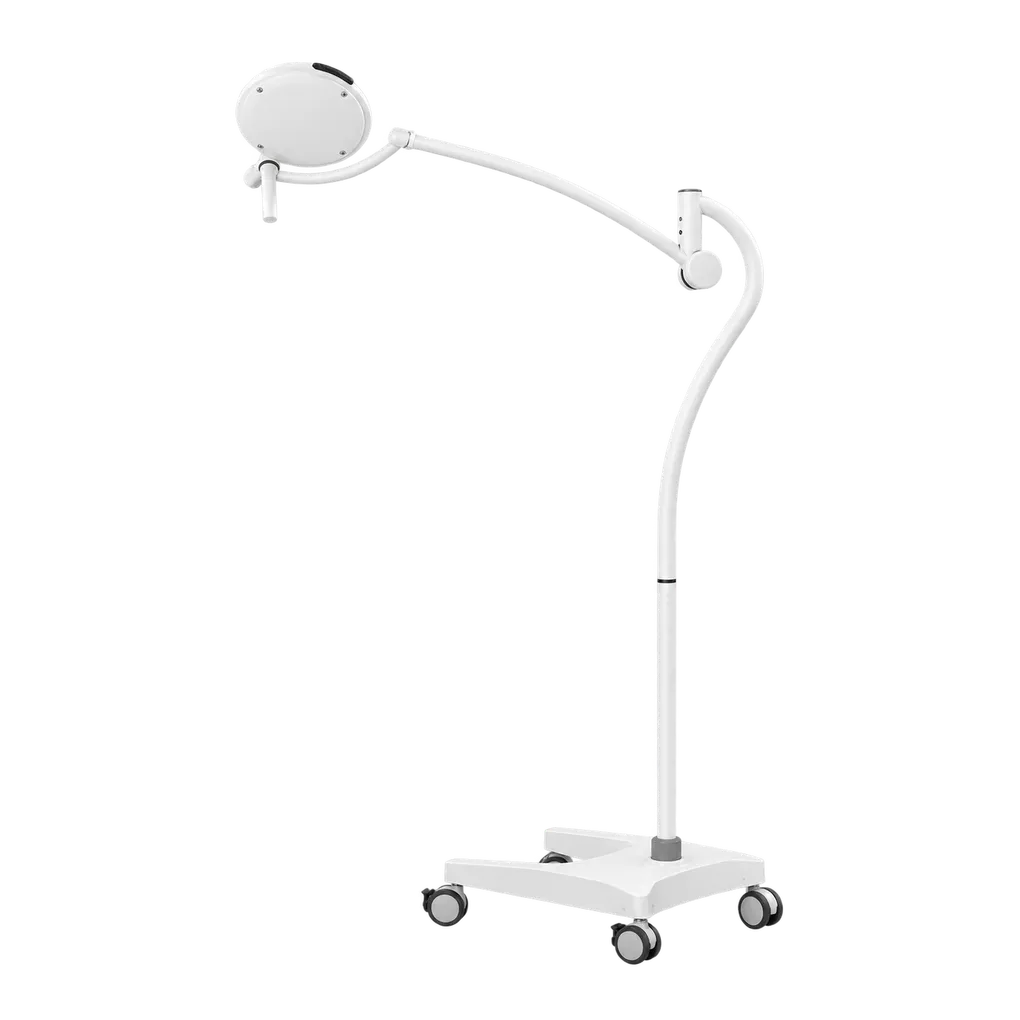
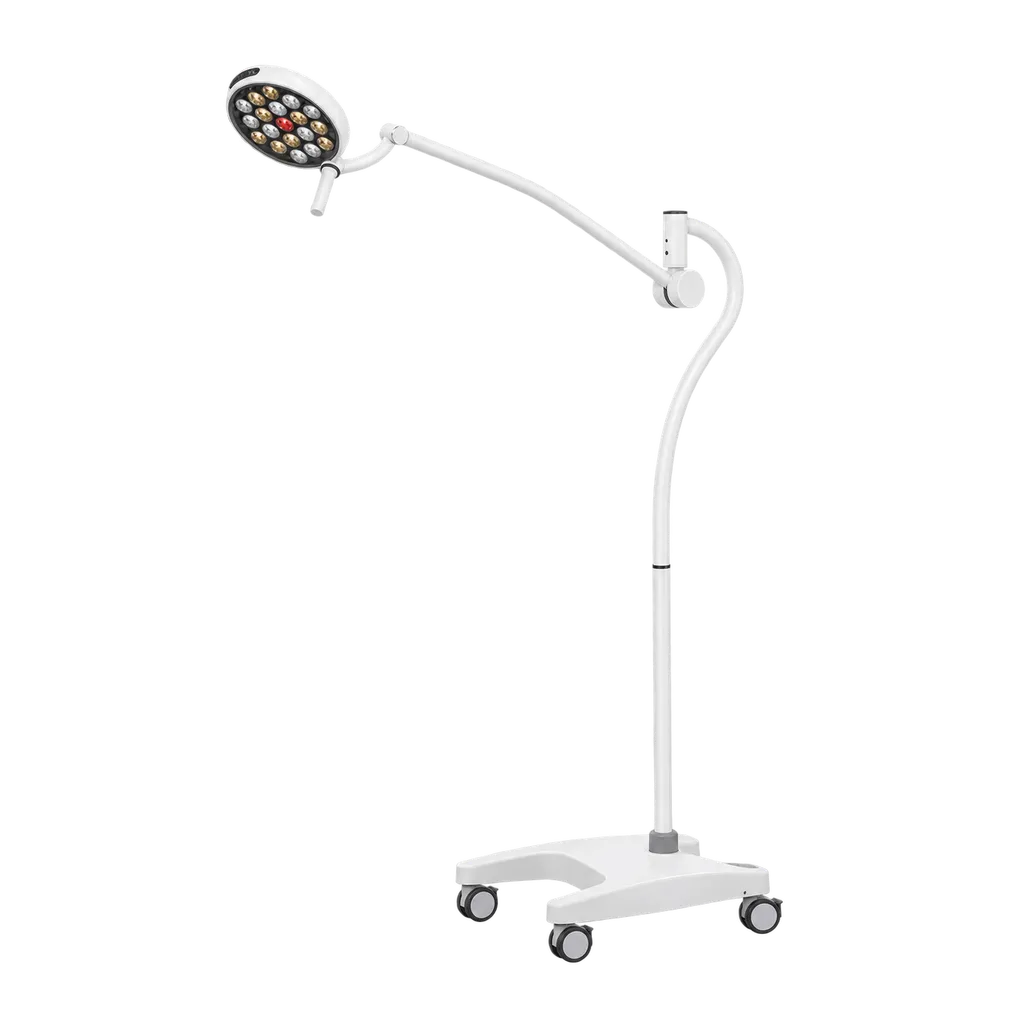
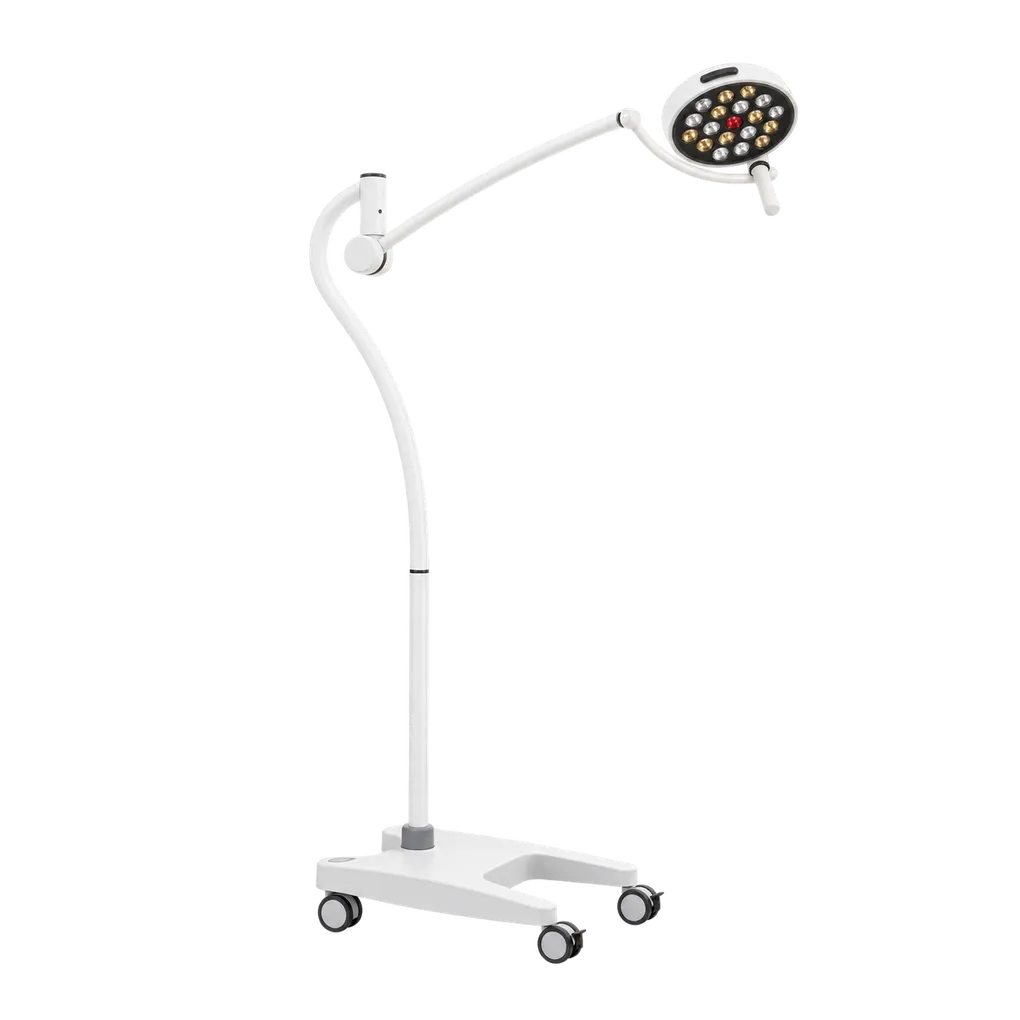
The KL01L·IILEDTR suits examination rooms, outpatient clinics, gynaecology and ENT rooms, emergency cubicles and minor procedure rooms. Its case is mechanism and effect. The head’s range of movement is the mechanism, and the effect is light where an examination needs it.
Consider a gynaecological examination. The patient lies with knees raised and the clinician sits at the foot of the couch. The beam has to travel almost horizontally, at seat height, past the clinician’s shoulder. A head that tilts 190° front to back can point that way, and the spring arm lowers it to the right level.
Consider the throat or ear. The patient sits upright, and the target is a small opening at face height. The lamp stands to one side, the head turns across on its 160° sideways tilt, and the clinician works along the beam. A compact head matters here, since it sits near the clinician’s own line of sight and leaves room for instruments.
Consider a wound on a limb or trunk. Suturing a laceration or draining an abscess needs steady light from above, and 80,000 lux or above at 1 m is a working level. Multiple brightness levels let it come down for a conscious patient, and colour temperature from 3500 to 6700 K with an R9 function helps the clinician judge tissue and skin tone.
Low power completes the picture. At 20 VA and with AC/DC operation listed, the lamp suits rooms with few sockets and visits where mains is uncertain, once the battery details are known.
Clinic managers, NHS procurement routes, and overseas tender panels will ask for the declared intended use, the IEC 60601-2-41 report, and a declaration of conformity. The manufacturer issues the conformity documentation required by those procurement routes, and the enquiry team shares it.