
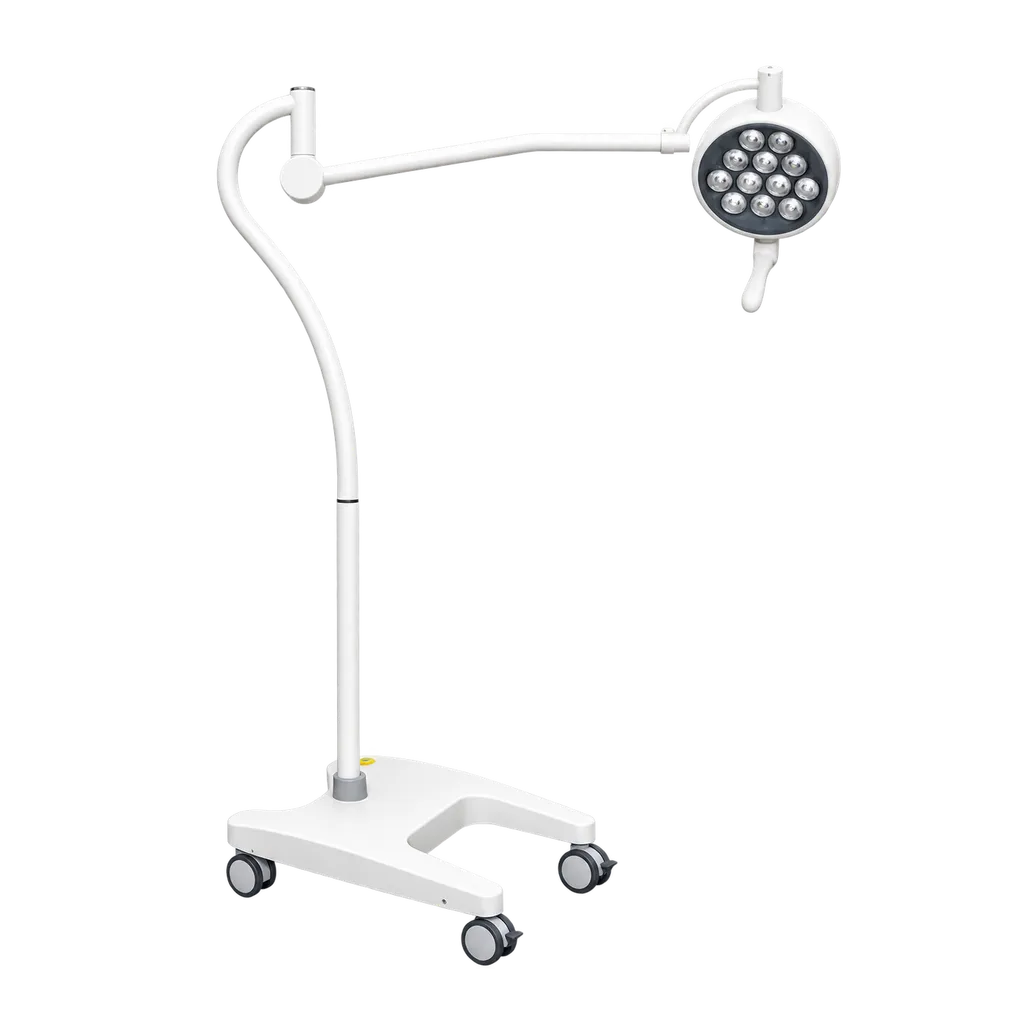
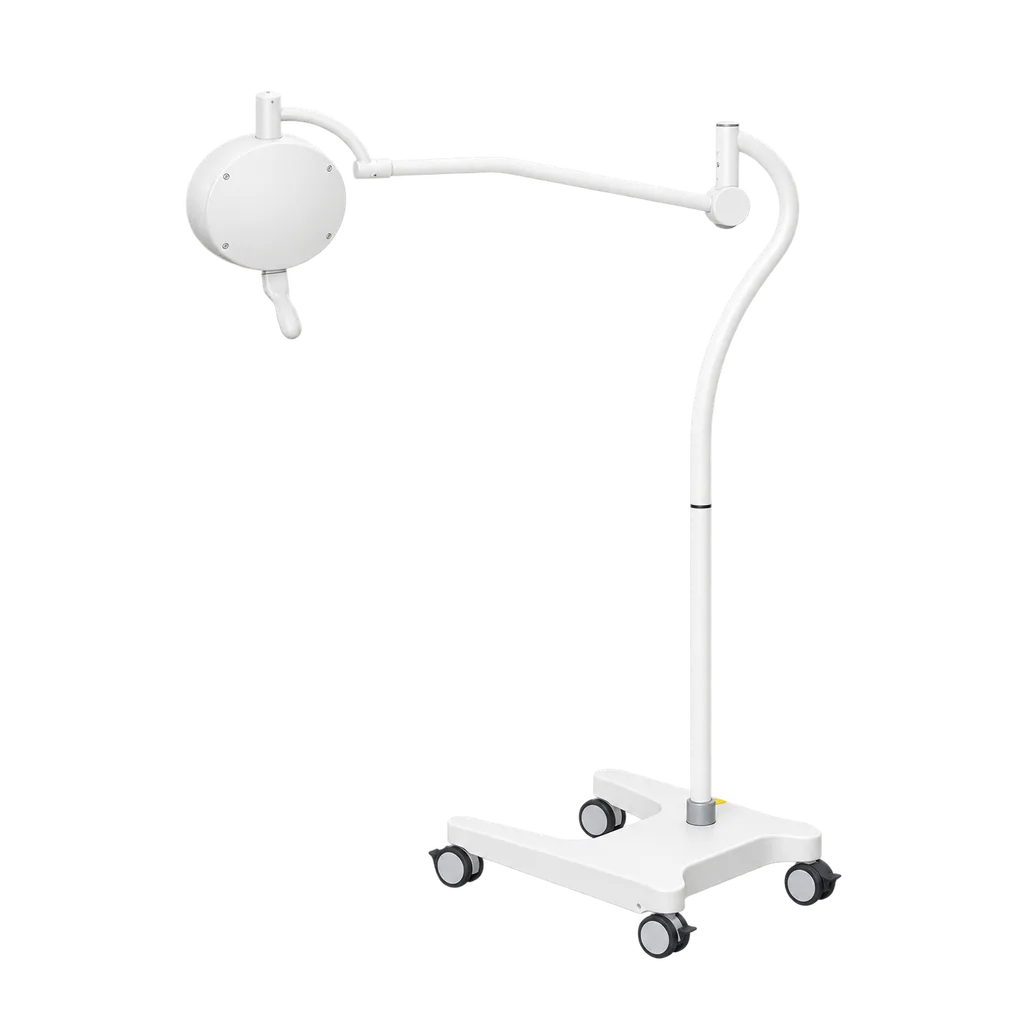
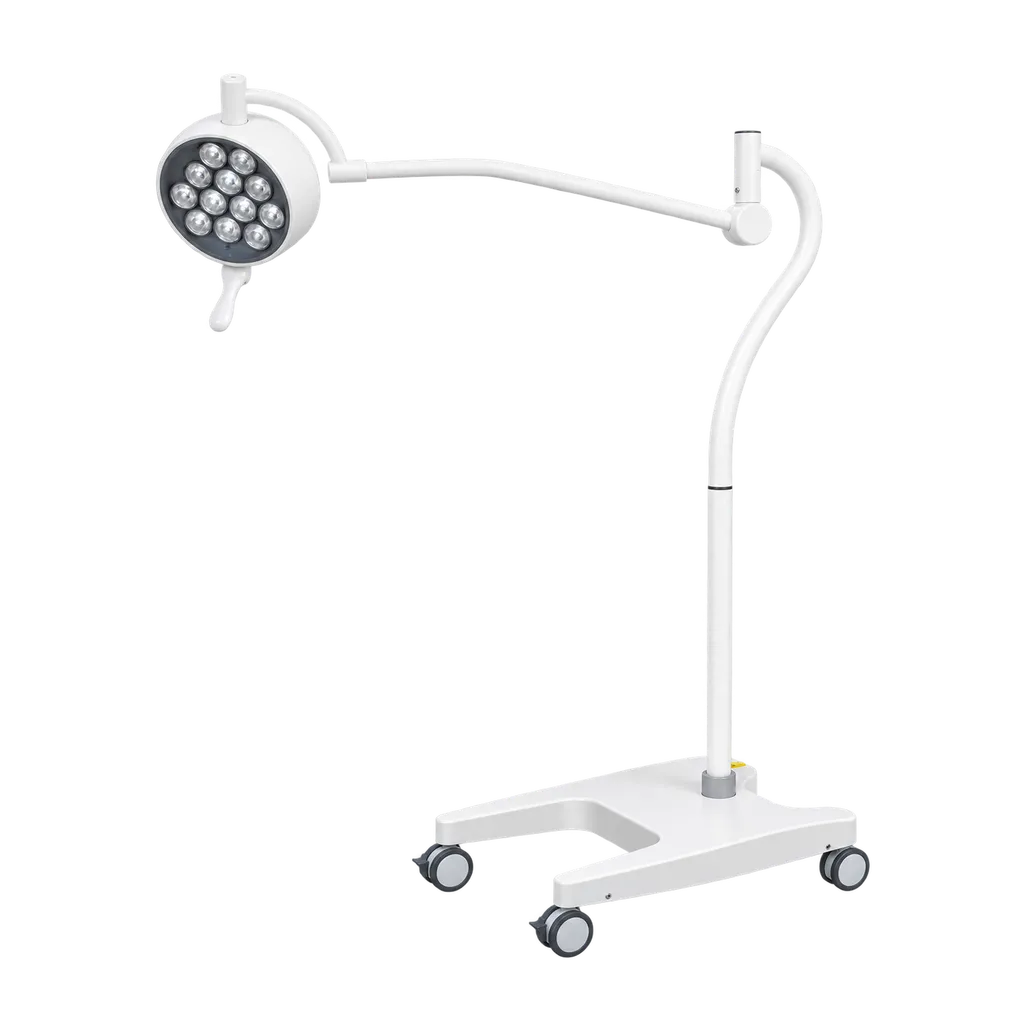
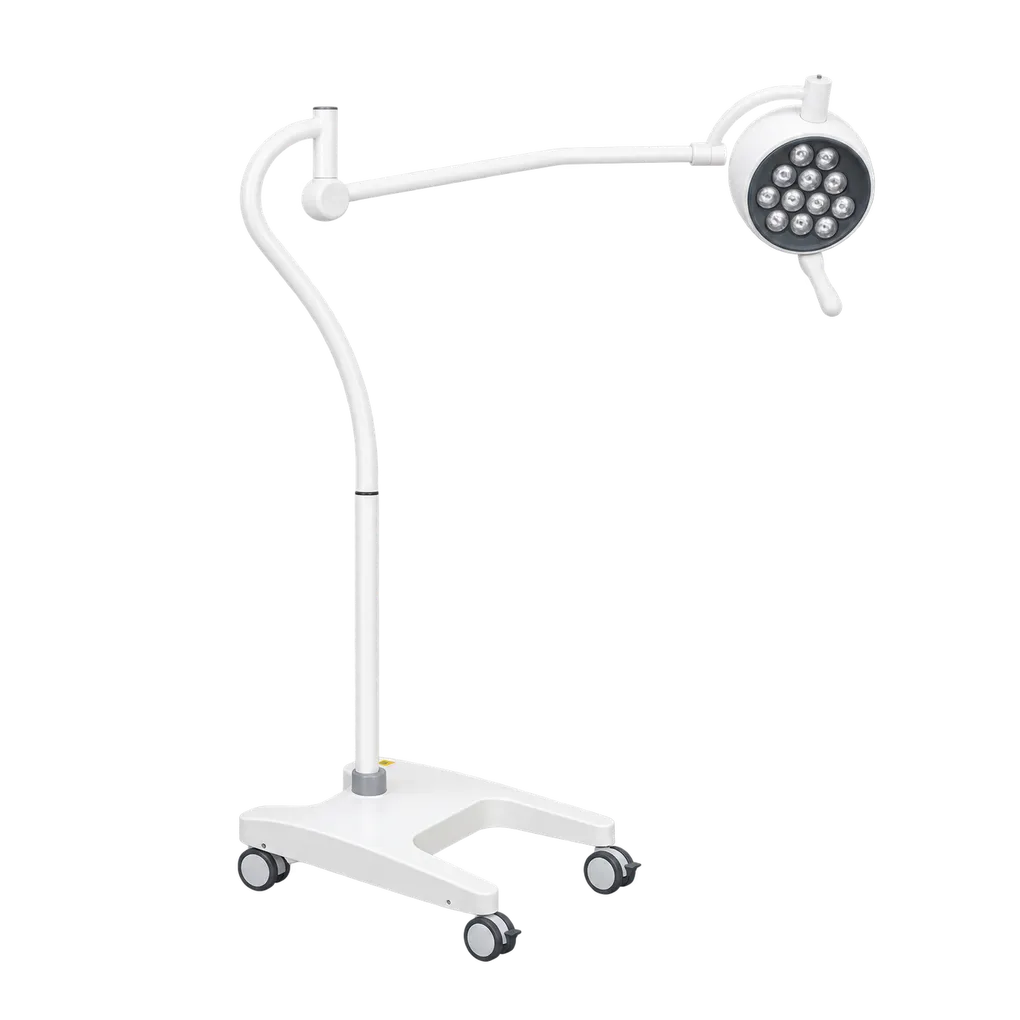
The KL01L·IILED suits treatment rooms, hospital wards, health centres, minor injury units and community clinics. Its case is population-fit. Patients have wounds and skin problems, and nurses and doctors see them all day.
Wound care takes up much of the day. A leg ulcer has to be cleaned, measured, and assessed for slough, granulation, and the colour of the surrounding skin. Poor light hides the early redness of infection. With the lamp at the foot of the couch and the head tilted down toward the shin, the clinician sees the whole wound bed evenly.
Lacerations come next. A cut on the scalp, a brow or a finger needs irrigating, exploring for debris and closing. The compact head comes in near the site, the balance arm holds it there, and brightness can be raised for the closure and lowered while the local anaesthetic takes effect.
Skin checks need angle as well as level. Moles, rashes and pressure areas show their texture when light falls across them from one side. A tilt of 160° left and right lets the nurse rake the beam over a sacrum or heel while the patient lies still.
The lamp also suits the people who are hard to move. A frail patient in a ward bed or a child on a parent’s lap can be examined where they are, since the stand rolls to them and draws only 20 VA from the nearest socket.
Ward managers, NHS procurement routes and tender committees abroad will ask for the declared intended use, the IEC 60601-2-41 report and a declaration of conformity. The manufacturer issues the conformity documentation required by those procurement routes, and the enquiry team shares it.