
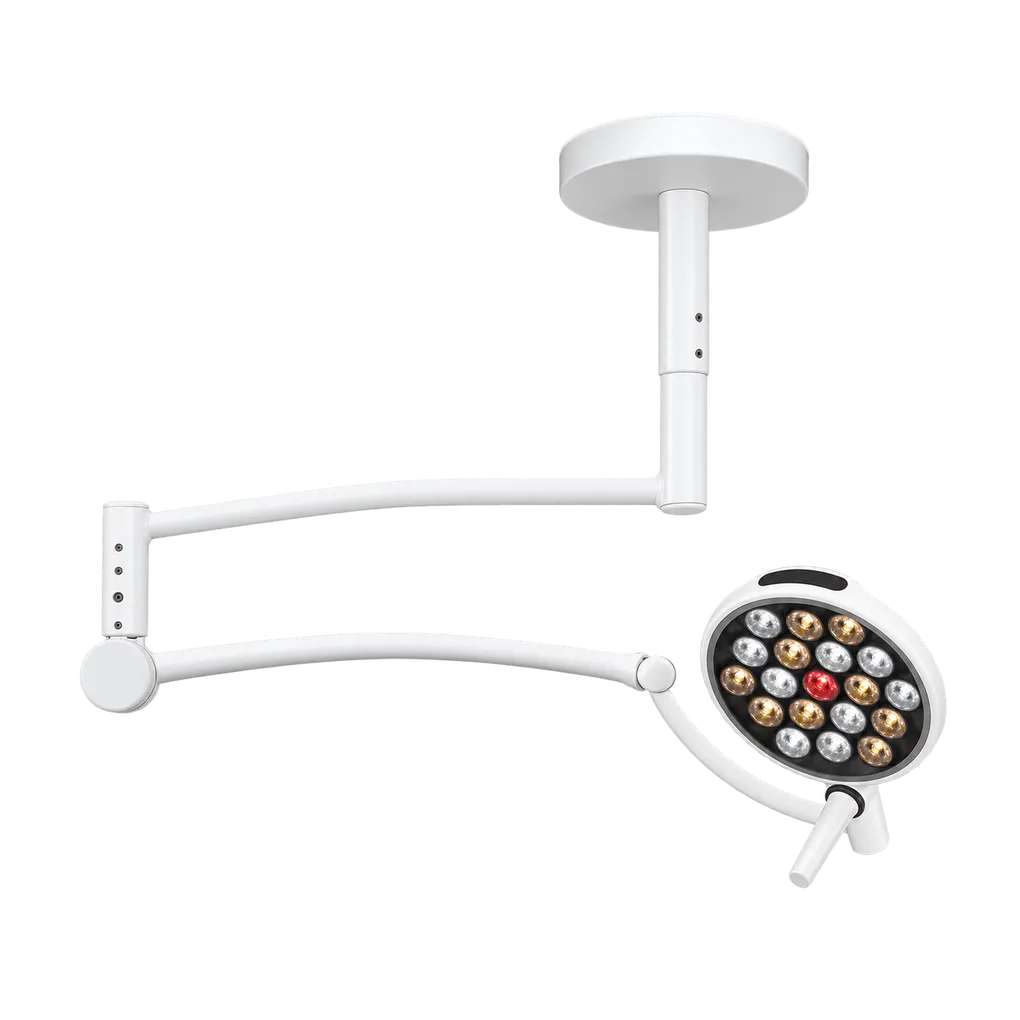
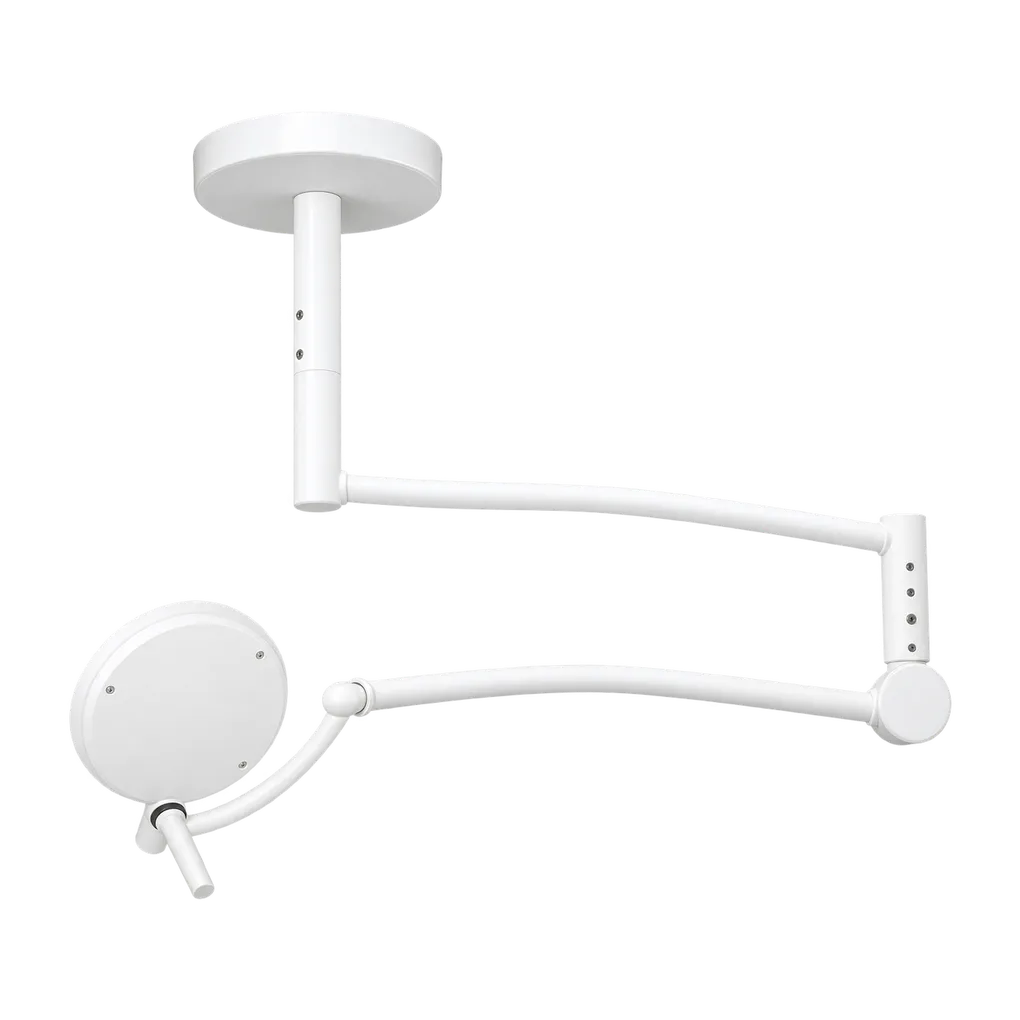
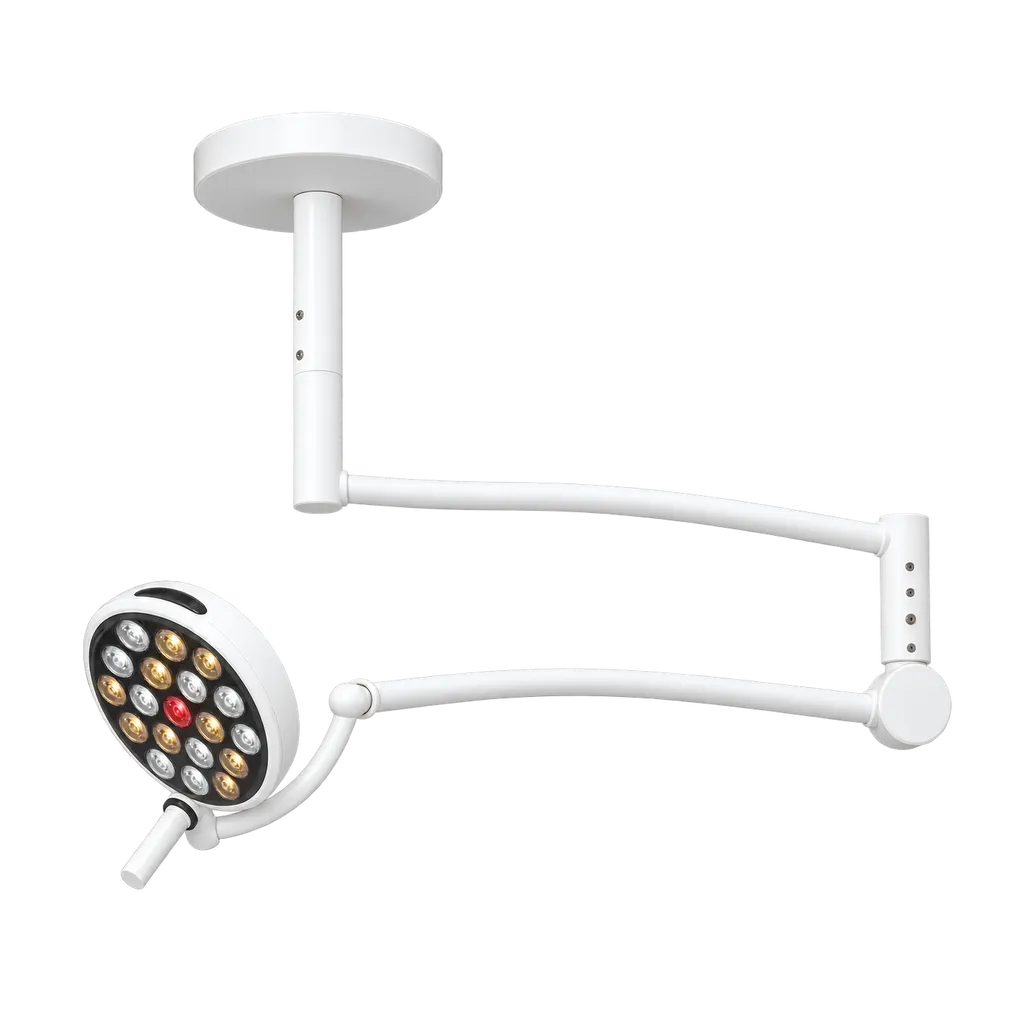
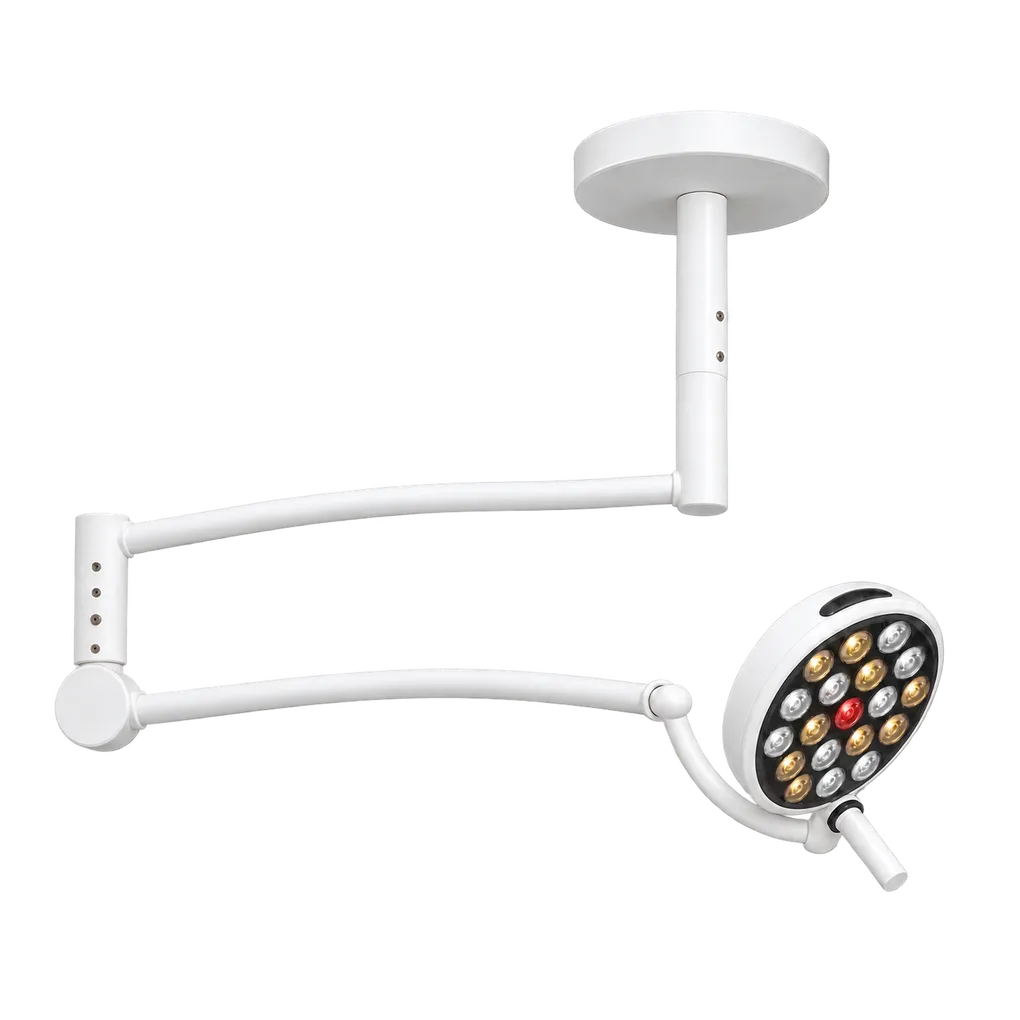
The KL01L·IIILEDTR suits consulting and examination rooms, treatment rooms, emergency cubicles, minor procedure rooms and delivery rooms where the couch has a settled place. Its case is estate and environment. What it offers depends on the room it hangs in.
Floor space is the first gain. In a cubicle two metres wide, a stand’s base and the couch’s wheels compete for the same strip of floor. A ceiling lamp leaves that strip to the clinician, the trolley, and a wheelchair. Cleaning staff have a clear floor to mop, and there is no mains lead to catch a foot.
Readiness is the second. A fixed lamp is never in another room or left uncharged. The clinician reaches up, pulls the head over the patient by its handle, and the spring arm holds it there. Afterwards it swings back toward the wall.
The limits are real. The arms have fixed reach, so the couch, the chair for seated examinations and the patient’s head end should all be planned inside that circle before the plate goes up. The ceiling needs structure behind it, which in a partitioned clinic may mean a steel member above the tiles. Ventilation grilles, curtain tracks and sprinkler heads need to stay clear of the arm’s sweep.
The light suits the work done in such rooms. The series figure of 80,000 lux or above at 1 m serves suturing, lesion checks and wound care, and the listed colour temperature range and R9 function help with skin and tissue colour.
Estate teams, NHS procurement routes, and overseas tender panels will ask for the installation drawing, the IEC 60601-2-41 report, and a declaration of conformity. The manufacturer issues the conformity documentation those procurement routes require, and the enquiry team shares it.