
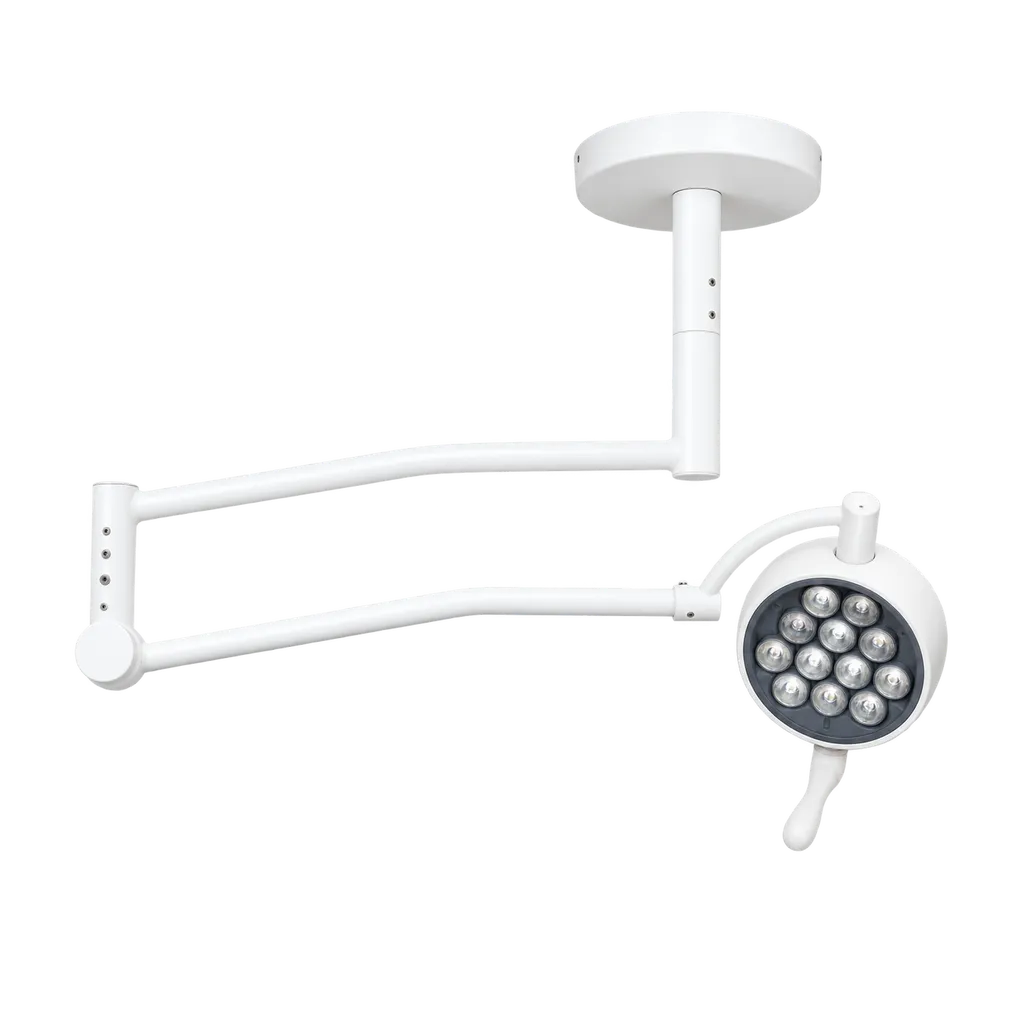
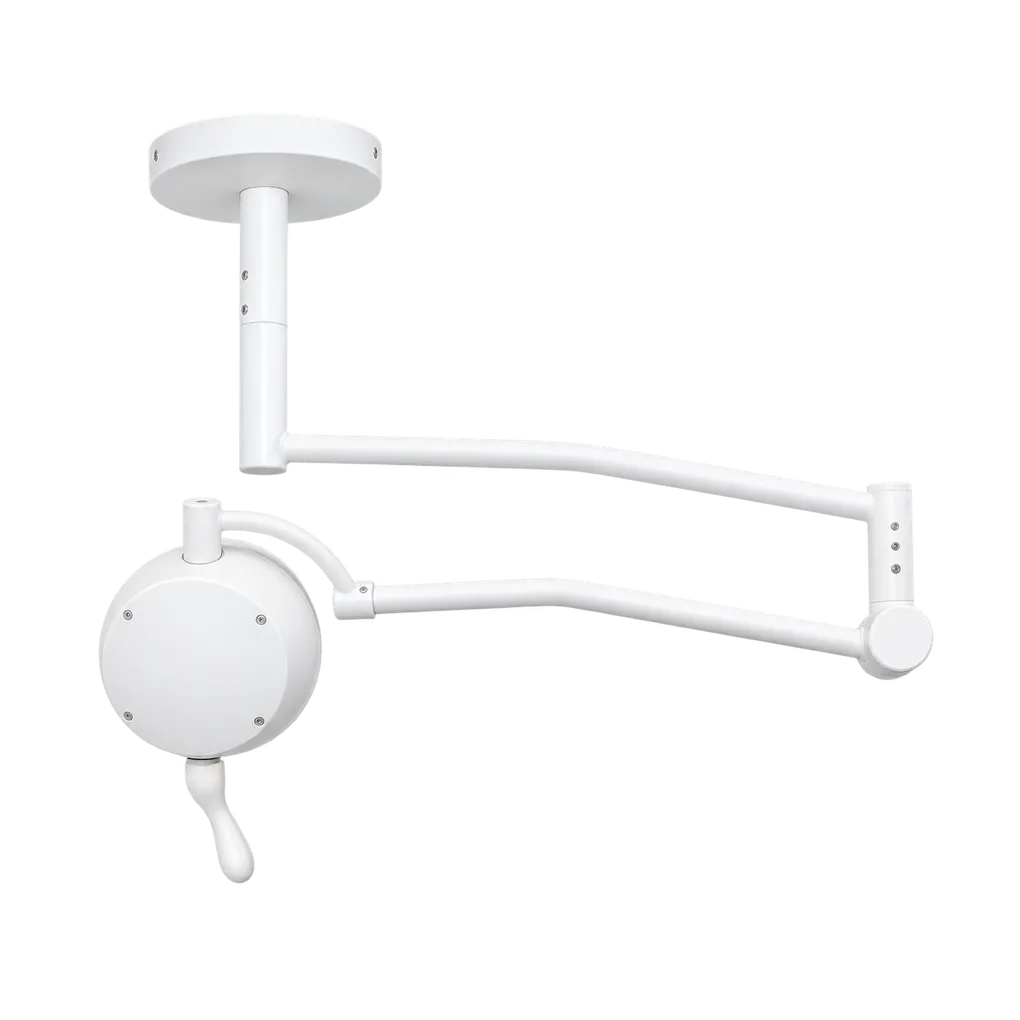
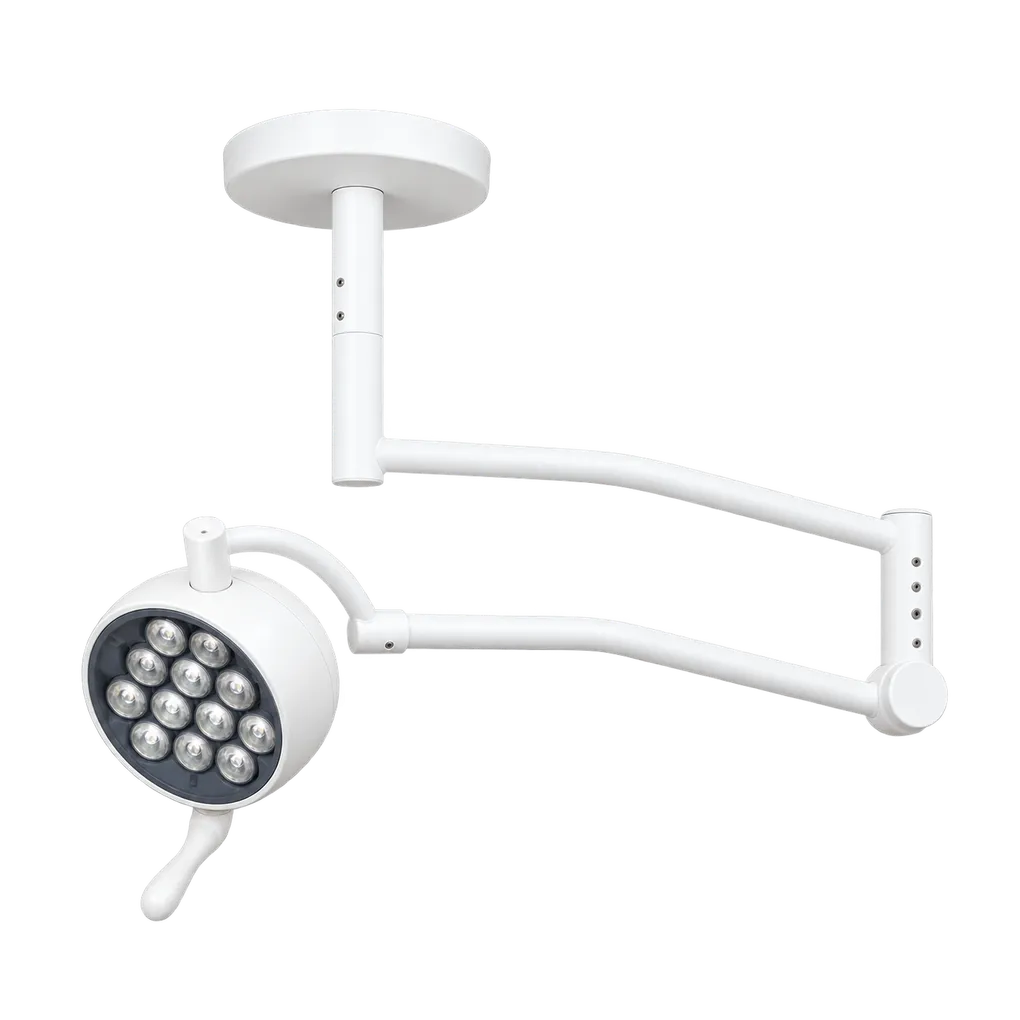
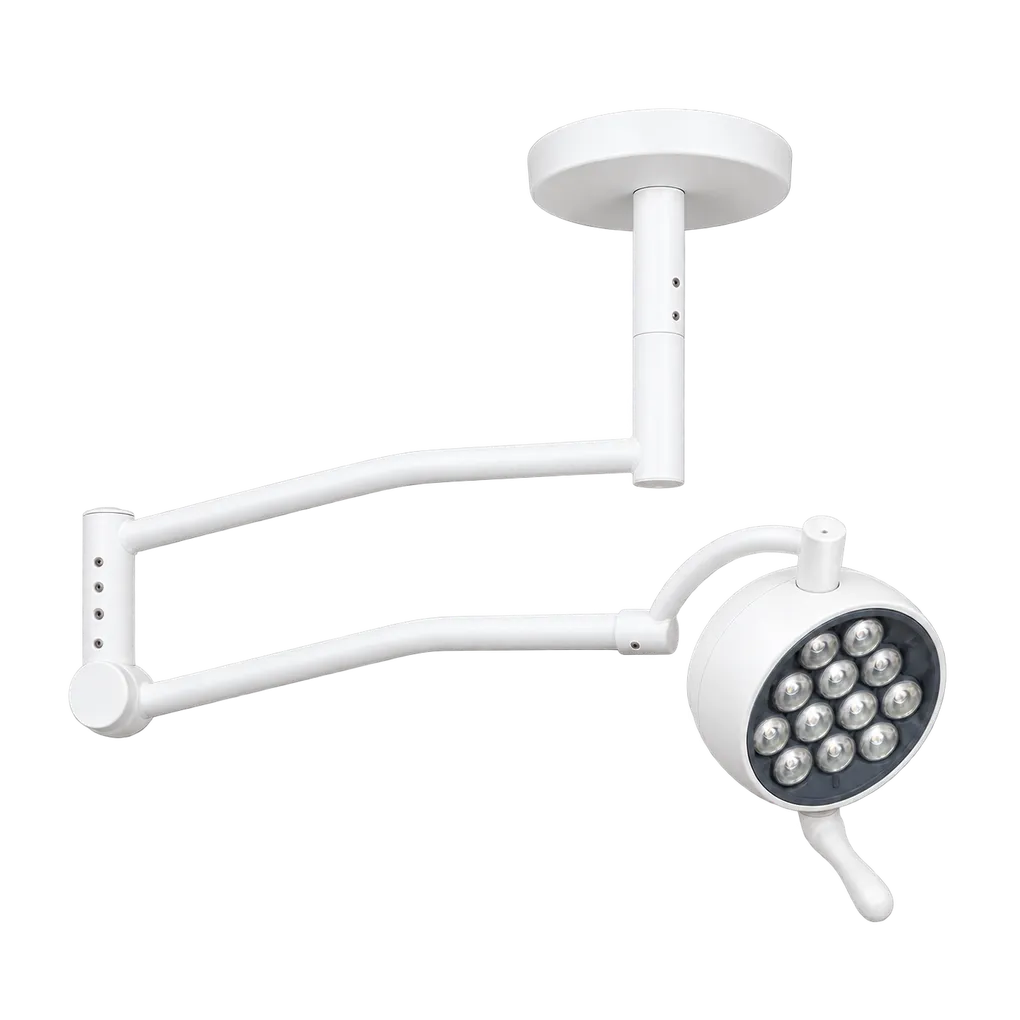
The KL01L·IIILED suits outpatient clinics, general practice treatment rooms, dressing clinics, minor injury units and antenatal rooms with a steady flow of patients. Its case is workflow. A booked clinic runs on short appointments, and anything that shortens setup gives time back to the consultation.
Picture a dressing clinic with fifteen-minute slots. The nurse greets the patient, helps them onto the couch and removes the old dressing. At that point, light is needed at once. With the lamp overhead, one hand brings it down while the other opens the pack. The wound is assessed, cleaned and redressed; the lamp is pushed up, and the next patient is called. No one has crossed the room for a stand.
The same rhythm serves a minor injury unit. Cuts, splinters and foreign bodies arrive unannounced, and the clinician moves between cubicles. A lamp fixed in each cubicle means the examination starts when the clinician does. Multiple brightness levels let the same lamp support a quick look and a careful closure.
A fixed lamp also keeps the routine identical from room to room. Staff who rotate between rooms find the light in the same place and working the same way, which matters when locums and students are part of the team. Cleaning is part of the cycle, with the handle detached and wiped or exchanged between patients.
What the workflow needs from the building is settled once. The couch stays inside the arm’s reach, the fixing is approved, and the supply is wired to the plate.
Clinic managers, NHS procurement routes and tender boards overseas will ask for the installation drawing, the IEC 60601-2-41 report and a declaration of conformity. The manufacturer issues the conformity documentation these procurement routes require, and the enquiry team shares it.