
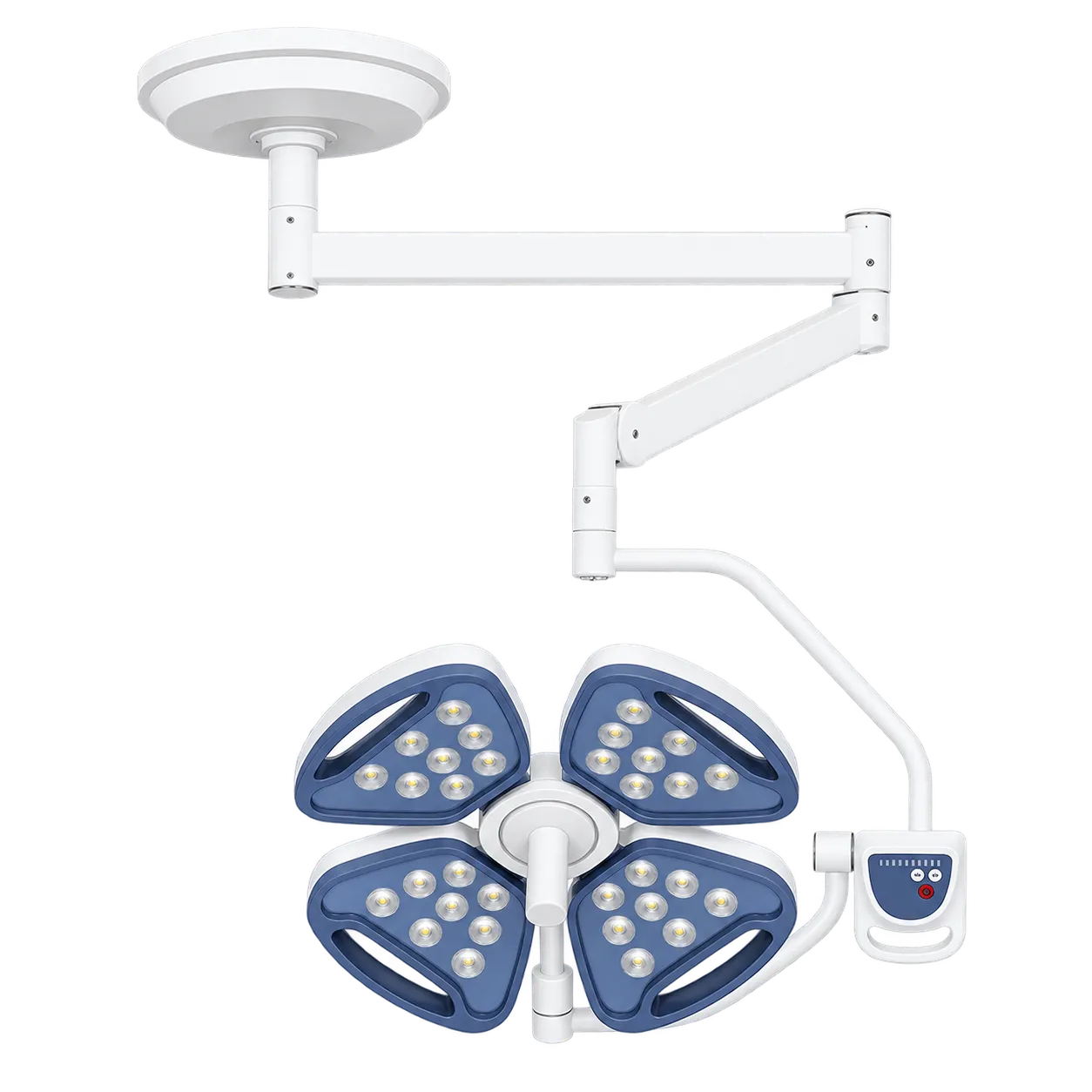
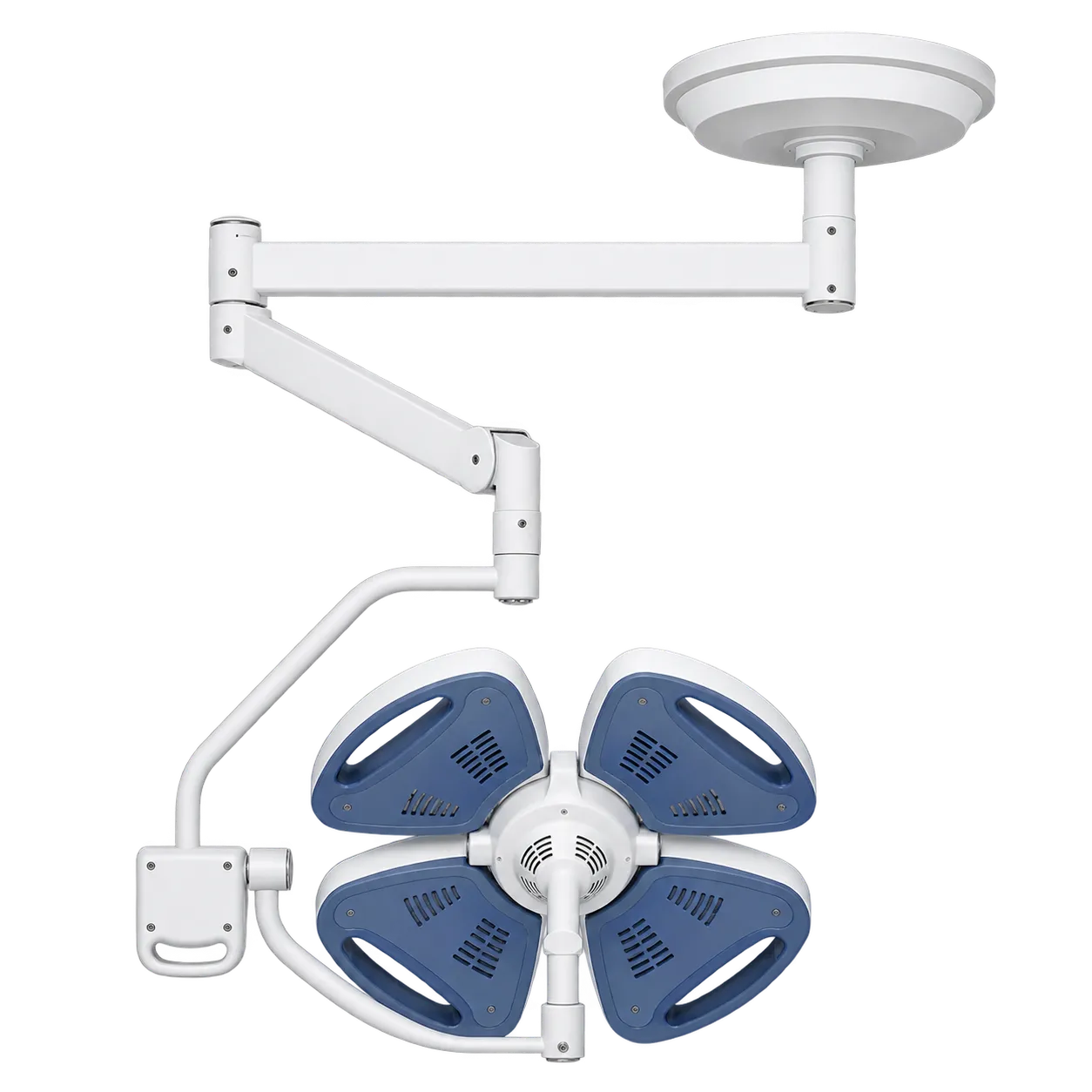
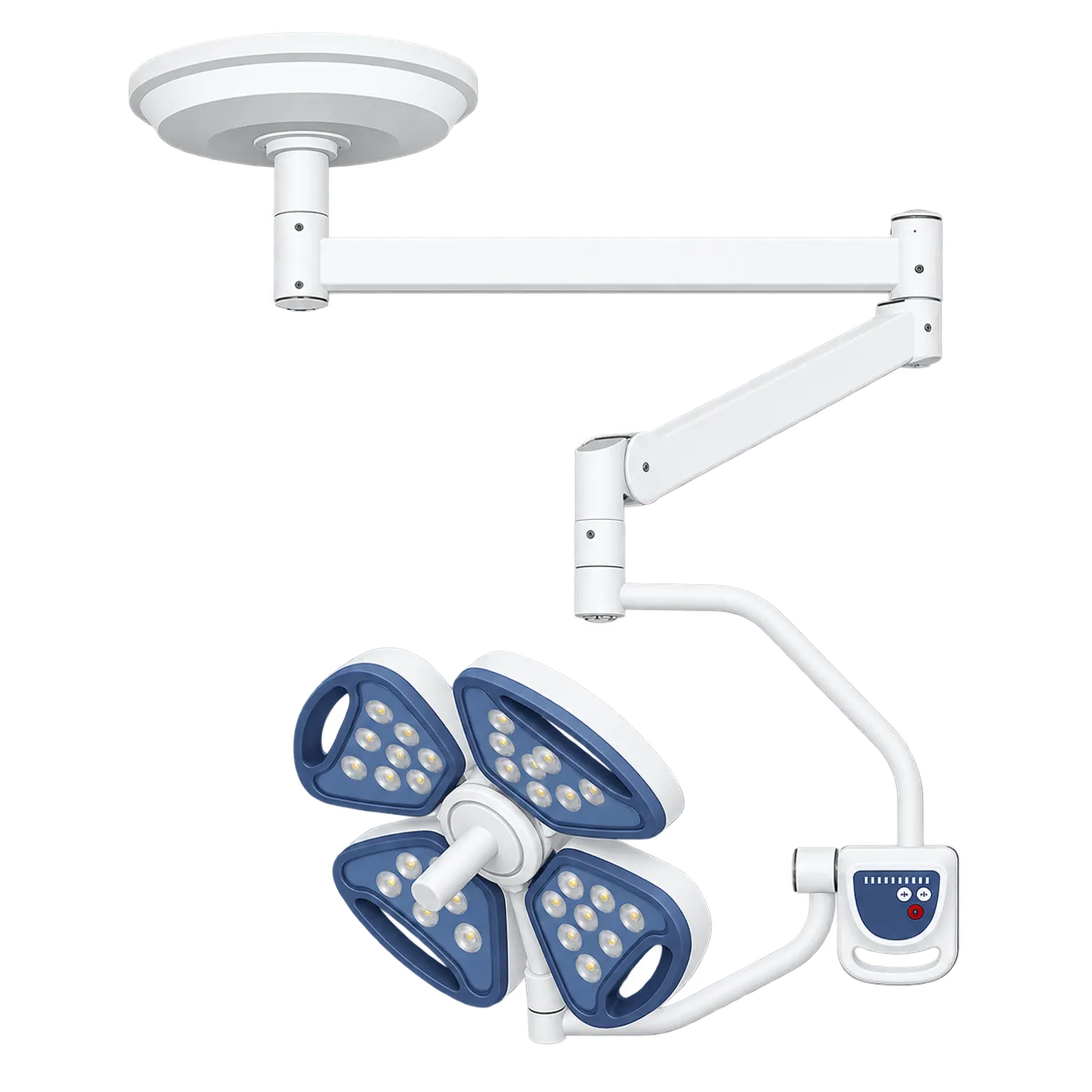
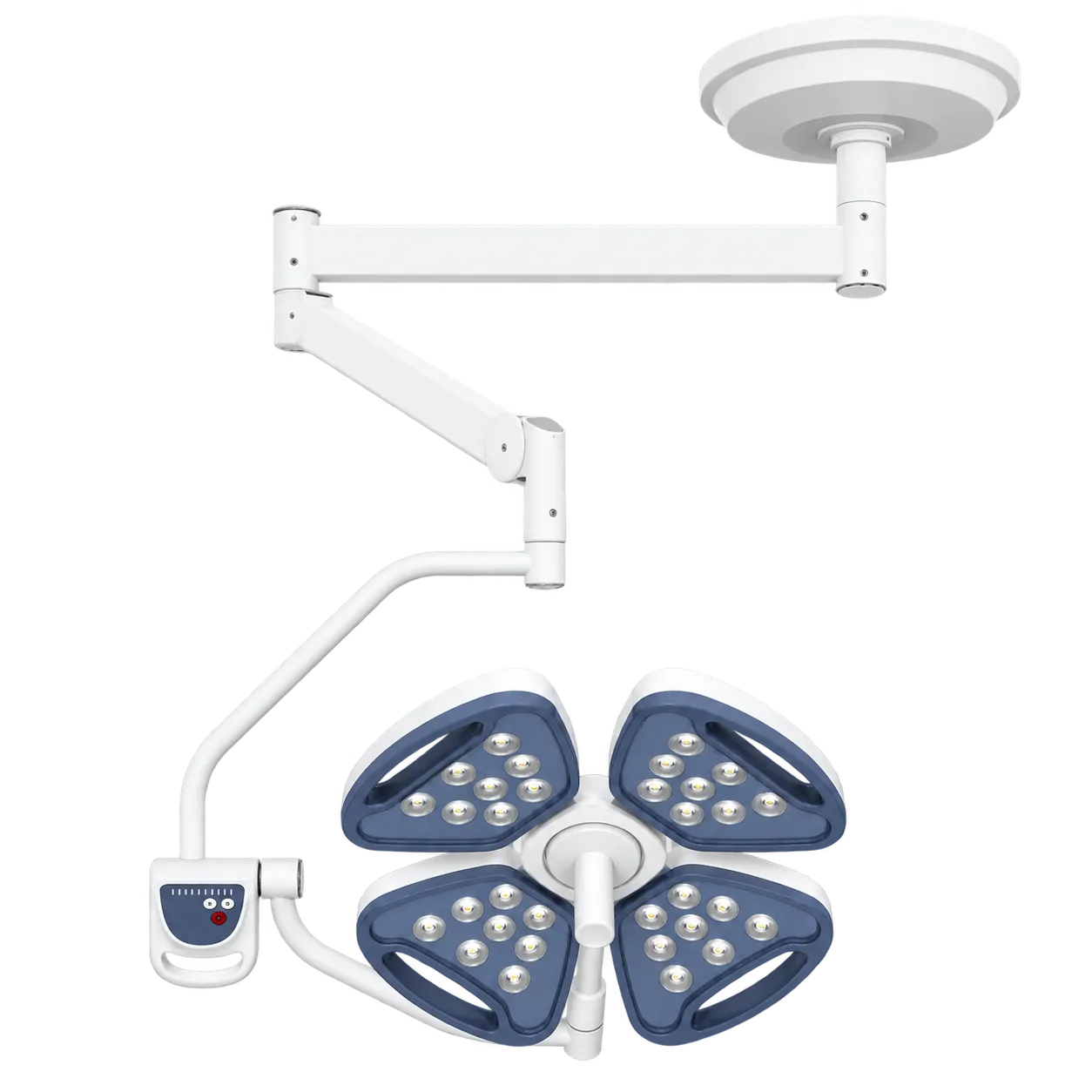
The KL-LED·SZ4 suits minor operations rooms, day-surgery theatres, procedure rooms, emergency departments and small hospitals with one table. Its case is mechanical and effective. Four petals aimed at one field, a spring arm and a short row of controls each do one thing, and each has a visible effect on the work.
Overlapping beams are the first effect. With four sources around the hub, a hand or instrument in the way blocks only part of the light, so the wound stays lit. The second is depth. A 150 cm depth of illumination and a 70 to 140 cm working distance keep the field lit as the table height or the head position changes, so staff re-aim less often. The third is handling. Slots on every petal let whoever is nearest pull the head across, and the spring arm holds it there. A fixed neutral white of about 4500 K and output from 40,000 to 120,000 lux leave one decision to make during a case: how bright.
The same simplicity sets the limits. One head light from one direction, so a deep cavity will show shadow that a second lamp would fill. No endo mode is listed, so endoscopy relies on dimmed room lighting. Colour temperature is fixed, and the table gives no R9 figure. At full output the head delivers up to about 384 W/m² to the field, by Keling’s heat-to-light ratio, so long cases call for the lowest useful setting.
Clinic and theatre managers, NHS procurement routes and district health offices abroad will ask for the device class, the IEC 60601-2-41 test report and a declaration of conformity. The manufacturer issues the conformity documentation required by those procurement routes, and the enquiry team shares it.