
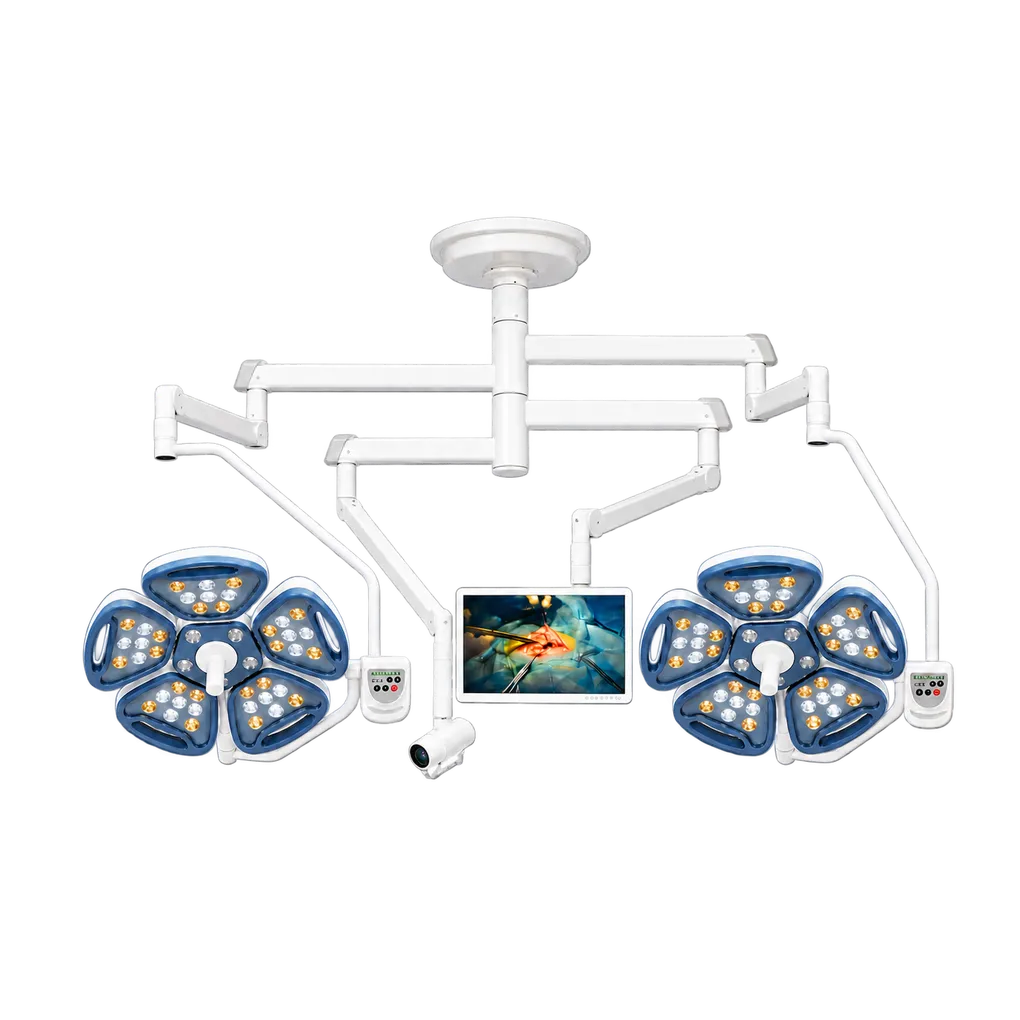


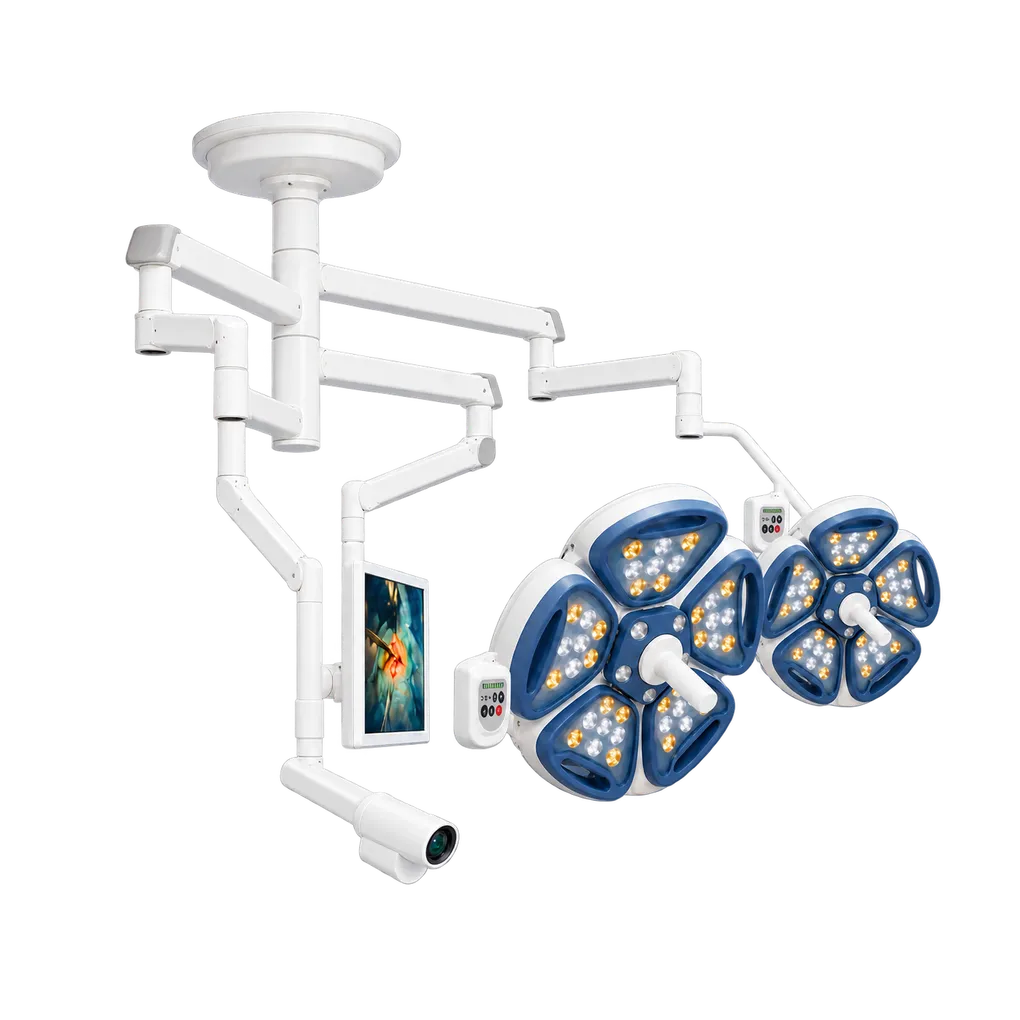
The KL-LED·STZ5/STZ5 with camera system suits general, orthopaedic and day-surgery theatres that want video for teaching or team viewing and expect to keep the installation for a long time. Its case is whole-life cost. A ceiling column with four arms is a building fixture, and the real costs run well beyond the purchase.
Running cost comes first. Two heads at 90 W each draw about 180 W together at full output, and a 50,000-hour average LED life spreads the light source over many years of use. Endo mode at 10,000 lux and a 3000 to 6700 K colour range are settings, with no consumables behind them. The handle’s sterilisation or cover method carries a recurring cost, as set out in the instructions for use.
Service is the next line. Spring arms need periodic adjustment so the heads, camera and monitor stay where they are placed. Electrical safety testing to IEC 62353 covers the lamp and the connected video items. A contract should name response times, because a theatre without its light loses the whole session. Spare parts matter in the same way, so ask how long LED modules, drivers, control panels and arm parts are held.
Video is the part a buyer should expect to renew. A camera and monitor on their own arms can be changed separately from the lights, and that is worth getting in writing with the contract, including specs and cable routes. An as-fitted cabling drawing kept by the estates team shortens every later job.
Finance leads, NHS procurement routes and tender boards abroad will ask for warranty terms, a parts commitment and the declaration of conformity. The conformity documentation those procurement routes require is issued by the manufacturer and shared by the enquiry team.