
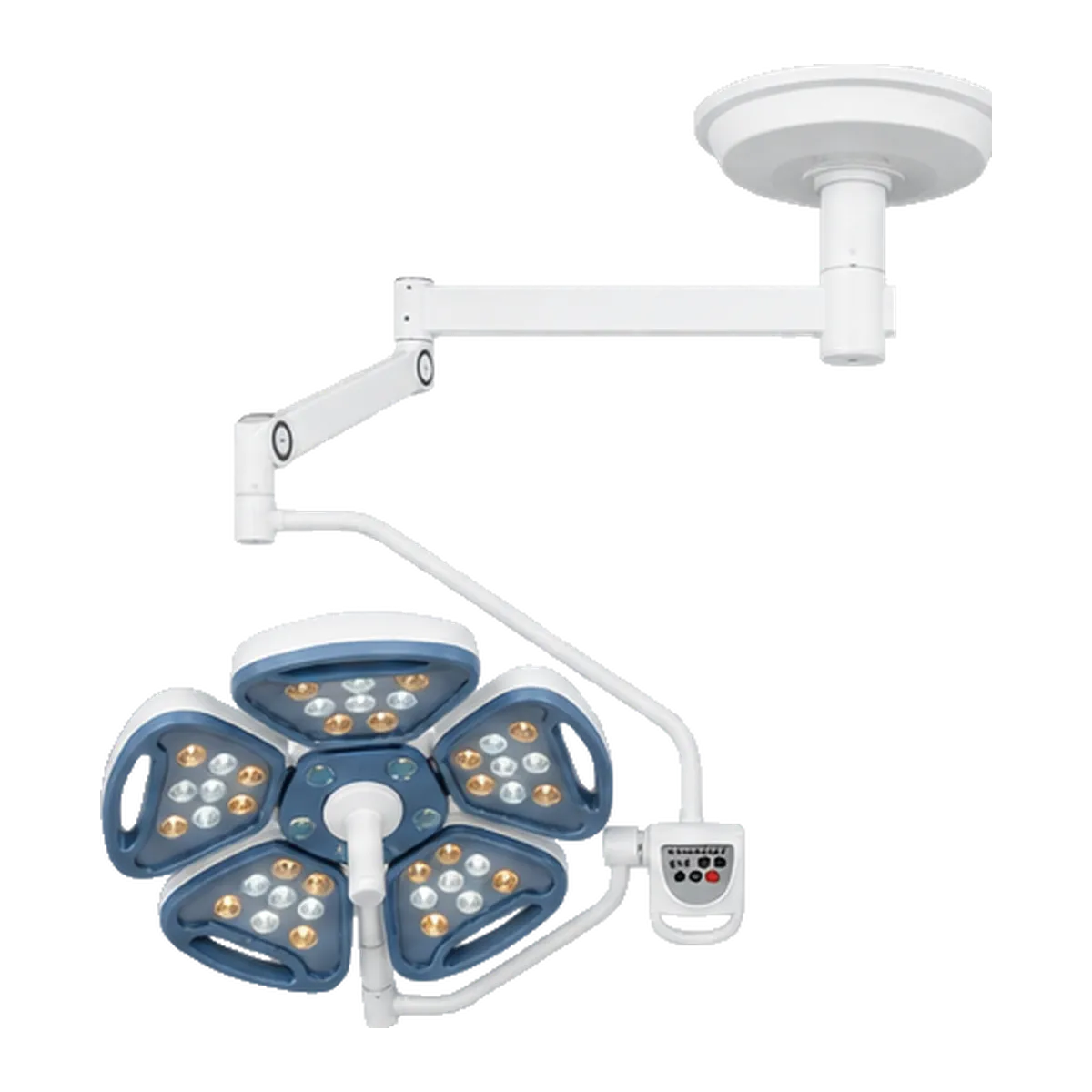
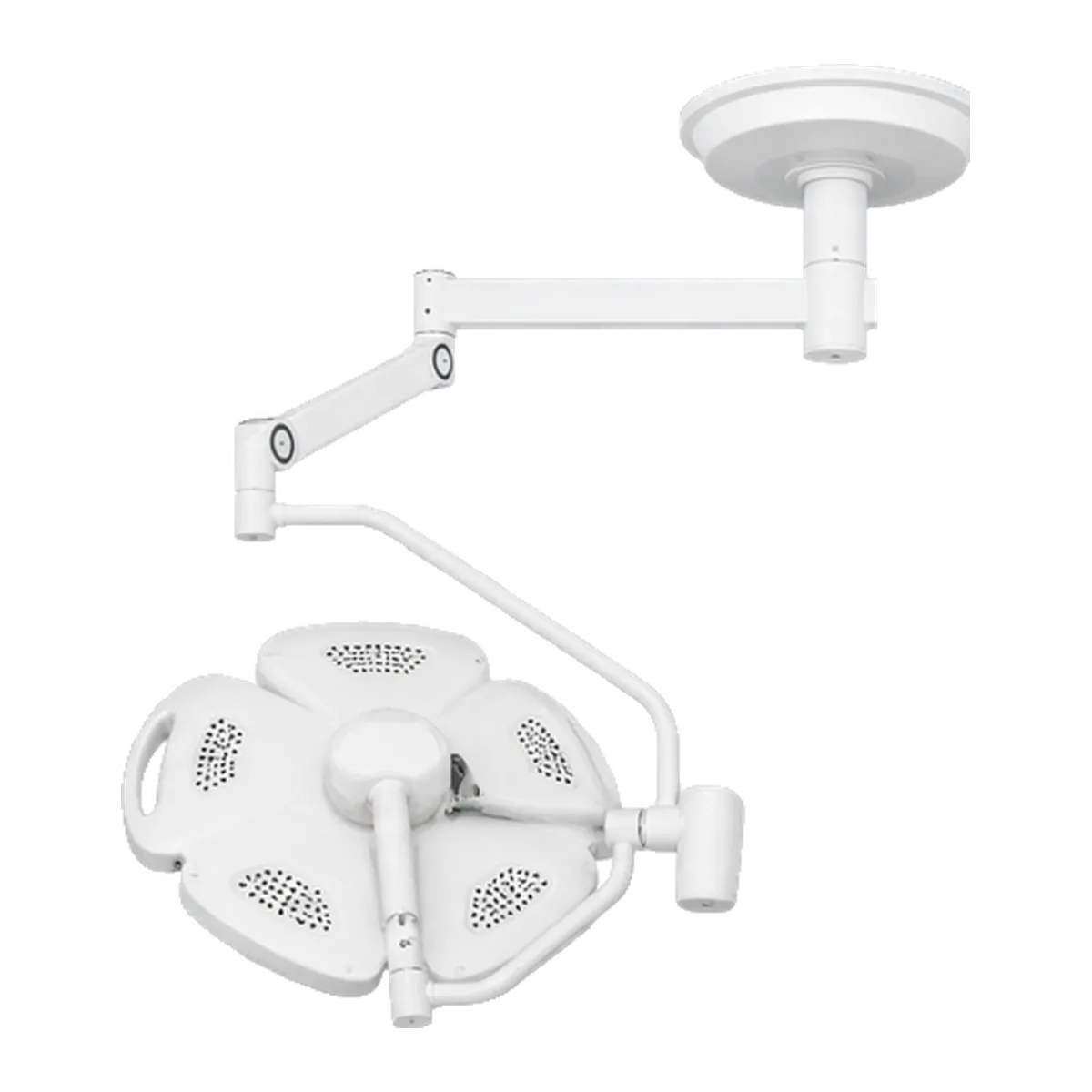
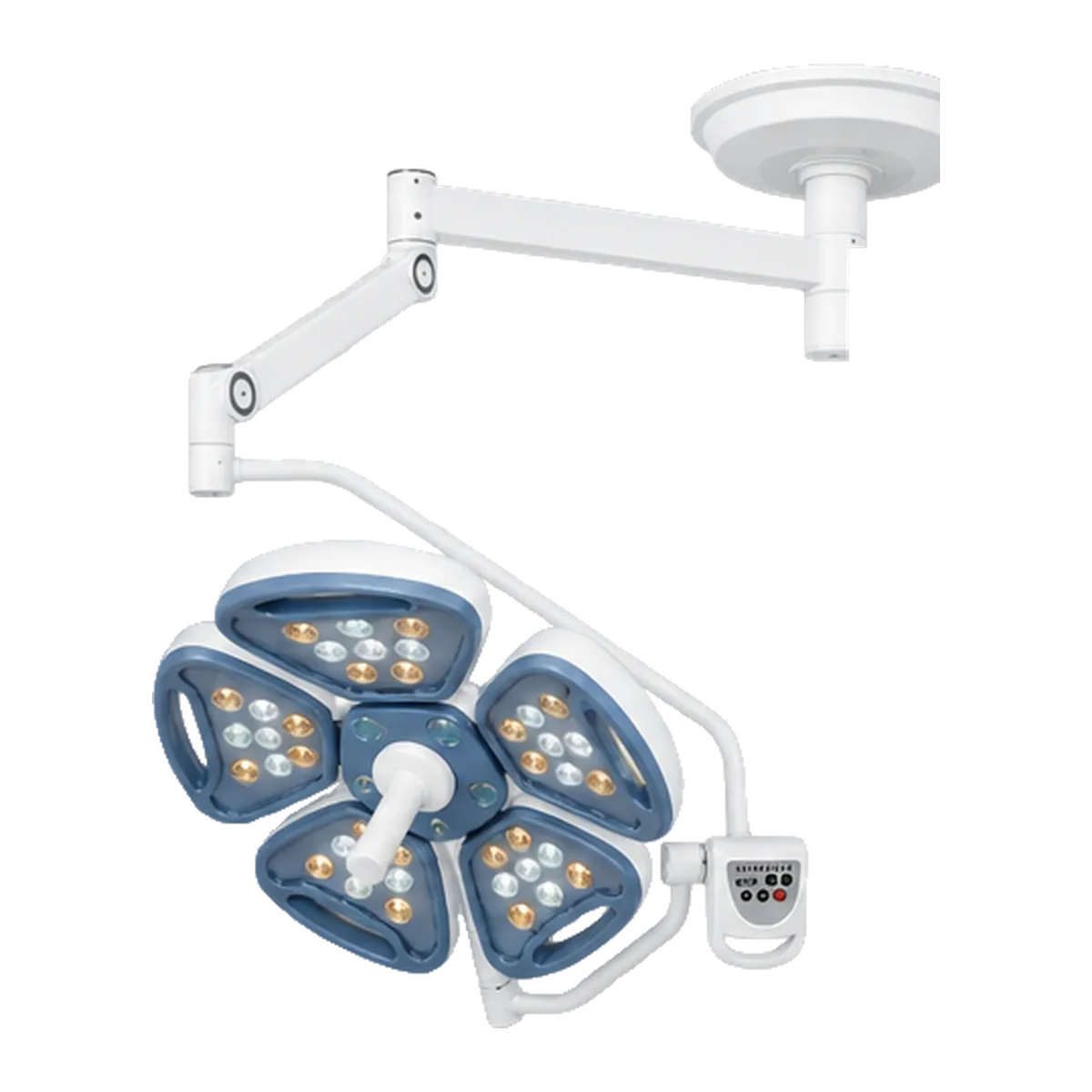
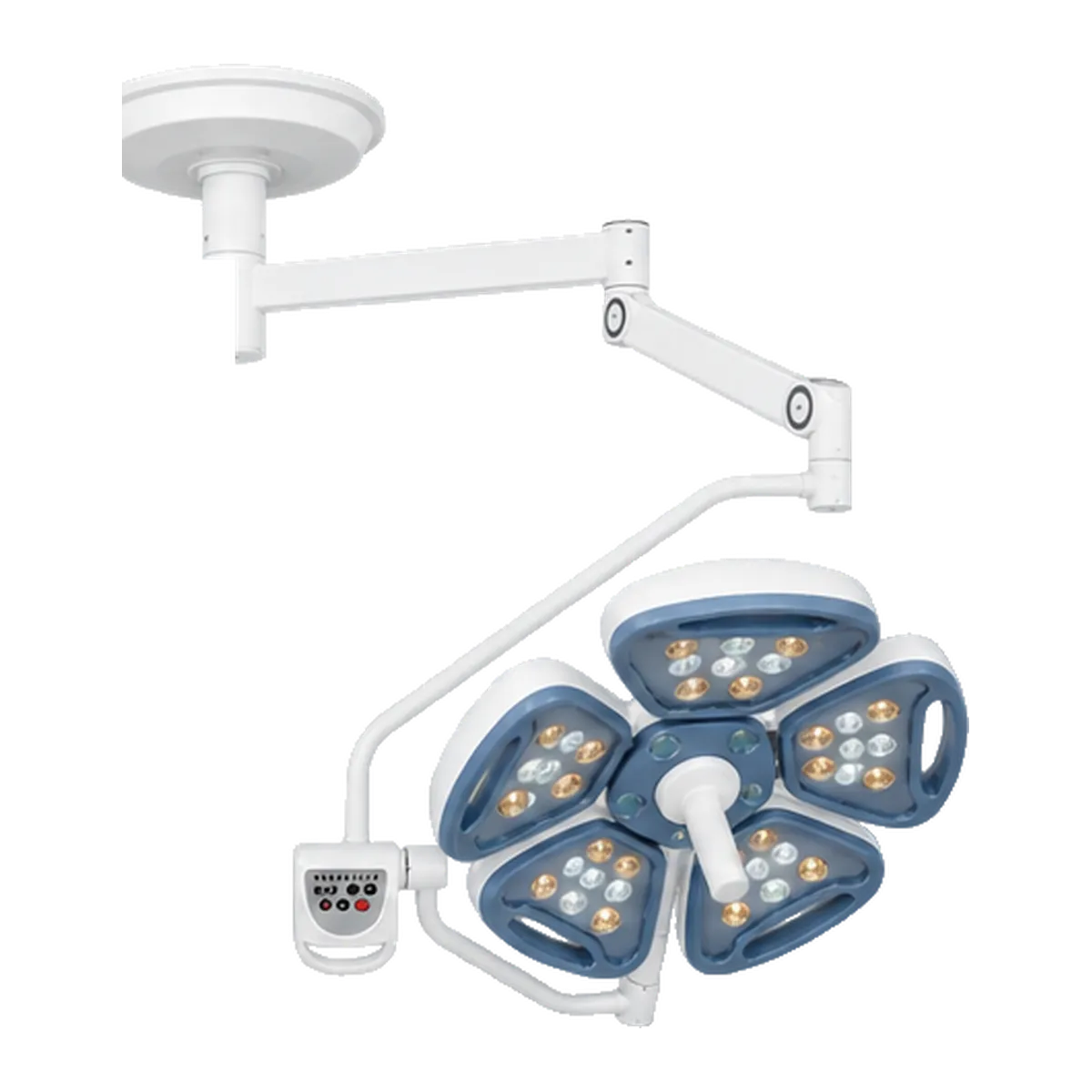
The KL-LED·STZ5 suits day-surgery theatres, minor operations rooms, procedure rooms, obstetric theatres and district hospitals running one table with a small team. Its case is labour economics. A theatre lamp draws on staff minutes every working day, and the head design determines where those minutes go.
Aiming is the task repeated most. In a small team, the circulating nurse is often busy when the surgeon asks for the light to move, and a head that anyone can pull across by a petal slot saves a wait. Scrubbed staff use the central handle. Endo mode at 10,000 lux and a colour temperature range of 3000 to 6700 K are set at the yoke panel, so one person can manage position and settings together. A 70 to 140 cm working distance and a 150 cm illumination depth mean fewer re-aims as the table height changes.
Cleaning and servicing take the rest of the time. Five petals and a hub have many edges, so the turnaround routine should name each surface and the agent to use. LEDs listed at 50,000 hours remove bulb changes from the engineer’s list, and 90 W keeps energy to about 180 kWh a year at 2,000 lit hours. What remains is in-service testing to IEC 62353, checks on arm drift and light output, and a backup supply that restores light within the 5 seconds IEC 60601-2-41 expects. One headlamp per side, so rooms doing deep open surgery should plan for a second lamp.
Theatre managers, NHS procurement routes and district health boards abroad will ask for the device class, the service schedule and a declaration of conformity. The conformity documentation those procurement routes require is issued by the manufacturer and shared by the enquiry team.