
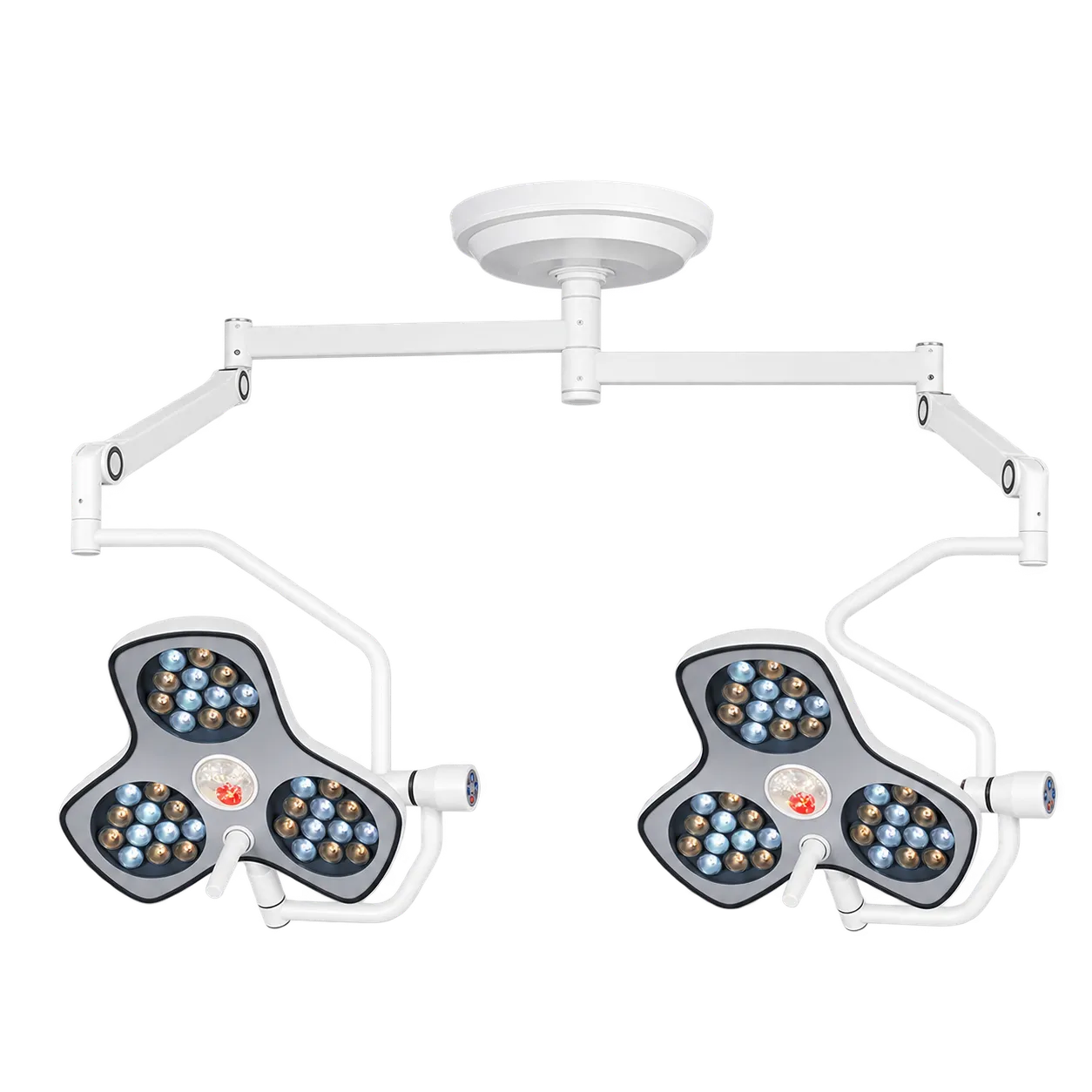
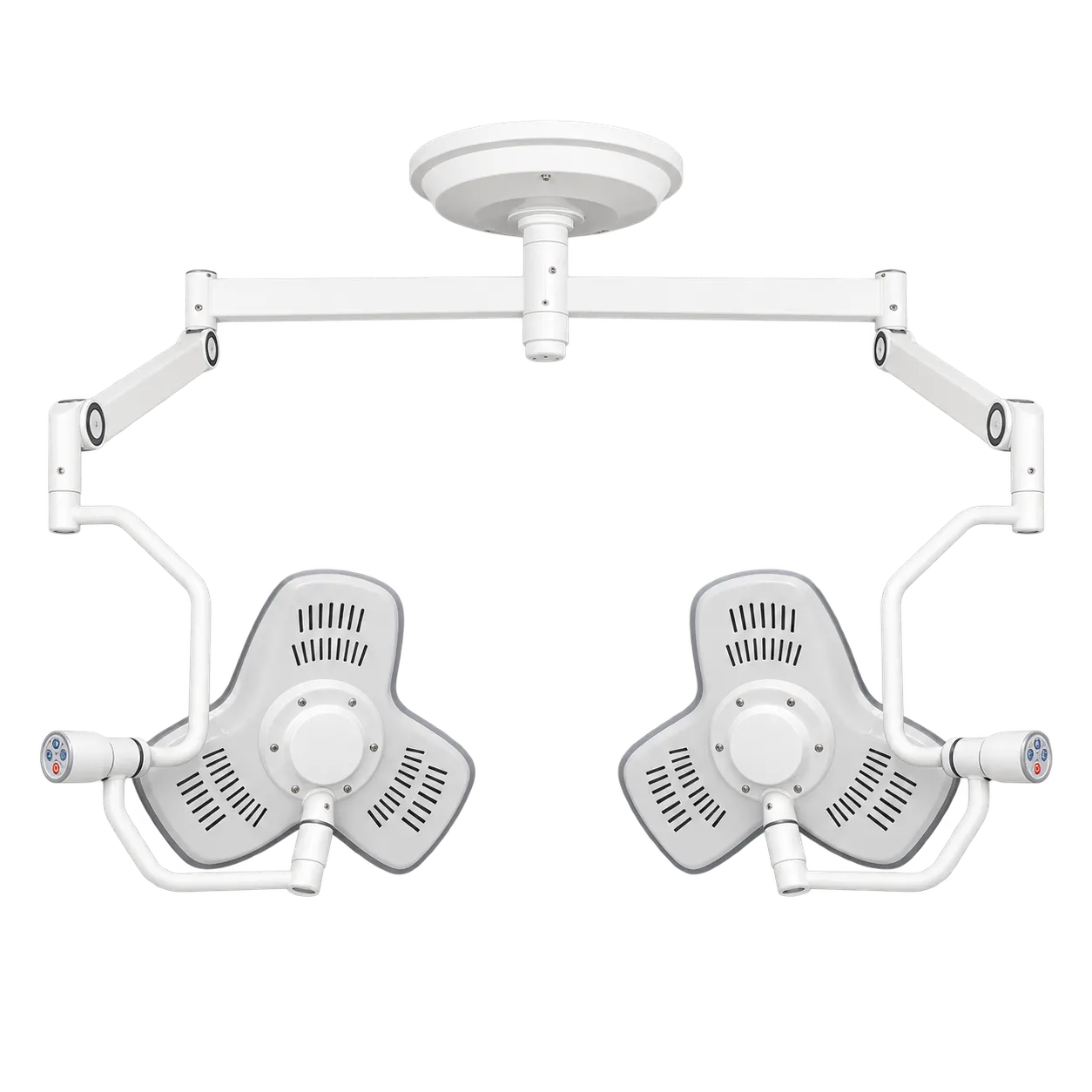
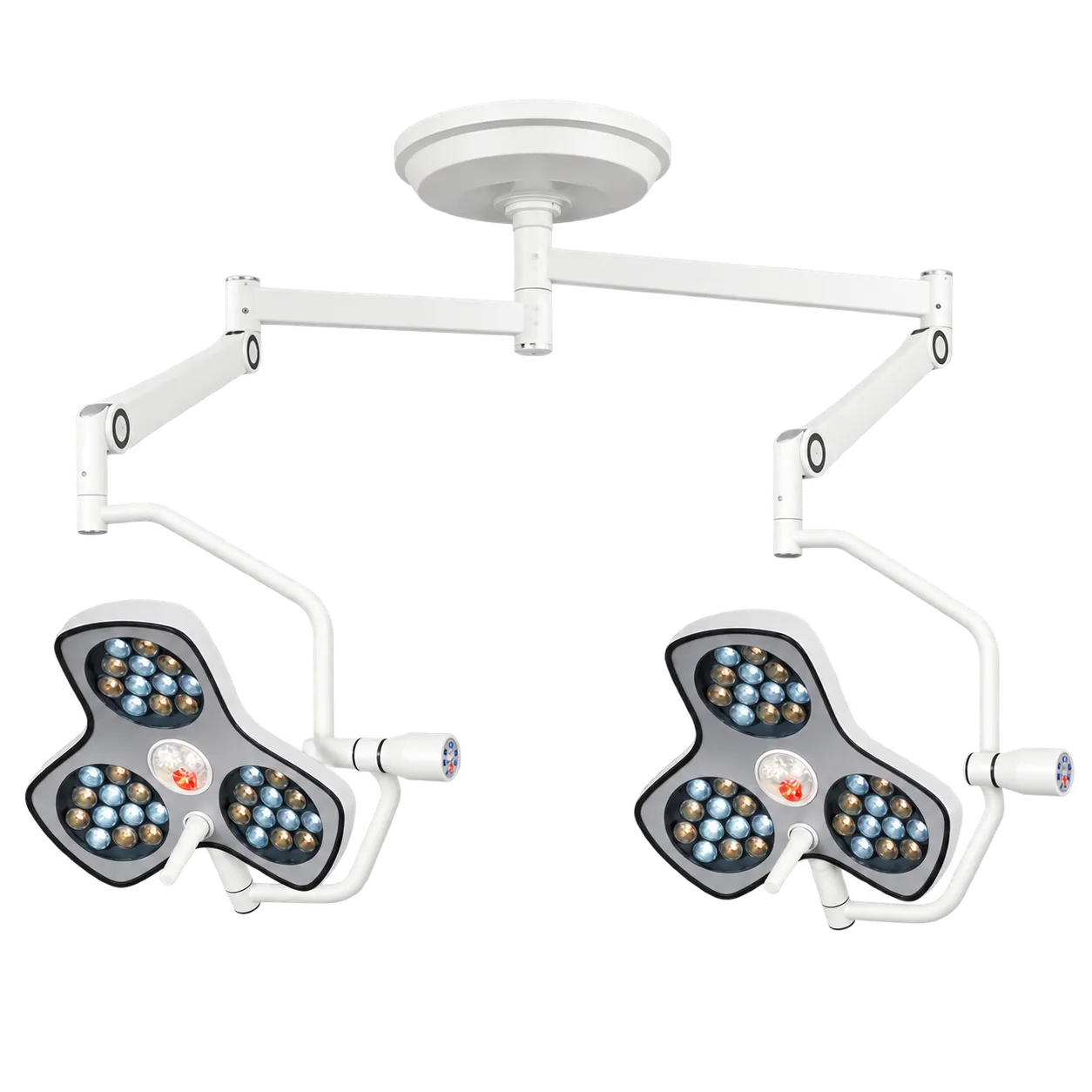
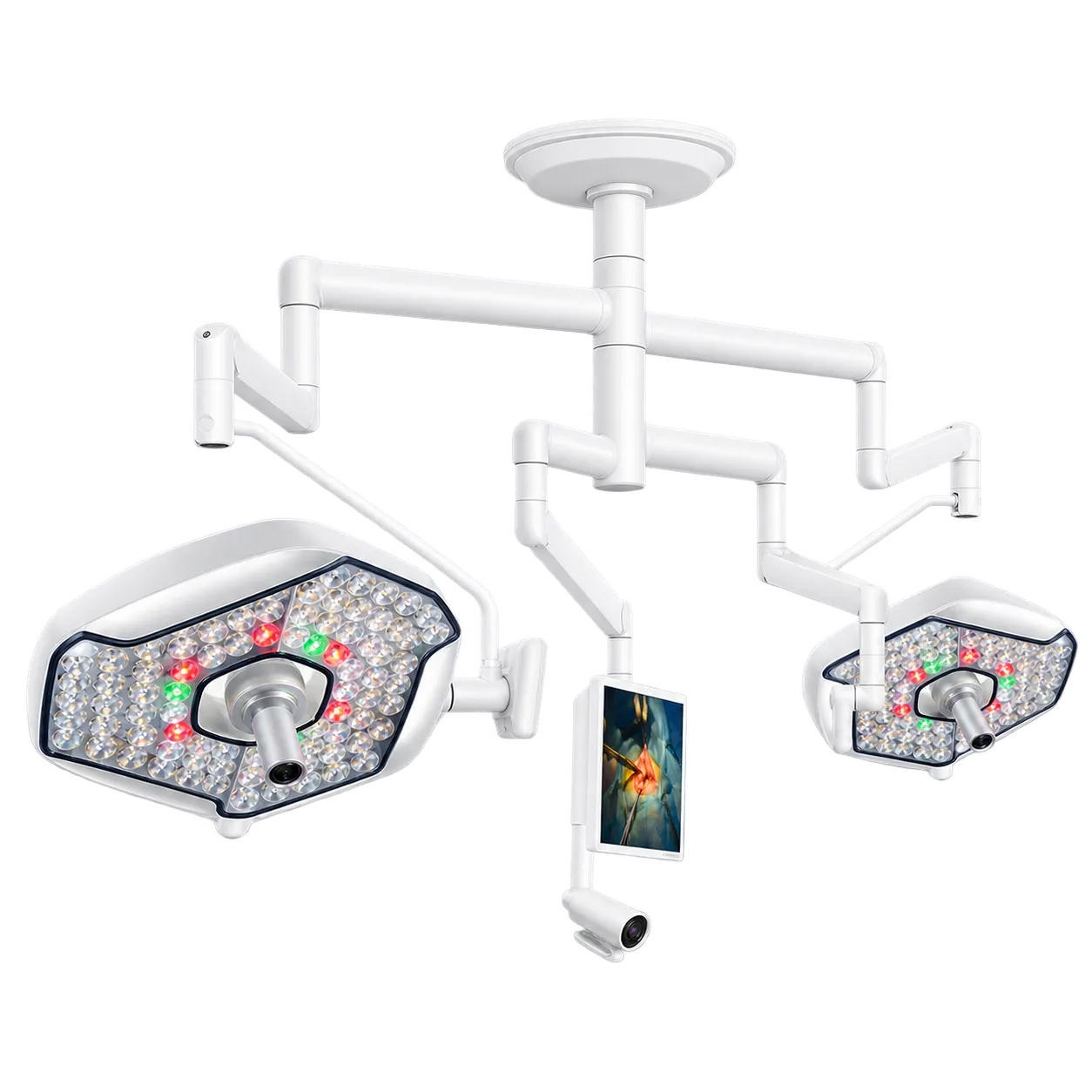
The KL-LED·STZ4/STZ4 suits general surgery, gynaecology and urology theatres, and day-surgery units where a list moves between open and laparoscopic cases. Its case is theatre workflow across the phases of one operation. A laparoscopic cholecystectomy, a hernia repair or a diagnostic laparoscopy each starts and ends as open surgery at skin level, with a long stretch in between when the team watches a screen.
The listed figures map onto that sequence. For the incision and port placement, each head gives 160,000 lux at 1 m across a 10 to 28 cm field, and two heads on separate arms cover the wound from two sides. When the scope goes in, endo mode brings output down to 10,000 lux. That is low enough for the monitor and still lights the instrument trolley. For closure, the heads return to full output, and the colour temperature shifts from 3000 to 6700 K, letting the surgeon pick the tone that shows skin edges clearly. If a keyhole case converts to open, full light is one control press away, and the heads are already over the table.
A list keeps its pace when these steps are agreed in advance. A short note in the theatre routine can name who changes the setting and when in the case. Heat belongs in that note too. From Keling's heat-to-light ratio, one head at full output gives up to about 512 W/m² and two overlapped give up to about 1,024 W/m², so overlap is worth limiting during long open phases.
Surgical leads, NHS procurement routes, and overseas tender panels will expect the declaration of conformity, the device class it states, and the IEC 60601-2-41 test report. The manufacturer issues the conformity documentation those procurement routes require, and the enquiry team shares it.