
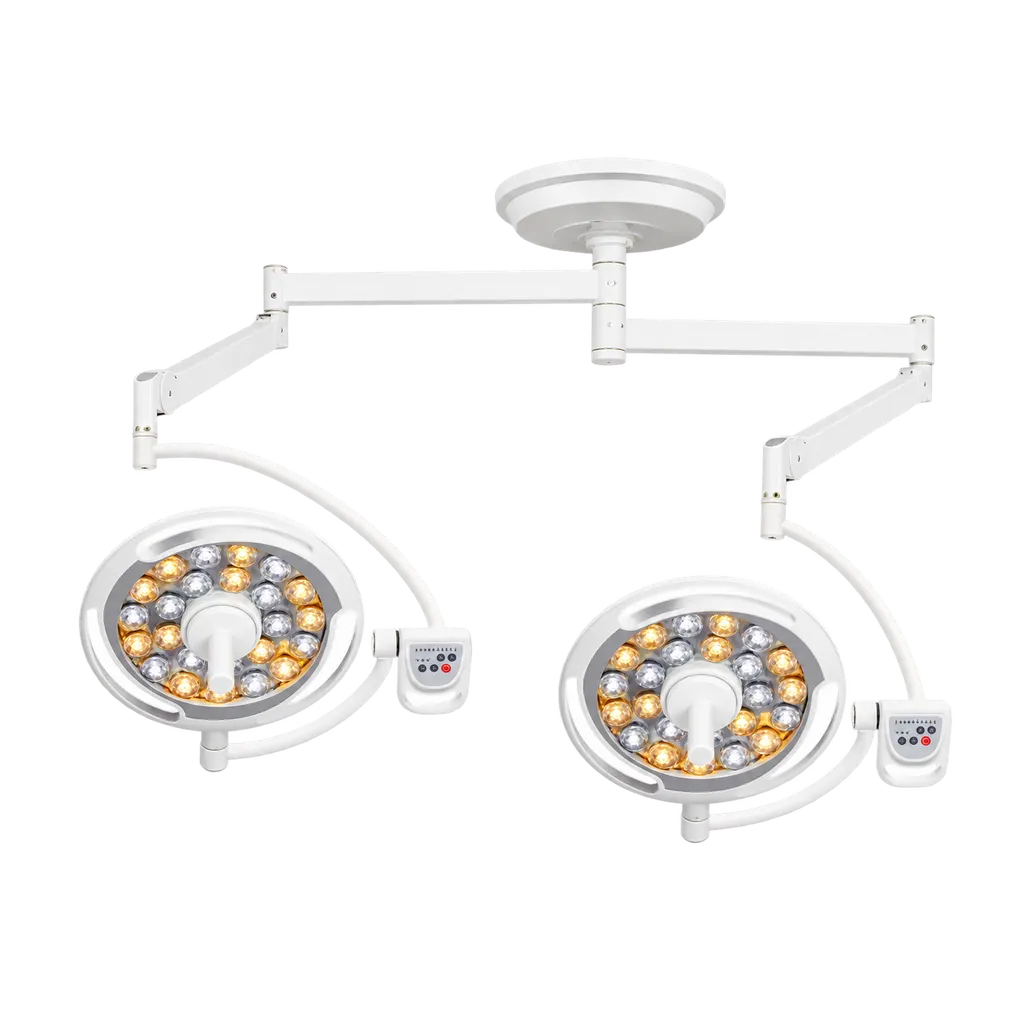
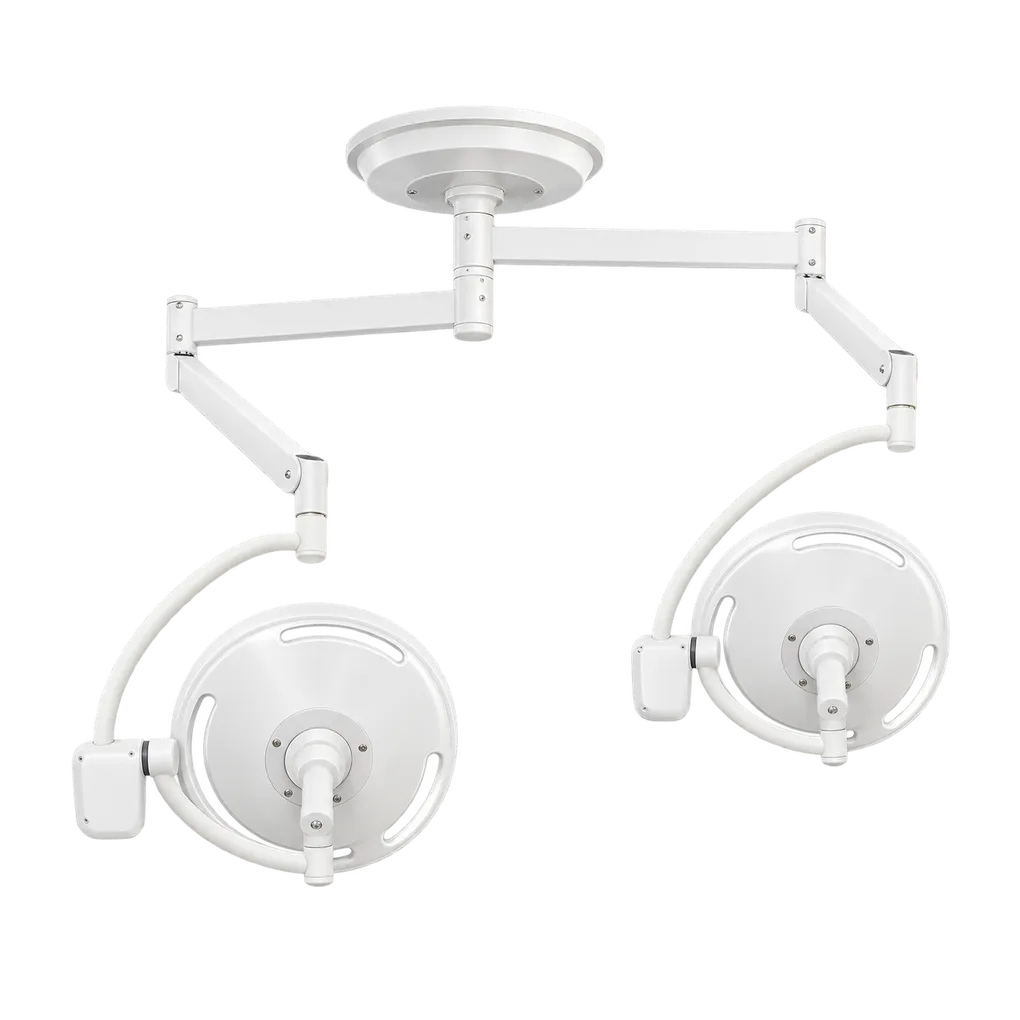
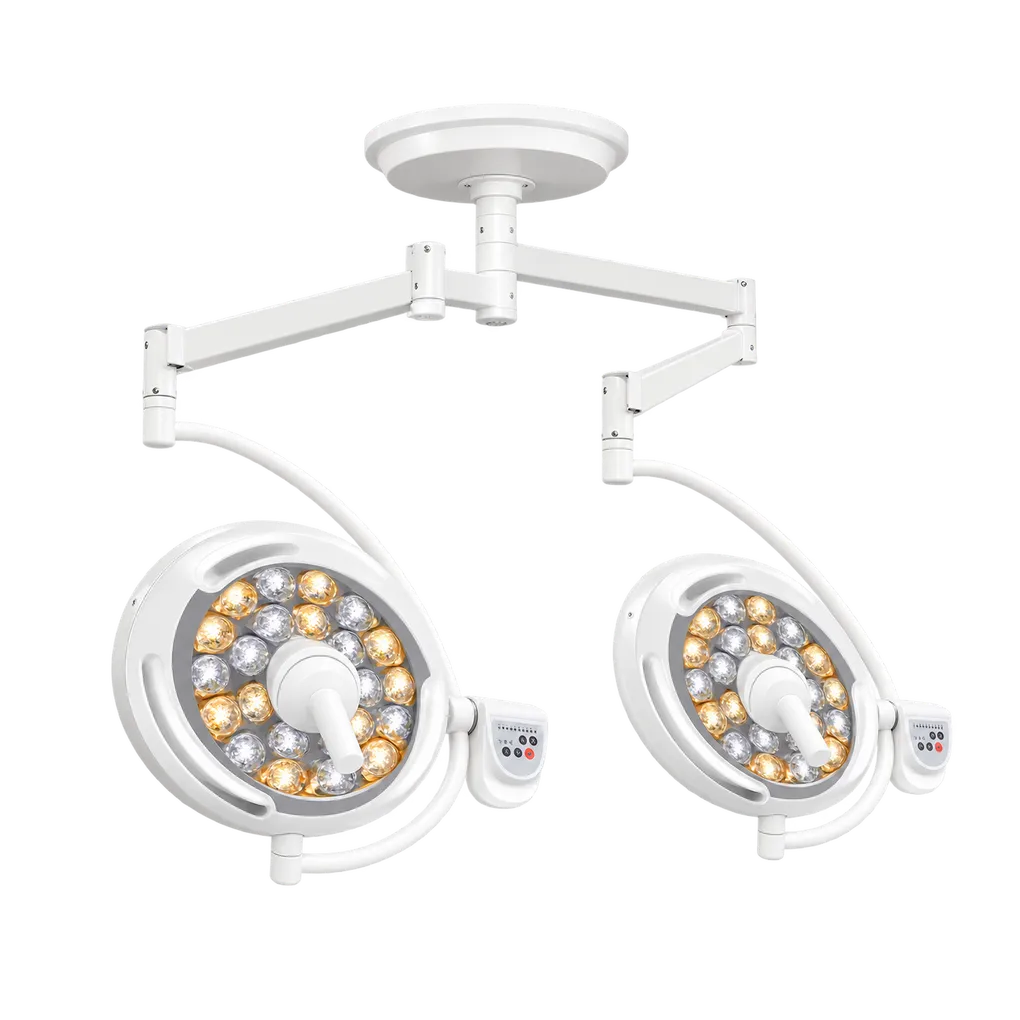
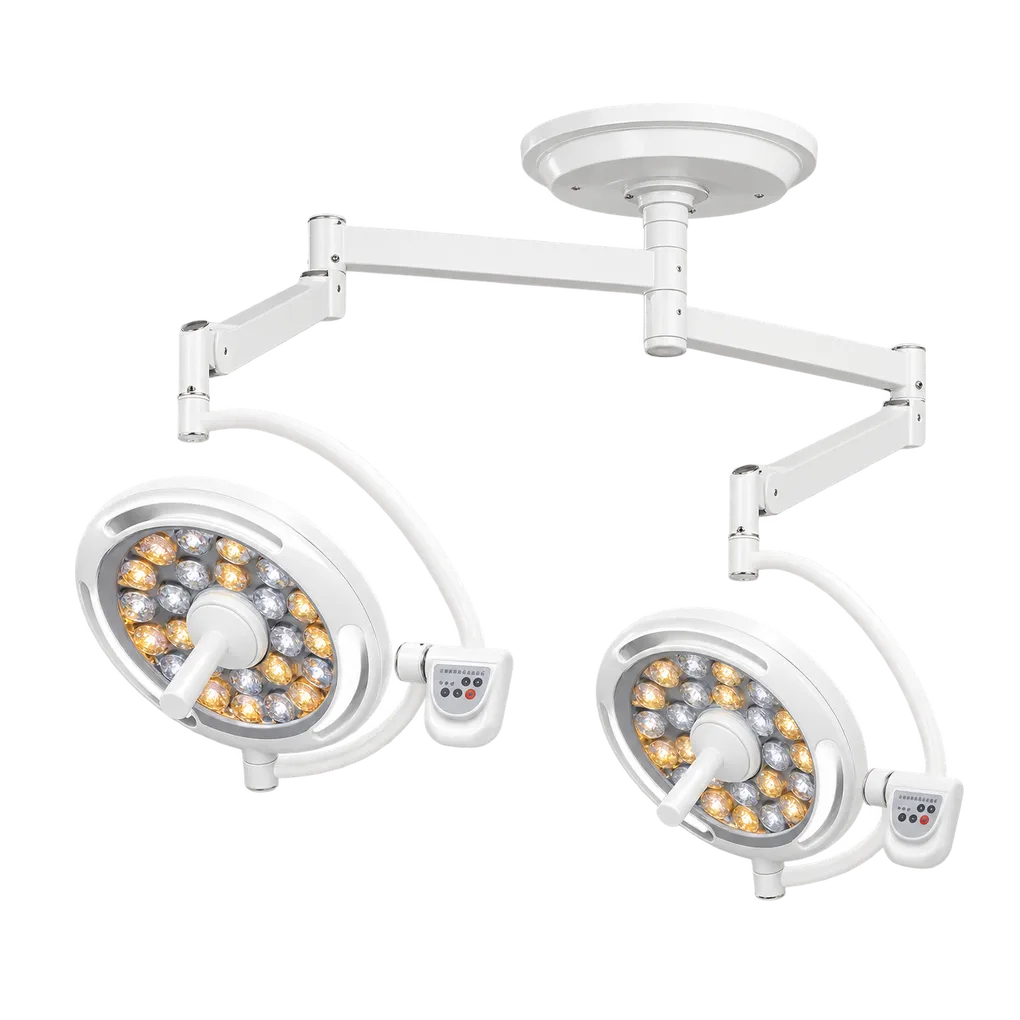
The KL-LED·ST45/ST45 suits day-surgery theatres, obstetric theatres, minor operations suites, plastic and hand surgery lists, and general theatres in district hospitals. Its case is population-fit. The right question for this lamp is which patients and procedures will pass beneath it, and the listed figures answer that fairly precisely.
Begin with the wound. A light field of 10 to 20 cm matches incisions for skin lesions, carpal tunnel release, hernia repair, breast lumps and caesarean section. Each head at 80,000 lux or above gives working light for those sites, and crossing both beams on one field raises the level and fills shadows from hands and instruments. A light depth of 100 cm or above keeps the site lit as the head moves along the arm’s range.
Then look at the list. Day-surgery and minor operations units run many short cases, often with the patient awake. Heat from the listed ratio is about 256 W/m² per head at 80,000 lux, so skin warming and tissue drying stay low during a short procedure. Colour temperature from 3000 to 6700 K lets staff pick a warm tone for a conscious patient or a cool one for contrast. Thirty-six VA per head is a small electrical load, which helps where a backup supply has limited capacity.
Finally, mark the limits. Long, deep, or wide procedures require a broad field and high illumination deep in a cavity. A hospital whose lists include those should assess this lamp against that work.
Theatre leads, NHS procurement routes and tender committees abroad will ask for the device class, the measured illumination in the IEC 60601-2-41 report and a declaration of conformity. The manufacturer issues the conformity documentation these procurement routes require, and the enquiry team shares it.