
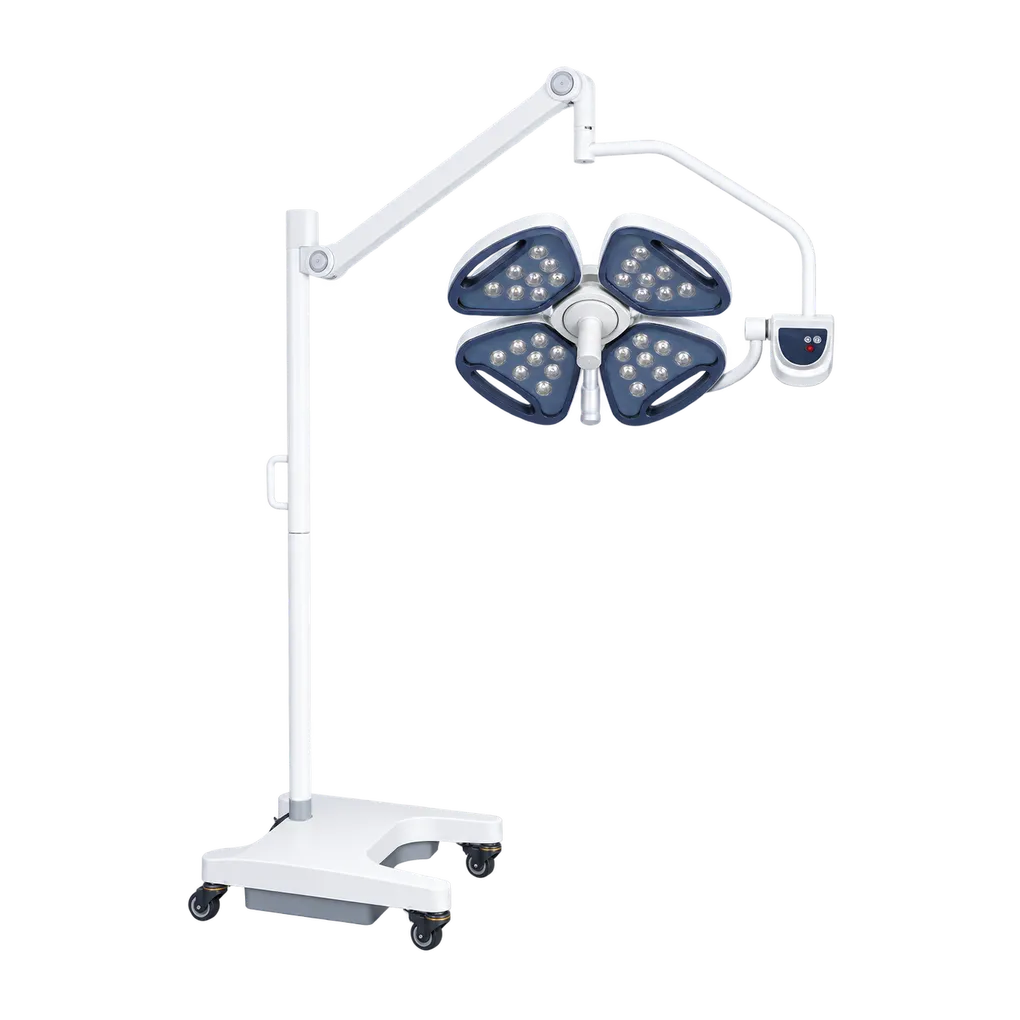
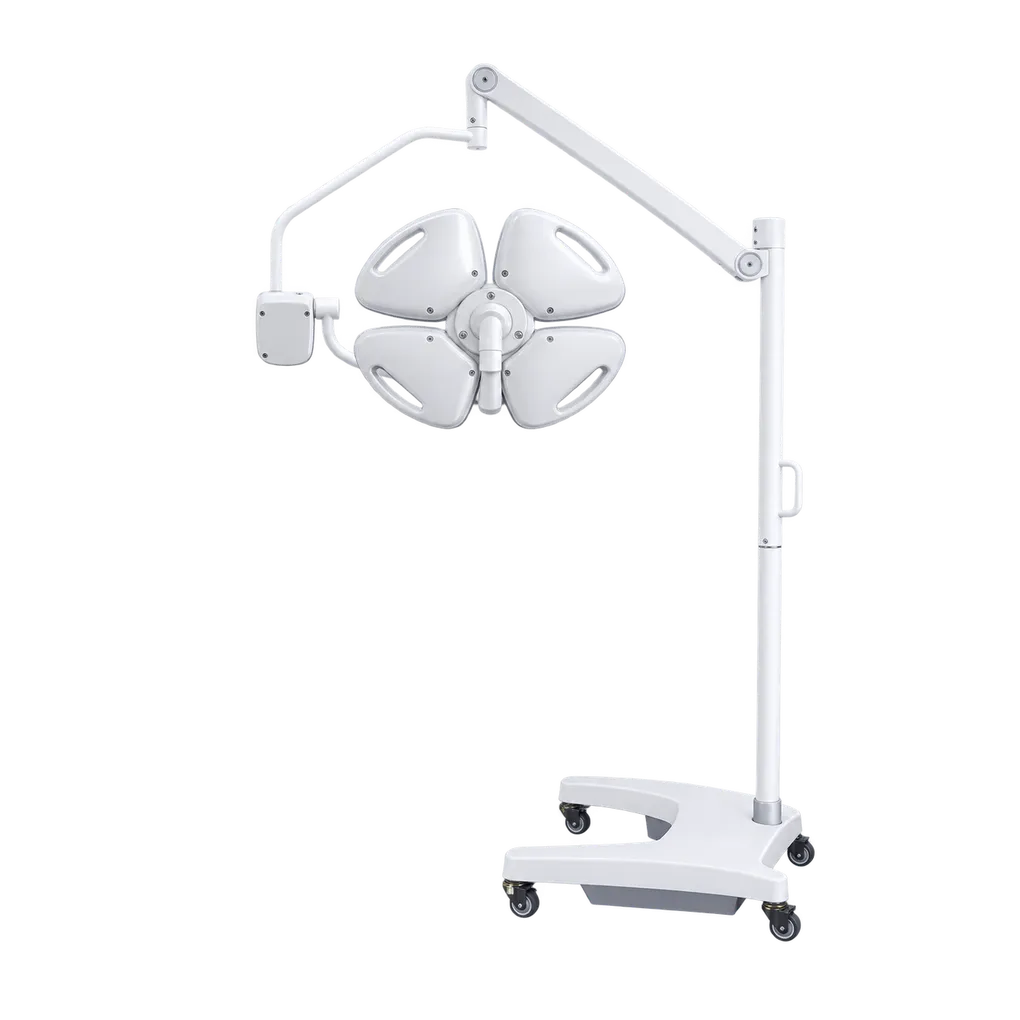
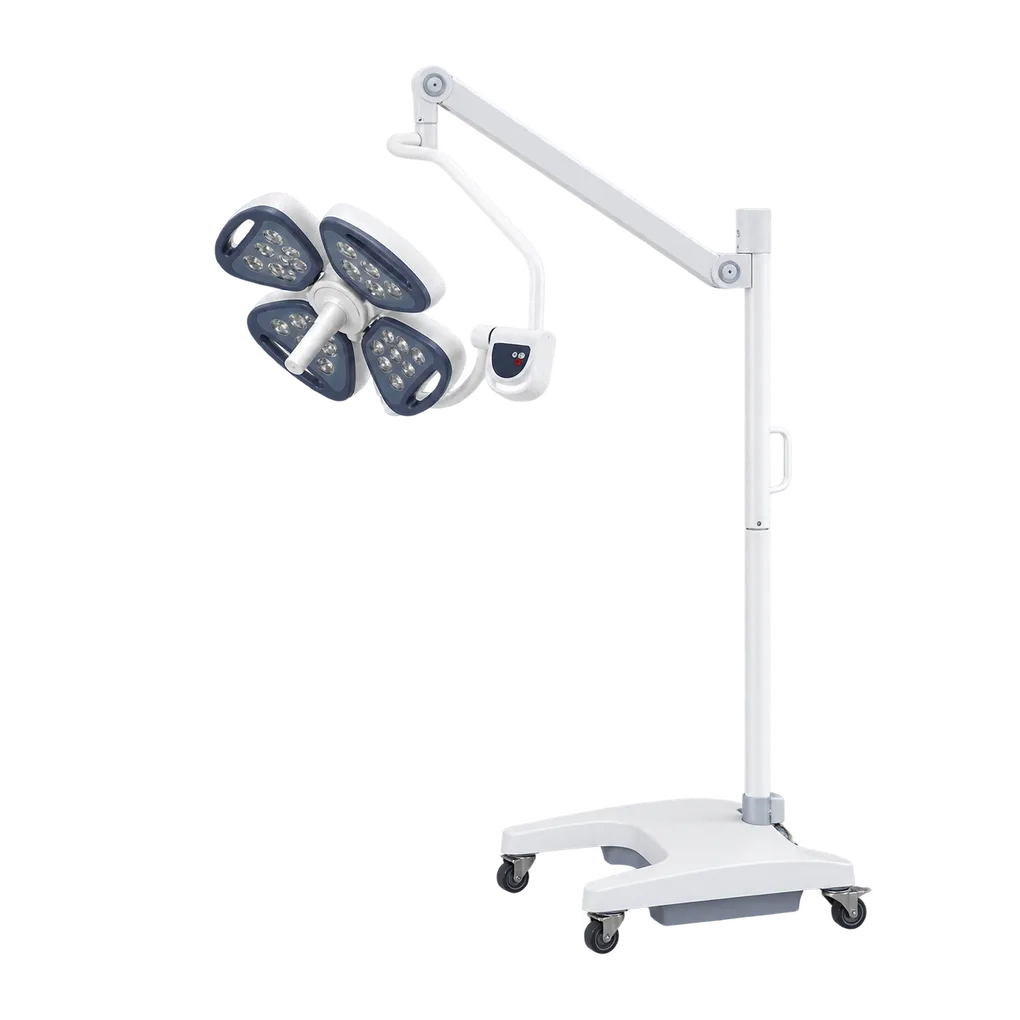
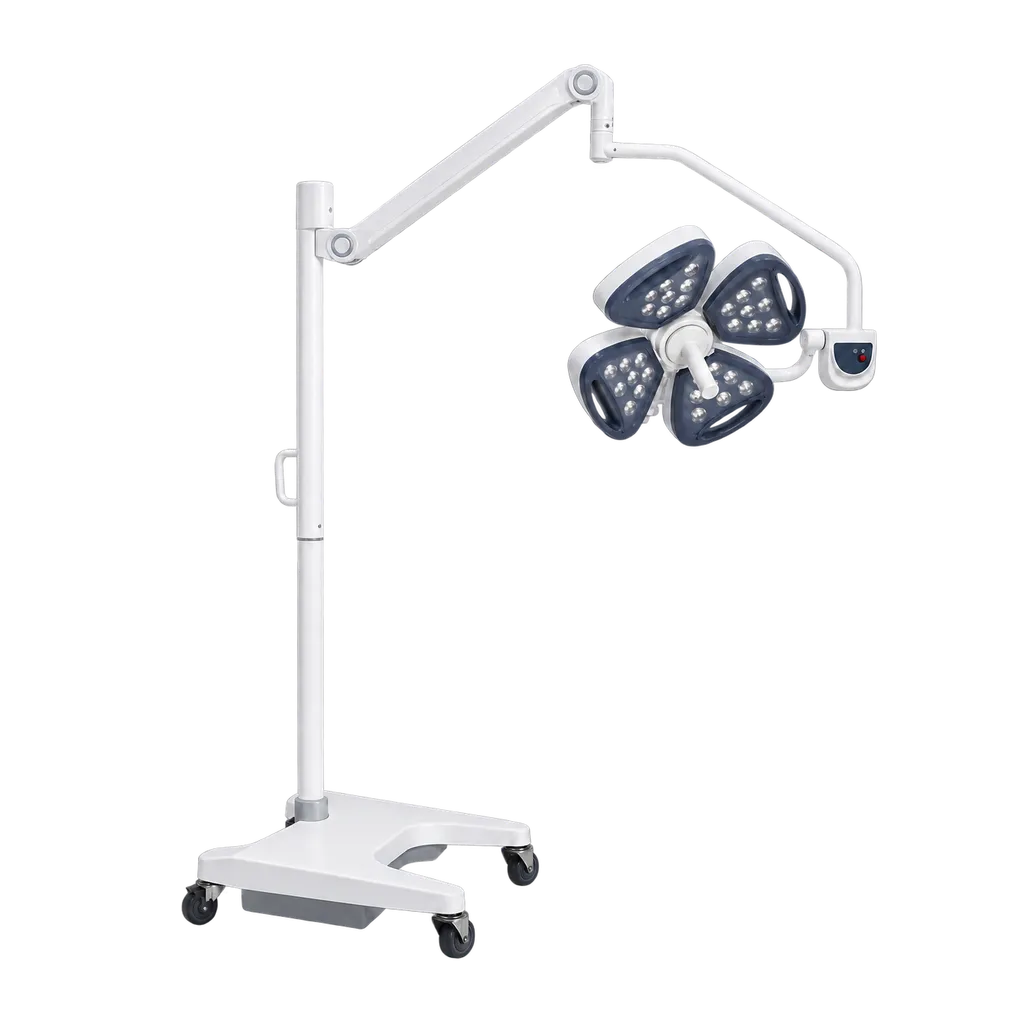
The KL-LED·MSZ4D suits dermatology and podiatry clinics, minor surgery rooms in health centres, outpatient procedure rooms and community hospitals. Its case is population-fit. It mostly serves walking patients with short procedures under local anaesthetic, and staff in small teams in standard rooms.
In dermatology, the work is excision, shave and punch biopsy, curettage and cautery. The clinician needs to see a lesion’s edge and the colour of the tissue beneath it. A neutral white of about 4500 K and Ra from 85 to 100 support that, and a light field that closes to 10 cm keeps attention on a site that may be a centimetre across.
In podiatry, the work is nail avulsion, matrix ablation and treatment of deep corns and wounds. The patient sits or reclines with the foot raised, and the clinician often sits too. A mobile stand lets the head come in low from the foot of the couch, within the 70 to 140 cm working distance, where a fixed light would be in the wrong place.
In general, minor surgery lists include cysts, lipomas, ingrown nails, and joint injections. The top of the series range, 120,000 lux, gives depth in a small cavity, and the lower end suits preparation and closure. Because these patients are awake, the modest heat at mid settings and the quiet presence of an LED head both help.
The same lamp can move between rooms as sessions change through the week, which suits a health centre that hosts visiting clinics.
Service managers, NHS procurement routes and tender committees overseas will ask for a data sheet naming the model, the IEC 60601-2-41 report and a declaration of conformity. The manufacturer issues the conformity documentation required by those procurement routes, and the enquiry team shares it.