
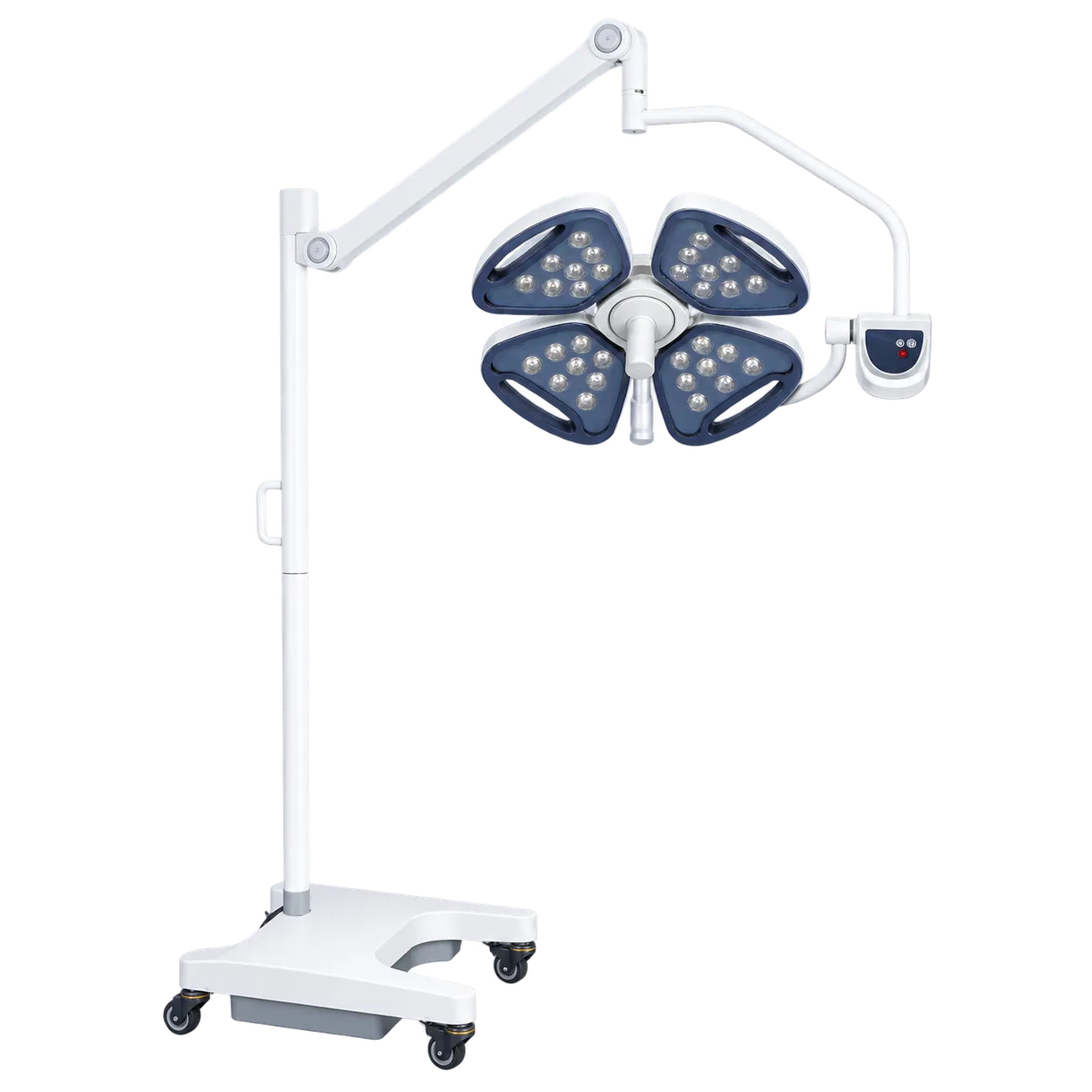
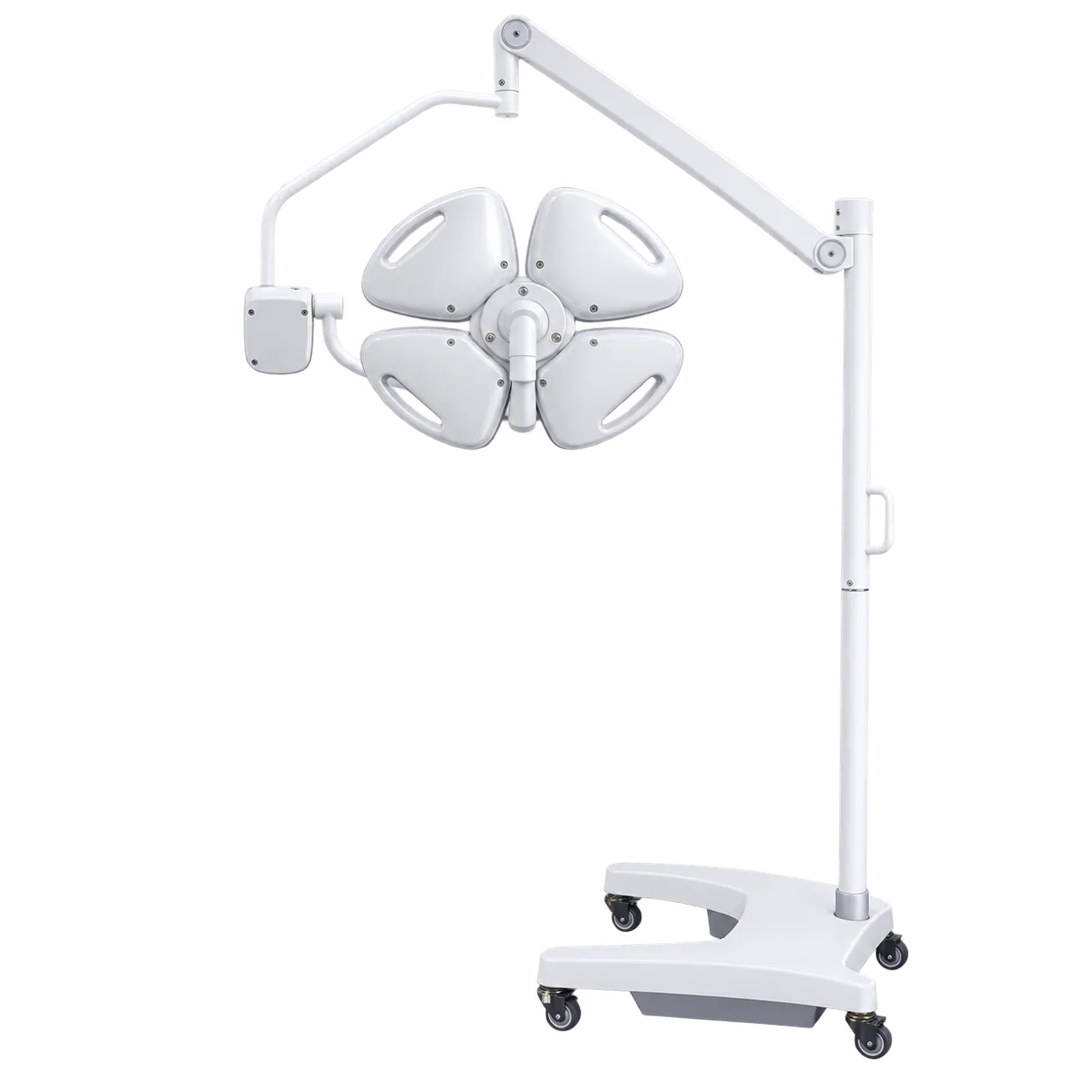
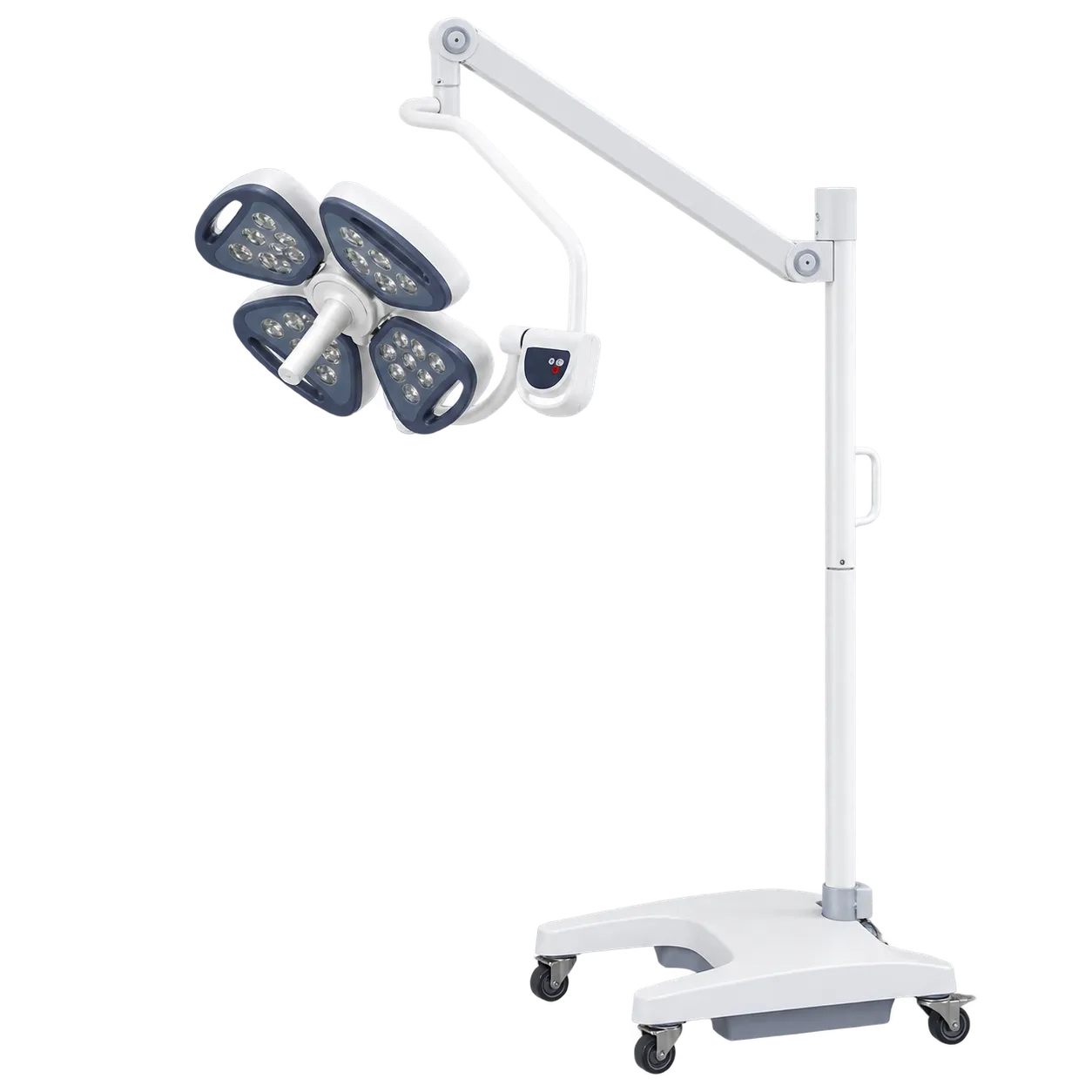
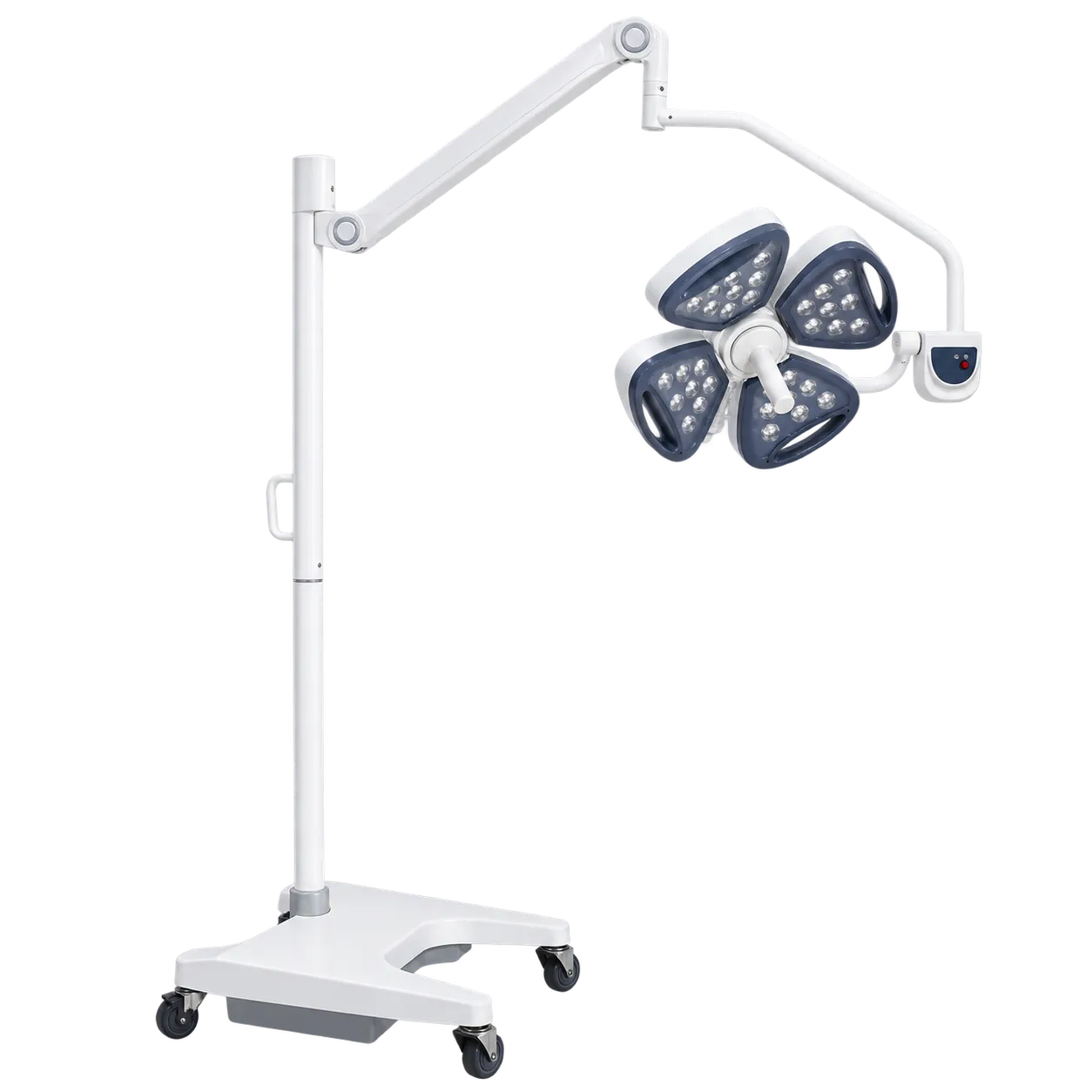
The KL-LED·MSZ4 suits minor operations rooms, outpatient clinics, obstetric and gynaecology rooms, emergency treatment areas and small theatres. Its case is mechanism and effect. One listed range, 40,000 to 120,000 lux, explains most of what the lamp does for a clinician and for the tissue under it.
At the low end of the range, about 40,000 lux suits examination, skin preparation, infiltration of local anaesthetic and superficial work on pale skin, where glare off wet tissue is a nuisance. At that level, heat is about 128 W/m², which an awake patient barely notices.
In the middle, around 80,000 lux serves most minor and intermediate surgery. Lesion excision, wound exploration, perineal repair and hand procedures sit here, with about 256 W/m² at the field.
At the top, 120,000 lux is for depth and dark tissue. A bleeding wound absorbs light, and a cavity returns little of it to the eye. The listed maximum gives about 384 W/m², so it is worth using for the steps that need it and easing back afterwards. Stepless control makes that easy, since there are no fixed notches to jump between.
Other figures support the same work. A 10 to 28 cm light field with spot adjustment matches the lit patch to the incision. The 70 to 140 cm working distance leaves room for a seated or standing operator. Colour temperature is listed at 4500 ± 500 K, a neutral white that shows skin and tissue without a strong tint.
Clinic managers, NHS procurement routes, and overseas tender panels will ask for measured illumination in the IEC 60601-2-41 report, the device class, and a declaration of conformity. The manufacturer issues the conformity documentation these procurement routes require, and the enquiry team shares it.