
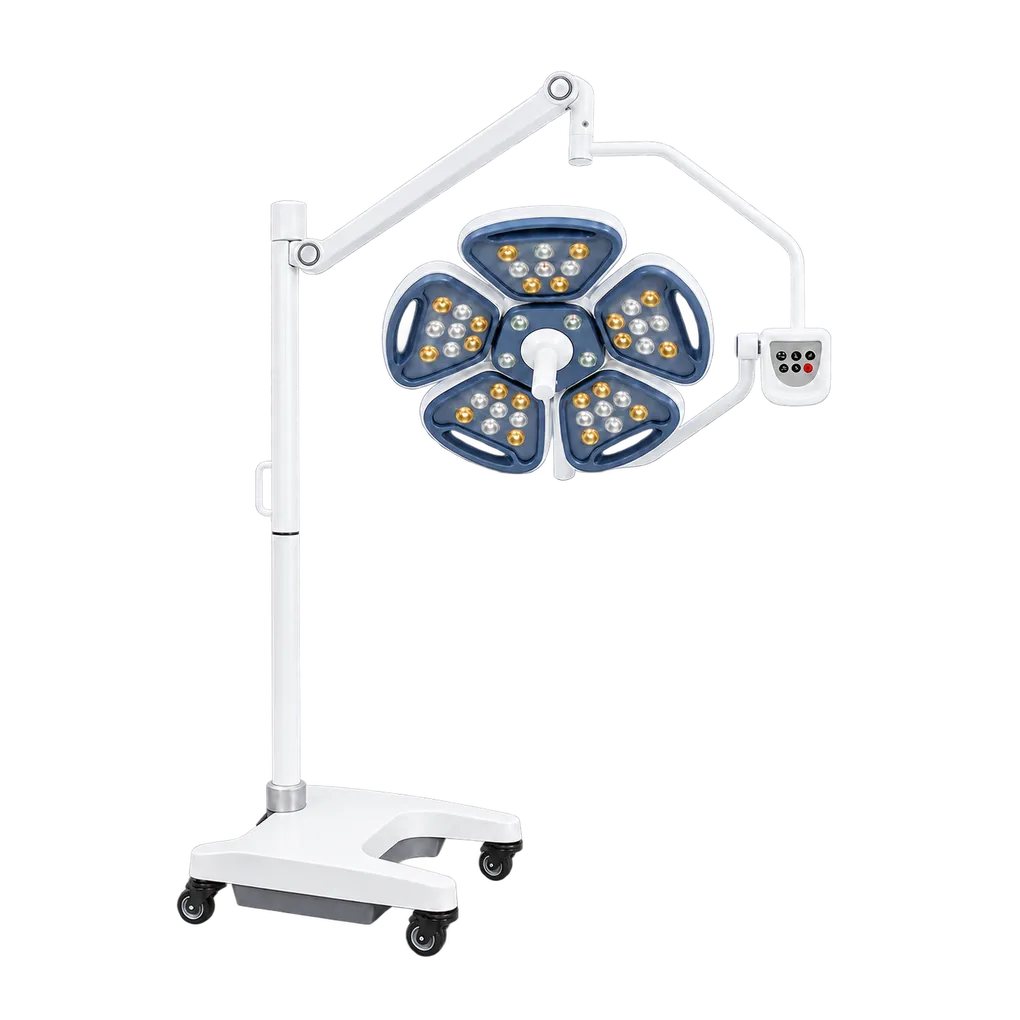
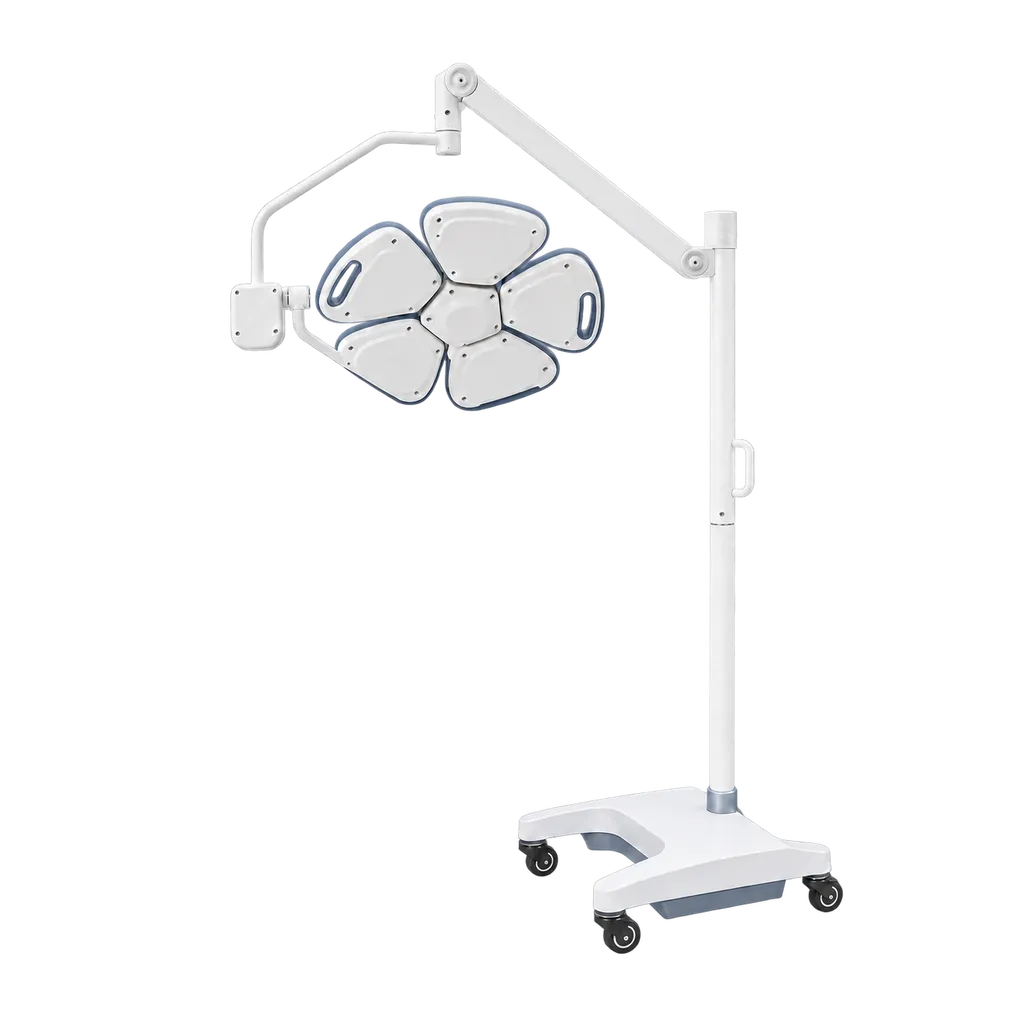
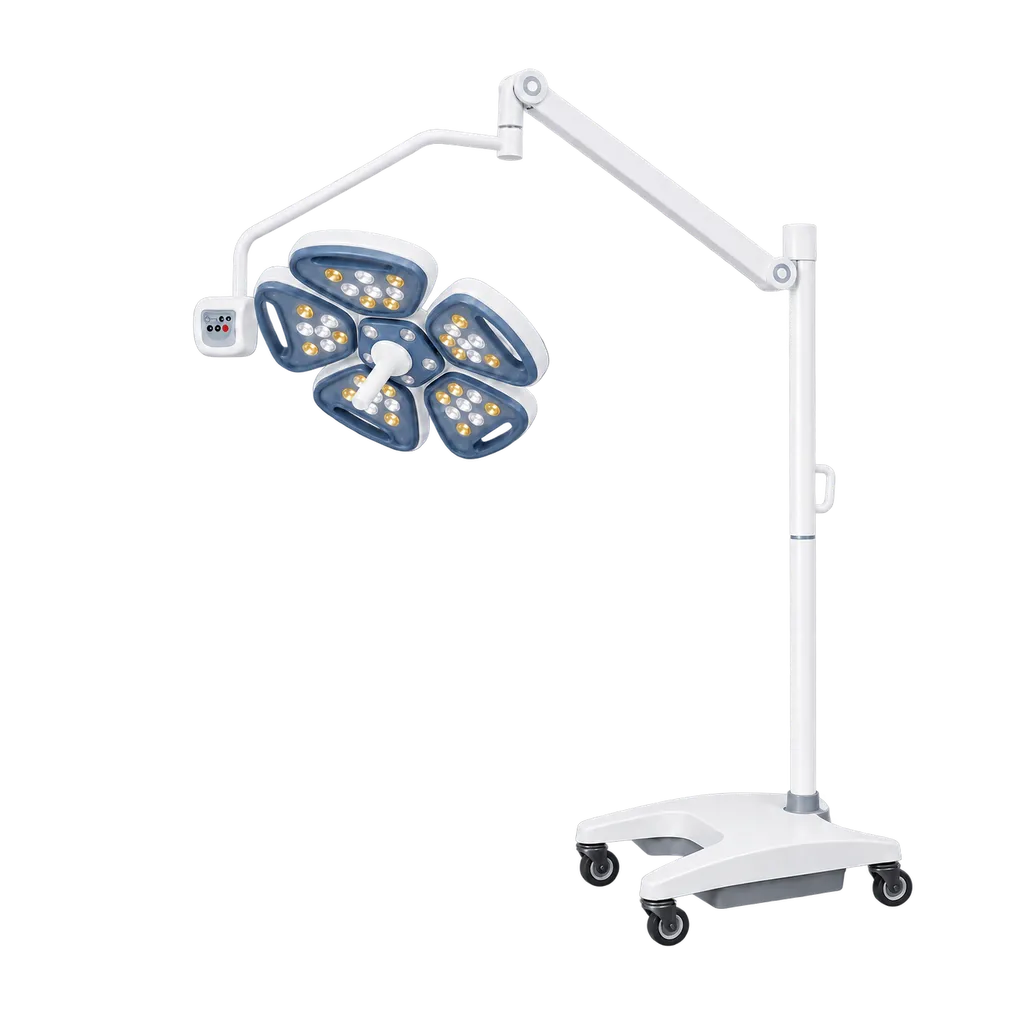
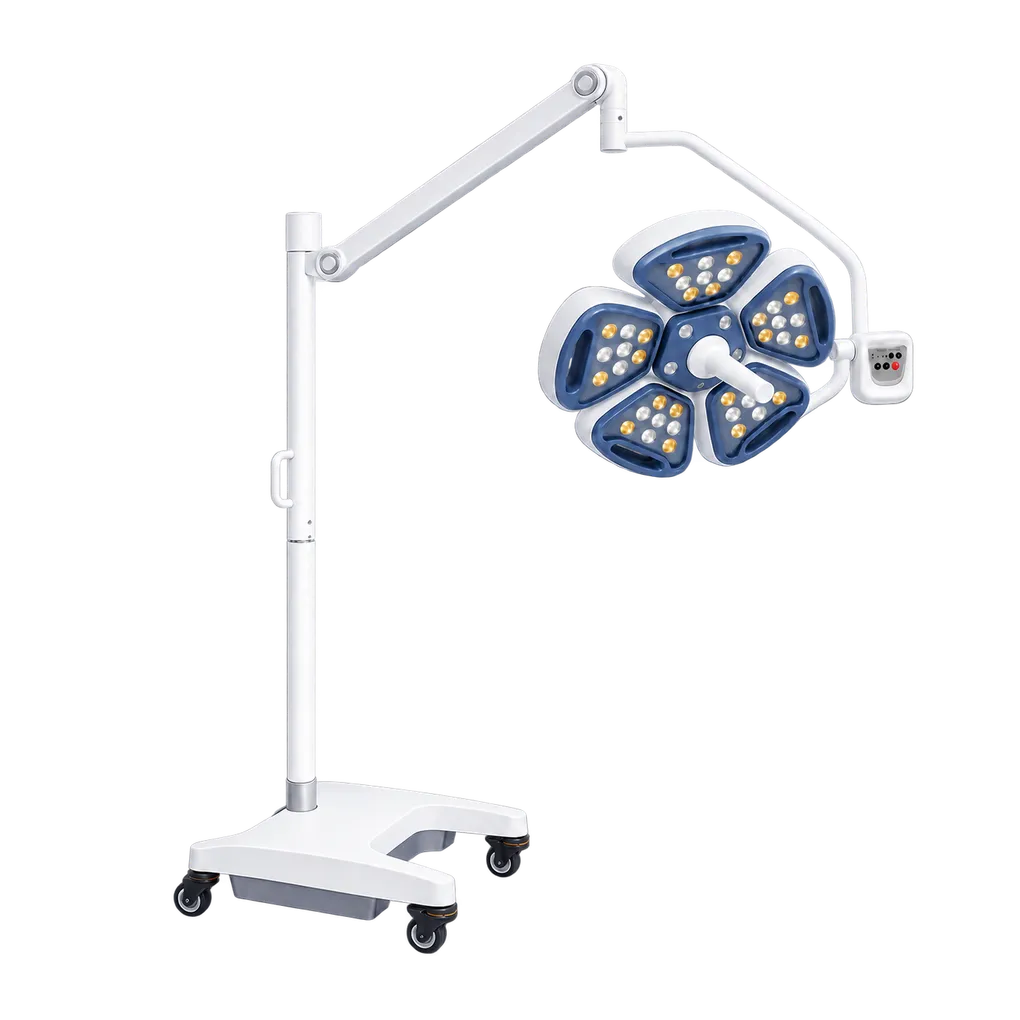
The KL-LED·MSTZ5D suits wards, emergency cubicles, side rooms, elderly care units, and community hospitals where procedures are done on awake patients away from a theatre. Its case is patient experience and dignity. For someone frail, frightened or in pain, where a procedure happens and how it feels matter alongside the result.
Staying put is the first kindness. A transfer to theatre means a trolley, corridors, a holding bay and unfamiliar faces. Wound debridement, abscess drainage, line insertion and suturing can often be done at the bedside when the light is adequate. A stand on castors brings a surgical head to the bed, and the curtain or door keeps the procedure private.
How the light behaves is the second. An awake patient looks up at whatever hangs over them. Placing the stand to the side and tilting the head keeps the beam on the site and off the face. The series lists stepless brightness, so staff can raise the level slowly and stop at what the task needs. A colour temperature of 3000 K gives a soft, warm light, and 10,000 lux in endo mode is there for the quiet minutes of preparation.
Words do the rest. Saying what the lamp is and that it can be turned down takes seconds and removes much of the fear. Asking whether the light is in their eyes gives the patient some control.
Full output remains in reserve. The series figure of 160,000 lux serves the moments that need it, and heat at that level is felt on skin, so it is used briefly.
Ward sisters, NHS procurement routes and tender boards overseas will ask for a data sheet naming the model, the IEC 60601-2-41 report and a declaration of conformity. The manufacturer issues the conformity documentation those procurement routes require, and the enquiry team shares it.