
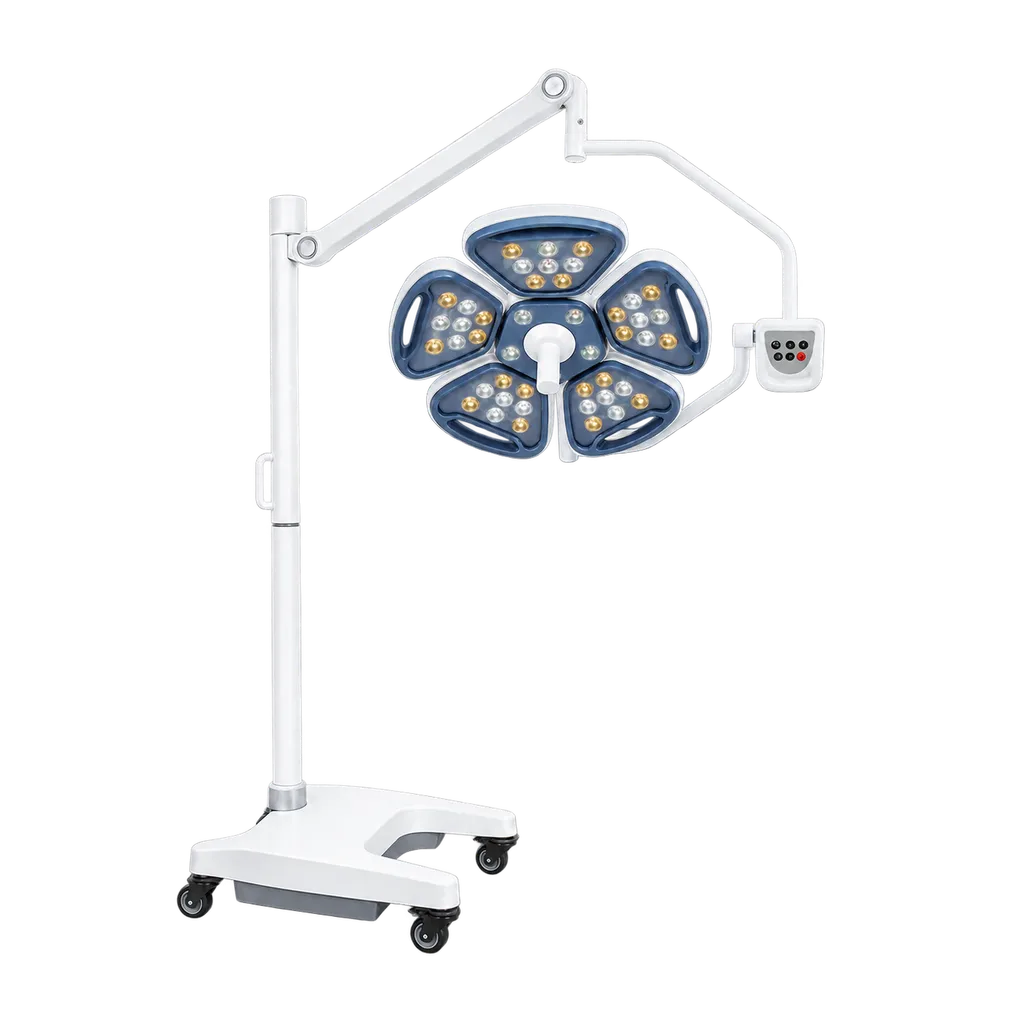
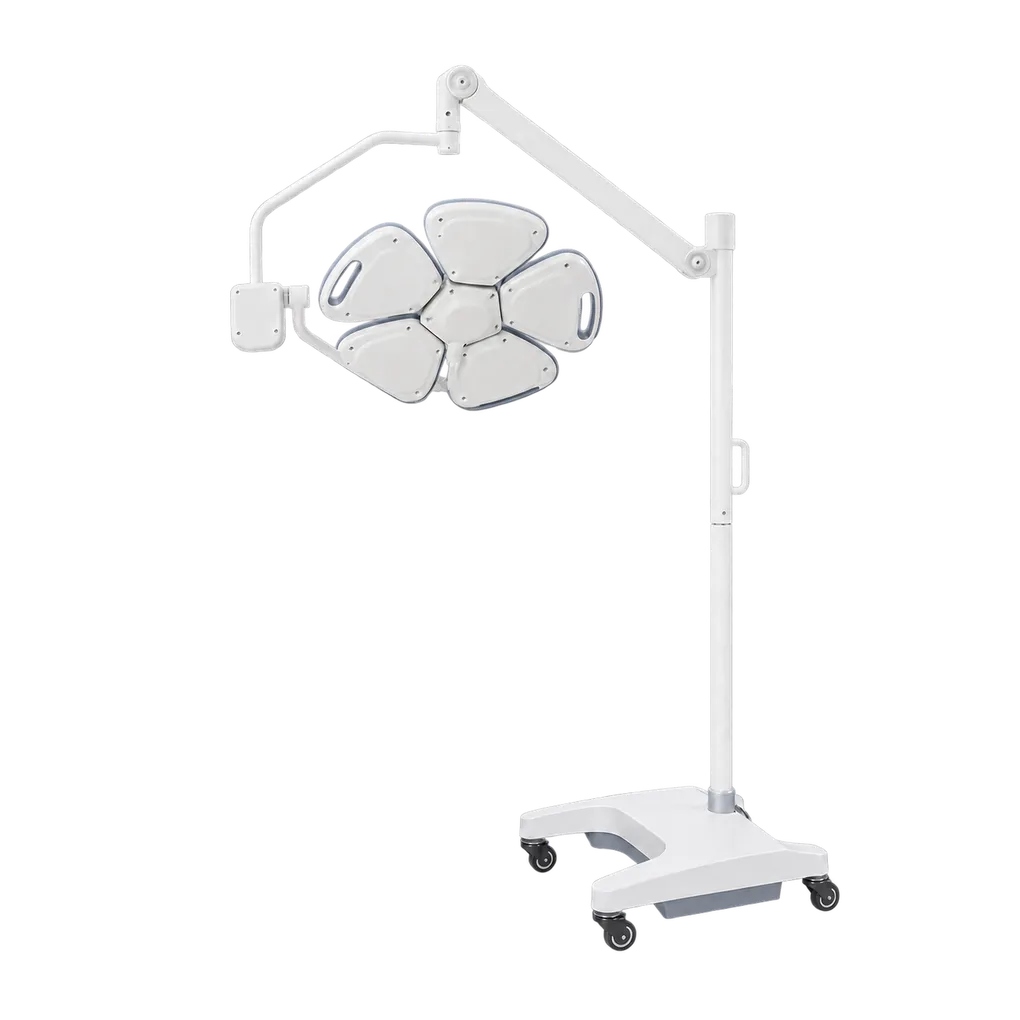
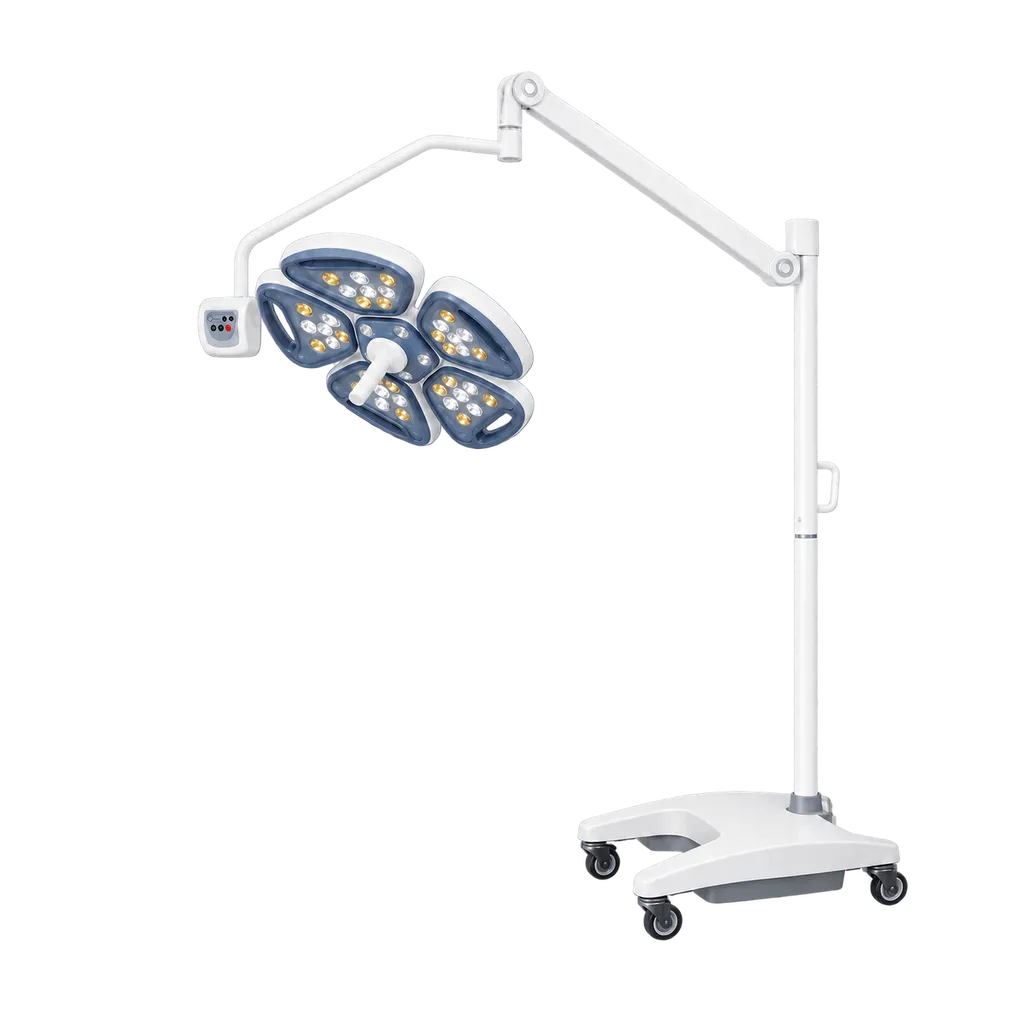
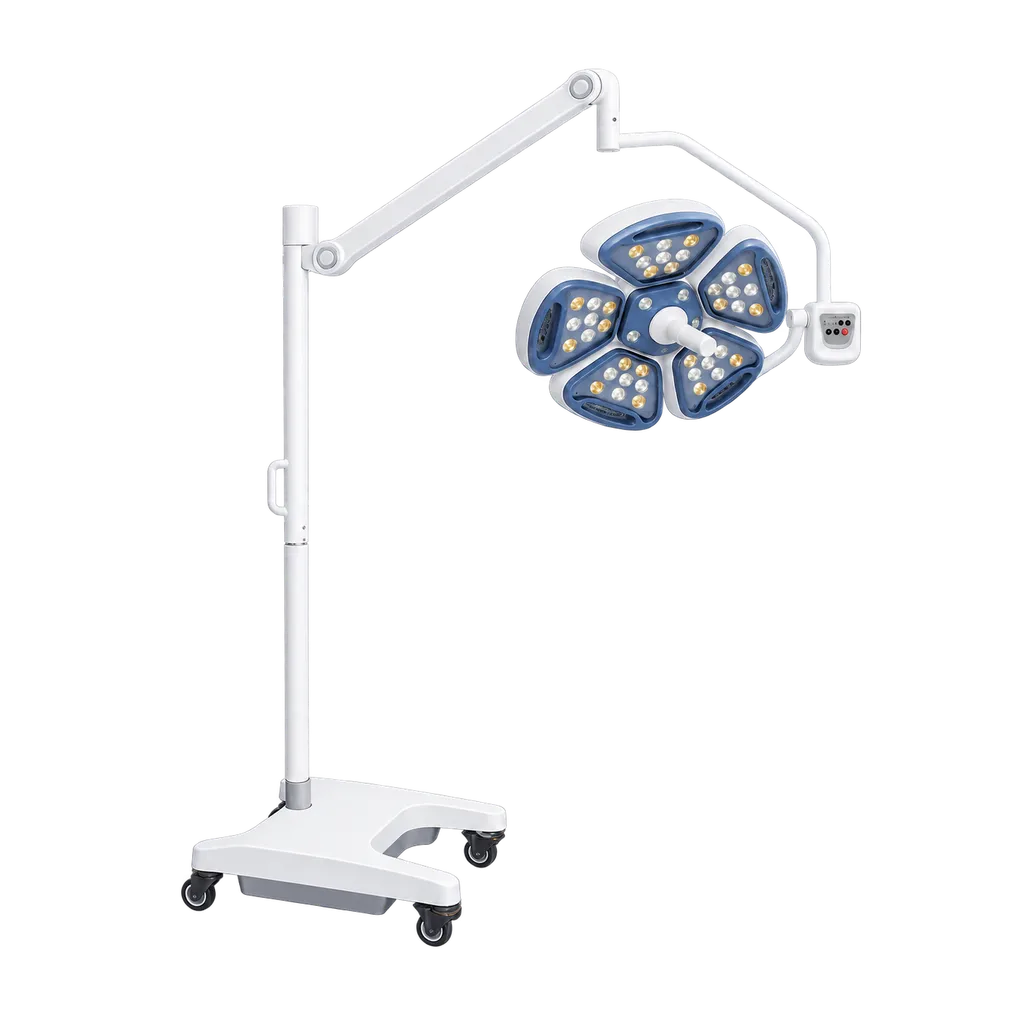
The KL-LED·MSTZ5 suits emergency departments, minor injury units, treatment rooms, delivery rooms and small theatres where the patient surface changes from case to case. Its case is population fit. A ceiling lamp is planned around one operating table, and a mobile lamp meets whatever comes through the door.
Patients vary first. A child with a scalp laceration sits low on a couch. An adult with a hand injury rests the arm on a side table. A woman needing perineal repair lies on a delivery bed with the field near its foot. A bariatric bed puts the wound high off the floor. In each case, the head must sit 70 to 140 cm from the field, so the arm’s vertical travel and the pole height determine which of these the lamp can serve.
Operators vary as well. Suturing is often done seated, and exploration or drainage standing. The listed working distance leaves space above a seated operator’s head at its lower end and clears a tall one at its upper end, provided the arm reaches. The 10 to 28 cm light field and adjustable spot cover a fingertip wound and a long laceration alike.
The light can also be fitted to the patient. Stepless brightness lets the level come down for a conscious casualty, and colour temperature from 3000 to 6700 K offers a warm tone. The endoscopy mode at 10,000 lux serves scope work and quiet preparation. The handle sheath comes off for cleaning between patients.
Emergency leads, NHS procurement routes, and overseas tender committees will ask for the arm’s travel, the IEC 60601-2-41 report, and a declaration of conformity. The manufacturer issues the conformity documentation these procurement routes require, and the enquiry team shares it.