
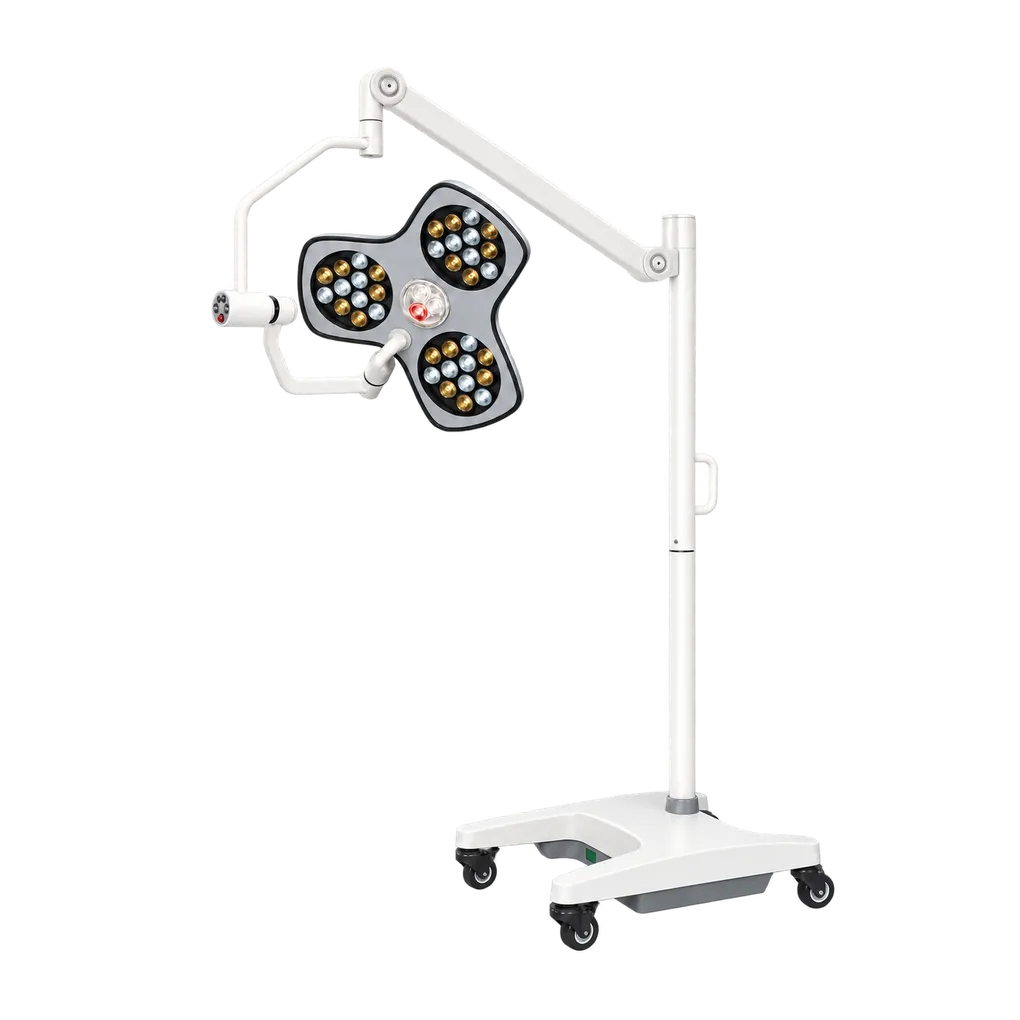
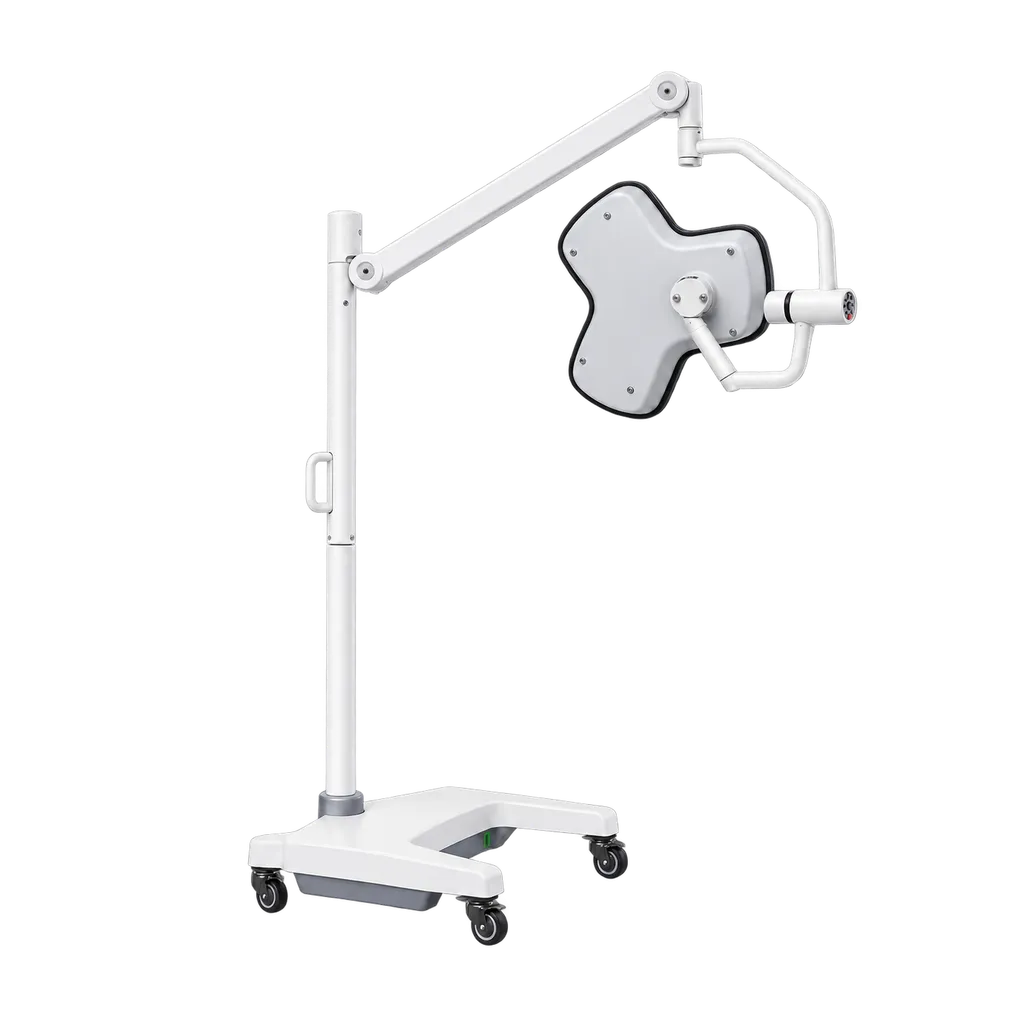
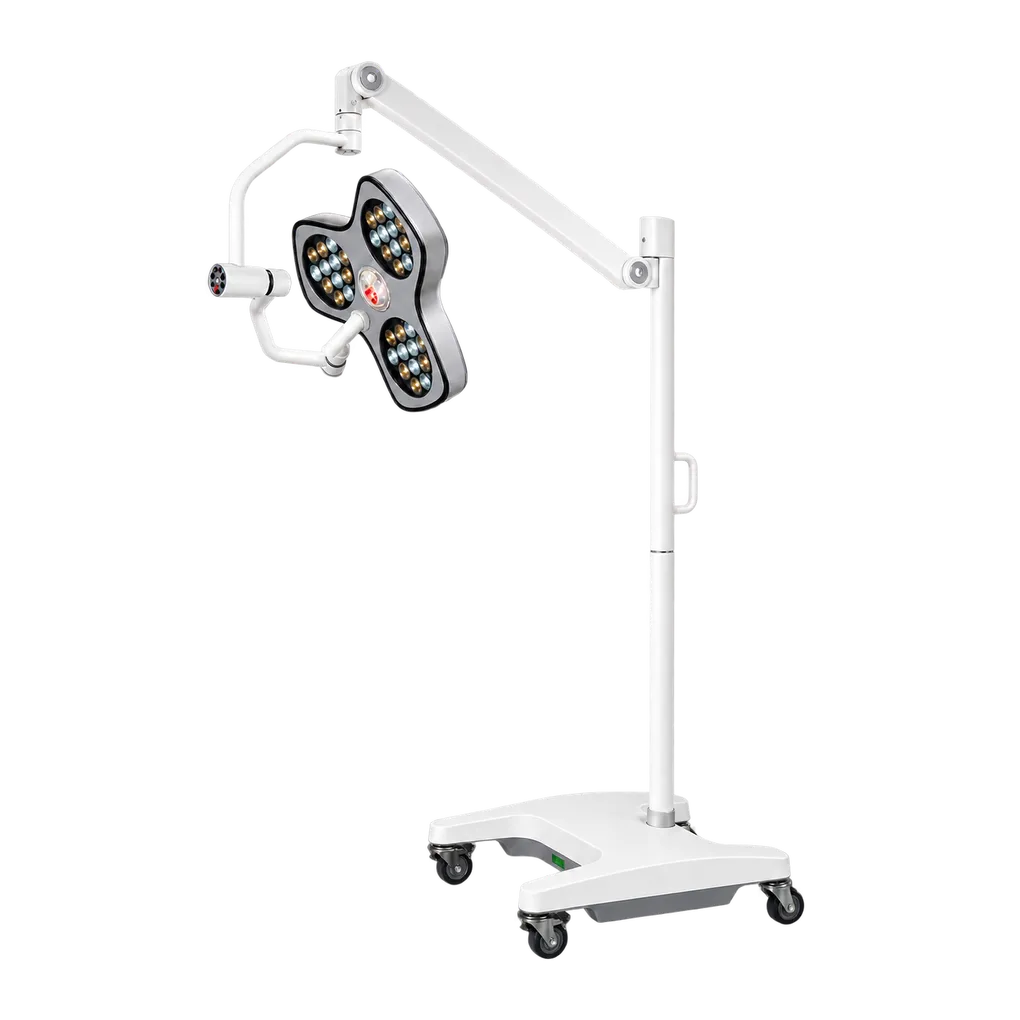
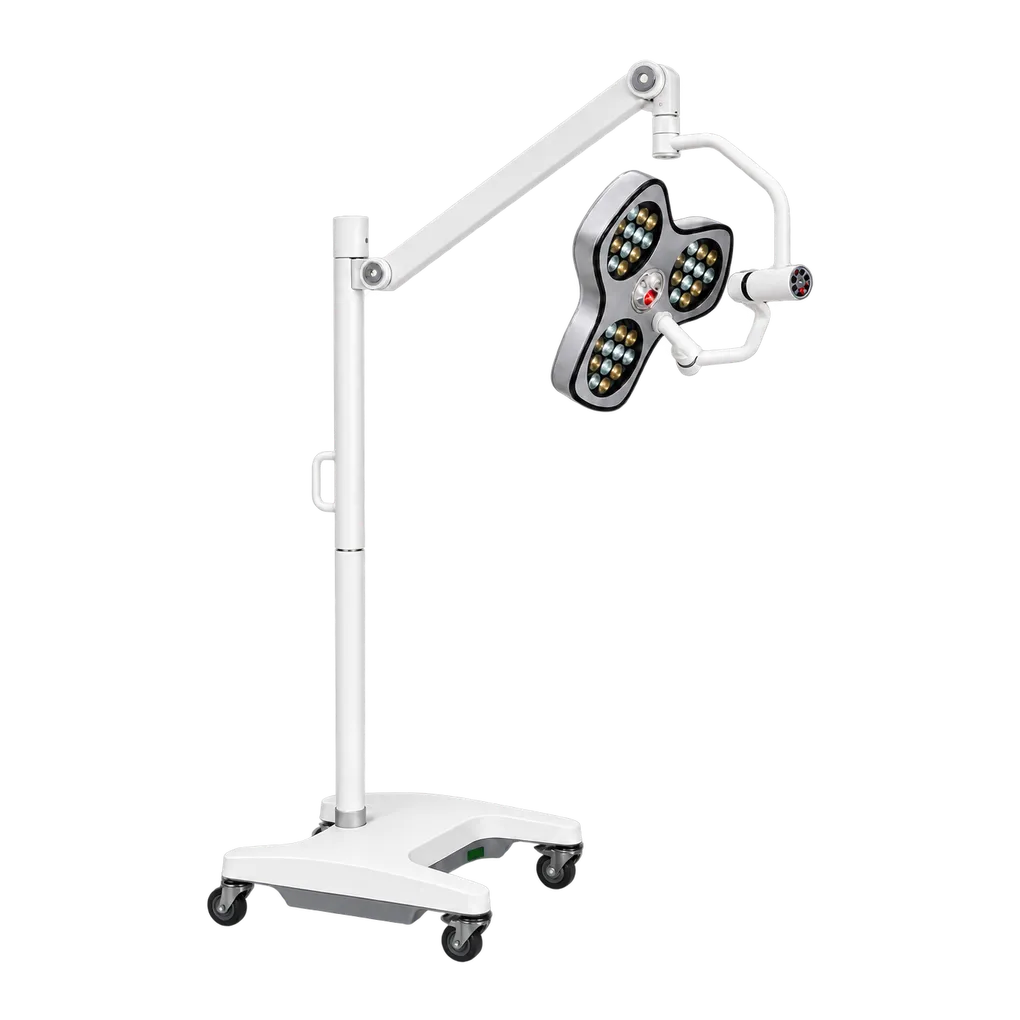
The KL-LED·MSTZ4D suits emergency and general theatres, procedure rooms and small hospitals where one mobile lamp lights the field. Its case is mechanism and effect. The head shape is the mechanism, and what the surgeon sees in the wound is the effect.
Begin with an open, shallow wound. All three clusters reach it, the beams overlap fully, and the field lights evenly. A hand passing over it blocks one cluster for a moment, and the other two keep the tissue visible. This is where a three-source head earns the word shadowless.
Now take a deep, narrow wound, such as a pelvic or thoracic approach. The cavity walls cut off light arriving at a wide angle, so only some LEDs see the bottom. Bringing the head directly over the opening and within the listed 70 to 140 cm lets as many clusters as possible look straight down. The series spot adjustment narrows the field to concentrate light where the cavity opens.
Then consider the surgeon. A head bowed over the wound is a large obstruction in any theatre. With one lamp, the answer is to bring the light over a shoulder so at least two clusters pass beside the surgeon’s head. The series arm is described as holding position without drift, which keeps that angle once it is found.
Colour follows the same logic. Warm-white and white LEDs sit side by side in each cluster and blend at the field, and the red LEDs at the centre add to the deep red that tissue reflects.
Surgical leads, NHS procurement routes and tender panels abroad will ask for the IEC 60601-2-41 report, which measures shadow dilution with standard obstructions, and a declaration of conformity. The manufacturer issues the conformity documentation required by those procurement routes, and the enquiry team shares it.