
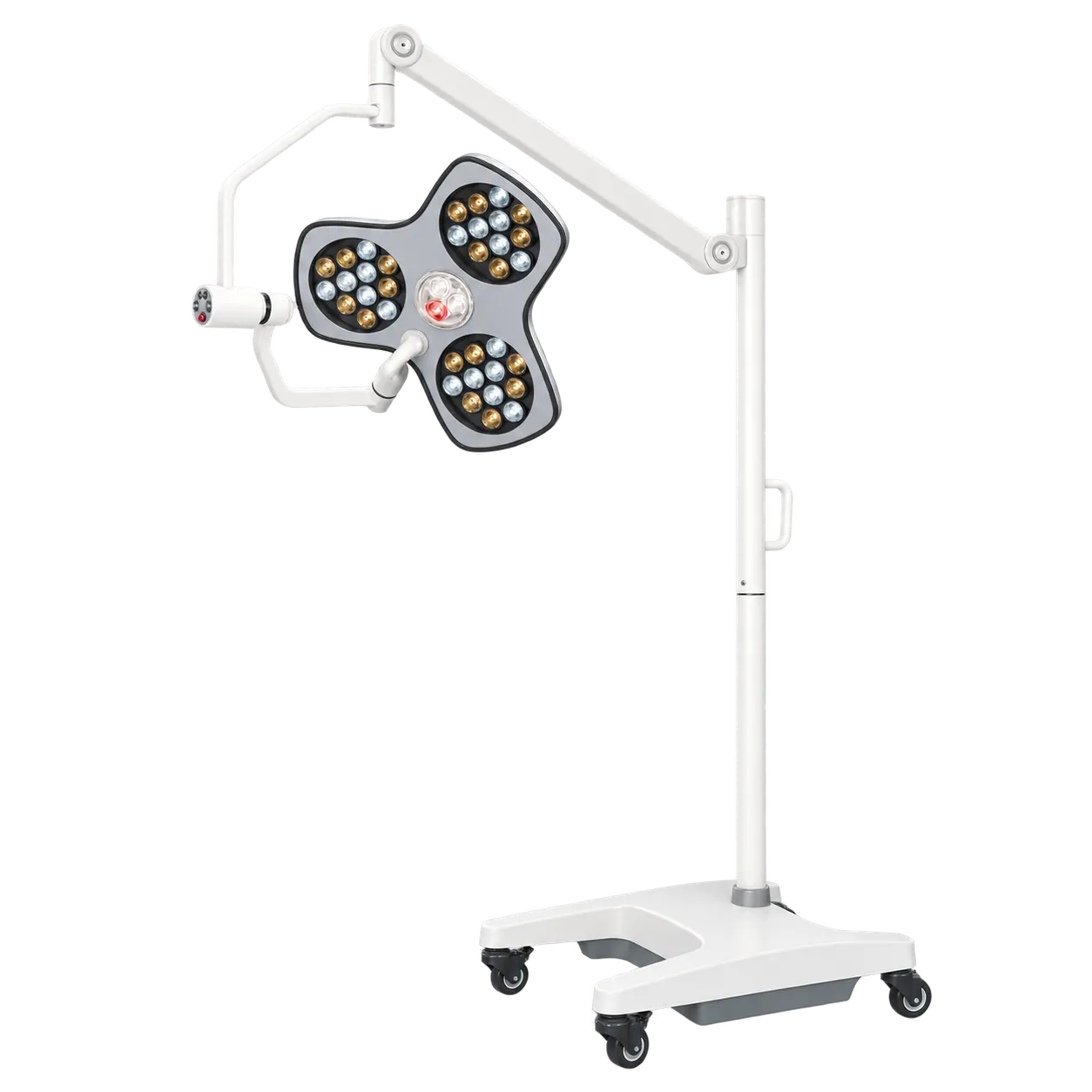
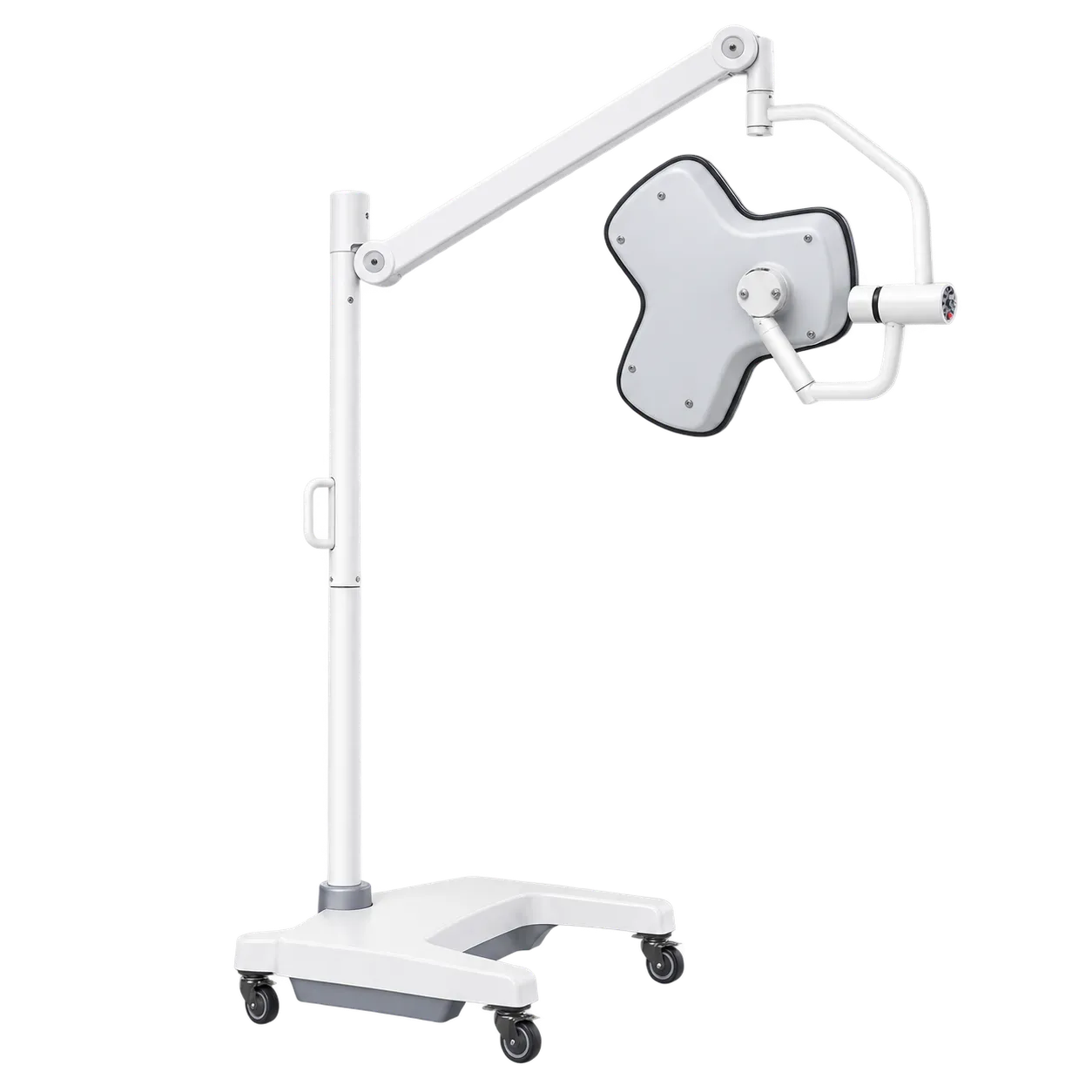
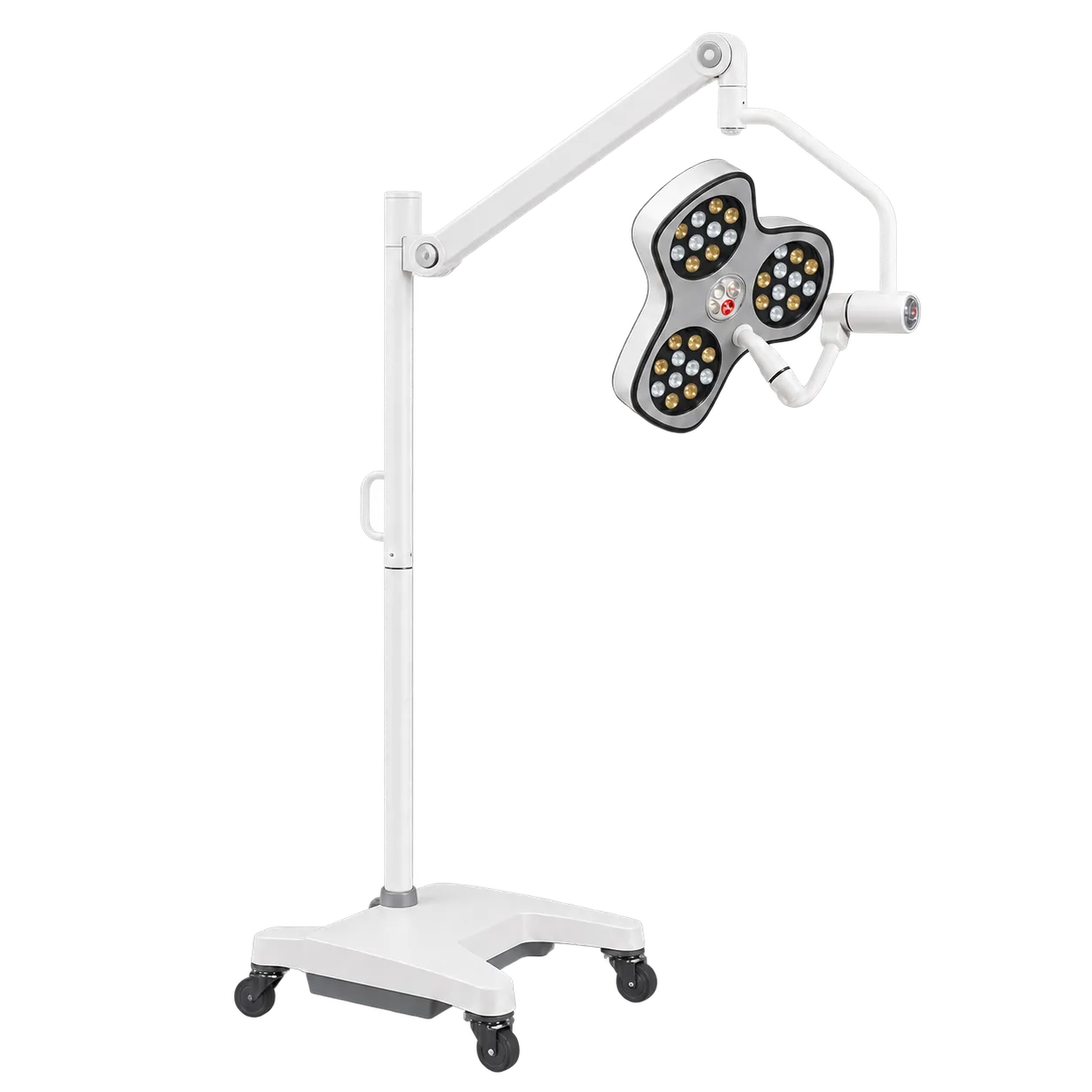
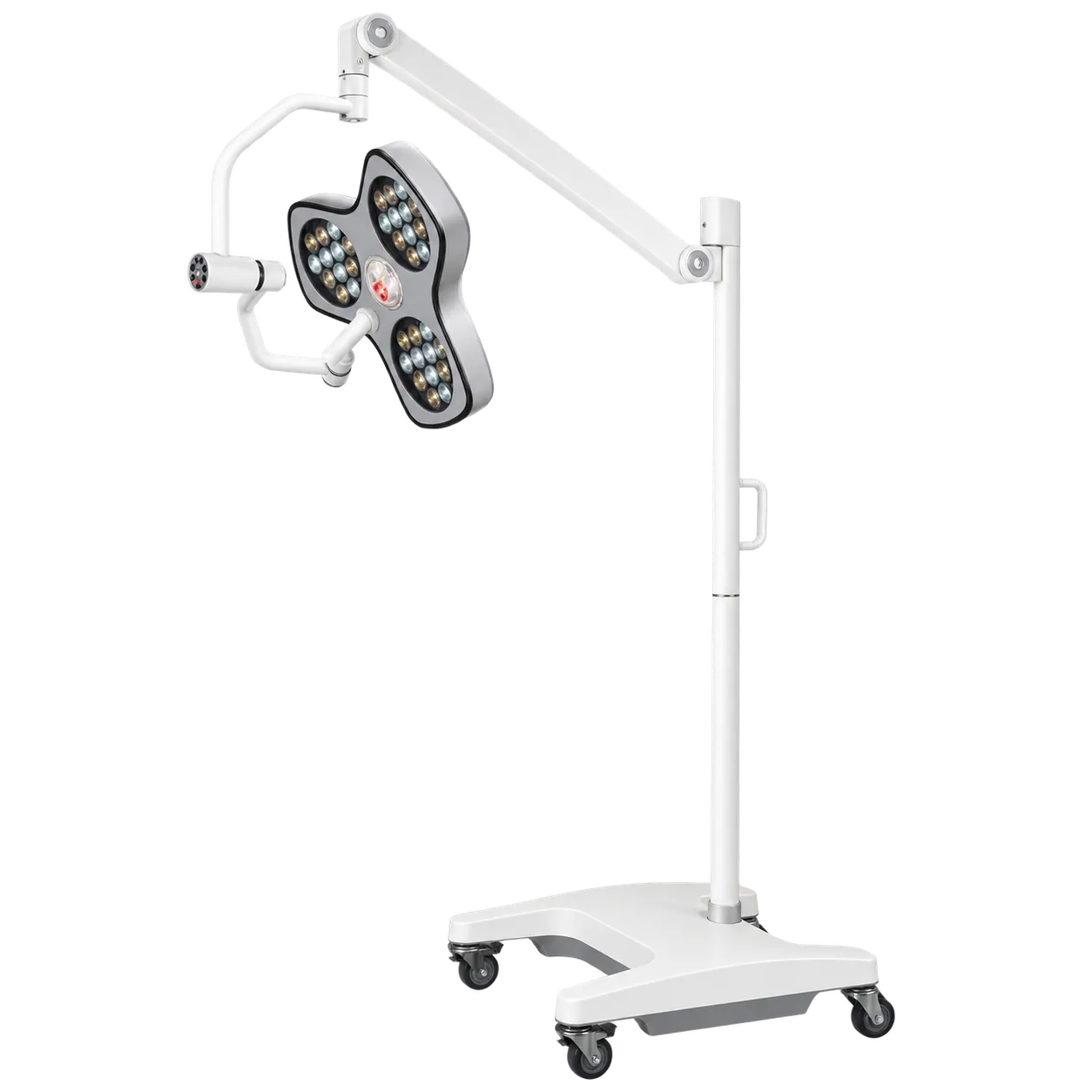
The KL-LED·MSTZ4 suits emergency theatres, procedure rooms, obstetric rooms and small hospitals where a mobile lamp is the main surgical light. Its case is safety and risk transfer. With a ceiling pair, a second head quietly absorbs many small failures; with one mobile head, those risks shift to the team, who must manage them intentionally.
Shadow is managed by position. The three clusters in the head already come at the field from different angles. The surgeon then places the head off to one shoulder so that a bowed head does not sit between lamp and wound. An arm described as free of drift keeps it there, and the 70 to 140 cm working distance leaves space to do so.
Heat is managed by level. Full output is listed at 160,000 lux, which the ratio converts to about 512 W/m². Bowel, flaps and exposed cartilage dry out under that over time. Dropping the level after the incision, narrowing the 10 to 28 cm spot to the wound, and irrigating are the usual answers, and stepless control makes the first easy.
Contamination is managed by routine. Change or reprocess the removable handle case for each case, and wipe the head, arm, and stand between patients. A lamp that travels between rooms needs the same care at its base and castors.
Manage loss of light in advance. The room needs to know whether the lamp has a battery, how long it runs and what the fallback is. A second light source within reach, even a modest one, turns a blackout into a pause.
Theatre leads, NHS procurement routes and tender boards overseas will ask for the backup arrangement, the IEC 60601-2-41 report and a declaration of conformity. The manufacturer issues the conformity documentation those procurement routes require, and the enquiry team shares it.