
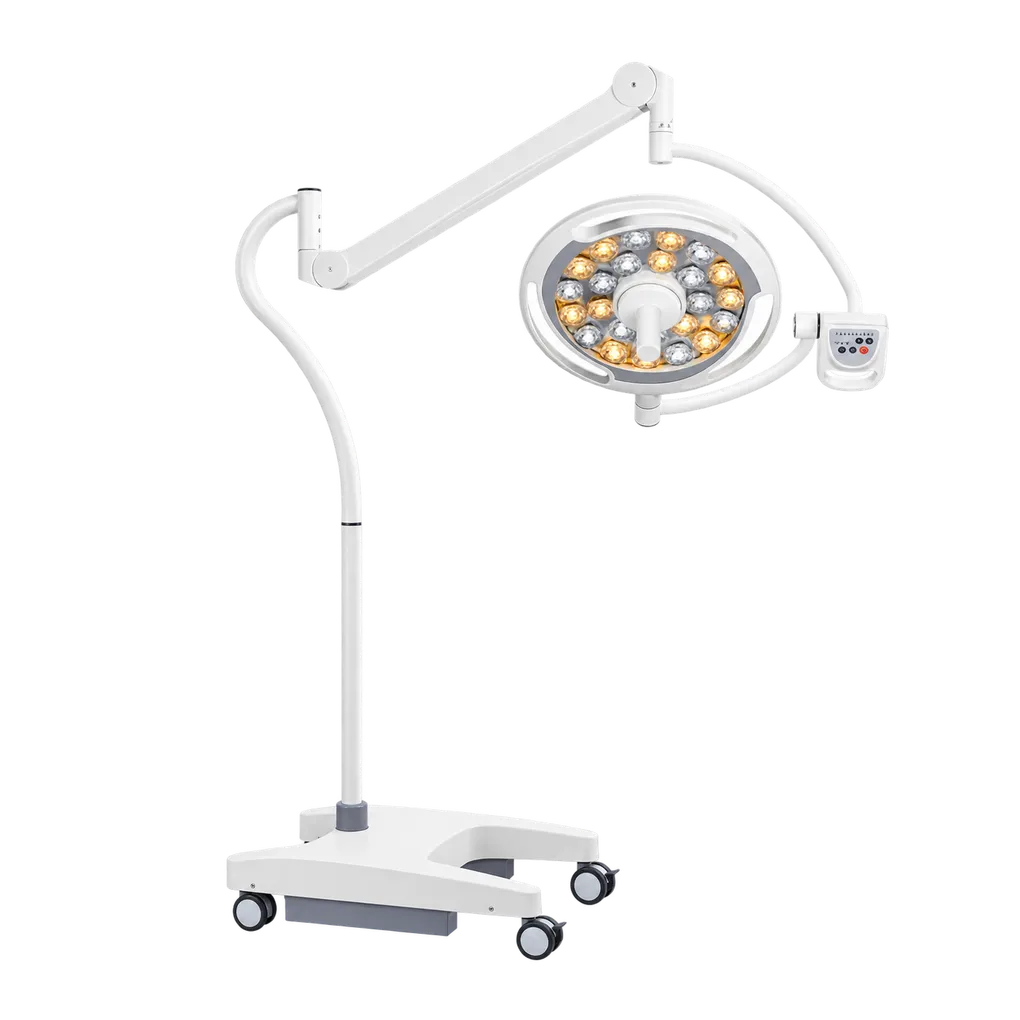
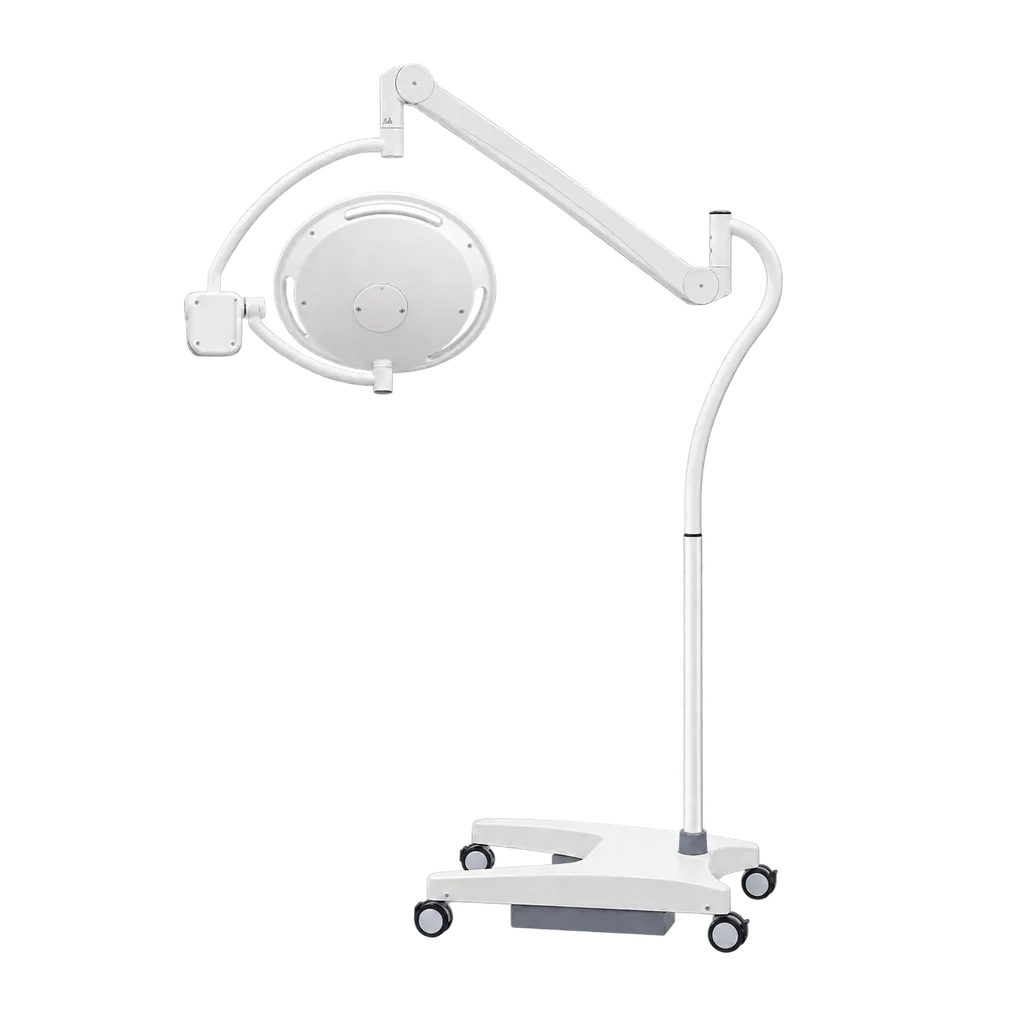
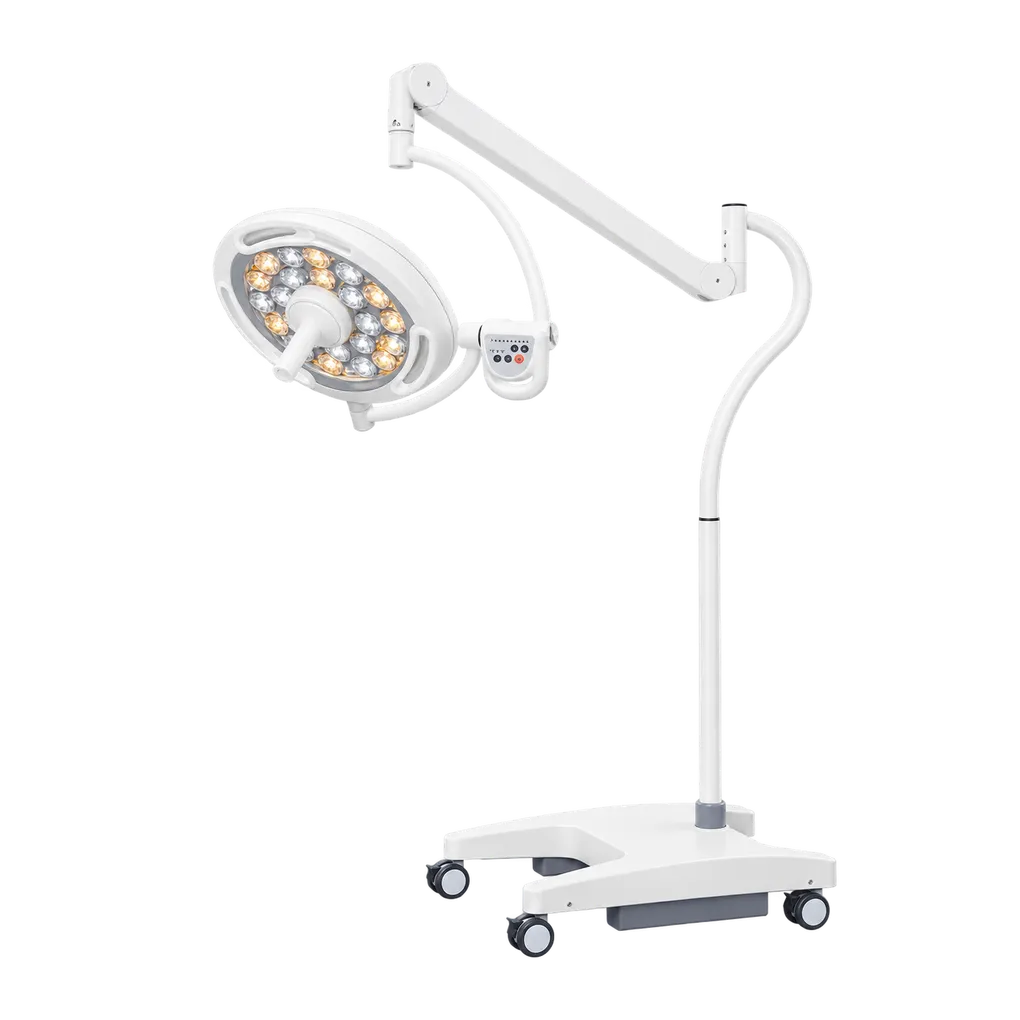
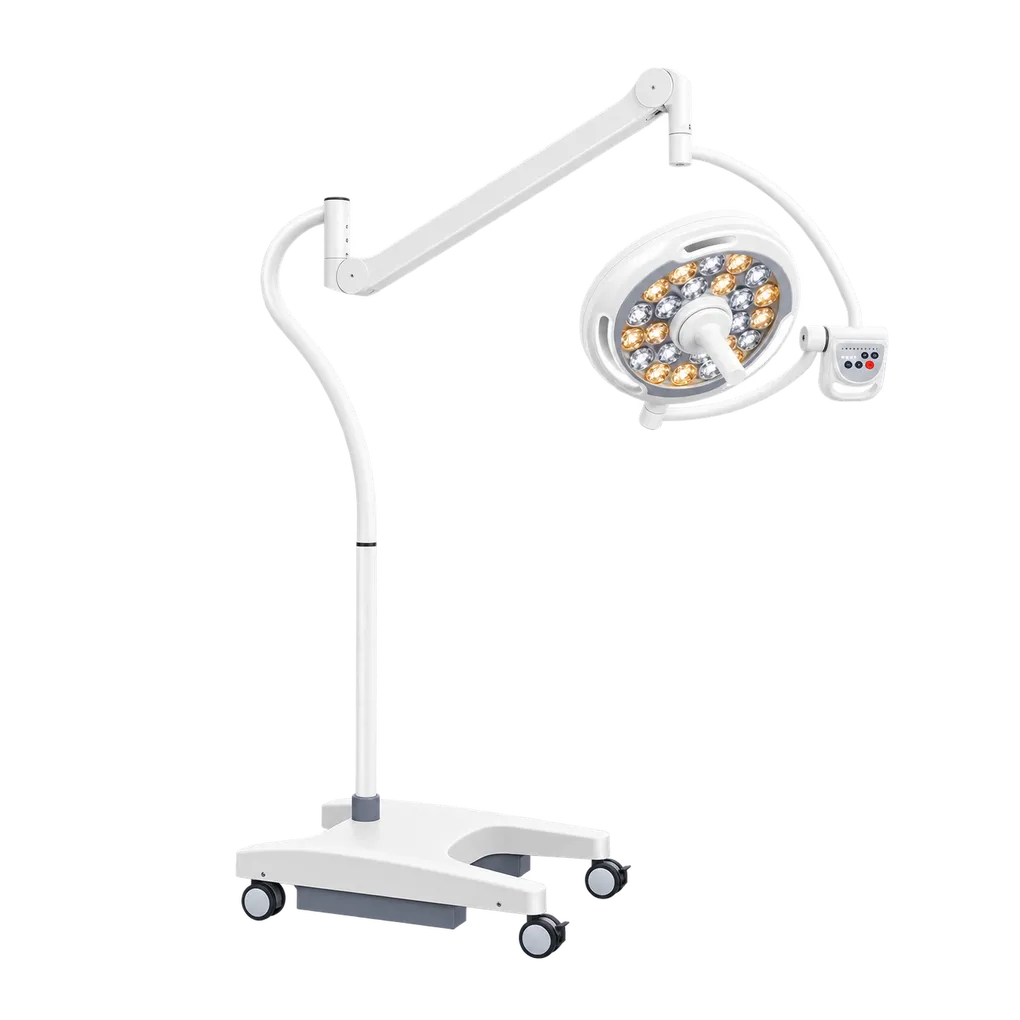
The KL-LED·MST45 suits emergency departments, delivery rooms, treatment and minor procedure rooms, intensive care bays, and clinics without a ceiling surgical light, and theatres that keep a spare. Its case is safety and risk transfer. A fixed lamp passes its risks to the installer and the engineer once, and a mobile lamp hands them to whoever moves it that day.
Tipping comes first. The photograph shows a tall pole at the rear of a forked base with the arm reaching forward over it. That geometry is stable when the head stays within its designed reach on a level floor. Risk rises on ramps, over door thresholds and when someone steers by pulling the head. The routine is simple. Fold the arm in, push from the pole and take thresholds square and slowly.
Position comes next. The forked base lets the stand sit close to a bed or table, and brakes belong on before the arm is extended. Staff should agree which side the lamp stands on, so that it stays clear of the anaesthetic machine and leaves the exit open.
Electricity and hygiene complete the list. A trailing cable needs a route behind the team, and any battery needs a charging routine and a pre-use check. Because the stand travels, its base and castors need wiping between rooms. Under PUWER 1998,, the employer must maintain the equipment and train its users, and a short competency sign-off is a sensible record.
Ward managers, NHS procurement routes and overseas tender boards will ask for the IEC 60601-1 stability result, the IEC 60601-2-41 report and a declaration of conformity. The manufacturer issues the conformity documentation these procurement routes require, and the enquiry team shares it.