
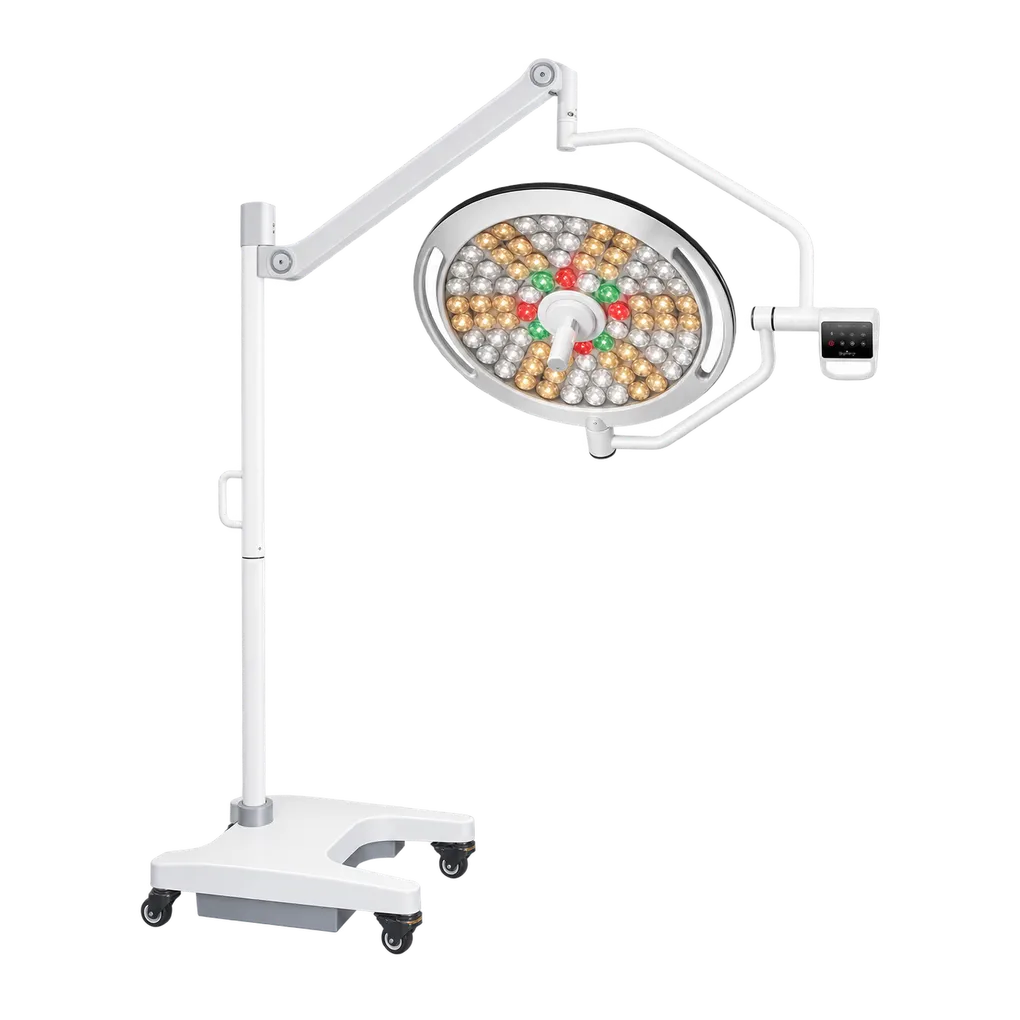
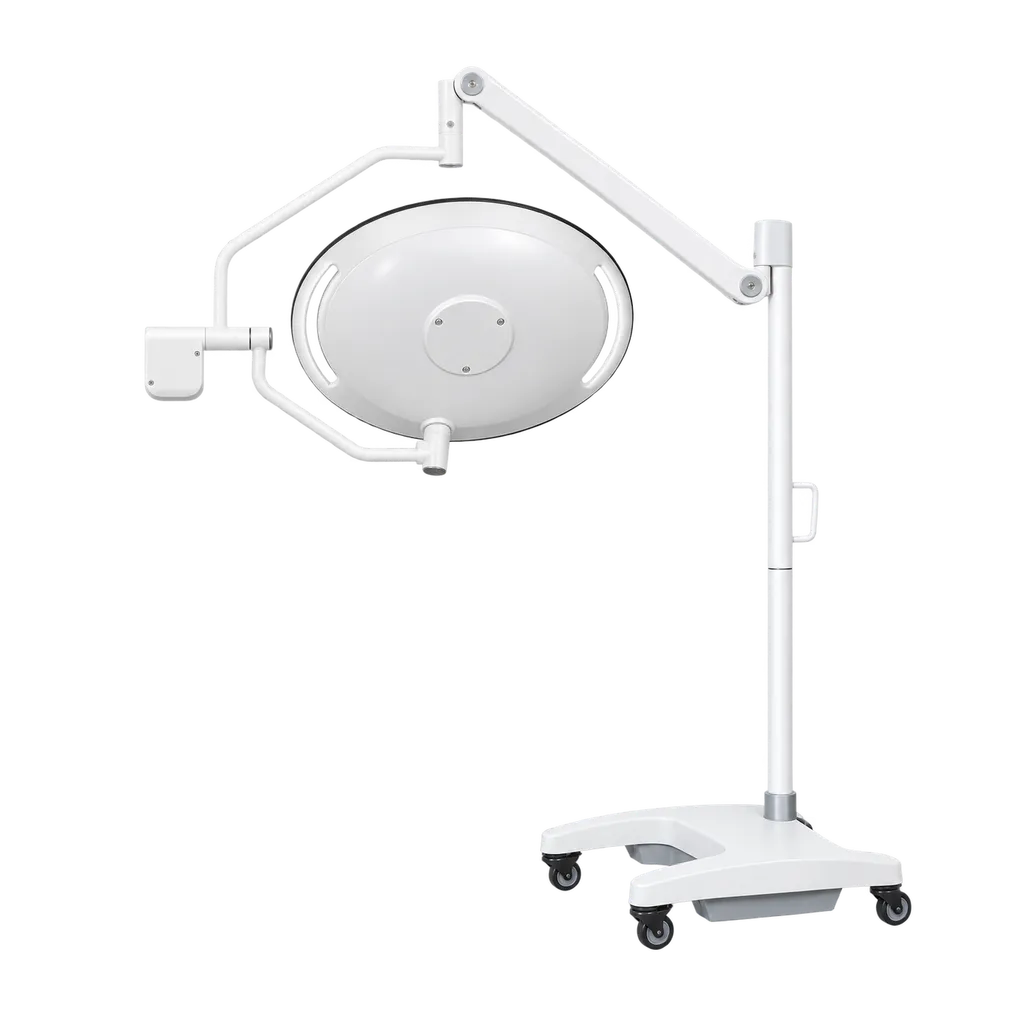
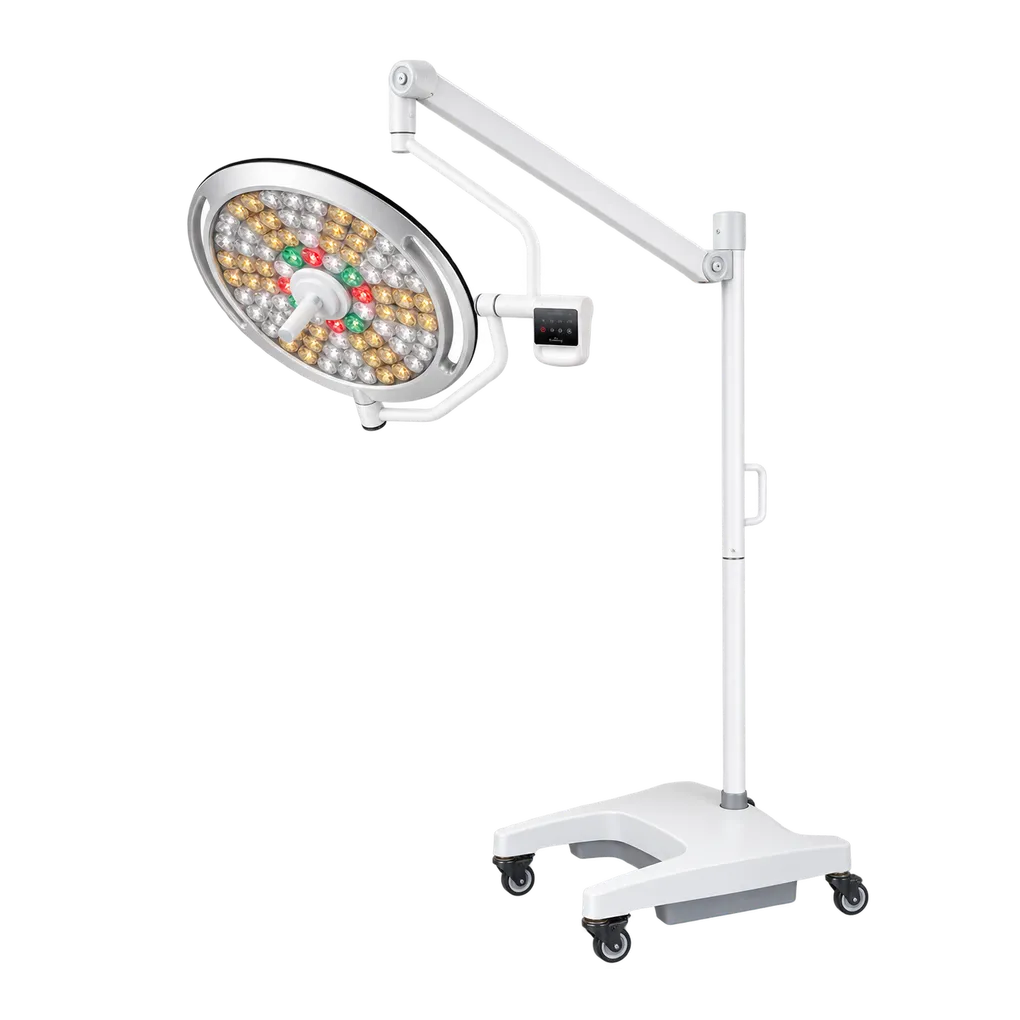
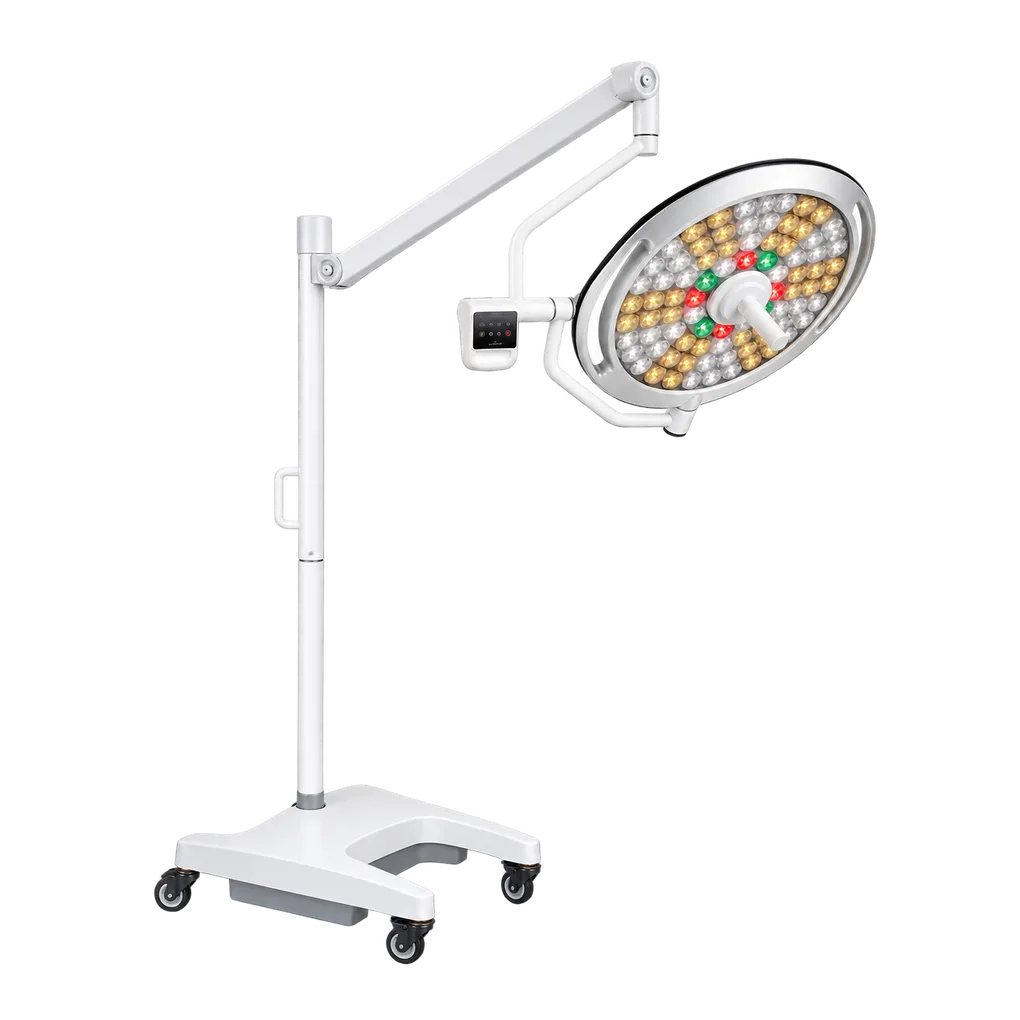
The KL-LED·MDTR78D suits emergency theatres, trauma and resuscitation rooms, obstetric units, and hospitals that keep one high-output mobile lamp for several rooms or for cover when a ceiling light is down. Its case is workflow. In urgent work, the lamp is judged by how long it takes to light the field, and that depends on a routine everyone knows.
Picture an emergency caesarean in a room whose ceiling light has failed. Someone fetches the lamp while the patient is positioned. It comes in by its pole grip with the arm folded, the forked base goes beside the table on the side away from the anaesthetic machine, and the brakes go on. The cable goes to the nearest socket behind the team. The head swings over on its arm, and the touch screen sets full output for the incision. None of this needs discussion if it has been rehearsed.
The series figures support that use. At 160,000 lux with a 150 cm depth of illumination, one head lights an open abdomen, and electric focus matches the patch to the wound from the controls. R9 and R11 of 97 or above help with tissue colour, and the 15,000 lux endo mode covers scope work. The series lists automatic illumination compensation, and the instructions for use describe how it behaves.
After the case, the reverse order applies. The head is lowered and wiped, the arm folded, the cable coiled and the stand returned to its bay. A fault noted then is a fault fixed before the next call.
Theatre coordinators, NHS procurement routes and tender committees overseas will ask for the device class, the IEC 60601-2-41 report and a declaration of conformity. The manufacturer issues the conformity documentation those procurement routes require, and the enquiry team shares it.