
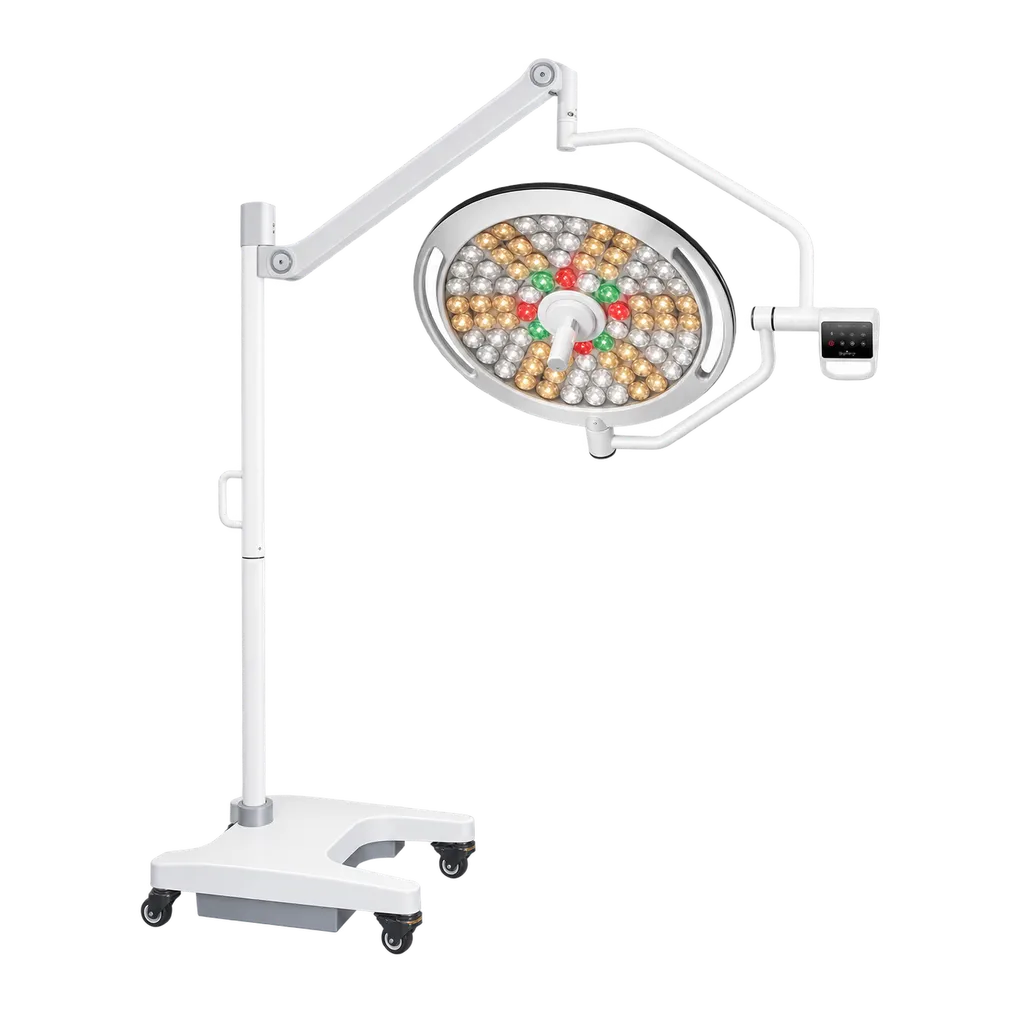
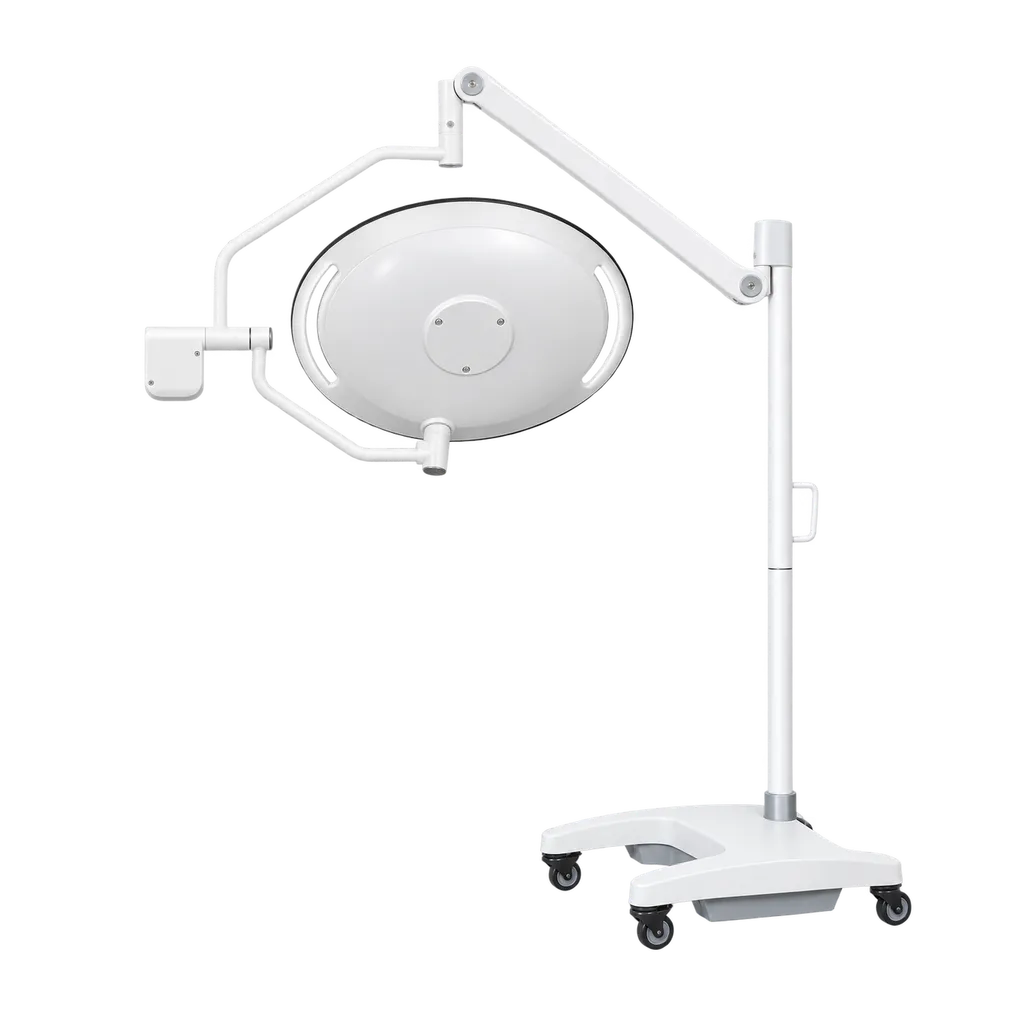
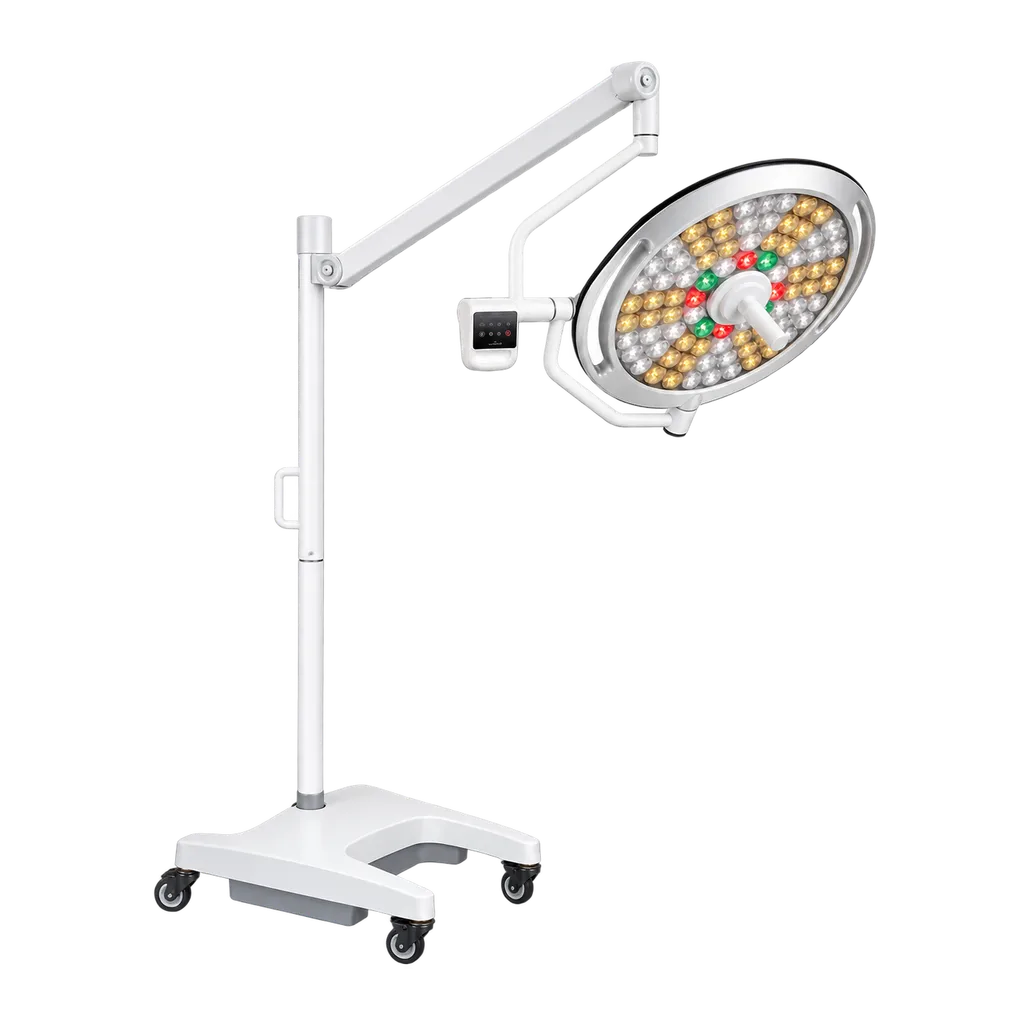
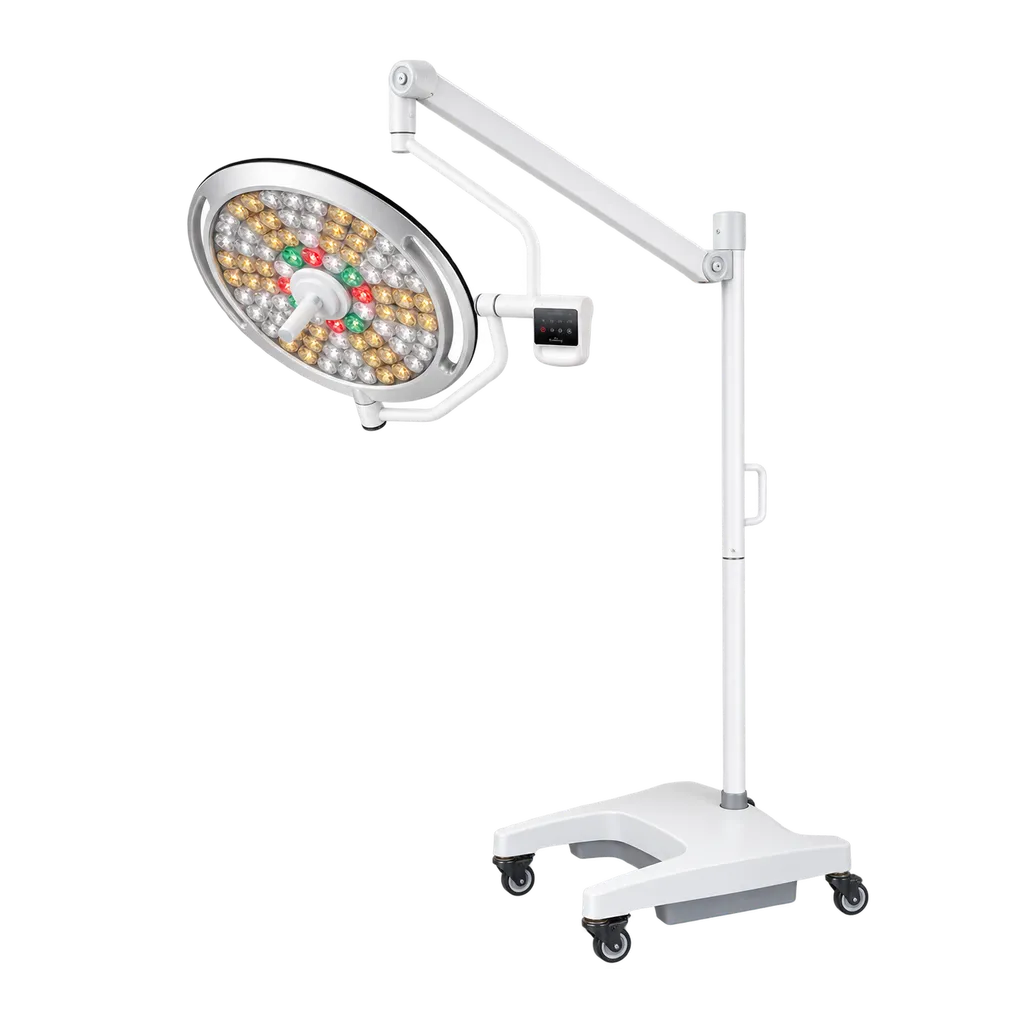
The KL-LED·MDTR78 suits operating rooms without a ceiling lamp, emergency and trauma rooms, field and temporary hospitals, and theatres that need a full-output spare. Its case is mechanism and effect. Each listed function does a specific job at the wound, and a team that knows the link uses the lamp well.
Start with output. The head is rated at 160,000 lux at 1 m with a 150 cm depth of illumination, so a deep wound stays lit as the head is raised or lowered on its spring arm. Electric focus then matches the lit patch to the incision, and a tight patch puts light where it is needed while sparing the surrounding skin.
Colour is the second link. Tissue is mostly red, and white LEDs alone struggle to render deep red. The R9 and R11 auxiliary LEDs fill that gap, and Keling lists both indices at 97 or above. Colour temperature between 3000 and 6700 K lets the surgeon choose a tone that separates the structures in view.
Steadiness is the third. Automatic illumination compensation holds the level at the field when something changes, and the touch screen gives the circulating nurse one place to set brightness, colour, and endo mode. Endoscopy auxiliary lighting at 15,000 lux keeps the room workable during scope phases.
Heat follows from output. From the listed ratio, full brightness gives up to about 512 W/m² at the field, which dries exposed tissue over time. The nano-coated heat sink manages heat inside the head and does not alter that figure.
Theatre managers, NHS procurement routes and tender boards overseas will ask for the IEC 60601-2-41 test report, the device class and a declaration of conformity. The manufacturer issues the conformity documentation required by those procurement routes, and the enquiry team shares it.