
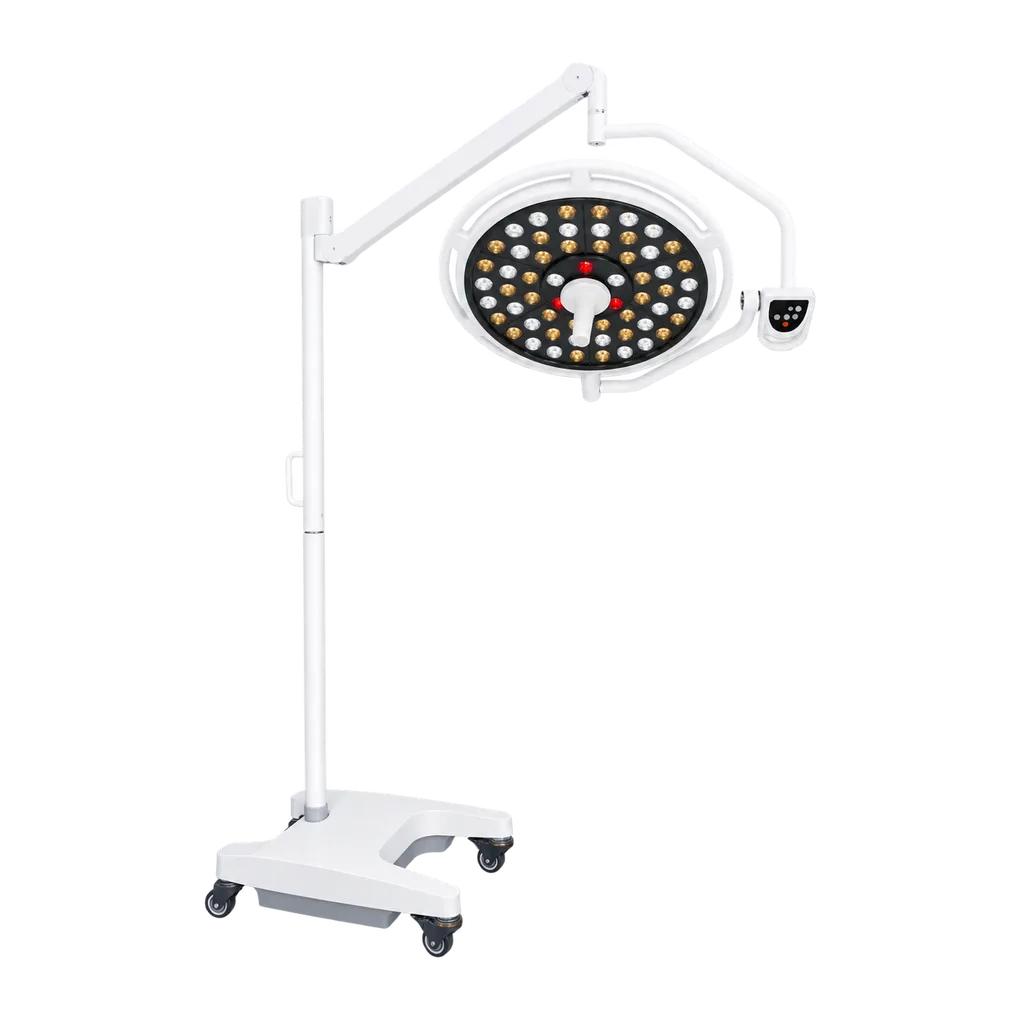
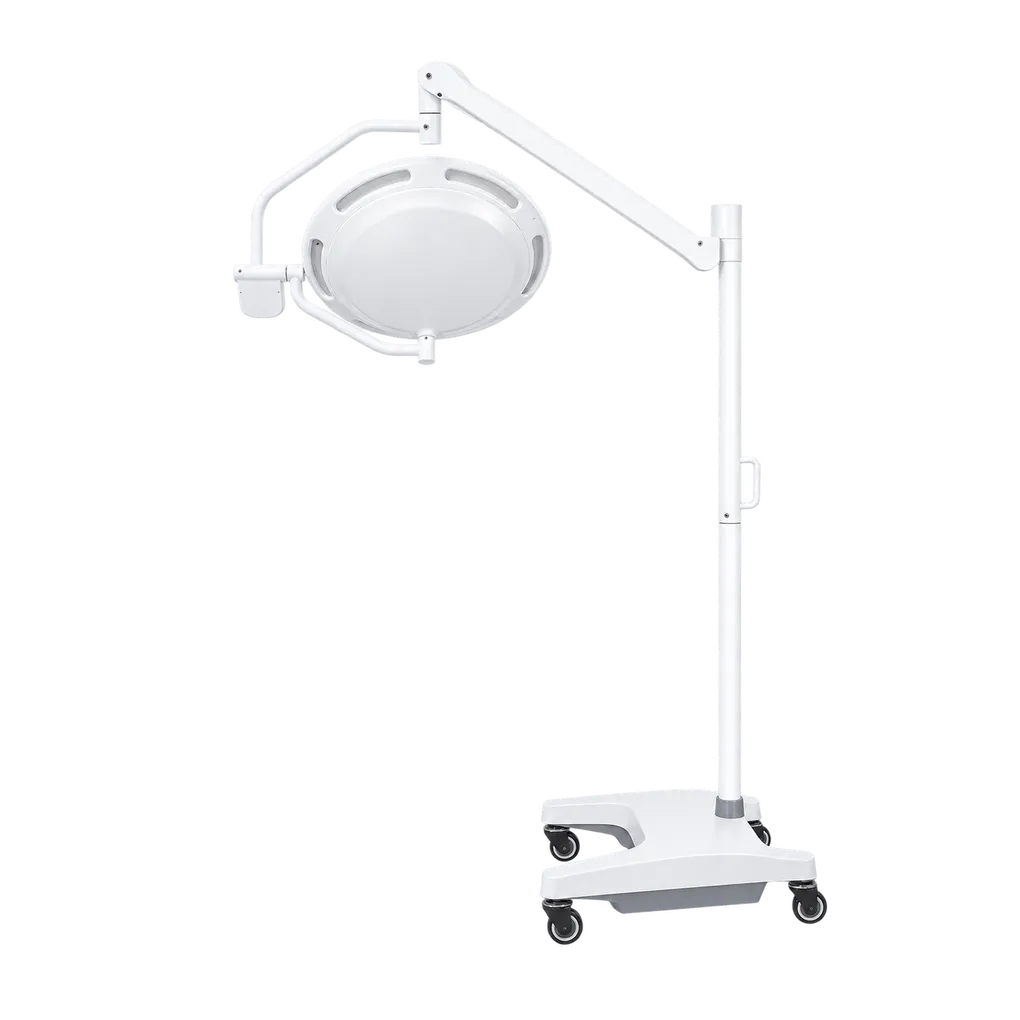
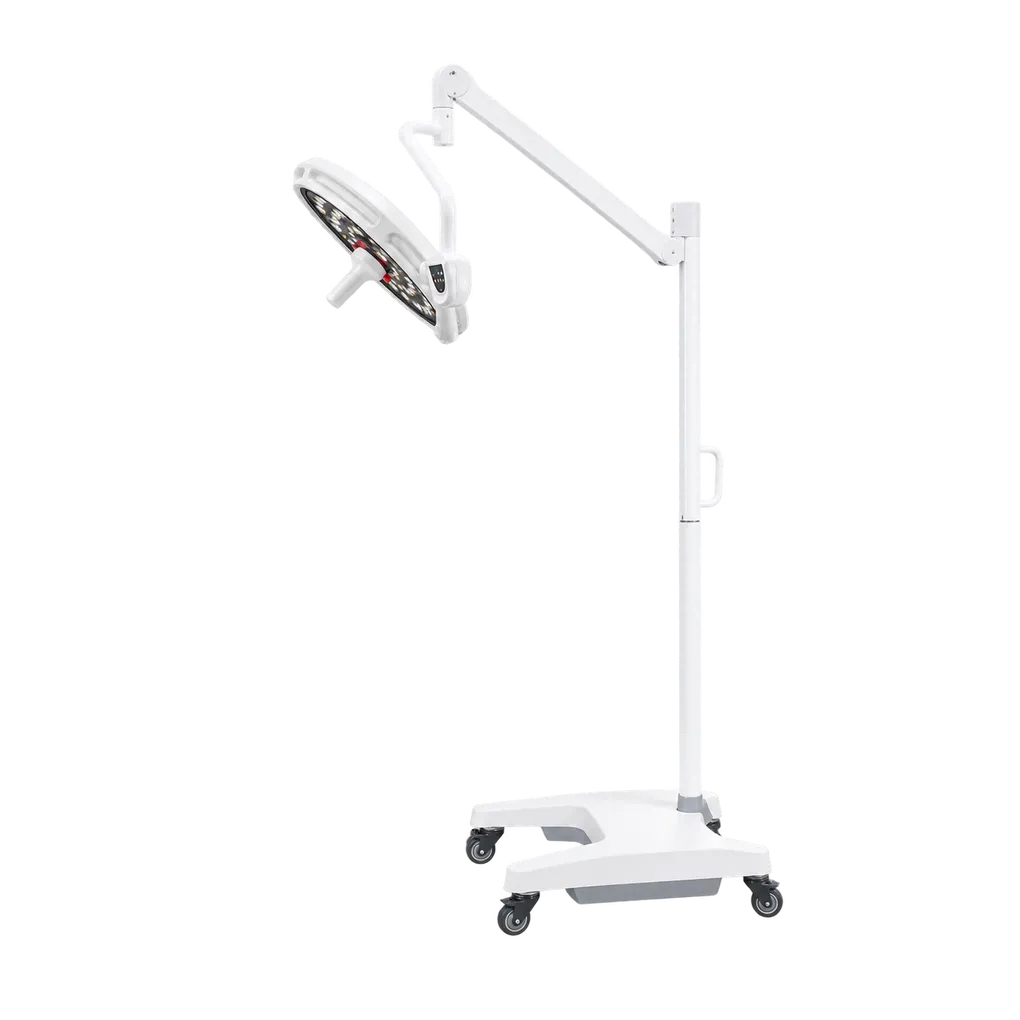
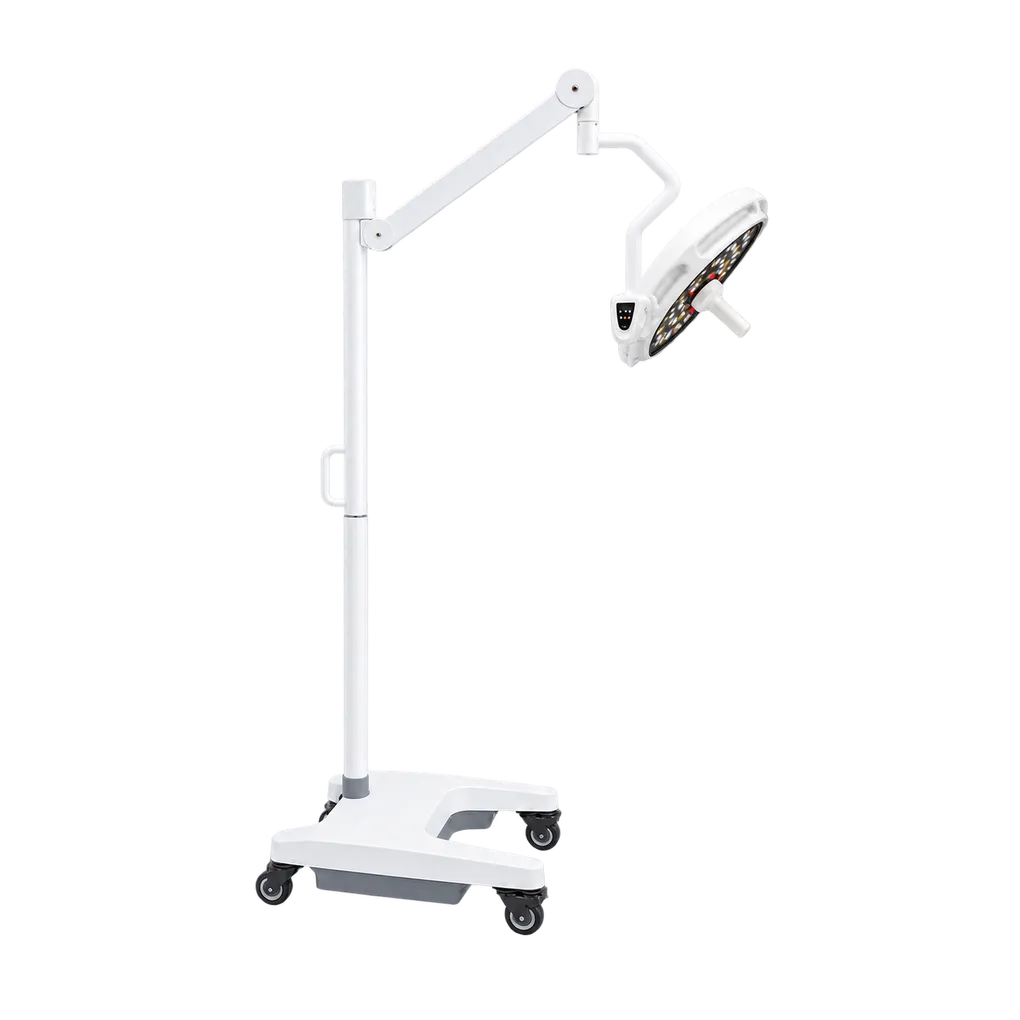
The KL-LED·MDT61 suits general and emergency theatres, day-surgery rooms, obstetric theatres and procedure rooms that run with small teams. Its case is labour economics. In a theatre with four or five people, each interruption to adjust equipment takes someone away from the patient, and a lamp can either cause those interruptions or remove them.
Consider the circulating nurse. In a busy list, that person fetches supplies, opens packs, records swabs, and answers the surgeon. A head that sinks or swings after being placed adds a job, and the listed arm is described as free of drift at each 90-degree angle. If that holds in use, the surgeon positions the head by its covered handle, and it stays.
Setting the light is the next call on time. Stepless digital brightness means one adjustment reaches the level wanted. An adjustable spot lets the same lamp serve a small skin incision and an open abdomen, so no second light needs to be brought in. Independent minimally invasive lighting at 15,000 lux covers scope phases from the same panel.
Turnaround benefits as well. The handle cover comes off for cleaning and disinfection, and the head’s smooth lens face and titanium alloy arm are surfaces a single wipe-down can cover. On a mobile stand, one person can move the lamp by holding the pole grip.
The clinical figures stand beside those savings. With 160,000 lux output and 150 cm of illumination depth, it supports open surgery, and an R9 of 97 or above supports reading red tissue.
Theatre managers, NHS procurement routes and tender boards abroad will want the arm’s service schedule, the IEC 60601-2-41 report and a declaration of conformity. The manufacturer issues the conformity documentation required by those procurement routes, and the enquiry team shares it.